
News
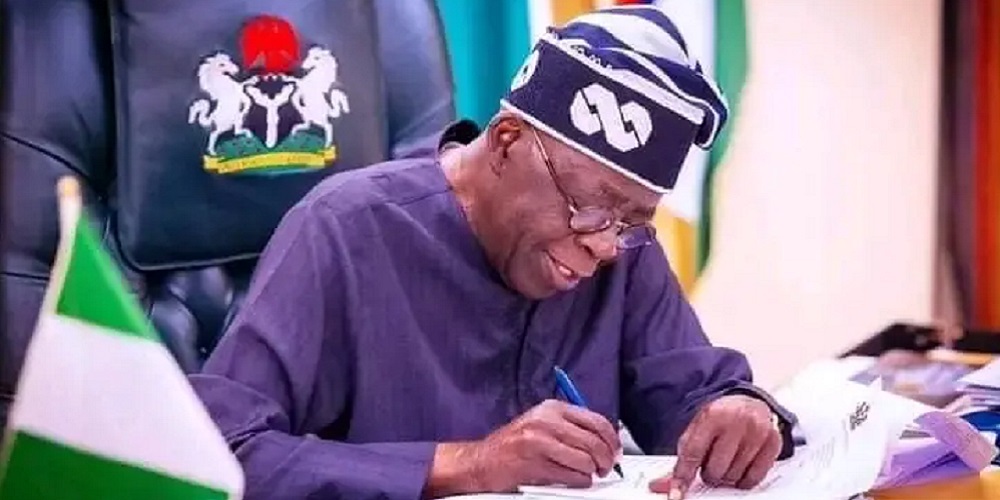
JUST IN: President Tinubu Writes Reps, Requests For N24bn Reimbursement To Nasarawa, Kebbi States

- /home/naijuinz/public_html/wp-content/plugins/mvp-social-buttons/mvp-social-buttons.php on line 27
https://naijablitznews.com/wp-content/uploads/2024/02/Tinubu-appoints.jpg&description=JUST IN: President Tinubu Writes Reps, Requests For N24bn Reimbursement To Nasarawa, Kebbi States', 'pinterestShare', 'width=750,height=350'); return false;" title="Pin This Post">
- Share
- Tweet /home/naijuinz/public_html/wp-content/plugins/mvp-social-buttons/mvp-social-buttons.php on line 72
https://naijablitznews.com/wp-content/uploads/2024/02/Tinubu-appoints.jpg&description=JUST IN: President Tinubu Writes Reps, Requests For N24bn Reimbursement To Nasarawa, Kebbi States', 'pinterestShare', 'width=750,height=350'); return false;" title="Pin This Post">


… transmit National Anti-Doping Bill, FCT supplementary statutory budget
By Gloria Ikibah

A coalition of 12 civil society organisations focused on digital rights, freedom of expression, and civic space has raised an alarm over an ongoing, unexplained disruption of access to TikTok across several states in Northern Nigeria.
The CSOs claimed that the widespread access difficulties began around mid-September 2026 as intermittent disruptions, but have since escalated into a multi-week digital blackout in states including Kano, Kaduna, Kebbi, and Sokoto.
Millions of citizens relying on the social media platform for their livelihoods, information dissemination, and daily communication are said to be unable to upload content, view videos, or load pages using standard mobile data connections. Service currently remains accessible only for a fraction of users through Virtual Private Networks (VPNs).
Adopting the neutral term “TikTok Disruption” while awaiting further technical evidence, the group expressed deep concern over what it described as more than two weeks of institutional silence from regulatory bodies, telecommunications operators, and platform managers.
Addressing the possibility of state involvement, the coalition emphasized that if the outage stems from intentional directives, government agencies must immediately cease any unlawful blocking, throttling, or filtering. Any platform restrictions, the CSOs noted, must have a clear legal foundation and comply strictly with constitutional protections under Section 39 of Nigeria’s 1999 Constitution and international human rights frameworks guaranteeing freedom of expression and access to information.
The statement also urged regulatory authorities to ensure that citizens, media practitioners, and researchers documenting the blackout or utilizing VPNs are protected from harassment, arrest, or penalties. Similarly, the coalition called on TikTok to publicly clarify whether internal technical glitches, infrastructure routing failures, or localized delivery modifications contributed to the disruption.
To prevent future occurrences, the coalition recommended the creation of a national internet disruption transparency protocol, alongside a formal engagement mechanism bringing together civil society, technical experts, and government agencies under the leadership of the Ministry of Communications, Innovation and Digital Economy.
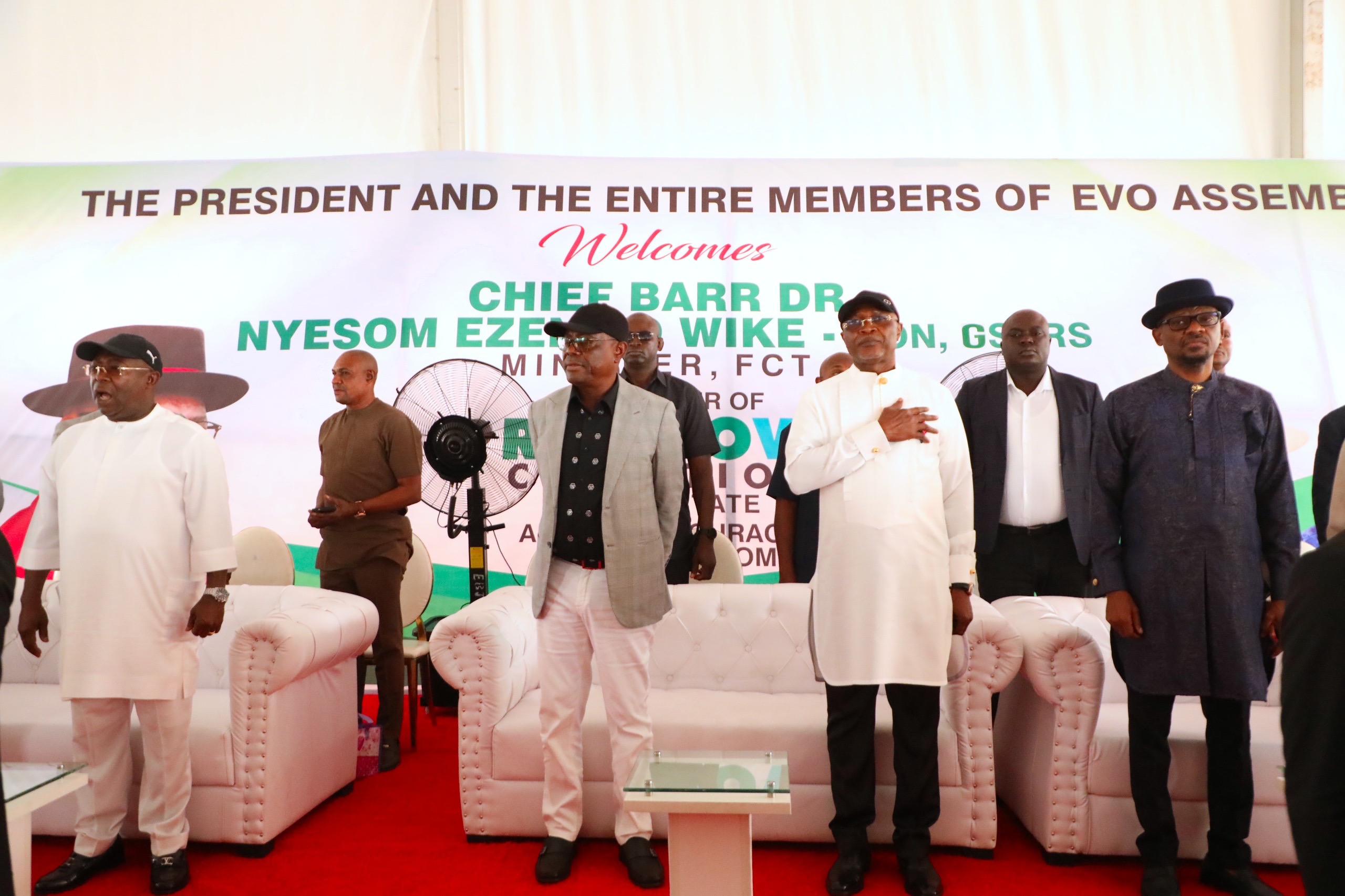
… Reaffirms loyalty to President Bola Tinubu, vows to continue building sustainable leadership
Former Governor of Rivers State and Minister of the Federal Capital Territory (FCT), Chief Nyesom Wike, has challenged the people of Evo Kingdom to point to any tangible development or political empowerment attracted to their land by his predecessor, Chibuike Rotimi Amaechi, despite holding top political offices as Speaker, Governor, and Minister for 24 years.
Speaking during an interactive session with leaders and stakeholders of Evo Kingdom in Obio-Akpor Local Government Area, Wike declared that unlike past leaders who used their elevation to pull down others and monopolize power, his political philosophy centers on human capacity development, divine gratitude, and uplifting his people.
Wike questioned the moral right of those who spent decades in high offices without leaving behind a legacy of leadership or infrastructure in the area, warning against selfish politics that crumbles once the leader passes on.
”Because how will I answer before God if these people could take that kind of risk, and opportunity came up for you to help, for you to uplift them? But because of your greed, because of your selfishness, you don’t want anybody to reach the level you are,” Wike said.
He said; “You don’t want anybody in Obio-Akpor to be governor again because you have become governor. God will not be happy with me”.
Taking direct aim at Amaechi’s 24-year tenure across various arms of government, Wike challenged the kingdom to present evidence of what was attracted to the land under his rival’s reign.
”Someone was Speaker of the House of Assembly for eight years, Governor for eight years, and Minister for eight years—that is 24 years in top leadership positions! What can anybody point to that he attracted to Evo Kingdom or Rivers State in all those 24 years? Nothing! Not one single thing!
”I was a Minister of State for Education, and as I sit here, I can count the projects I brought to Rivers State and my people. But somebody was Speaker, Governor, and headed a very lucrative ministry as a full Minister for eight years, yet brought nothing back home! How can someone who spent 24 years in power without empowering his people or raising new leaders now turn around to tell you he loves you?” Wike queried.

Highlighting his political trajectory and contentment with his achievements under the administration of President Bola Ahmed Tinubu, the FCT Minister stressed that he has no further personal political ambitions other than serving as a vessel for his people.
”After all, what do I want that God has not given to me? Nothing! Nothing! Nothing! The only thing I ask from God today is to continue to give me long life,” he said.
“I can’t be a governor again. I’ve been a minister two times. I cannot be chairman of council again. So I am happy. I don’t have anything to lose”.
He continued: “What leadership, as you are leaving, what’s the leadership you have kept behind to continue with where you have stopped? Because our problem here is that you just want only yourself. When you die, everything crumbles. That is not our own case.”
Addressing political uncertainties and betrayal, the Minister reiterated his firm trust in God rather than human promises.
”As a politician, I know that the only person who will not disappoint is God,” Wike declared.
“So, don’t ever believe that a human being will not disappoint you. No matter the love you have, do the best you can do. If the person disappoints you, don’t kill yourself. God will right the wrong”, he said.
Wike also recounted how his administration restructured the chieftaincy institution to give Evo Kingdom adequate representation in the Rivers State Council of Traditional Rulers, dismissing claims that traditional politics or native charms could intimidate him.
Political leaders and traditional rulers like Eze Temple Ejekwu
and Elder Peter Chinwo, President of Evo Assembly assured the FCT Minister of victory for the President and other candidates endorsed by the Rainbow Coalition.
News
Nigeria’s Ambassador to Hungary, Abass Ogwime, Selected to Commission Hungarian-African House in Budapest

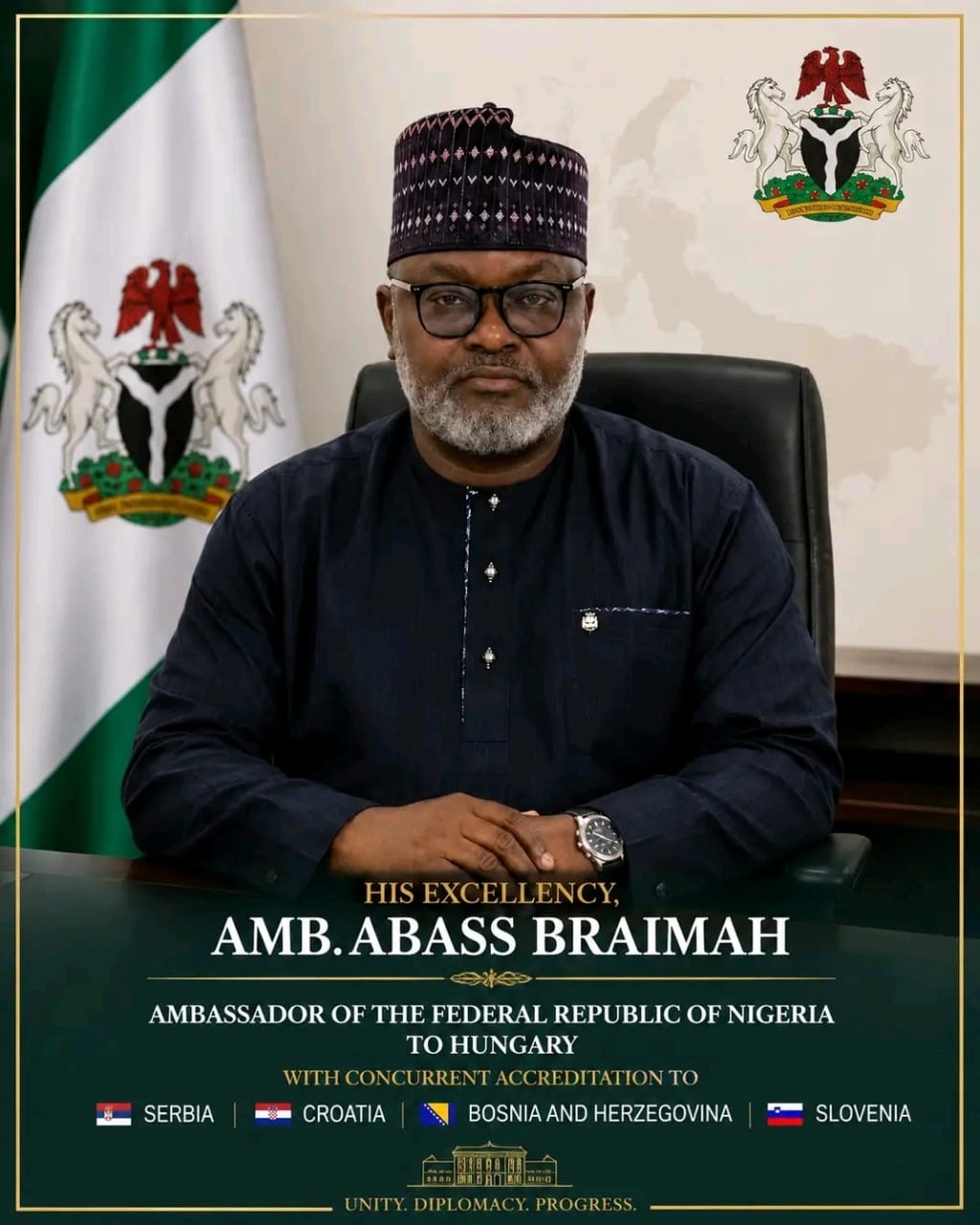
Nigeria’s Ambassador to Hungary, Abass Braimah Ogwime, has been selected among African ambassadors accredited to Hungary to officially commission the newly established Hungarian-African House in Budapest.
Ogwime, who also serves as Nigeria’s ambassador to Serbia, Croatia, Bosnia and Herzegovina, and Slovenia, was the guest speaker at the inauguration ceremony held in Budapest on October 2, 2026.
The event attracted members of the diplomatic community, Hungarian government representatives, African heads of mission, business executives, investors, members of the African diaspora and other stakeholders seeking to strengthen economic, cultural and diplomatic relations between Hungary and African countries.
The Hungarian-African House, known locally as Magyar-Afrika Ház, is an initiative of the Foundation for Africa. The facility is designed to serve as a permanent platform for dialogue, business development, cultural exchange and cooperation between Hungary and African nations.
The initiative is expected to provide a meeting point for Hungarian and African businesses, investors, academic institutions and government representatives to explore investment opportunities, establish strategic partnerships and develop practical areas of collaboration.
Ogwime’s selection as one of the African ambassadors chosen for the commissioning underscores Nigeria’s participation in diplomatic engagements aimed at expanding cooperation between African countries and Hungary.
The Nigerian Embassy in Budapest reaffirmed its commitment to strengthening diplomatic ties, promoting economic partnerships and supporting initiatives that encourage collaboration between Nigerian, African and Hungarian institutions and communities.
The establishment of the Hungarian-African House comes amid broader efforts to deepen Africa-Europe engagement through trade, investment, cultural diplomacy and institutional partnerships.
The new facility is expected to provide a dedicated space for advancing these objectives and fostering long-term relationships between Hungary and African countries.

CSOs cry out over unexplained TikTok blackout in Northern Nigeria

Fear grips RCCG Church members as pastor collapses, dies while preaching about sudden death

Edo APC Chairman Tenebe Sparks Outrage Over ‘AK-47 Fire’ Threat Against Tinubu Vote Opponents



-

 News22 hours ago
Independence Day: NNPCL Slashes Petrol Price With N66 Discount for Nigerians
-

 Metro21 hours ago
‘I Hit Her With a Pistol, Hacked Her With Machete’ — Suspect Confesses to Killing Girlfriend in Enugu
-
 News24 hours ago
Nigeria Bids Farewell to Reverend Okoye, Ex-Aso Villa Chaplain
-

 Sports21 hours ago
Man City Launch Appeal Against Premier League Verdict Over £830m Financial Scandal
-

 News19 hours ago
2027: Wike rallies support for Tinubu In Akpor kingdom, Insists He’II resign as Minister should president lose FCT, Rivers(Photos)
-
 Sports21 hours ago
AFCON 2027: Chelle Vows Super Eagles Will Bounce Back, Targets Tanzania Double
You must be logged in to post a comment Login