
Connect with us

News

Insider Who Abducted Kogi University Students Finally Exposed

Published

on

ADVERTISEMENT
Zoom Ad
ADVERTISEMENT
Zoom Ad

Last week, it was the turn of students of the Kogi State government-owned Confluence University of Science and Technology (CUSTECH) to experience the menace of banditry after a similar episode in Kaduna State, recently. YEKINI JIMOH tells how it happened.


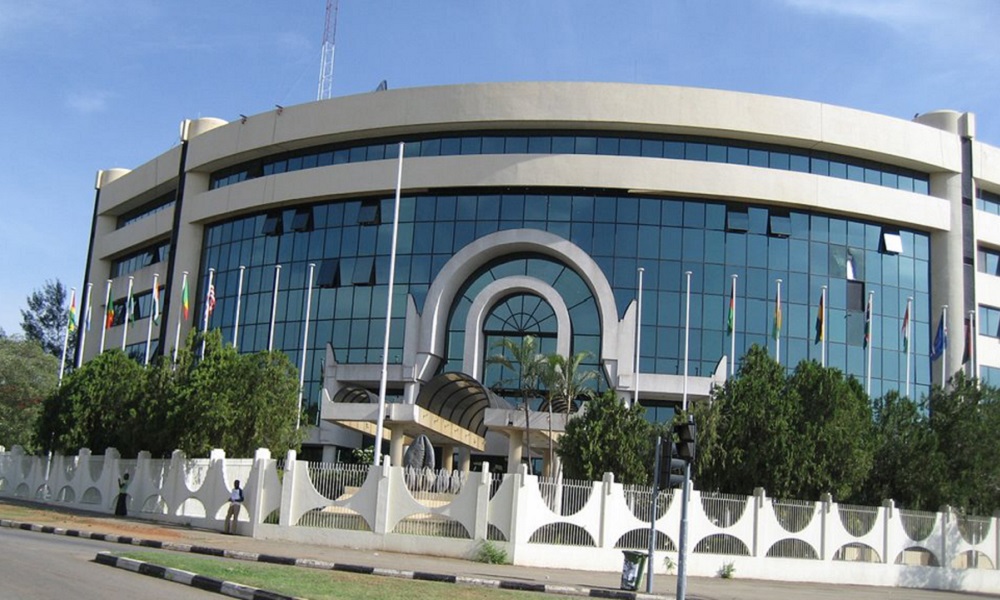
Osara, a sleepy town in Kogi Central senatorial district of Kogi State, hosts the Confluence University of Science and Technology (CUSTECH). It witnessed a sad day last Thursday when bandits invaded the institution and kidnapped some students.

It happened when some students were going to the class in the evening for tutorials ahead of their first semester examinations.

Security men in the institution engaged the bandits for more than 30 minutes before the bandits retracted into the bush having kidnapped some students.

Advertisement

According to the vice-chancellor of the institution, Professor Abdulrahaman Asipita Salawu, the attack happened at about 8:23 p.m.

He said some of the students who were gathered for tutorials ahead of their First Semester Examinations scheduled to commence on Monday, May 13, were abducted.

Professor Salawu said, “Alhaji Ahmed Usman Ododo, the Governor of Kogi State, the State Security Adviser, Jerry Omodara as well as the Vice Chancellor, Prof. Abdulrahaman Asipita Salawu together with the management staff swung into action immediately they got wind of the unpleasant news by deploying members of various security agencies on rescue mission.”

He added that the governor “has directed that CUSTECH will remain in session and that the students abducted will be returned unhurt.

Advertisement

“We want to allay the fears of the public and also assure parents and guardians of our dear students that must have been involved in the incident that no stone will be left unturned till we have them back safely into our fold at CUSTECH.”

The vice chancellor said that “parents who want their wards out of the campus can go ahead with such a decision” while assuring parents and guardians who want their children to remain on campus not to fret over their safety “as the situation is under control at the moment.”

Inside job?

The state governor visited the institution last Saturday with an assurance that the students will be rescued.

Advertisement

He allayed the fears of parents, guardians and students, urging them to be calm and promised that all the missing students will be returned without a scratch.

The governor added that “these criminals were only testing the waters and it is a fact that in next to no time they will be caught up in the web of their nefarious activities.”

He also stated that there must be collaborators who aided the criminals in gaining access to the institution.

He said, “It is our duty as a government to protect lives and property in all parts of the state. We are prepared to protect the students and that is why we allowed the students to stay on the campus.

Advertisement

“We installed CCTV cameras in all the classrooms and the entire perimeter of the university campus, yet on the day of the attack, our investigation so far revealed that all the cameras were switched off and this can only be attributed to sabotage by internal collaborators.

“Our security agencies are on their heels and investigation is ongoing. All our students shall return safely and the perpetrators shall be brought to book.”

Speaking further on the ongoing rescue efforts, Governor Ododo disclosed that there will be regular review of the operation as more facts emerge from the investigation.

He commended the security officers for their gallantry in minimising the impact of the attack by preventing the attackers from gaining access to the university hostels, stressing that nothing will be spared to bring back the students and prevent a repeat of such attack on the university and elsewhere in the state.

Advertisement

Rescuing begins

After the visit of the governor, security operatives went into action on Saturday night. They included the Directorate of State Services, vigilantes, the military and the police.

Incidentally, a number of the students were soon rescued including other people kidnapped by the bandits.

The Commissioner for Information and Communications, Kingsley Fanwo, in a statement said that the students were rescued hours after the Governor Ododo visited the institution.

Advertisement

According to the statement, local vigilante and security agents engaged the kidnappers in a fierce shootout and the kidnappers succumbed to superior firepower and escaped with gun wounds, leaving the kidnapped students who also ran in different directions to avoid being caught up in the fire exchange.

“Many of the students kidnapped and even other people in captivity have been rescued and taken to medical facilities for proper attention, while many others were also rescued in the early hours of today. Security agents are currently combing the forests to ensure all the kidnapped students are found and brought home safely

“In the sporadic gun battle to rescue our dear students, a local hunter and a DSS operative sustained injuries and they are currently receiving medical attention. We commend our local hunters and all the conventional security agents for their bravery and gallantry. Of special commendation is the DSS for acting on credible intelligence to coordinate a fearless confrontation on the outlaws. The security agencies have once again demonstrated why Kogi State will remain an uncomfortable place for bandits, kidnappers and other criminal elements.

“They have rescued six more students, bringing the number of kidnapped students rescued to 20. Our data shows that there are four students yet to be found.

Advertisement

“The fierce gun battle between security agents and the kidnappers forced the kidnappers to succumb to superior firepower and abandon the kidnapped students. Some of the kidnappers escaped with severe injuries.

“Nine students had been rescued first while five others were found the following morning. The families of the six students just rescued have confirmed that the students have arrived home.

“The Governor of Kogi State, Ahmed Usman Ododo has expressed deep appreciation to the Joint Forces that carried out the operations, urging them to continue the search until the last student is found.

“We wish to assure the public that the security architecture around our schools has been recalibrated for efficiency and early warning alarm to prevent future occurrence.”

Advertisement

FG’s response

Meanwhile, the Nigerian Security and Civil Defence Corps (NSCDC) has promised to improve security by building the capacity of relevant stakeholders to ensure safety in schools across the country.

The Commander, National Safe School Response Coordination Centre (NSSRCC), NSCDC NHQ, Abuja, Commandant Hammed Abodunrin, made the promise during his visit to CUSTECH, on Monday.

Speaking to newsmen, Abodunrin said he was in the school on behalf of the Commandant General (CG) NSCDC, in solidarity with the management and university community.

Advertisement

“NSSRCC as a national centre that coordinates response to issues like this. We owe it a duty to visit the place for on-the-spot assessment after receiving the briefing from the commandant, NSCDC Kogi Command.

“The Federal Government has resolved that there will be no stone left unturned when it comes to the issue of safety and security in our schools.

“Safe school initiative is a global project and not peculiar to Nigeria. But our own situation in Nigeria is peculiar and we are taking it very seriously.

“So, we will assist in building the capacities of the CUSTECH’s management and staff, university security agents as well as the students especially those in final year,” he said.

Advertisement

Abodunrin emphasised that the establishment of the NSSRCC at the NSCDC Headquarters is in demonstration of government’s resolve to address the challenges of school attacks and its consequences that have thrown a large number of children in Nigeria out of school.

The NSSRCC commander stressed the need to be proactive and be conscious of the environment, saying, “Nigerians have always been taken the issue of security for granted.

“That is why the criminals are taking advantage of our not being security-conscious; everybody must be vigilant.

“It is high time we began to build the capacity of everybody including members of university community on personal security and vigilance, so that people will be able to know what to do on time.

Advertisement

“But I want to assure you that with the collaboration of the relevant stakeholders in safe school initiative, we will build the capacity of everybody in the institution.”

He stressed the need for community engagement in curbing security in the schools and the society at large, saying, “when you see something you must identify what you see and say it.

“People should be security-conscious and give timely information to security agencies for prompt intervention because everybody is affected.

“I am happy that the students have been rescued, and that is our joy. Although it happened but we are on top of the situation.”

Advertisement

In his response, the vice chancellor commended the NSSRCC commander for the visit, noting that 14 students had been rescued.

He explained that the security agencies including the Army, DSS, Police and NSCDC as well as the Hunters and Vigilantes had been working together which had resulted in rescuing the kidnapped students.

“So far, we have rescued 14 students, but now we cannot say if there remains any.

“The security operatives, hunters and vigilantes are still combing the forest to see if there are some remaining.

Advertisement

“We will do our own part as individuals and as institution in intelligence gathering. We promise that this kind of incidence will not happen again in our institution,” Salawu said.

Meanwhile, the Executive Secretary of Kogi State Emergency Management Agency (SEMA), Muktar Atimah, in a statement personally signed by him, said the assurance given by government to parents, the university management and the public serves as morale booster, reinforcing confidence in the government’s capacity to intervene at critical moments.

“The quick response of Kogi State government boosted the morale of conventional security agents, local vigilante men and hunters that engaged the kidnappers in the forest where the victims were kept.

“The state, known to have shared boundaries with 10 states, has never experienced this ugly act in the past eight years. The current administration has practically demonstrated that the security architecture policy, championed by former governor Yahaya Bello which the current governor is consolidating upon, maintains zero tolerance for criminals and criminalities in the state.”

Advertisement

The SEMA boss urged all the concerned citizens to be law abiding and assist the government with useful and prompt information on suspicious movements in their communities that could lead to criminal activities.
Continue Reading
Advertisement
Click to comment

Warning: Undefined variable $user_ID in /home/naijuinz/public_html/wp-content/themes/zox-news/comments.php on line 49

You must be logged in to post a comment Login

Leave a Reply

News

How to get Federal High Court affidavit online without visiting court

Published

on

By

ADVERTISEMENT
Zoom Ad
ADVERTISEMENT
Zoom Ad

Nigerians can now obtain affidavits from the Federal High Court without travelling to any court premises, thanks to the court’s Electronic Court Management System (ECMS) e-Affidavit Portal.

The fully digital platform allows applicants to register, complete forms, upload documents, make payment and download a verified affidavit from anywhere with an internet connection.

The portal was set up to deliver a secure and efficient process for affidavit applications and related court services. It operates under the Nigeria Data Protection Act (NDPA) 2023.

The process, obtained from the Federal High Court’s e-Affidavit Portal on Sunday, shows that applicants can access a range of affidavits covering name changes, correction of dates of birth, loss of documents, change of signature, next of kin, marriage, banking and other purposes.

Advertisement

The portal also provides applicants with a means of tracking their applications and downloading completed affidavits after payment and approval.

Here is how to apply:

1. Create an account

Applicants are required to register on the Federal High Court’s Electronic Court Management System portal at https://portal.fhc.gov.ng/.

Advertisement

During registration, users are asked to provide their full name, phone number, date of birth, email address and a password.

The name entered should be the name that the applicant wants to appear on the affidavit.

After registration, the applicant should log in to the portal and select the affidavit module.

2. Complete your profile

Advertisement

Before starting a new affidavit application, applicants are required to complete their affidavit profile.

The portal requests information including the applicant’s native town, residential address, occupation, NIN, country of origin, state of origin, gender, religion and date of birth.

Applicants are also required to upload a passport photograph and an identity card.

The Federal High Court advises applicants to ensure that all information supplied is accurate before saving the profile.

Advertisement

3. Choose the type of affidavit

After completing the profile, applicants can access the list of available affidavit services.

The portal offers several categories, including:

Name change: Affidavit of Change of Name, Correction of Name and Harmonisation of Name(s)

Advertisement

Date of birth: Statutory Declaration of Age, Declaration of Age for a Minor and Correction of Date of Birth.

Loss and incidents: Loss of Items, Burglary, Theft, Robbery, Damage, Missing Person and other related affidavits.

Identity and personal matters: Good Conduct, Next of Kin, Guardianship, Verification of Address and State of Origin.

Marriage: Bachelorhood, Marriage Declaration, Spinsterhood and Non-impediment.

Advertisement

Banking: Change of Bank Phone Number, Non-Indebtedness and Single Account Ownership.

General purpose: Authorisation, Transfer of Ownership, Claim of Ownership, Sponsorship, Affidavit of Means and others.

Institutional affidavits: Good Conduct and Non-Membership of Secret Cult/Terrorist/Militant Group, Hostel Accommodation and other applications.

There are also options for affidavits relating to academic documents, political office candidacy and other institutional purposes.

Advertisement

4. Fill out the application

After selecting an affidavit, the applicant is taken to the relevant application form.

Depending on the affidavit selected, the form may require the applicant to provide personal details, the purpose of the affidavit and information specific to the application.

For example, an application for correction of date of birth requires the applicant to state the reason for the correction, the wrong date of birth and the correct date of birth.

Advertisement

Applicants are also required to provide their email address and phone number and select a preferred Federal High Court.

The available court options include Federal High Court divisions in different states and Abuja.

5. Upload the required documents

The portal requires applicants to provide a recent passport photograph, a valid means of identification and a signature, which can be uploaded or drawn.

Advertisement

Accepted identification documents include a National Identification Number, international passport, driver’s licence or voter’s card.

The portal states that uploaded passport photographs, identification cards and signatures must meet its specifications, with each file limited to 300KB in the application form reviewed.

6. Preview the application

After entering the required information, applicants should click the preview option to review their application.

Advertisement

The preview displays the information supplied, including the applicant’s name, identification details, affidavit information, contact details and selected court.

Applicants should carefully check the information at this stage before submitting the application because the portal states that payments are final, non-refundable and non-transferable.

7. Agree to the terms and submit

After checking the information, the applicant must agree to the portal’s terms and conditions and consent to the processing of personal data in accordance with the Nigeria Data Protection Act.

Advertisement

The application can then be submitted.

8. Pay the required fee

The portal then directs applicants to make payment electronically.

The payment options include Paystack and Remita.

Advertisement

The application reviewed for this report displayed a fee of N1,797 for the selected affidavit.

Applicants should, however, confirm the amount displayed for their particular application before making payment, as fees may vary by service or change over time.

The portal warns that payments are final, non-refundable and non-transferable.

9. Download the affidavit

Advertisement

After payment and processing, the completed affidavit can be downloaded through the portal, while a copy is also sent to the applicant’s email address.

The Federal High Court says affidavits issued through the portal are protected with unique barcodes and reference numbers that can be used for verification.

Applicants are warned that falsifying, altering or misusing an affidavit constitutes a criminal offence and may attract legal consequences.

Important things applicants should know

Advertisement

The portal says applicants whose applications are queried for additional information or documents must respond within 72 hours.

Failure to make the required payment or respond to a query within the stipulated period can result in automatic deletion of the application without a refund or further notice, after which the applicant would have to start a new application and make a fresh payment.

The portal also says applicants’ personal information, including NIN, passport photographs, signatures and contact details, is collected for affidavit applications, verification and other lawful purposes.

The Federal High Court’s e-Affidavit Portal is available through its Electronic Court Management System. Federal High Court e-Affidavit Portal.

Advertisement
Continue Reading

News

Falana urges prosecution of suspects linked to 37 miners’ deaths

Published

on

By

ADVERTISEMENT
Zoom Ad
ADVERTISEMENT
Zoom Ad

Human rights lawyer, Femi Falana, SAN, has called on the Attorney-General of Niger State, Nasiru Mu’azu, to ensure the speedy investigation and prosecution of all persons found culpable in the deaths of 37 suspected illegal miners who died in the custody of the Nigeria Security and Civil Defence Corps in Minna.

Falana, in a statement on Saturday, said the Attorney-General should direct the relevant authorities to investigate the circumstances surrounding the deaths and prosecute any NSCDC personnel or other individuals indicted by the investigation.

The call came amid a Federal Government investigation into the deaths, which occurred on Thursday, September 17, after scores of people arrested during raids on suspected illegal mining sites were detained at an NSCDC facility in Minna.

The government has since constituted a 10-member independent committee to investigate the incident and suspended officers linked to it pending the outcome of the probe.

Advertisement

The Niger State Governor, Umaru Bago, also confirmed the death of 37 detainees and said forensic and medical examinations, including autopsies, were being conducted to establish the cause of the deaths.

The incident has generated protests in Minna, with reports indicating that some of the detainees were teenagers. Accounts from survivors and relatives have raised concerns about overcrowding and poor ventilation in the detention facility, although authorities have yet to establish a definitive cause of death.

Falana said, “The Attorney-General of Niger State, Nasiru Mu’azu Esq. should ensure a speedy investigation by the State Police Command and immediate prosecution of all indicted suspects by the State Ministry of Justice.”

According to him, the NSCDC had confirmed that more than 50 people were arrested over alleged illegal mining, with profiling and documentation still ongoing.

Advertisement

He described the deaths as a reminder of longstanding concerns over the treatment of suspects in detention facilities across the country, arguing that the circumstances surrounding the Niger incident should not be treated as an isolated occurrence.

Falana recalled the 1980 incident in which about 50 criminal suspects reportedly died after being locked inside a police transport van, popularly known as a “Black Maria,” at the premises of the Tinubu Magistrate Court in Lagos.

He argued that despite such incidents, overcrowding and poor conditions in detention facilities had continued to expose suspects to serious risks.

“The best way to honour the 37 suspects that were suffocated to death last week is to ensure that detention centres in the country meet the United Nations Standard Minimum Rules for the Treatment of Prisoners, known as the Nelson Mandela Rules,” he said.

Advertisement

The United Nations’ Mandela Rules set minimum standards for the treatment of prisoners, including requirements relating to accommodation, sanitation, ventilation, healthcare and the humane treatment of people deprived of their liberty.

Falana also linked the Niger incident to a broader concern about the manner in which suspects, particularly people arrested for minor or alleged offences, are detained before trial.

He urged the authorities to ensure that the investigation into the deaths establishes individual responsibility rather than ending with administrative sanctions.

The Federal Government has said the investigation into the Niger deaths would be comprehensive, transparent and unhindered, while the Minister of Interior, Olubunmi Tunji-Ojo, said the government owed the families of the deceased and Nigerians an explanation of what happened.

Advertisement

Falana also called on the Attorney-General of Ondo State, Olukayode Ajulo, SAN, to prosecute persons allegedly responsible for the mass poisoning that has killed 48 people in the state.

The National Agency for Food and Drug Administration and Control said 182 cases had been recorded as of September 17 following the reported consumption of locally prepared alcoholic and herbal concoctions in parts of Ondo State.

NAFDAC said five victims had become totally blind while two others suffered partial blindness. Preliminary laboratory analysis also detected high concentrations of methanol in samples of the suspected beverages.

The affected communities include New Town, Odole, Okele, Orita Odigbo, Araromi-Obu and Oniparaga, with Odigbo Town and Araromi-Obu recording the highest number of cases. The agency said cases had also been reported in Irele Local Government Area.

Advertisement

NAFDAC said 15 people had been arrested in connection with the production, sale and distribution of the suspected toxic drinks, while investigations and surveillance were continuing.

Falana urged Ajulo to take over the case with a view to ensuring the prosecution of suspects found responsible for the deaths.

The lawyer said the two incidents in Niger and Ondo underscored the need for the relevant authorities to pursue accountability where investigations establish criminal responsibility, rather than allowing cases involving multiple deaths to end without prosecution.

Advertisement
Continue Reading

News

Amnesty lawyer faults N100m SERAP judgment, recalls Ribadu defence

Published

on

By

ADVERTISEMENT
Zoom Ad
ADVERTISEMENT
Zoom Ad

The Socio-Economic Rights and Accountability Project defended Nuhu Ribadu when the former Economic and Financial Crimes Commission chairman was being persecuted by the government over his anti-corruption activities.

Now, the civil society organisation is facing a N100m defamation judgment in favour of two Department of State Services officials, with Ribadu serving as National Security Adviser in the same administration.

The contrast was highlighted by legal adviser at Amnesty International’s International Secretariat, Kolawole Olaniyan, in an opinion article titled, “When the state turns the law against dissent under Tinubu’s watch.”

Olaniyan recalled that SERAP had campaigned against Ribadu’s removal as EFCC chairman in 2008, when the late President Umaru Yar’Adua administration sent him on what was described as a “refresher course” after removing him from the anti-graft agency.

Advertisement

According to him, SERAP condemned the decision, petitioned the United Nations over Ribadu’s removal and threatened legal action concerning his replacement.

He added that after Ribadu survived assassination attempts later that year, SERAP demanded an investigation and protection for his life.

Olaniyan further recalled that Ribadu became the inaugural recipient of the Civil Society Anti-Corruption Defender Award in 2009, an initiative he said he helped establish to recognise activists, human rights defenders and civil society organisations fighting corruption.

The Wole Soyinka Centre for Investigative Journalism, which was part of the award jury alongside SERAP, WARDC, HEDA and CDHR, confirmed that Ribadu received the inaugural award in 2009.

Advertisement

The centre said Ribadu was honoured for his “courage and commitment to the fight against corruption” and for the “persecution, harassment and intimidation” he had suffered from Nigerian authorities because of his anti-corruption work.

It is against that history that Olaniyan drew attention to SERAP’s current legal battle involving DSS officials.

In September 2024, SERAP alleged that DSS operatives had unlawfully occupied its Abuja office and demanded to see its directors after the organisation called on President Bola Tinubu to investigate allegations of corruption and mismanagement involving the Nigerian National Petroleum Company Limited.

Two DSS officials, Sarah John and Gabriel Ogundele, subsequently sued SERAP and its Deputy Director, Kolawole Oluwadare, over the organisation’s publications concerning the incident.

Advertisement

The officials alleged that SERAP’s publications falsely portrayed them as having invaded the organisation’s office.

The Federal Capital Territory High Court in Abuja, in a judgment delivered by Justice Yusuf Halilu on May 5, 2026, found SERAP liable for defamation and awarded N100m in damages to the two officials.

The court also ordered SERAP to publish apologies to the claimants, pay N1m in litigation costs and pay 10 per cent annual post-judgment interest on the damages until the judgment is fully satisfied.

SERAP has appealed the judgment and sought a stay of execution, describing the decision as legally and procedurally flawed.

Advertisement

In its appeal, the organisation challenged, among other issues, the court’s treatment of the parties, the evidence relied upon and the application of principles of defamation law.

The DSS, however, has distanced itself from the suit as an institutional action.

Following the judgment, the service said the case was not instituted by the DSS but by John and Ogundele in their personal capacities after they allegedly felt defamed by SERAP’s publications.

The agency said an internal investigation was conducted and that the officers obtained approval from the Director-General of the DSS before seeking legal redress.

Advertisement

For Olaniyan, the development is particularly striking because of SERAP’s previous role in defending Ribadu when he was on the receiving end of government pressure.

“SERAP repeatedly defended Ribadu when he was targeted for confronting corruption,” Olaniyan wrote, recalling the organisation’s intervention after his removal from the EFCC.

He described the present circumstances as an irony, writing that “the same organisation that once defended Ribadu against harassment, intimidation and threats to his life is now facing similar tactics of harassment and intimidation for doing its own human rights work.”

Olaniyan said the contrast raised broader questions about the relationship between security institutions and civil society organisations under the Tinubu administration.

Advertisement

“Today, under Ribadu’s watch as National Security Adviser, the DSS is weaponising the judicial system against SERAP and other critics,” he wrote.

However, the DSS’s position is that the defamation action was a personal suit by the two officers rather than a case instituted by the agency itself.

Olaniyan’s article placed the SERAP case alongside other disputes involving the DSS and critics of the government, including its legal challenge to Prof Pat Utomi’s proposed “shadow government” and the cybercrime prosecution of activist and journalist Omoyele Sowore over social media comments about Tinubu.

He also pointed to President Tinubu’s own remarks on criticism in his 2025 Democracy Day address, when the President said Nigerians should not suffer injustice merely for writing a bad report about him or calling him names.

Advertisement

“No one should bear the brunt of injustice for merely writing a bad report about me or calling me names,” Tinubu said, adding that democracy required “a fair degree of tolerance for harsh words and stinging insults.”

Olaniyan said the President’s statement stood in contrast to what he described as the growing use of security and legal mechanisms against critics and civil society organisations.

Continue Reading

Trending

Copyright © 2024 Naija Blitz News