…Five Gender Bills and lack of political will by Executive/Legislature


By Gloria Ikibah
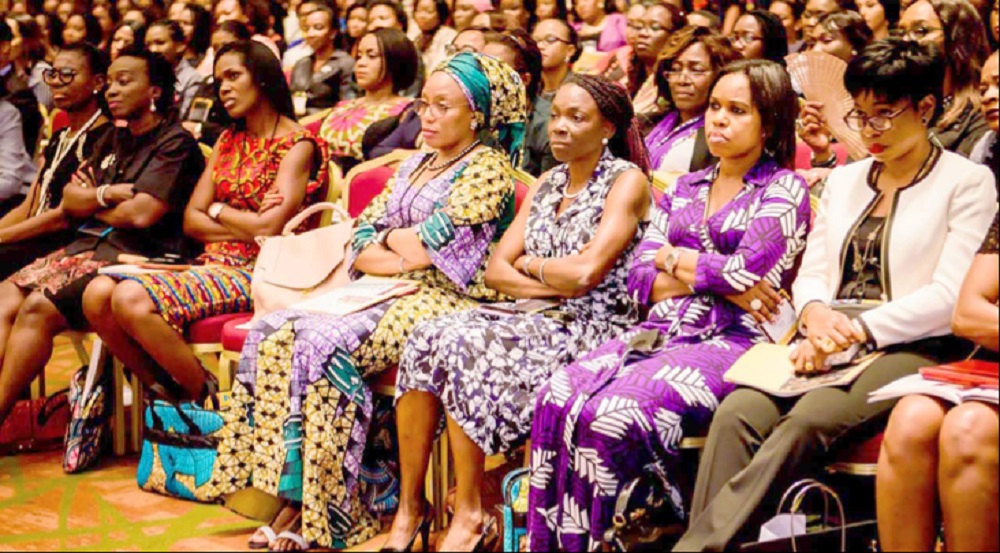
Low representation of women in politics and the numerous factors militating against their involvement have always generated concern for many experts in Nigeria. This low turn out of women is experienced at the local government, state and national level. 
Naijablitznews.com reports that since the return to democracy in 1999, the political space has seen the number of women in politics, elective and appointive positions drastically drop by the day, and not quite encouraging.
The National Assembly has been dominated by males, in 1999, there were only 3 women out of the 109 members representing 2.8 per cent of the members of the Senate.
In 2007, the number increased to 8 (7.3 per cent). But in 2011, there was a decrease to 7 in 2011, which is 6.4 per cent and in 2015, 8 (7.3 per cent).
While the number of women in the House of representative was 12 out of 360 members in 1999, which was about 3.3 per cent.
In 2003 the number increased to 21 (5.8 per cent). We had 26 (7.2 per cent) in 2011, and in 2015, there was a decline to 19 (5.3 percent).
While, between 1999 and 2003, out of 130 federal boards of public corporations, only 7 (5.6 per cent) were women.
During the period, out of 47 cabinet ministers appointed, only 7 were women which represent 14.89 per cent. In 2011, more women were given political appointment, 12 women were appointed as Ministers out of 42, which represent 30 per cent and 4 women out of 20 as Special Advisers.
In this present administration, only 6 women were appointed as Ministers out of 30 ministerial appointees.
Meanwhile, in 2023, statistics revealed that the number of women elected to the National Assembly is the lowest since 2003, when 24 women were elected.
In the 2023 National Assembly, elections held on 25 February, 11 women ran for Senate seats, while 35 ran for seats in the House of Representatives.
At the end of the polls, the 10th National Assembly recorded 14 female members in the lower chamber and 3 in the upper chamber.
The circumstances resulted in the emergence of five bills in the 9th Assembly to press home the demands of the female gender, and make them have relevance in the political space.
But the five gender bills were not passed by the 9th Assembly, despite the promise by the leadership, as they never saw the light of the day, as the 9th Assembly did not do justice for their passage, and no assent given by the president.
The bills are: “Bill to provide special seats for women at national assembly”, “Affirmative action for women in political party administration”; another bill sought to ‘grant citizenship to foreign-born husbands of a Nigerian woman”. Already, a Nigerian man’s foreign-born wife is automatically a Nigerian citizen and a bill that seeks to “allocate 35 per cent of political positions based on appointment to women and creation of additional 111 seats in National Assembly as well as at the state constituent assemblies”.
Lastly, “Inclusion of at least ten percent affirmative action in favour of women in Ministerial appointments”.
While speaking with Ene Edeh, the Founder of Policy Advocacy and publisher of The Woman Today, she said the five gender bills still remain the same, and nothing really has changed, but it is going to be represented.
According to her, the executive, legislature, political gladiators, political stakeholders, and particularly the political parties are responsible for the non passage of the five gender bills.
She stated: “The major reason responsible is fear, and anxiety about the space been populated by marginalised groups and particularly women. They feel that it will shrink their relevance, it will diminish their value, and it will make them less of men. “You know what men do. They have access to plenty of money, they have power, they have access to state resources, and they have unlimited opportunities, that they use as a bait for us.
“So, the oppressing tendency that governance in Nigeria gives to politicians is unlike other countries that the opportunities are used for service. So these structures and opportunities are usually used for oppression and self aggradisement.
“Another reason, Nobody is really holding anybody strictly and strongly accountable in a consistent manner. So it is a major problem for us. They have their way always, and that is why people get up to say things in the Assembly, and they go free. In other countries, they hold them to account, and the system is self accounting.
“There’s seeming a lack of cooperation among women, we believe that there is competition”.
The Executive Director of Inemo Foundation, Dr. Opeyemi Adeosun, blamed the diminishing representation of women in leadership positions, on the political class and women.
According to Adeosun, if women represent about 50 per cent of Nigeria’s population, “why can’t they mobilise themselves? But naturally, the majority of them are under men. If you are a daughter, a wife, or a sister, you are still under a man.
“So, we blame the political class for it, if you know the power of women, if you know the strength that women hold, a lot of them have made us proud”, he noted.
Adeosun said, women must be factual in their dealings when it comes to the passage of these bills.
“They must come with evidence based data, by carrying out research on other countries, advocates should push and lobby for the passage of this bill , and need to be strategic about the engagement.
“People need to be aware because a lot of people are not aware of this bill. A lot of people are not even aware that women are fighting for women. Women are too busy with other things. Leadership actually means responsibility and accountability, so women should sensentize women and they should engage more men in the community, CSOs and prominent people; including the lawmakers themselves, just like it has started to garner support.
He further added that there should be a sustainability plan to empower women.
“We do not see any strategy to keep issues of women at the front burner. We just do and go, we retreat and come again. The energy is not there to deliver on the misbehaviour we are seeing, the political rascality is too much and is not checked.
“We also have the problem of not been able to empower women sufficiently to fight, we should raise strategic fighters. We have never had it so bad, for me we can still get it right even before 2027 with different elections happening”, Adeosun asserted.
“The Late Dora Akunyili, Ngozi Okonjo-Iweala, Madam Servicom and a number of them. Women have good hearts, but men believe that they can be emotionally imbalanced sometimes, but in leadership, they also seek the guidance of men, and once you give them authority, they can use it positively. We have also seen a number of them use it negatively like men in political leadership positions.
“The political class must pay attention to this, and say, let us test the power of women. What is the extent of progress made over the years? Can we try women? Can we try more youths? Can we try people who have not been given the opportunities?”
An investigation by Naijablitznews.com into women’s representation in political and appointive positions in the federal capital territory Abuja, revealed that the number of women in council in the six area councils have diminished drastically, and even no representation in the last council election.
In the federal capital territory Abuja, there are six area councils and there is no female representative as councilor or chairman of an area council. A total of 55 candidates contested to be the chairpersons of the six area councils. Only three of the candidates (9 per cent) are women.
Also, all the 55 candidates, by law, had to have running mates, who if elected would be the vice-chairpersons of the area councils. Of the 55 running mates, only eight (15 per cent) are women.
The Chairman of the Abuja Municipal Area Council (AMAC), Hon. Matthew Yare, disclosed that there is no female councillor in the whole of the Federal CapitalTerritoryAbuja.
He decried: “Even at the national level, you see the numbers shrinking. The issue is that we keep pushing them, we keep fighting them, and we keep giving them a fight that they can not bear. Now you should know that the female is somebody’s wife, she is some one’s mother.
“The children would tell her to stay back because they need her more than the political fight, and the husband tells her same, because we have made it look like it is a fight for the survival.
“I must be very frank with you that it was disappointing, in FCT we have 62 councillors in two major parties, not just that we do not have female representatives but that even in the general election a female did not emerge in the Primaries, they were denied tickets at the primary level.
“So when they are denied ticket at the primary level, you know that for sure at the main election they can not just come up in the major political parties that we have. It is disappointing, it is not good.
“In the council, before this current one, there was no female. It’s been quite a long time since we had a female representative in our political positions in FCT. And it is not a good practice. Like I said, we must have laws that prescribe for female representation, and that is the only way we can get all of it.
“There is no female councillor in the whole of FCT. In the last council of the 62, we had only one female from Ushafa ward in the Bwari Area Council”.
Hon. Yare believes that only if deliberate laws are put in place, and the 1999 constitution of the Federal Republic of Nigeria amended to accommodate women in such positions, only then can we see gender representation and balance.
“Now, for us to get it right as a nation and as a people, there need to be laws that prescribe specifically. For instance, in the senatorial seat, that for every state there must be one female Senator, now it becomes a law.
Or you say where two senators come, the next one should be a female. There must be those deliberate laws. When they are prescribed in our constitution and laws, it gives room for gender representation, and it gives a balance.
“Where it is open, I tell you that the challenge for the female gender is political participation, Nigeria is tough and tight, it is not easy and it is because of our loose laws where there are political thugs and so on. How many women can pay for political thugs to be able to win an election?
“There is a lack of political will, and we can not say that females are not supporting the female this time around. No, that era is gone. We see the females getting their governorship candidate to be kept in Adamawa state, but winning the election at the end of the day is a problem”, he asserted.
The AMAC Speaker further noted that the electoral law, national code of conduct for elections, and the rest of it must be deliberate.
“We must have deliberate laws that give women representations the opportunity. What then can women do to ensure that the five gender bills is given accelerated hearing before the 10th National Assembly and also presidential assent?
Comrade Edeh, said a new approach must be adopted to see passage of the five gender bills and ensure it is signed into law.
“Our overall strategy for delivery on these 5 development bills (gender bills) is largely obsolete, ineffective and bad behaviour eggo massaging.
“Women closing internal, women for women gaps, building water -tight trust, finding creative, innovative ways of funding their convictions, empower themselves and other women and girls
‘ We need to get trusted male allies , expand and improve the strategy. Women from armed forces who have retired, security agencies, civil servants, former office holders, ordinary women, and all sectors need to collaborate extensively”, she said.
Experts have recommended holistic amendment of our laws from top to down, so as to give the female gender their representation that positions specified in the laws.
The school curriculum should capture gender development.
Women need to support each other during elections ,not minding their husband political affiliations.
This investigation is for the GENDER ACCOUNTABILITY AND INCLUSIVITY IN NIGERIA project for Gender Strategy Advancement International (GSAI) supported by the OPEN SOCIETY INITIATIVE FOR WEST AFRICA.
FIRST PUBLISHED ON DECEMBER 4, 2023.