Connect with us

News

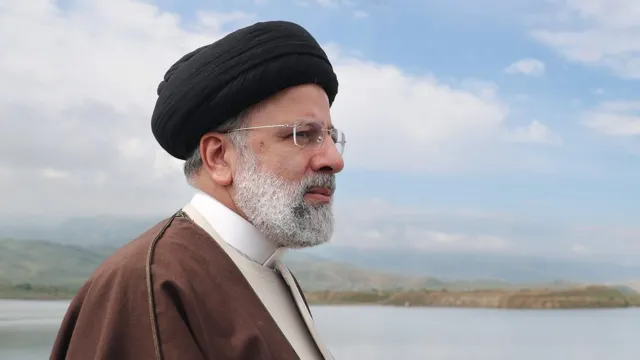
Eight things to know about death of Iranian President Raisi

Published

on

ADVERTISEMENT
Zoom Ad
ADVERTISEMENT
Zoom Ad

Eight things to know about death of Iranian President Raisi

By Francesca Hangeior

Iranian state-run media have confirmed the death of President Ebrahim Raisi and Foreign Minister Hossein Amir-Abdollahian in a helicopter crash in the province of East Azerbaijan on Sunday as they headed towards the city of Tabriz.

State television said: “The servant of Iranian nation, Ayatollah Ebrahim Raisi has achieved the highest level of martyrdom whilst serving the people,”

Advertisement

Here are things to know about death of President Ebrahim Raisi:

1. He was returning with a group from Azerbaijan, where they had attended the inauguration of a dam alongside President Ilham Aliyev, when the helicopter crashed in a mountainous region amid poor weather conditions.

2. The government has yet to make an official statement but the state-run news agency Irna reported that an urgent cabinet meeting had been called and a statement was expected soon.

3. After an hours-long search hampered by fog and rain, rescuers found the burnt-out wreckage of the helicopter on a mountainside. The head of the Iranian Red Crescent, Pir Hossein Kolivand, said as rescuers approached the wreckage, that there were “no signs of life”.

Advertisement

4. A total of nine people were on board the aircraft, according to Tasnim news agency, including the governor of East Azerbaijan, Malek Rahmati, and Ayatollah Mohammad Ali Ale-Hashem, the representative of the Leader of the Islamic Revolution to East Azarbaijan province.

5. On Sunday, before the wreckage was found, Supreme Leader Ayatollah Ali Khamenei urged Iranians to “not worry” about the leadership of the Islamic republic, saying “there will be no disruption in the country’s work”.

6. The President is believed to have been travelling in Bell 212 helicopter.

7. If a President dies in office, article 131 of the Islamic Republic’s constitution says that the first vice-president – in this case Mohammad Mokhber – takes over, with the confirmation of the Supreme Leader, who has the final say in all matters of state in Iran.

Advertisement

8. A council consisting of the first Vice-President, the Speaker of parliament and the Head of the judiciary must arrange an election for a new President within a maximum period of 50 days.

What do we know so far about the helicopter crash that killed Iran’s president, others

By Francesca Hangeior

The helicopter crash that killed Iran’s president and foreign minister has sent shock waves around the region.

Advertisement

Iranian state media said on Monday that President Ebrahim Raisi, the country’s foreign minister, Hossein Amirabdollahian, and others have been found dead at the site after an hourslong search through a foggy, mountainous region of the country’s northwest.

Here’s what we know so far

The helicopter was carrying Raisi, Amirabdollahian, the governor of Iran’s East Azerbaijan province and others officials, according to the state-run IRNA news agency.

Raisi was returning on Sunday after traveling to Iran’s border with Azerbaijan to inaugurate a dam with Azerbaijan’s President Ilham Aliyev when the crash happened in the Dizmar forest in Iran’s East Azerbaijan province.

Advertisement

Reports have it that the crash killed eight people in all, including three crew members aboard the Bell helicopter, which Iran purchased in the early 2000s.
Aircraft in Iran face a shortage of parts, often flying without safety checks over Western sanctions. Because of that, former Iranian Foreign Minister Mohammad Javad Zarif sought to blame the United States for the crash.

How did the search operation go?

Iranian officials have said the mountainous, forested terrain and heavy fog impeded search-and-rescue operations, which began on Sunday.

The president of the Iranian Red Crescent Society, Pir-Hossein Koulivand, said 40 search teams were on the ground despite “challenging weather conditions.” Because of the bad weather, it was “impossible to conduct aerial searches” via drones, Koulivand said.

Advertisement

How was the crash site found?

Early on Monday, Turkish authorities released what they described as drone footage showing what appeared to be a fire in the wilderness that they “suspected to be wreckage of a helicopter.” The coordinates listed in the footage put the fire some 20 kilometers (12 miles) south of the Azerbaijan-Iranian border on the side of a steep mountain.

Footage released by IRNA showed what the agency described as the crash site, across a steep valley in a green mountain range. Soldiers speaking in the local Azeri language said: “There it is, we found it.” Shortly after, state TV in an on-screen scrolling text said: “There is no sign of life from people on board.”

How will raisi’s death impact iran?

Advertisement

Raisi was seen as a protégé to Iran’s supreme leader Ayatollah Ali Khamenei and a potential successor for his position within the country’s Shiite theocracy.

Under the Iranian constitution, if a president dies, the country’s first vice president — in this case, Mohammad Mokhber — would become president. Khamenei has publicly assured Iranians that there would be “no disruption to the operations of the country” as a result of the crash.

What has the international reaction been?

After the news first broke of the search operation, countries including Russia, Iraq and Qatar made formal statements of concern about Raisi’s fate and offered to assist in the search.

Advertisement

Azerbaijani President Aliyev offered any support necessary. Relations between the two countries have been chilly due to Azerbaijan’s diplomatic relations with Israel, Iran’s regional arch-enemy.

Saudi Arabia, traditionally a rival of Iran although the two countries have recently made a rapprochement, said it stands by “Iran in these difficult circumstances.”

There was no immediate official reaction from Israel. Last month, following an Israeli strike on an Iranian consular building in Damascus that killed two Iranian generals, Tehran launched hundreds of missiles and drones at Israel. They were mostly shot down and tensions have apparently since subsided.
Advertisement
Continue Reading
Advertisement
Click to comment

Warning: Undefined variable $user_ID in /home/naijuinz/public_html/wp-content/themes/zox-news/comments.php on line 49

You must be logged in to post a comment Login

Leave a Reply

News

Published

on

ADVERTISEMENT
Zoom Ad
ADVERTISEMENT
Zoom Ad

By Gloria Ikibah

The House of Representatives has commenced a comprehensive investigation into illegal mineral exploitation across Nigeria, pledging to tackle the activities of criminal networks draining the country’s vast mineral resources.

The move was the resolution at a high-level stakeholders’ workshop on extractive industry governance organised by the House Ad Hoc Committee on Mineral Exploitation, Security and Anti-Money Laundering on Monday in Abuja.

Declaring the workshop open, Speaker of the House of Representatives, Rt. Hon. Tajudeen Abbas, described the committee’s assignment as one of the most significant responsibilities before the National Assembly.

Advertisement

He lamented that for years, illegal operators had continued to exploit Nigeria’s mineral wealth, depriving the country of much-needed revenue and weakening its economic potential.

Abbas explained that the workshop was designed to gather credible information, evidence and practical recommendations from regulators, security agencies and operators within the extractive industry before the House considers further legislative action.

He urged participants to speak openly and contribute meaningful solutions.

According to him, “Nigeria cannot achieve economic diversification, fiscal stability or job creation if the sector that should be a second revenue pillar is bleeding from illegality and opacity.

Advertisement

“This is not an inquisition; it is a partnership. Withhold nothing, speak plainly and proffer solutions. The success of this intervention depends on the quality of information we receive and the sincerity of purpose we all bring to this room”.

Earlier, Chairman of the House Ad Hoc Committee on Mineral Exploitation, Security and Anti-Money Laundering, Rep. Sanni Abdulraheem, said the committee was also examining whether existing laws and regulatory institutions were strong enough to close loopholes that continue to encourage illegal mining.

He explained that the investigation will also trace the financial networks through which proceeds from illegal mining are concealed and laundered, while assessing whether security arrangements around mining communities are adequate.

Abdulraheem identified illegal mining, weak enforcement and money laundering as the major factors responsible for the disconnect.

Advertisement

“Nigeria is blessed. Few nations on earth carry the range and richness of mineral deposits that lie across our states—gold, lithium, tin, coal, tantalite and many more. On paper, these resources should be transforming livelihoods, funding schools and hospitals, and strengthening our national economy. Yet, for too long, a troubling gap has persisted between the wealth in our ground and the prosperity in our communities.

“That gap has a name: illegal mining, weak enforcement, and the laundering of proceeds that should belong to the Nigerian people. It is a gap filled instead by criminal networks, by revenue leakages we can no longer afford to ignore, and by security threats that have, in some of our communities, turned mineral-rich land into contested and dangerous territory”, hesaid.

The lawmaker noted that the committee had already engaged several government agencies and, where necessary, issued summons to compel cooperation.

He emphasised that the exercise was not intended to create confrontation but to ensure transparency and accountability.

Advertisement

“Oversight without candour achieves nothing, and reform without accurate information is guesswork dressed as policy,” he added.

Abdulraheem maintained that addressing illegal mining required collaboration among regulators, security agencies, financial intelligence institutions, state governments, traditional rulers, licensed operators and civil society organisations.

He also commended security agencies, particularly the Nigeria Security and Civil Defence Corps (NSCDC) and the Mining Marshals, for their efforts in protecting the country’s mineral resources.

According to him, “We must understand your capacity gaps honestly, so that we can recommend the support and reform you genuinely need.”

Advertisement

He further noted that illicit mining proceeds often pass through complex financial channels that require coordinated efforts to track and dismantle.

“Illicit proceeds do not vanish—they move through accounts, shell arrangements and cross-border channels that can be traced with the right tools and the right political will. We look to your expertise to help this Committee and the nation close those channels,” he said.

He therefore assured participants that all submissions, data and recommendations received during the workshop would form part of the committee’s final report to the House.

Also speaking at the event, the Nigeria Security and Civil Defence Corps disclosed that its Mining Marshals had arrested more than 671 suspected illegal miners across the country, with 397 already facing prosecution.

Advertisement

Representing the Commandant-General of the NSCDC, Ahmed Audi, the Commander of the Mining Marshals, Attah Onoja, said the Corps had dismantled several illegal mining sites, leading to improved government revenue and renewed investor confidence in the sector.

He, however, identified inadequate logistics, limited manpower, delays in the judicial process and interference from organised criminal syndicates as major obstacles to effective enforcement.

Onoja called for increased funding, improved surveillance technology and the establishment of specialised courts to handle mining-related offences more efficiently.

The workshop attracted regulators, security agencies, industry operators and other stakeholders, who pledged to support efforts aimed at sanitising Nigeria’s mining sector and ensuring that the country’s mineral resources contribute meaningfully to national development.

Advertisement
Continue Reading

News

Tinubu Flags Off Tungan Madaki-Zuba Road(Photos)

Published

on

ADVERTISEMENT
Zoom Ad
ADVERTISEMENT
Zoom Ad

… Moves to Deepen Integration of Satellite Towns into Abuja Development plan

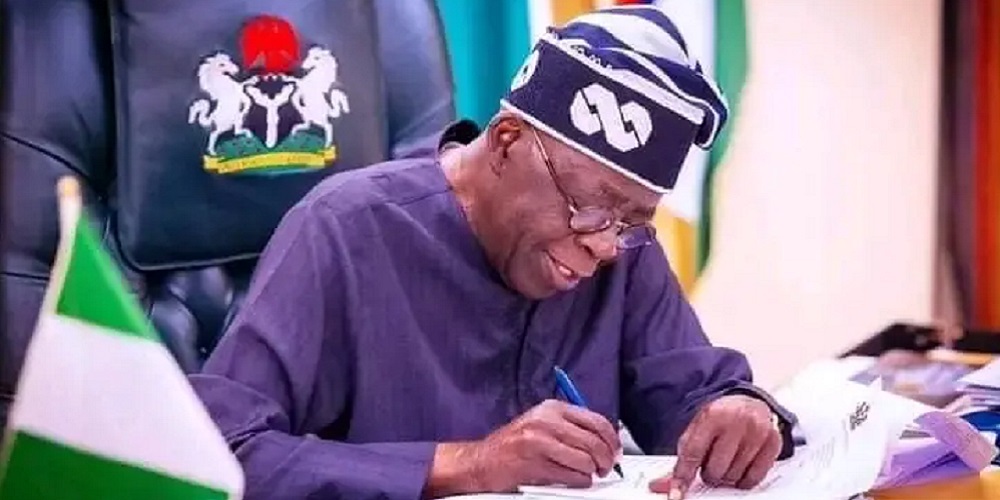
President Bola Ahmed Tinubu on Monday, advanced his administration’s drive to integrate satellite communities into the Federal Capital Territory’s development framework with the flag-off of the construction of the access road linking Tungan Madaki to the Abuja-Kaduna Expressway through Zuba.

The President, represented by the Speaker of the House of Representatives, Rt. Hon. Tajudeen Abbas, said the project is part of the Renewed Hope Agenda aimed at ensuring that rural and suburban communities benefit from the same level of infrastructure development as residents of the city centre.

According to him, the road project formed a critical component of a broader strategy to connect communities, stimulate economic activities, improve mobility and unlock investment opportunities across the FCT.

“This project is a direct continuation of the road from the Bill Clinton Drive to Tungan Madaki Community Road which we commissioned a few weeks ago as part of the activities marking the third anniversary of the Renewed Hope Administration.

“What began as one road is now growing into a network, and that is how real development takes root,” Tinubu said.

Advertisement

The President noted that residents of Tungan Madaki, Zuba and neighbouring communities, many of whom are farmers, traders and students, have endured years of poor road access that hindered movement, increased transportation costs and limited economic opportunities.

He explained that the new road would provide a direct link to the Abuja-Kaduna Highway, reduce travel time, lower vehicle maintenance costs and facilitate the movement of goods and services.

“This new road will link Tungan Madaki directly to the Abuja-Kaduna Road, cutting travel time, reducing vehicle maintenance costs, and opening a faster route for people and goods.

“It will connect rural productivity to urban opportunity. When farmlands are opened, food becomes cheaper in our markets. When communities are connected, young people have more reason to build enterprises at home,” he stated.

Tinubu further stressed that infrastructure development remains central to his administration’s economic agenda, describing roads as catalysts for prosperity, security and social inclusion.

“Infrastructure is not just concrete and asphalt. It is the bridge between potential and prosperity, and that is the core of the Renewed Hope Agenda,” he added.

Advertisement

The President said the project would also ease traffic pressure on the Abuja city centre, provide alternative routes for commuters and strengthen the economic corridor between the FCT, Kaduna and the wider North-West region.

He noted that improved infrastructure along the axis would encourage investments in housing, healthcare, education and industrial development.

Commending the Minister of the Federal Capital Territory, Nyesom Wike, for the pace of infrastructure delivery in the capital city, Tinubu said the administration was witnessing a renewed emphasis on project completion and measurable results.

“From major highways to community access roads like this one, we are seeing a return to planning, a rejection of abandoned projects, and a focus on results that citizens can feel,” he said.

Advertisement

The President also directed the contractor to ensure timely completion and quality delivery of the project while engaging local labour to create employment opportunities for youths in the area.

Earlier, FCT Minister, Barr. Nyesom Wike, said the road project was in line with Tinubu’s directive that all satellite towns and area councils should be adequately connected to the city centre through modern road infrastructure.

Wike disclosed that the project emerged after the Chairman of Gwagwalada Area Council drew the administration’s attention to the need for a direct link between Zuba and Abuja to reduce travel stress on residents.

“It has been the directive of Mr. President that all communities and all satellite towns must be linked up to the city. What we are doing today is to fulfil that promise that Mr. President made to Nigerians,” Wike said.

Advertisement

He explained that upon completion, residents of Zuba and adjoining communities would enjoy easier access to Abuja and the Nnamdi Azikiwe International Airport without having to travel through Gwagwalada.

The minister described the project as another milestone in the FCT Administration’s efforts to open up rural communities and improve the quality of life of residents.

He expressed optimism that the contractor, China Civil Engineering Construction Corporation, CCECC, would complete the project before the end of the year.

“We are putting pressure on them to ensure that by December, by the grace of God, we will commission this road. For the people of Tungan Madaki and Zuba, this is a Christmas gift,” Wike said.

Advertisement

While delivering a vote of thanks, FCT Minister of State, Dr. Mariya Mahmoud, stated that the construction of the access road from Tungan Madaki to the Abuja–Kaduna Road at Zuba was another bold demonstration of the commitment of President Bola Ahmed Tinubu’s Renewed Hope Agenda and the FCT Administration’s determination to extend infrastructure and economic opportunities to underserved communities.

Mahmoud also said the road would significantly improve connectivity, stimulate commerce, attract investment, and enhance the quality of life of residents across Tungan Madaki, Zuba, and neighbouring communities.

According to the Minister, the project reflects the Federal Capital Territory Administration’s unwavering resolve to ensure that no community is left behind in the ongoing transformation of the nation’s capital.

She expressed profound appreciation to President Bola Ahmed Tinubu, for providing the visionary leadership that has continued to drive unprecedented infrastructure development across the Federal Capital Territory through the Renewed Hope Agenda.

Advertisement
Continue Reading

News

Sad: Gunmen k!ll 300-level varsity student, abduct palace secretary, four others in Edo

Published

on

ADVERTISEMENT
Zoom Ad
ADVERTISEMENT
Zoom Ad

Unidentified gunmen suspected to be kidnappers have reportedly killed a 300-level student of the Ambrose Alli University, AAU, Ekpoma and abducted five others in Edo State.

The incident happened separately on Friday, July 10, and Sunday, July 12, 2026 in Idoa and Ekpoma communities, respectively.

In the accident that happened on July 12, 2026, a student whose identity is yet to be ascertained was reportedly abducted on the night of the fateful day when the gunmen invaded his residence. A woman was also allegedly abducted by the assailants on the same day.

The killing of the student and the abduction of the woman was disclosed in Esan Political Assembly facebook page.

Advertisement

In the Idoa kidnapping incident, the gunmen abducted the secretary to the palace of the community alongside three children.

It was gathered that the victims were abducted on Friday morning, July 10,2026.

A source who said the secretary is his brother and the children those of his neighbours, added that the abductors have demanded for N30 million ransom.

He said the abductors threatened to kill the victims if the ransom was not paid before the end of July 13.

Advertisement

According to him, my brother was kidnapped on Friday morning at the Idoa community, in Esan west Local Government Area. He is the secretary of the Idoa palace. They are demanding for N30 million.

“He was kidnapped alongside other small children that were with him. His vehicle broke down on his way to the farm and he left it where it broke down.

“The next day, he came back to the place with tools and other things to repair the motor. As he was there to repair the vehicle, gunmen just came out from the bush, rounded them up and took them into the bush.

“They have made contact demanding for N30m ransom and threatened that if we did not bring the money by the end of today, they will kill them.

Advertisement

“The children are those of his neighbours. The children followed him to where he wanted to repair his vehicle just to give him support, and he was to bring them back home after the repair because they live together,” he said.

While appealing to government and security agencies for intervention for the rescue of the victims, he said the incident has been reported to the Police.

At the time of the report the Public Relations Officer of the Edo State Police Command, ASP Eno Ikoedem, was yet to respond to a message sent to her whatsapp.

Recall that a high-ranking chief of the community, identified as Chief Jimah Jacob Ogboi was on February 26, 2026 reportedly killed and his daughters abducted.

Advertisement

The gunmen were alleged to have struck in the night and instantly shot the deceased while they used machetes and other dangerous weapons on his wife.

The gunmen who were four in number, allegedly invaded the deceased house, shot him and went away with his two daughters.

Daily Post

Advertisement
Continue Reading

Trending

Copyright © 2024 Naija Blitz News