
Foreign
‘Send Them To Hell’ – Iranian Clerics Call For Ass@ss!nation Of Trump, Netanyahu

- /home/naijuinz/public_html/wp-content/plugins/mvp-social-buttons/mvp-social-buttons.php on line 27
https://naijablitznews.com/wp-content/uploads/2026/07/hjjhg-1.jpg&description=‘Send Them To Hell’ – Iranian Clerics Call For Ass@ss!nation Of Trump, Netanyahu', 'pinterestShare', 'width=750,height=350'); return false;" title="Pin This Post">
- Share
- Tweet /home/naijuinz/public_html/wp-content/plugins/mvp-social-buttons/mvp-social-buttons.php on line 72
https://naijablitznews.com/wp-content/uploads/2026/07/hjjhg-1.jpg&description=‘Send Them To Hell’ – Iranian Clerics Call For Ass@ss!nation Of Trump, Netanyahu', 'pinterestShare', 'width=750,height=350'); return false;" title="Pin This Post">


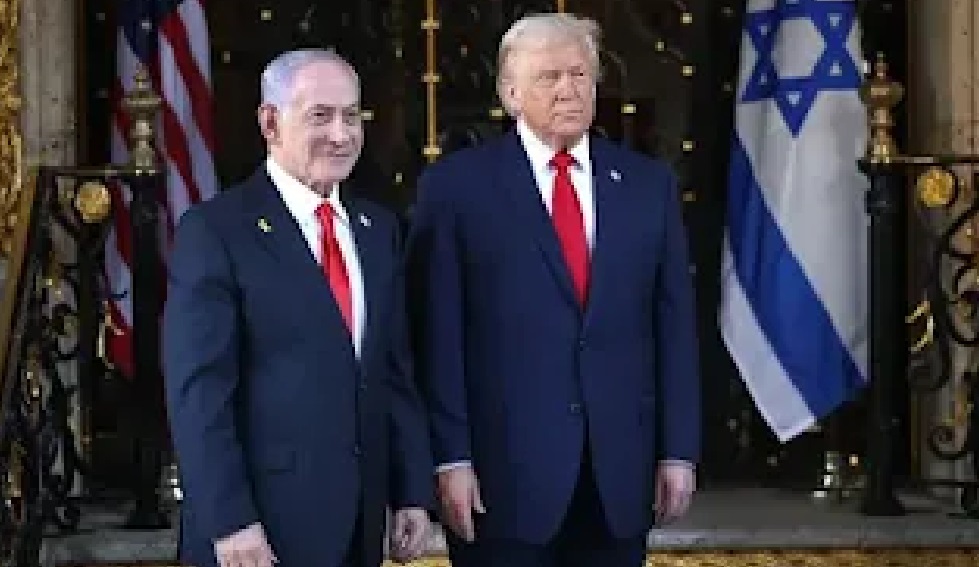
Iran’s most senior clerics have called for the ass@ss!nations of President Donald Trump and Israeli Prime Minister Benjamin Netanyahu.
The 88-member Assembly of Experts issued a 10-point statement in which they said k!lling “the wicked prime minister of the Zionist regime” and “the criminal American president” was a religious duty that must be carried out “under any circumstances.”
The clerics, who are constitutionally tasked with choosing and supervising the supreme leader, wrote that the call for their ass@ss!nations and avenging the death of supreme leader Ali Khamenei was of “paramount” importance.
“It is obligatory upon any duty-bound person who gains access to these criminals to send them to hell,” they wrote.
In another development, Iranian newspaper Hamshahri ran a front-page story featuring Trump’s face in the crosshairs of a rifle scope with a banner headline reading “Revenge is certain.”
The clerics also warned that the ongoing cease-fire negotiations to end the war that has raged since Feb. 28, was merely a delay tactic to give the US more time to plan another round of attacks.
“The likelihood of a renewed attack after will be very high the matters raised in the memorandum of understanding must be resolved within the stipulated 30-day and 60-day deadlines,” they wrote, referring to the terms in the 14-point memorandum of understanding signed by the US and Iran aimed at ending the war.
They further urged supporters of the Iranian regime to take to the streets “in the leader’s name,” adding that “the people’s presence is necessary and decisive.”
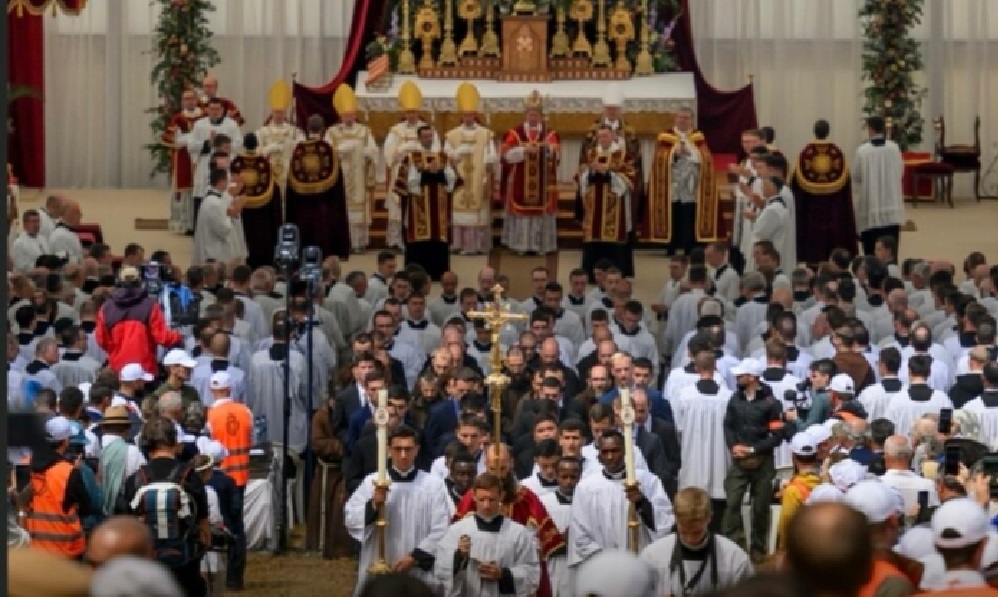
Pope Leo XIV has reportedly excommunicated about 500,000 members of the traditionalist Society of Saint Pius X (SSPX), escalating one of the Roman Catholic Church’s longest-running internal disputes after the group defied papal authority by consecrating four new bishops without Vatican approval.
The disciplinary action followed Wednesday’s episcopal consecrations in Geneva, carried out despite explicit instructions from Pope Leo XIV that the ceremony should not proceed.
In a statement issued on Thursday, the Vatican announced that the Society’s bishops had been excommunicated and said members of the SSPX were to be regarded as being in schism from the Catholic Church. The Holy See, however, stressed that members who choose to leave the group and return to full communion with Rome would be welcomed back.
The SSPX, founded in 1970 by Archbishop Marcel Lefebvre, was established in opposition to reforms introduced by the Second Vatican Council, which reshaped Catholic liturgy and the Church’s engagement with the modern world.
The group, estimated to have about 600,000 followers worldwide, rejects several post-Vatican II reforms, including the widespread use of local languages during Mass. Its members continue to celebrate the liturgy in Latin, receive Holy Communion while kneeling and directly on the tongue, and maintain other traditional Catholic practices.
Reacting to the Vatican’s decision, SSPX member Rita Reid of Jersey in the Channel Islands said the announcement would not weaken her commitment to the Society.
“It actually makes me feel quite strong.
“Before the consecrations yesterday I said to my husband, ‘Do you know what? Even if they excommunicate us, go ahead, bring it on, it’s not going to make one bit of difference.’”
The Vatican maintained that the Society’s clergy administer the sacraments unlawfully.
“The sacred ministers of the Society of St Pius X administer the sacraments illicitly, while the sacrament of penance they administer and the marriages they witness are invalid,” the Holy See said.
Although tensions between Rome and the SSPX have persisted for decades, relations had improved in recent years, raising expectations that the latest dispute could be resolved without severe sanctions. While many observers anticipated disciplinary action against the bishops who carried out the illicit consecrations, the reported extension of the measure to the Society’s wider membership has drawn significant attention.
Excommunication is among the most severe canonical penalties in the Catholic Church, placing those affected outside full communion with the Church and preventing them from receiving sacraments such as Holy Communion, confession and marriage within the Catholic faith.
Despite the Vatican’s action, many SSPX members continue to insist that it is the Holy See—not the Society—that has departed from authentic Catholic teaching, underscoring the deep theological divide that continues to separate the traditionalist movement from Rome.
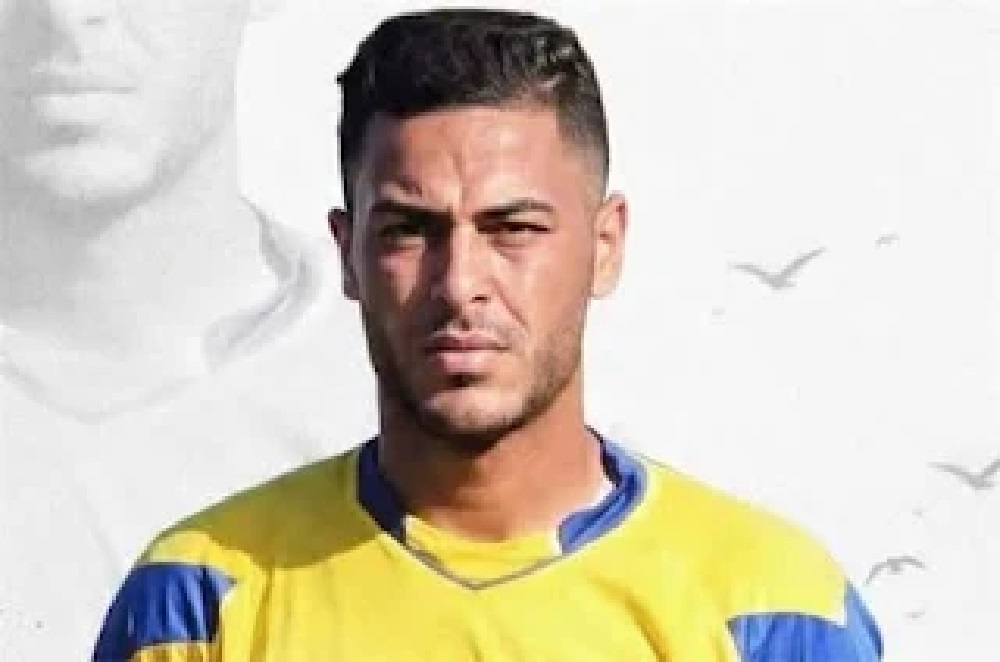
Palestinian goalkeeper, Saleem Al-Ashqar was k!lled earlier this week in the Gaza Strip by the Israeli army.
The football player was riding his bicycle to refill a gas cylinder for his home when the area came under heavy fire from an Israeli tank stationed nearby, the Palestinian Football Association (PFA) told The New Arab, adding that he was struck by a stray bullet that lodged in his abdomen.
The PFA added that he was immediately rushed to hospital, where examinations revealed severe internal hemorrhaging and extensive damage to his stomach, intestines, liver, and pancreas.
“Despite medical efforts, the hospital’s severely limited capabilities—exacerbated by the collapse of Gaza’s health sector due to the ongoing war of extermination, as well as shortages of equipment, electricity, and medical staff—made it impossible to control the internal bleeding. Given the severity of his injuries, Al-Ashqar passed away about two hours after arriving at the hospital,” spokesperson Dima Youssef told TNA.
Throughout his athletic career, Al-Ashqar played for Khadamat Khan Younis, Al-Aqsa and Al-Masdar in the Gaza Strip. He leaves behind his wife, whom he married just five months ago and who is expecting their first child.
Al-Ashqar, who was the only son in his family, is also survived by his seven sisters.
His death brings the total number of Palestinian sports people killed since the start of Israel’s war on Gaza to 1,009, which includes at least 567 footballers.
Among them was Suleiman al-Obeid, who was shot and killed by Israeli forces as he attempted to collect humanitarian aid in August last year, in one of the most high-profile killings of a Palestinian sportsperson since the start of Israel’s genocidal war on Gaza.
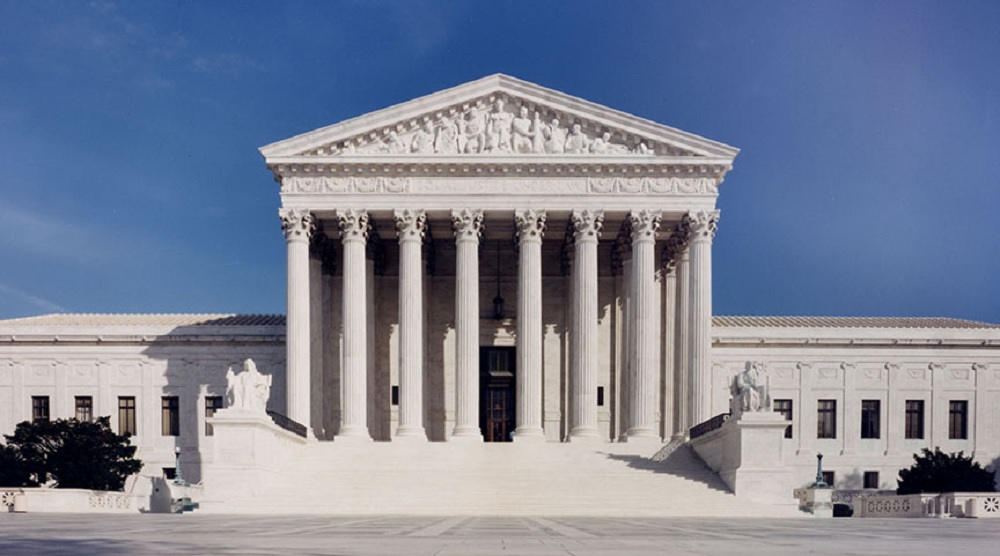
The US Supreme Court on Tuesday upheld state laws barring transgender athletes from competing in girls’ and women’s school sports, delivering a major victory to conservatives in one of the country’s most fiercely contested culture-war battles.
The decision allows Idaho, West Virginia and more than two dozen other Republican-led states to enforce measures requiring students to compete in public school and college teams according to their sex assigned at birth rather than their gender identity.
The ruling is the latest sign of the conservative-dominated court’s willingness to side with states on the issue, following last year’s decision upholding Tennessee’s ban on gender-affirming care for minors.
The cases before the court were brought by transgender students who argued that the bans violated the US Constitution’s equal protection guarantee and Title IX, the federal civil rights law barring sex discrimination in education.
Fair competition?
Supporters of the laws say they are needed to preserve fair competition and protect athletic opportunities for girls and women.
Opponents say they single out a tiny number of vulnerable students for exclusion and discrimination, turning children’s participation in school sports into a national political battleground.
Writing for the majority, Justice Brett Kavanaugh rejected arguments that restrictions on biological males in sports for women and girls unconstitutionally discriminate on the basis of sex or gender identity.
“May schools determine eligibility for women’s and girls’ sports based on biological sex? The answer is yes,” Kavanaugh wrote.
“Consistent with Title IX and the Equal Protection Clause, we hold that the States may maintain women’s and girls’ sports for biological females. They may determine eligibility for women’s and girls’ sports based on biological sex,” he added.
The court was largely divided 6-3, although three justices who opposed the decision concurred in part.
The Idaho case arose from the state’s 2020 Fairness in Women’s Sports Act, which was challenged by a transgender athlete at an Idaho university. Lower courts found the law unconstitutional.
Idaho Solicitor General Alan Hurst told the justices during arguments in January that “sex is what matters in sports,” citing differences in size, strength, muscle mass and lung capacity.
The West Virginia case involved a teenage transgender girl who was barred under a 2021 state law from running on her middle school girls’ track team.
Her lawyers argued that transgender girls who receive testosterone-suppressing treatment do not retain an unfair athletic advantage and that the laws are broad bans driven more by politics than evidence.
‘Zero-sum game’
But several conservative justices had voiced skepticism during arguments.
Kavanaugh said he sympathized with transgender students who wanted to play sports, but described many sports as a “zero-sum game,” in which one athlete’s inclusion can mean another loses a roster spot, playing time or a medal.
“Someone who tries out and makes it who is a transgender girl will bump from the starting lineup, from playing time, from the team… someone else,” he said. “There’s a harm there.”
The ruling lands amid an escalating national push by conservatives to regulate transgender participation in school life, health care and public accommodations.
President Donald Trump issued an executive order in last year allowing federal agencies to deny funding to schools that permit transgender athletes to compete on girls’ or women’s teams.
The issue has been politically charged since Lia Thomas, a transgender swimmer at the University of Pennsylvania who had previously competed on the men’s team, became a flashpoint after racing in women’s collegiate meets in 2022.
Supporters of transgender rights say the debate has been distorted by a handful of high-profile cases.
Seventy percent of voters in a new Quinnipiac University poll think transgender women and girls should not be allowed to play on women’s and girls’ school sports teams.
AFP

Two African nations make round of 16 at ongoing World Cup football fiesta

2026 World Cup: FIFA set to change kick-off time for England vs Mexico clash

2027: INEC extends nationwide Continuous Voter Registration, introduces full online registration




-

 News19 hours ago
FG Clears Inherited N39.6bn Pension Arrears Under Renewed Hope Agenda Drive
-

 News12 hours ago
BREAKING : Court orders final forfeiture of ₦150m linked to Delta HoR member
-

 Economy16 hours ago
Oyedele Delivers ₦39.63bn Lifeline to 24,814 Pensioners as PTAD Clears Long-Standing DBS Liabilities
-
 News18 hours ago
Just in: Ex- Benue SSG, David Salifu killed in suspected kidnappers’ attack
-

 News16 hours ago
Just in: FRSC Starts 2026 Nationwide Recruitment
-

 News13 hours ago
Photos: “I Directed Wike To Build Roads Before Asking Nigerians to Move into Renewed Hope Estate, He Has Done It” – Tinubu
-
 News17 hours ago
Finally, US Confirms Withdrawal Of Troops From Nigeria
-
 News19 hours ago
DAY 18 of Projects Commissioning in the FCT