Connect with us

Health

Ebola deaths exceed 300 in DR Congo – Heath authorities

Published

on

ADVERTISEMENT
Zoom Ad
ADVERTISEMENT
Zoom Ad

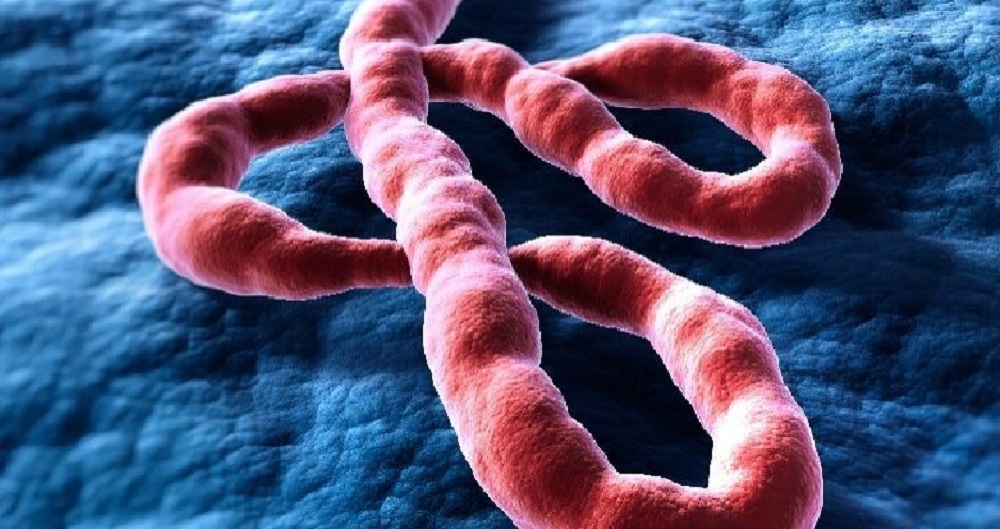
The Ebola epidemic has claimed more than 300 lives in the Democratic Republic of Congo (DRC), a little over one month after it was declared, health authorities said on Friday.


The deadly viral disease, which spreads through direct contact with bodily fluids, can cause severe bleeding and organ failure.

A total of 304 people in the DRC have now died of the virus, from 1,115 confirmed infections since the outbreak was detected on May 15, giving a mortality rate of 26.3 percent, the National Public Health Institute (INSP) said.

This is a jump from the 202 deaths confirmed on June 18 by the African Union’s health agency, from 875 confirmed infections — a mortality rate of 23 percent.

Advertisement

The Red Cross warned last week that the outbreak of the haemorrhagic fever has yet to peak and could take up to a year to contain.

In some rare good news, the DRC authorities announced in early June that several Ebola patients had been treated and cured.

Responders to the epidemic, the 17th to hit the vast, unstable central African country, face towering challenges.

No approved vaccines or treatments exist for the Bundibugyo strain of the virus responsible for the latest outbreak to hit the DRC, which is one of the world’s poorest countries.

Advertisement

The three affected provinces in eastern DRC — Ituri, North Kivu and South Kivu — have been plagued for three decades by conflict and mass displacement, complicating the response.

The outbreak has spread to neighbouring Uganda, where containment measures have been effective.

Kampala has reported 20 confirmed cases nationwide, including two deaths since May 15. Most of those infected are Congolese nationals who have travelled to Uganda.

On Wednesday, France reported the outbreak’s first confirmed case of Ebola outside Africa — a Congolese doctor who was working in the DRC for the international medical aid NGO ALIMA.

Advertisement

The World Health Organization says there is minimal risk of the virus spreading in Europe and there is no need for travel restrictions.

Air France, on which the doctor flew back to France, has nevertheless suspended all flights to Kinshasa for several days.

– Ituri –

The vast majority of cases in the DRC have been detected in Ituri.

Advertisement

The mineral-rich province is plagued with unrest from a string of rival armed groups, and frequent population movements favour the spread of the disease.

More than 91 percent of all infections have been registered in the provincial capital, Bunia, and more than 82 percent of all deaths.

Efforts to contain the virus have been ratcheted up in Ituri.

But healthcare facilities -– which often operate with limited resources — still lack basic equipment and supplies, such as personal protective equipment and chlorine.

Advertisement

Many clinics set up by the WHO and aid agencies are close to full, the country’s public health agency said.

At least 78 healthcare workers have been infected with the virus, and 18 have died, it added.

Medical and aid workers also have to contend with deep mistrust from some local communities.

Some families have demanded that hospitals hand over the bodies of the deceased, not realising that touching the body puts them at risk of contamination.

Advertisement

The reluctance of some families to allow post-mortem examinations on the victims is also leading to an underestimation of the number of cases, officials said.

AFP

Continue Reading
Advertisement

Health

What is being released to NCDC is a drop in the ocean- Senate C’ttee laments

Published

on

By

ADVERTISEMENT
Zoom Ad
ADVERTISEMENT
Zoom Ad

Poor  funding could undermine the ability of the North Central Development Commission (NCDC) to deliver on its mandate, the Senate has said, insisting that the N2.9 billion monthly allocation being released to the commission is only “a drop in the ocean” compared to its N140 billion budget  allocation for 2026.

The Chairman of the Senate Committee on the North Central Development Commission, Titus Zam, sounded the warning while briefing journalists after an interactive session between the committee and the commission’s management at the National Assembly on Tuesday.

According to him, the current monthly release would amount to less than half of the commission’s approved budget if maintained throughout the year, expressing optimism that the federal government would increase funding as the commission becomes fully operational.

“If you give someone that has a budget of N140 billion, N2.9 billion per month, in 12 months, it won’t be up to half of the entire budgetary sum,” Zam said.

Advertisement

“I suppose that is just a temporary package. When the commission finally comes to fruition, much more funds will be released. So we thank Mr President and the Executive for dropping something now, but we look forward to more.”

The lawmaker, however, assured that the Senate Committee would ensure the prudent utilisation of the funds already released by providing effective oversight and guiding the commission on areas of priority.

He urged the commission to focus its interventions on agriculture, security and rural development, stressing that the North Central region is largely agrarian and continues to face serious security challenges.

“North Central is mostly an agricultural land. We have arable land, we have good rainfall and vegetation. There is policy for agriculture. We need the department of NCDC to take agriculture very seriously.

Advertisement

“We also have a challenge of insecurity. The commission is advised to support the security forces and state governments to complement their efforts towards mitigating the tide of insecurity within the region.

“We also ask them to take rural development very seriously because we are also rural in nature,” Zam said.

Continue Reading

Health

NCDC records rise in Lassa fever cases, death toll hits 221

Published

on

By

ADVERTISEMENT
Zoom Ad
ADVERTISEMENT
Zoom Ad

The Nigeria Centre for Disease Control and Prevention (NCDC) says Nigeria recorded an increase in confirmed Lassa fever cases during epidemiological week 26 of 2026, with 31 new infections reported, up from 22 the previous week.

The new confirmed cases were recorded in Bauchi, Ondo, Taraba and Benue states, according to the latest NCDC Lassa fever situation report released by the public health agency on Friday.

The report showed that 221 deaths have been recorded cumulatively in 2026, with a Case Fatality Rate (CFR) of 24.0 per cent, higher than the 18.7 per cent reported in 2025.

It stated that 23 states had reported at least one confirmed Lassa fever case across 111 Local Government Areas, indicating the continued geographic spread of the disease nationwide in 2026.

Advertisement

According to the report, 85 per cent of all confirmed cases originated from Ondo, Bauchi, Taraba, Edo and Benue states, while the remaining 15 per cent were reported elsewhere.

The report said Ondo accounted for the highest proportion of confirmed cases at 30 per cent, followed by Bauchi with 26 per cent, Taraba with 14 per cent, Edo with nine per cent, and Benue.

It revealed that people aged between 21 and 30 years remained the most affected group, although confirmed cases ranged from one to 93 years, with a median age.

The report also showed that the male-to-female ratio among confirmed cases stood at 1:0.9, suggesting nearly equal infection rates between males and females across affected states.

Advertisement

Health authorities noted that both suspected and confirmed Lassa fever cases increased compared with the corresponding period in 2025, while one healthcare worker was infected during week 26.

The report added that the National Lassa Fever multi-partner, multi-sectoral Incident Management System remains activated to coordinate surveillance, case management, risk communication and response activities nationwide.

Continue Reading

Health

Medical academics give FG 21-day strike ultimatum

Published

on

By

ADVERTISEMENT
Zoom Ad
ADVERTISEMENT
Zoom Ad

The Nigerian Association of Medical and Dental Academics (NAMDA) on Tuesday issued 21-day nationwide indefinite strike notice to the Federal Government despite commending some of the recent initiatives of the President Bola Tinubu’s administration.

NAMDA President, Dr Nosa Orhue, announced the strike ultimatum on Tuesday in Abuja after the association’s National Executive Council (NEC) meeting.

However, Orhue commended President Bola Tinubu’s administration for efforts to improve university education.

He also hailed the Minister of Education for supporting salary parity for medical academics.

Advertisement

He also lauded the Federal Government’s preparedness for a possible Ebola outbreak and pledged the association’s support toward strengthening the country’s public health response.

But the NAMDA President said members of the association would embark on nationwide, indefinite strike if the Federal Government failed to resolve outstanding remuneration and welfare concerns of its members in the next 21 days.

He said the union expected government to conclude negotiations within the period, warning that NEC would reconvene to determine its next line of action if talks failed.

According to him, NAMDA had engaged government through dialogue for more than 24 months without meaningful progress.

Advertisement

Orhue said the association was dissatisfied that negotiations on the renegotiation of the 2009 agreement had remained stalled since April 9, in spite of repeated engagements.

He alleged that while improved welfare packages had been implemented for other university unions, NAMDA members remained excluded, resulting in non-payment of earned academic and professorial allowances and worsening brain drain among medical academics.

The NAMDA president attributed the dispute largely to salary disparities between university-based medical lecturers and hospital consultants performing identical professional duties.

He explained that medical academics combine teaching, research and clinical responsibilities, including patient care, surgeries and hospital administration.

Advertisement

According to him, they earn less than their counterparts in the hospital system despite maintaining the same professional qualifications and practicing licenses.

Orhue said the Federal Government had previously recognised the unique status of medical academics through their placement on the Consolidated Medical Salary Structure (CONMESS).

The NAMDA President added that the Minister of Education, Dr Tunji Alausa, had supported salary parity and communicated the position to the National Salaries, Incomes and Wages Commission.

He, however, alleged that some government agencies were frustrating implementation of the agreement.

Advertisement

Orhue reaffirmed that the Consolidated Medical Salary Structure (CONMESS) remained the only acceptable salary framework for medical and dental academics.

He warned that any attempt to replace it with another structure could trigger industrial action.

He also rejected what he described as the forced migration of members of NAMDA above 65 years from CONMESS to the Consolidated University Academic Salary Structure (CONUASS).

According to him, the move amounts to a demotion and results in financial losses for affected academics.

Advertisement

He said the association was also demanding implementation of special pension benefits for retired hospital-based academics and opposed the National Universities Commission’s requirement for medical academics to obtain PhD qualifications.

(NAN)

Continue Reading

Trending

Copyright © 2024 Naija Blitz News