Connect with us

News

40 directors fail permanent secretary qualifying exam

Published

on

ADVERTISEMENT
Zoom Ad
ADVERTISEMENT
Zoom Ad

By Francesca Hangeior.

At least 40 directors failed the qualifying examination for appointment to the position of permanent secretaries, it was gathered.

Out of 92 directors who took the examination on May 27, 2024, 40 scored below 50 percent, indicating failure, according to the results obtained by our correspondent in Abuja.

It was also gathered that three directors were absent, and one was unable to complete the exam.

Advertisement

A memorandum dated May 28, 2024, originating from the Office of the Head of Service, designated as “HCSF/ CMO/ AOD/012/IX/59,” disclosed that the subsequent phase of the selection procedure will involve an ICT-based assessment.

This setback occurs amidst the federal government’s efforts, channelled through the Office of the Head of Civil Service, to address prevailing and forthcoming vacancies by appointing new permanent secretaries.

The vacancies in question span various states, including Akwa Ibom, Anambra, Bauchi, Ebonyi, Jigawa, Ondo, Zamfara, and regions within the South-East and South-South.

Folashade Yemi-Esan, the Head of Civil Service of the Federation, relayed pertinent details in a circular addressed to key government figures such as the Chief of Staff to the President, Femi Gbajabiamila, and the Secretary to the Government of the Federation, George Akume.

Advertisement

Yemi-Esan’s circular, dated April 19, 2024, and personally signed, outlined eligibility criteria, stressing that only directors who attained substantive director status by January 1, 2022, qualify for consideration.

The circular specified the initiation of the process for appointing Permanent Secretaries, emphasizing the importance of adhering to eligibility criteria, updating records on the IPPIS Verification Portal, and maintaining a clean disciplinary record.

The circular, referenced as “HCSF/CMO/AOD/012/IX/24,” stated: “Following the approval of Mr. President, the Office of the Head of the Civil Service of the Federation is initiating the process for appointing Permanent Secretaries in the Federal Civil Service for current and anticipated vacancies in Akwa-Ibom, Anambra, Bauchi, Ebonyi, Jigawa, Ondo, Zamfara states, South-East, and South-South geo-political zones, where current Permanent Secretaries have retired or will retire between April and September 2024.”

Eligibility criteria outlined in the memo include having reached the position of substantive Director on Salary Grade Level 17 by January 1, 2022, updating records on the IPPIS Verification Portal, being from the specified states or geopolitical zones, and not retiring before December 31, 2025.

Advertisement

Additionally, officers currently undergoing disciplinary procedures are excluded from the selection process.

Continue Reading
Advertisement
Click to comment

Warning: Undefined variable $user_ID in /home/naijuinz/public_html/wp-content/themes/zox-news/comments.php on line 49

You must be logged in to post a comment Login

Leave a Reply

News

Insurgency: Two Nigerian Soldiers K!lled, Three Injured in Terrorist Ambush During Sokoto Operation

Published

on

ADVERTISEMENT
Zoom Ad
ADVERTISEMENT
Zoom Ad

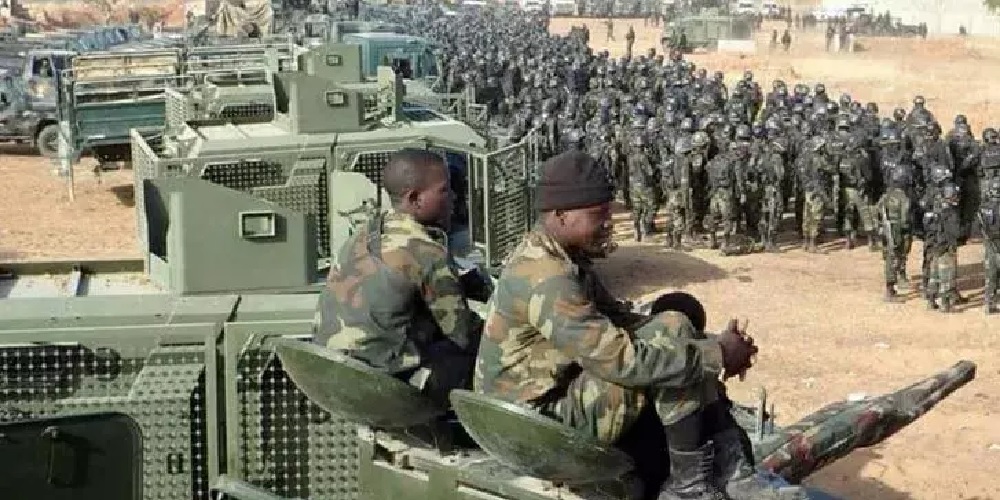
Two Nigerian soldiers have been killed while three others sustained varying degrees of injuries after troops of the Nigerian Army were ambushed by suspected terrorists during a military operation in Isa Local Government Area of Sokoto State.

The deadly attack reportedly occurred at about 10 p.m. on Tuesday, June 30, when troops attached to the Nigerian Army’s 8 Division Forward Operating Base (FOB) in Tidibale were responding to a distress call over an attack on Tagirke village by armed terrorists.

According to security sources cited by counter-insurgency publication Zagazola Makama, the soldiers swiftly mobilised to the community and engaged the attackers in a fierce gun battle. The troops reportedly succeeded in overpowering the terrorists, forcing them to abandon the assault and retreat from the village.

However, while the soldiers were returning from the operation after repelling the attack, they reportedly encountered a carefully planned ambush set up by the fleeing terrorists.

Advertisement

During the withdrawal, one of the military’s gun trucks reportedly drove over an Improvised Explosive Device (IED), triggering a powerful explosion that resulted in multiple casualties among the troops.

The blast claimed the lives of two soldiers, who were confirmed killed in action, while three others suffered injuries of varying severity.

The remains of the deceased personnel were evacuated to the mortuary of the Usmanu Danfodiyo University Teaching Hospital in Sokoto, where necessary procedures are expected to be carried out.

The wounded soldiers were immediately transported to the 8 Division Medical Services and Hospital, where they are currently receiving medical attention.

Advertisement

The explosion also left one of the military gun trucks badly damaged. The vehicle was later recovered from the scene and towed back to the Forward Operating Base in Tidibale for assessment and possible repairs.

Security sources disclosed that military authorities have intensified operations across the area in a bid to hunt down those responsible for the ambush. Troops are also working to recover any weapons that may have gone missing during the attack while sustaining offensive operations aimed at dismantling terrorist hideouts in the region.

The latest incident highlights the persistent security challenges facing parts of northwestern Nigeria, where armed terrorist groups continue to launch attacks on rural communities and security personnel despite ongoing military offensives designed to restore peace and stability.

Advertisement
Continue Reading

News

Reps Push for Special Court to Fast-track Crude Oil Theft Cases, Seek Tougher Penalties for Saboteurs

Published

on

ADVERTISEMENT
Zoom Ad
ADVERTISEMENT
Zoom Ad

…committee faults NUPRC for shunning stakeholders’ meeting

…as security agencies demand stronger laws to curb economic sabotage

By Gloria Ikibah

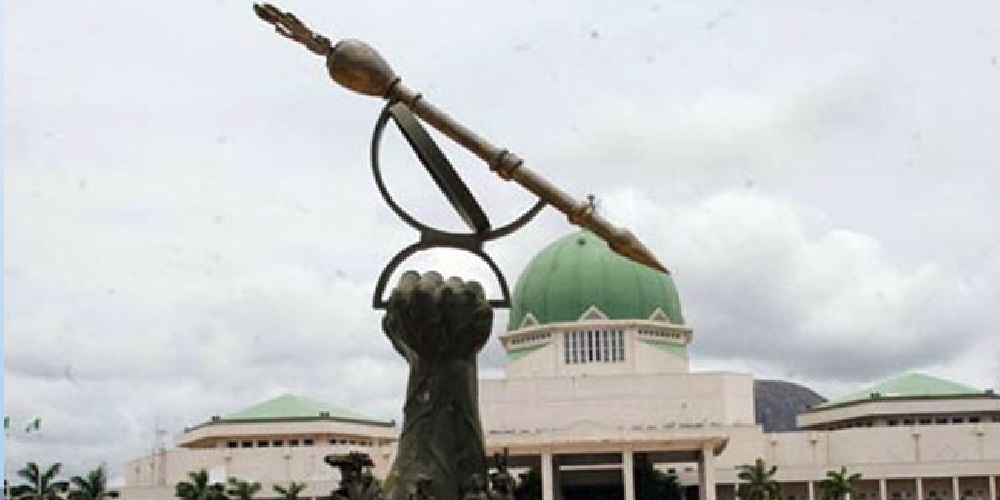
The House of Representatives Special Committee on Crude Oil Theft has called for the establishment of a special court to prosecute crude oil thieves and pipeline vandals, arguing that Nigeria’s current legal framework is too weak to deter offenders undermining the country’s economy and national security.

Advertisement

The proposal emerged on Thursday during a stakeholders’ meeting convened by the committee as part of ongoing efforts to identify practical measures to curb crude oil theft and sabotage across the oil and gas sector.

Chairman of the committee, Rep. Alhassan Ado Doguwa, said the country must urgently overhaul outdated laws governing oil-related offences, insisting that existing penalties no longer reflect the seriousness of the crimes.

According to him, many of the laws currently relied upon by the courts were enacted during the military era and have failed to keep pace with developments in the global energy industry.

He said: “We have been able to achieve some very remarkable progress in the course of our interface. We all agreed to work on the same page to address the existing legal frameworks and some of the bottlenecks affecting them.

Advertisement

“The global oil and gas economy is now in an advanced stage. Virtually all oil-producing countries are making progress because they have provided effective legal instruments to address their challenges. For this reason, we believe Nigeria should also review some of its laws.”

Doguwa clarified that the proposed reforms would not affect the provisions of the Petroleum Industry Act.

“Some may ask what happens to the PIA. This has got nothing to do with the PIA. The PIA merely addresses the fundamentals and basic principles of doing business within the global oil economy. None of its commitments or provisions will be affected.

“However, we still have old legislations, some dating back to the military era, including military decrees and orders, which are still being applied at various levels. The courts have no option but to rely on those laws.

Advertisement

“Unless we provide new measures, new laws and a new legal framework, the courts will continue to rely on these obsolete legislations in handling serious criminality within Nigeria’s oil and gas sector”, he added.

He pledged that the House will work closely with the Office of the National Security Adviser to strengthen efforts against crude oil theft.

“I want to assure Nigerians that the National Assembly, especially the House of Representatives through this committee, will partner with the Office of the National Security Adviser to effectively combat crude oil theft and every other criminal activity within the oil and gas environment.

“We must not forget that our daily crude oil production target in the budget remains below expectations. Until we address this problem, our production projections may continue to fall short”, he stated.

Advertisement

The lawmaker disclosed that senior officers from the Nigerian Army, Nigerian Navy, Nigerian Air Force, Nigeria Police Force and the Nigeria Security and Civil Defence Corps attended the meeting.

However, he expressed disappointment over the absence of the Nigerian Upstream Petroleum Regulatory Commission (NUPRC), describing the agency’s failure to attend as unacceptable.

“It was rather unfortunate that some of the critical regulatory agencies in the oil and gas sector, particularly the NUPRC, neither attended nor sent representatives.

“We frown at that action and have directed the Clerk of the Committee to write to them, requiring them to appear before the committee because they are key stakeholders in the fight against this serious problem bedevilling our country”, Doguwa said.

Advertisement

The Chairman said the committee was considering legislation to establish dedicated courts for crude oil theft and related offences, arguing that delays in the conventional judicial system often allow offenders to evade justice.

“We have also recommended in previous bills before the House the possibility of establishing a special court for these kinds of crimes because the crimes themselves are special.

“If we allow these criminal cases to go through the conventional court system, considering the delays involved, many of them will remain unresolved while the criminals escape appropriate punishment”, he noted.

A member of the committee, Rep. Cyril Hart, said addressing crude oil theft would require more than legal reforms, pointing to funding challenges and underutilised oil assets.

Advertisement

“The Chairman has highlighted the issue of obsolete infrastructure. There is another area which has to do with funding.

“The PIA makes it very clear that the oil belongs to the people of Nigeria. It does not belong to the oil companies. Therefore, if an oil block is not exploited for the benefit of Nigerians, that amounts to crude oil loss and economic sabotage.

“If any licence holder fails to produce within the stipulated timeline, that also amounts to economic sabotage.

“That is another major area we need to examine. We are currently witnessing divestment, with these critical national assets being transferred to Nigerian companies that may not have the required financial capacity, especially since the sector is dollar-denominated.

Advertisement

“If they lack the necessary capital, they may struggle. We must ensure they possess the capacity to maximise production. Nigeria has about 38 billion barrels of crude oil reserves. That is enormous”, he said.

Representing the National Security Adviser, Goodluck Ilajufi, said experience had shown that weak punishments remained one of the biggest obstacles to tackling oil theft.

“Through our work, we have reached a point where the kind of support we require can only come from the National Assembly.

“In your earlier remarks, you spoke about reforms and new investments coming into the industry. Part of the reason we are here is to put our house in order.

Advertisement

“If we are asking investors to commit billions of dollars to our economy, they must be confident that adequate security exists”, Ilajufi stated.

He therefore urged lawmakers to strengthen the legal regime governing petroleum-related offences.

“Specifically, we seek your support in strengthening the punishment regime for thieves, vandals and other criminal elements.

“My experience in the field is that after enormous state resources are spent arresting and prosecuting these criminals, the punishment they eventually receive is almost meaningless.

Advertisement

“A judge may sentence someone to five years imprisonment with an option of a N100,000 fine, or even six months imprisonment. That makes a mockery of the entire process.

“In some instances, suspects simply plead guilty because they already know the punishment will be lenient.

“We therefore require amendments to legislations such as the Miscellaneous Offences Act, particularly Section 107 relating to tampering with petroleum infrastructure and Section 118 relating to adulteration of petroleum products.
“If these laws are not strengthened, the deterrent effect will remain weak”, he added.

Also speaking, the Assistant Commandant General (Operations) of the Nigeria Security and Civil Defence Corps, David Idowu, backed the proposal for a special court, saying weak legislation had continued to frustrate efforts to secure convictions.

Advertisement

“I also want to appeal, if it has not already been included in the proposed amendments, for the establishment of special courts to try crude oil theft offenders.

“I remember when I served as a State Commandant. A lawyer returned from court one Monday in tears because the punishment handed down did not reflect the gravity of the offence.

“If there is a special court to try these offenders, including the shadow actors behind these crimes, they will receive appropriate punishment”, he noted.

A representative of the Nigeria Police Force’s Petroleum and Illegal Bunkering Prevention Unit, CSP Idris Abdullahi Mohammed, also reaffirmed the Force’s commitment to working with other security agencies and stakeholders to combat crude oil theft and other forms of sabotage within the country’s oil and gas industry.

Advertisement
Continue Reading

News

Sad: Bandits k!ll 10-yr-old boy, abduct 43 women, kids in Sokoto midnight attack

Published

on

ADVERTISEMENT
Zoom Ad
ADVERTISEMENT
Zoom Ad

Suspected bandits armed with sophisticated weapons stormed Takatsaba and Tarah villages in Sabon Birni LGA late Wednesday, abducting no fewer than 43 residents, killing a 10-year-old boy, and leaving communities begging for nothing but protection.

—Takatsaba: “They Came From the South-East While Security Watched the West”—

At 11:30 p.m., the bandits hit Takatsaba. They spent an hour moving house to house.

Abdullahi Ado’s 10-year-old son was gunned down in his family’s home. Five of his children were taken: Abubakar, Basira, Amira, Aisha and Naja’atu, all aged between 6 and 16.

Advertisement

In total, 32 people from seven households were abducted, a local source was quoted by Daily Trust to have said:
– 9 from Mamman Dogo’s home
– 5 from Abdullahi Ado’s family
– The wife of the village’s Chief Imam
– 2 from the Mai Unguwa’s home
– 2 orphaned children from the late Mallam Sani’s family
– 8 from Mallam Abubakar’s household — wives and young children
– 5 from Amadu Siro’s home

“We scattered in different directions. Up till now, we cannot account for everyone,” the resident said.

He said security operatives never arrived as reinforcements. “The security team was positioned on the western side, while the attackers entered from the south-east and carried out the operation before leaving.”

This is the second attack in eight days. The first was repelled by security personnel. This time, the bandits outsmarted them.

Advertisement

—Tarah: IEDs Block Security, 11 Women Still in Captivity—

Fifty minutes later, Tarah was next.

Bandits shot and injured three residents, who are now in hospital. They abducted 20 people, but released nine at a river crossing where they could not move with all captives.

–’11 remain missing, most of them married women: Marsiya Ya’u Gurmu, Aisha Ya’u Gurmu, Hadiza Illiti, Hajara Haruna Na’ita, Talata Atamo, Firdausi Lawali, Hafsat Na’inna, Maryam Gandi, Daudiya Haruna, Aisha Isaka and Samira Hussaini.

Advertisement

Residents say the attackers are using new tactics — planting IEDs to block security response. They also claim authorities confiscated four locally procured guns villagers bought to defend themselves before the last Ramadan.

“We are not asking for electricity, water or any other project. What we need is security so that we can return to our farms and produce food. That is our only request,” a Takatsaba resident said.

“*We are only asking Nigerians to remember us in their prayers*,” a Tarah resident pleaded.

—“Authorities Have Neglected Us”—

Advertisement

The attacks came days after Sabon Birni residents raised alarm over renewed bandit raids and the growing use of improvised explosive devices in eastern Sokoto.

When contacted, DSP Ahmad Rufai, spokesperson for the Sokoto State Police Command, said he would verify the incident. As of press time, no update had been given.

Continue Reading

Trending

Copyright © 2024 Naija Blitz News