News
Delta State Government Orders Absentee Health Workers to Refund Salaries
- /home/naijuinz/public_html/wp-content/plugins/mvp-social-buttons/mvp-social-buttons.php on line 27
https://naijablitznews.com/wp-content/uploads/2024/02/delta-state-map.jpg&description=Delta State Government Orders Absentee Health Workers to Refund Salaries', 'pinterestShare', 'width=750,height=350'); return false;" title="Pin This Post">
- Share
- Tweet /home/naijuinz/public_html/wp-content/plugins/mvp-social-buttons/mvp-social-buttons.php on line 72
https://naijablitznews.com/wp-content/uploads/2024/02/delta-state-map.jpg&description=Delta State Government Orders Absentee Health Workers to Refund Salaries', 'pinterestShare', 'width=750,height=350'); return false;" title="Pin This Post">
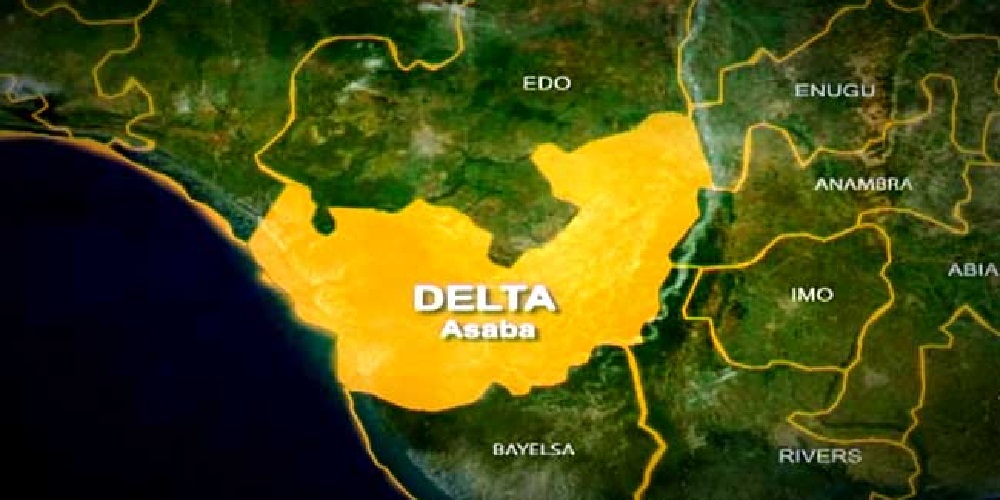
The Delta State Government has mandated over 200 absentee doctors and nurses to refund their salaries following an extensive audit of the state’s health institutions. This move, announced by the State Health Commissioner, Dr. Joseph Onojame, aims to address and rectify inefficiencies within the health sector.

Speaking to reporters in Asaba, Dr. Onojame disclosed that the audit uncovered a significant number of ghost workers, particularly at the Delta State University Teaching Hospital in Oghara. He emphasized that the administration, under Governor Sheriff Oborevwori, is committed to sanitizing the health sector.
“In our thorough investigation, we discovered that many health professionals had left their positions, often moving abroad, yet they remained on the payroll,” Dr. Onojame explained. “As a result, we have taken steps to remove them from the payroll to stop this financial drain.”

The audit revealed that the state had lost about fifty percent of its doctors and nurses due to emigration over the past few years. The removal of these ghost workers is seen as a critical measure to curb unnecessary expenditures and improve the allocation of resources.
In addition to addressing absenteeism, the Delta State Government is also tackling corruption within the Department of Nursing. Allegations of examination malpractice, admission racketeering, and corrupt practices have plagued the department. Dr. Onojame noted that steps have been taken to refund illegally collected building levies from students and to discipline staff involved in unethical practices.
“There was a lecturer who collected money in exchange for grades; such individuals will face severe consequences,” Dr. Onojame stated. “We are eliminating practices like ‘pay for score,’ ensuring that all nursing students must study to pass their exams.”
The State Chairman of the National Association of Nurses and Midwives, Comrade Philomena Onokpuvie, has expressed support for these reforms. She commended the government’s efforts to address the challenges in the health sector and emphasized the need for collaboration between the government, health professionals, and administrators to achieve sustainable improvements.
As Delta State moves forward with these reforms, the focus remains on creating a transparent, efficient, and accountable health sector that can better serve its residents.

News
Nigeria Will Never Support Military Coup, Unconstitutional Rule — FG
By Gloria Ikibah
The Federal Government has rejected claims that Nigeria or the Economic Community of West African States (ECOWAS) backed the recent failed coup attempt in Niger Republic, describing the reports circulating on social media as false and mischievous.
The Minister of State for Foreign Affairs, Amb. Sola Enikanolaiye, said Nigeria “did not and will never support any military coup or unconstitutional change of government”, insisting that the country remained committed to democracy and constitutional order.
In a statement issued in Abuja on Thursday, Enikanolaiye said the Ministry of Foreign Affairs had taken note of social media claims suggesting that the failed coup attempt in Niger had the backing of ECOWAS and, by implication, Nigeria.
He said, “The Federal Government of Nigeria categorically rejects these claims as baseless, irresponsible, and a deliberate attempt to misinform the public and tarnish Nigeria’s image.”
According to the minister, Nigeria remained a peace-loving country and a strong defender of constitutional government in West Africa, the Sahel and across Africa.
“Nigeria will never support illegality or unconstitutional change of government anywhere, no matter who is involved or which country is concerned,” he said.
Enikanolaiye referred to the Ministry’s Press Statement No: MFA/PR/2026/220 of August 30, 2026, saying Nigeria had already made its position on the situation in Niger clear.
He said the Federal Government had expressed deep concern over developments in Niger and called for “a peaceful, inclusive and participatory return to stability and constitutional order” in the neighbouring country.
“Nigeria views with deep concern any unconstitutional change of government,” the minister said.
He stressed that Nigeria’s position was also informed by its close historical, fraternal and cultural ties with Niger.
Enikanolaiye added that the use of force to resolve political disagreements was inconsistent with Nigeria’s foreign policy objectives.
“As a sisterly neighbour bound by close historical, fraternal and cultural ties, Nigeria desires only peace, security, democracy and development for Niger, the sub-region and the Sahel.
“As was stated in the Press Statement under reference, any resort to force to settle political differences is contrary to this objective and to Nigeria’s long-standing foreign policy”, he said.
While reaffirming Nigeria’s membership of ECOWAS, the minister dismissed suggestions that the country supported the military takeover.
He urged Nigerians at home and abroad to ignore videos and narratives circulating online
“While Nigeria is a proud and committed member of ECOWAS, it is unfair, mischievous and entirely false to suggest that Nigeria endorses or condones the military coup.
which, he said, were intended to create division.
“We urge the Nigerian public, both at home and abroad, to disregard the videos and narratives being circulated online by individuals seeking to sow discord”, he stated.
The minister reaffirmed Nigeria’s commitment to the ECOWAS Protocol on Democracy and Good Governance and the African Union’s position against unconstitutional changes of government.
“Nigeria remains firmly committed to the ECOWAS Protocol on Democracy and Good Governance and to the African Union’s zero tolerance for unconstitutional changes of government”, Enikanolaiye stressed.
He said Nigeria will continue to work with ECOWAS, the African Union and the international community to defend democratic governance, uphold the rule of law and promote peace and stability in the region.
News
DSS impounds 676 guns, 330,000 rounds of ammunition in anti-crime operations — DG
The Department of State Services (DSS) has impounded 676 firearms and more than 330,000 rounds of ammunition in its ongoing operations against terrorism, banditry, kidnapping and other violent crimes across Nigeria.
Director-General of the DSS, Mr Oluwatosin Ajayi, disclosed this while speaking with senior editors as he marked two years in office on August 28, 2026.
Ajayi, who has spent 36 years in the intelligence service, said the seizures were part of a broader effort by the agency to disrupt criminal networks, strengthen intelligence-led operations and improve cooperation with other security agencies.
The DSS boss, who began his career as a cadet officer and rose through the ranks to become the first cadet of the Service to attain the position of Director-General, also spoke extensively on the agency’s evolving approach to human rights, accountability, media relations and the fight against terrorism and insurgency.
He said his administration had focused on five major areas: strict law enforcement, inter-agency cooperation, accountability, respect for human rights, and infrastructural and administrative reforms aimed at improving operational efficiency.
According to him, the DSS has deliberately moved away from approaches that could blur the line between civil disputes and criminal matters, insisting that civil cases should be resolved through dialogue or the courts rather than arrests and the use of force.
“I have told my people there should be no arrest in any civil case,” Ajayi said, explaining that the Service now seeks judicial interpretation where necessary instead of resorting to coercive measures.
He cited the case involving Professor Pat Utomi and the alleged attempt to establish a shadow government as an example of the new approach. Rather than arresting Utomi, he said, the Service approached the court for an interpretation of the matter.
He also cited disputes involving the Socio-Economic Rights and Accountability Project (SERAP) and Sahara Reporters publisher, Omoyele Sowore, saying the Service had increasingly relied on judicial processes rather than arrests to resolve contentious matters.
A new approach to human rights
Ajayi said respect for human rights had become a central component of his administration, arguing that an intelligence agency could not effectively perform its duties while alienating the population it depended on for information.
He said the DSS had adopted what he described as “restorative justice”, including compensation and other forms of restitution where its operatives had wrongfully injured, detained or otherwise harmed innocent people.
The Director-General said the Service had paid more than N300 million in compensation in various cases, although he stressed that the figure did not capture all interventions because some cases were handled without publicity.
One of the cases involved a Jos-based businessman who was mistakenly shot by DSS operatives.
A court had ordered the Service in 2016 to pay him N10 million in compensation, but the judgment was not implemented at the time.
Ajayi said he ordered a review of such cases after assuming office and accepted responsibility for correcting past mistakes.
“When you wake up, that’s your morning. It’s never too late to do the right thing,” he said.
He said the victim’s condition had deteriorated considerably and that, after medical assessment, the Service not only provided medical treatment but approved an additional N10 million to help him rebuild his livelihood.
“We actually went further to set up a business for him, and he is now an employer of others,” Ajayi said.
He also disclosed that an Abuja-based businesswoman who was mistakenly arrested during an operation targeting suspected oil bunkerers was paid N10 million after investigators established that she was innocent.
According to him, the DSS subsequently supported efforts to rebuild her business.
News
NERD: UNIBEN, ABU, UNICAL, EKSU, Kwara State Poly Lead Nigeria’s Academic Digitisation Drive as Country crosses 400,000 academic submissions
Nigeria’s push to build a national digital infrastructure for education records and quality assurance in higher institutions has recorded a major milestone, with the Nigeria Education Repository and Databank (NERD) surpassing 400,000 digitised theses and dissertations.
Officials and education stakeholders see the achievement as an important step towards preserving the country’s intellectual output and making Nigerian research more accessible, while simultaneously building a national database for the instant validation of academic credentials.
Data from the repository showed that by early September 2026, the platform had accumulated over 400,000 visible academic submissions from universities, polytechnics, monotechnics, colleges of education, and other post-secondary institutions across the country.
That figure had exceeded 410,000 as of press time.
Likewise, the National Credential Verification Service’s component of NERD has verified more than 115,000 academic credentials and allocated these National Credential Numbers (NCN), fulfilling a critical mandate of NERD for the authentication, preservation, and digital warehousing of academic qualifications.
The development represents one of the measurable outcomes of the Federal Government’s Renewed Hope Agenda and its ongoing education digitisation programme under President Bola Ahmed Tinubu, GCFR, whose administration has increasingly placed technology, data and institutional accountability at the centre of reforms in the education sector.
Under the supervision of the Minister of Education, Dr Tunji Alausa, CON, NERD has grown into an increasingly broad national infrastructure connecting institutions, students, academic works, workers, and credentials within a common digital environment.
—629 institutions active on repository—
The scale of institutional participation is equally significant.
Figures on the NERD platform show that NERD has recorded 907 enrolled institutions, of which 629 are active, demonstrating the widening reach of the national repository across different categories of post-secondary education.
The latest institutional breakdown displayed by the platform includes 259 universities, 163 polytechnics, 179 monotechnics, 178 colleges of education and 130 institutions classified under other categories.
Beyond institutions themselves, the digital network now covers 2,020 enrolled faculties, with 1,620 recording visible submissions, while 5,353 of 9,626 enrolled departments have visible academic works on the repository.
The figures suggest that the challenge is gradually shifting from simply bringing institutions onto the national platform to deepening participation within individual faculties and departments.
—Varsities, polytechnics battle for top spots—
Competition among institutions is also becoming visible in the repository’s national statistics.
The latest Top 20 chart places the University of Benin and Ahmadu Bello University, Zaria, at the head of a tightly packed group of institutions, followed by Ekiti State University, the University of Calabar and the University of Nigeria, Nsukka, among other leading contributors.
The rankings are notable for the strong showing of polytechnics alongside universities.
Institutions such as Kwara State Polytechnic, Kaduna Polytechnic, Auchi Polytechnic, Federal Polytechnic Nasarawa and Federal Polytechnic Nekede feature prominently among institutions contributing substantial volumes of student academic works.
At faculty level, the Faculty of Education at Ahmadu Bello University leads the current chart, while Education at Ekiti State University and Science and Technology at Kaduna Polytechnic are also among the leading contributors.
The departmental statistics reveal an even more diverse picture. Mass Communication and Public Administration departments belonging to several polytechnics dominate some of the highest positions, illustrating that Nigeria’s growing digital research collection is not being driven exclusively by the traditional university system.
—Projects dominate national academic collection—
The data also offer a glimpse into the composition of the material being preserved.
Student projects overwhelmingly constitute the largest category of visible academic works, with theses, dissertations, seminar papers, and other research outputs making up smaller portions of the repository.
Similarly, as of the 4th day of September 2026, the number of undergraduate submissions (409,456) far exceeds the number of postgraduate submissions (1,563).
The significance of the initiative extends beyond the sheer number of documents accumulated.
For decades, Nigerian universities and other tertiary institutions generated large volumes of theses, dissertations, projects and other scholarly materials that were often stored almost exclusively within departmental libraries, physical archives or disconnected institutional systems.
Consequently, potentially valuable research could be difficult to discover outside the institution where it originated.
The Tinubu administration’s establishment of NERD represents an attempt to reverse that pattern by creating a structured national layer through which the country’s academic output can be verified, preserved, indexed and progressively made discoverable.
—Women lead in research submissions—
Fresh statistics from NERD also reveal an interesting dimension to Nigeria’s emerging academic knowledge base: female students currently account for substantially more of the visible research submissions than their male counterparts.
Of the records categorised by sex in the visible dataset, 228,347 submissions were attributed to female students, compared with 181,536 for male students, while 77 records were not categorised.
The pattern broadly reflects the platform’s overall student enrolment figures. NERD’s latest statistics show 248,284 enrolled female students, against 197,526 males.
The age profile provides another indication of the demographic character of the emerging repository. The largest concentration of final-year or graduating students falls within the 25–29 age bracket, followed by those aged 20–24, with considerably smaller numbers in the older age categories.
Taken together, the figures provide a growing body of national-level data that could eventually help government, institutions and researchers better understand participation patterns within Nigeria’s tertiary education system.
—Industry focus and top knowledge pillars—
The data also revealed a notable trend: regardless of their disciplines, a sizeable number of Nigerian students are gravitating towards innovation- and technology-driven research topics.
Significantly, this inclination is not confined to students in science, technology and engineering; it is also increasingly evident across the social sciences, humanities, law and other disciplines, suggesting a broader shift towards research that embraces technology, innovation and practical problem-solving.
—From certificates to national knowledge infrastructure—
The academic credential verification component of NERD gives the initiative a second strategic dimension. With more than 115,000 academic credentials already verified and allocated unique National Credential Numbers (NCNs), the emerging infrastructure provides a common national framework for uniquely identifying, referencing and authenticating academic credentials, while NERD simultaneously preserves and organises the research and intellectual outputs produced across Nigeria’s education system.
That combination, knowledge preservation and credential authentication, could prove important to the Federal Government’s wider effort to modernise education administration and improve the integrity of academic records.
The milestone also comes as the Tinubu administration seeks to reposition education as an instrument for skills development, innovation and economic growth.
Alausa’s education ministry has increasingly emphasised reforms intended to connect education more closely with technology, employability, research and national development.
NERD now provides a measurable digital component to that policy direction: rather than leaving Nigeria’s academic heritage dispersed among hundreds of institutions, the country is gradually assembling a national body of knowledge that can be counted, verified, organised and analysed.
—A repository still growing—
The statistics are not static. Institutional participation and submission volumes continue to change as more records enter the system, meaning rankings that hold today may shift as institutions accelerate digitisation.
That dynamism may itself become one of the project’s strengths. Universities, polytechnics and colleges can increasingly see their contribution to the national research pool, while policymakers gain a broader view of where academic work is being produced and where participation remains weak.
Crossing the 400,000 mark, therefore, is less significant as an endpoint than as evidence of scale.
For the Federal Government, the milestone offers an early indication that a nationwide education repository can move from policy conception to measurable infrastructure. For institutions, it creates an opportunity to give decades of Nigerian scholarship greater visibility. And for students and researchers, it raises the prospect that academic work produced in Nigeria will increasingly become part of a permanent and organised national intellectual record.
The larger test will be how effectively that expanding body of knowledge is subsequently connected to research, industry, innovation and public policy. This is why the nation must watch closely what Alausa and his team are doing with the introduction of the National Laureate Programme, an initiative that seeks to build on the Tinubu administration’s achievements with NERD by helping to transition promising academic discoveries and research outputs into commercially viable products and services, creating greater visibility for young researchers and their work, and identifying, celebrating and rewarding research with strong potential for real-world application.
But with more than 410,000 academic works, 115,000 verified credentials and 629 active institutions already within the emerging ecosystem, Nigeria appears to have crossed an important threshold: from discussing the need to preserve its academic knowledge to actually building the infrastructure to do so.
-
News4 hours agoJust in: Massive Explosion Rocks APC Governorship Candidate’s Convoy in Borno as Terrorists Attack
-
Politics4 hours agoLere Olayinka: Some Presidential Candidates Are Not Contesting To Win 2027 Election But To Make An Impression
-
News4 hours agoSee Dollar to Naira exchange rate today, September 4, 2026
-
News4 hours agoObi vows to protect 2027 election votes with his life
-
News3 hours agoBandits Kill Five, Abduct Several as Sokoto Community Comes Under Fresh Attack
-
News3 hours agoNERD: UNIBEN, ABU, UNICAL, EKSU, Kwara State Poly Lead Nigeria’s Academic Digitisation Drive as Country crosses 400,000 academic submissions
-
News2 hours agoDSS impounds 676 guns, 330,000 rounds of ammunition in anti-crime operations — DG
-
News2 hours agoNigeria Will Never Support Military Coup, Unconstitutional Rule — FG

Warning: Undefined variable $user_ID in /home/naijuinz/public_html/wp-content/themes/zox-news/comments.php on line 49
You must be logged in to post a comment Login