Foreign
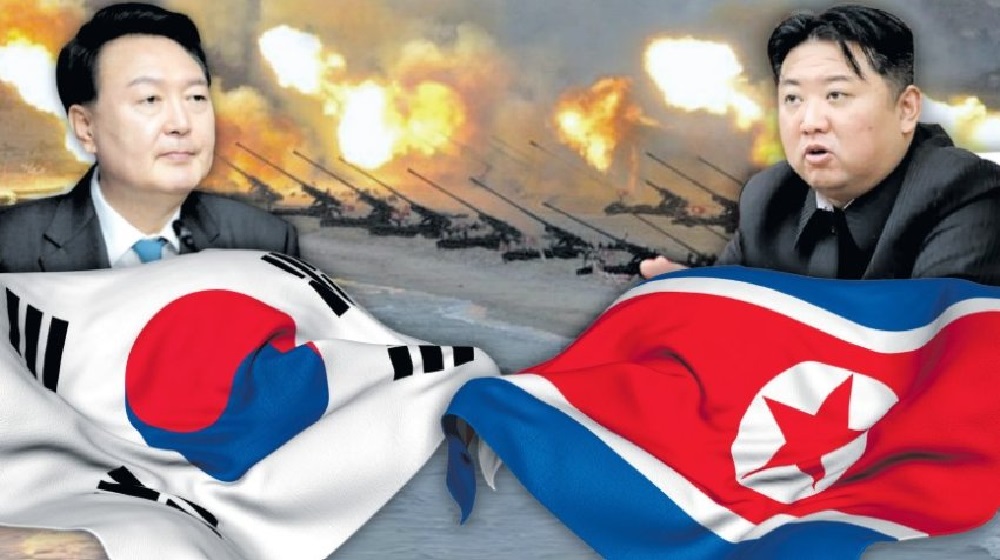
Tensions flare between North and South Korea
- /home/naijuinz/public_html/wp-content/plugins/mvp-social-buttons/mvp-social-buttons.php on line 27
https://naijablitznews.com/wp-content/uploads/2024/06/South-Korea-and-North-Korea.jpg&description=Tensions flare between North and South Korea', 'pinterestShare', 'width=750,height=350'); return false;" title="Pin This Post">
- Share
- Tweet /home/naijuinz/public_html/wp-content/plugins/mvp-social-buttons/mvp-social-buttons.php on line 72
https://naijablitznews.com/wp-content/uploads/2024/06/South-Korea-and-North-Korea.jpg&description=Tensions flare between North and South Korea', 'pinterestShare', 'width=750,height=350'); return false;" title="Pin This Post">
South Korea is fed up with North Korea’s garbage—literally. Last week, North Korea sent around 3,500 balloons full of manure, scrap paper, and cigarette butts over the border into South Korea, in response to South Korean activist groups sending balloons with propaganda leaflets and other contraband to their isolated neighbors to the north.

And even though no one was hurt by the North Korean deliveries—and Pyongyang promised to pause the mud-slinging for now—the damage had been done. The relative calm on the Korean Peninsula was officially trashed.
On Tuesday, Seoul suspended a six-year-old military agreement with Pyongyang that aimed to decrease tensions between the two countries by requiring both sides to stop holding military drills or carrying out psychological warfare activities in border areas. It’s a move that has some officials and experts worried that hostility on the Korean Peninsula—already on the rise after North Korea carried out an underwater nuclear test in January—could blow through the roof.

Tit-for-tat. The scrapped 2018 deal dated back to former South Korean President Moon Jae-in’s time in office, where he sought direct rapprochement with the north in three successive meetings with North Korean dictator Kim Jong Un. Both sides agreed to stop blaring propaganda messages across the border at one another and to halt live-fire exercises within the 400-square-mile demilitarized zone (DMZ) along the 38th parallel that roughly splits the two countries.
But even before Seoul killed the deal, relations on the Korean Peninsula were already deteriorating. North Korea’s failed launch of a military spy satellite in late May prompted South Korea to conduct air drills with 20 fighter jets—including F-35s, F-16s, and F-15s—maneuvering near the no-fly zone along the DMZ. And that’s when North Korea started sending trash balloons over the border.
“We cannot help being enraged by such intolerable saber-rattling, a blatant violation of our national sovereignty,” Kim said. He called South Korea a “gangsters’ regime.” And he punctuated his comments by firing 18 short-range ballistic missiles in a military drill.
Now, the Americans are involved. On Wednesday, the United States sent a long-range B-1 bomber over the Korean Peninsula in joint drills with Seoul and dropped precision-guided bombs. It was the first time that had happened in seven years. It last occurred during the war of words between former U.S. President Donald Trump and Kim that lasted for most of 2017.
Unwelcome distraction. For the last three years, the Biden administration has said that the U.S. will meet with North Korea anytime, anywhere, and without preconditions—a message that Pyongyang has pointedly ignored, even as Biden himself publicly repeated the pledge during Japanese Prime Minister Fumio Kishida’s visit to Washington in April.
But the flare-up in tensions comes at a time when the United States is trying to get South Korea to focus outside of the Korean Peninsula and repair relations with Japan to deal with the threat of China’s military rise.
Historical animosity stemming from Japan’s World War II-era occupation of Korea, including the military sexual enslavement of thousands of Korean women, had undermined the prospect of a diplomatic thaw for most of the past eight decades. But Seoul and Tokyo had a “kumbaya” moment at a Camp David summit with Biden, Kishida, and South Korean President Yoon Suk-yeol in August 2023. Earlier this week, all three countries agreed to hold joint military exercises, and Japan and South Korea agreed to re-normalize defense ties in a significant step toward overcoming those historical issues.
Now, South Korea’s military assets—and the political bandwidth to keep an eye on China—are once again being diverted to deal with North Korea’s threats.
Biden has nominated Julie Smith to serve as the undersecretary of state for political affairs, the State Department’s fourth-ranking job. The role has been vacant since Victoria Nuland retired in March. Smith will stay on in her current job as U.S. ambassador to NATO while she goes through the confirmation process.
Biden has also tapped Kin Moy to be U.S. ambassador to Vietnam and James Story to be U.S. ambassador to Mozambique. Both are career foreign service officers.
Kelly Magsamen, the chief of staff to U.S. Secretary of Defense Lloyd Austin, is set to leave her job at the end of the month after three and a half years.
House Speaker Mike Johnson has appointed Reps. Scott Perry of Pennsylvania and Ronny Jackson of Texas to serve on the House Intelligence Committee, putting two close Trump allies on the powerful congressional panel charged with overseeing U.S. spy agencies.
Johnson has also tapped Republican U.S. Rep. Ben Cline of Virginia to serve on the China select committee.
Beyond the Russian border. The Biden administration is now allowing Kyiv to hit targets inside Russia close to the Ukraine border with U.S. arms, and Ukraine hasn’t wasted any time since it got the green light. By Wednesday, Ukraine had already struck inside Russia with U.S. weapons, congressional aides and NATO officials told us, as Russia ramps up attacks on the Ukrainian city of Kharkiv near the Russian border. Other European countries, including the United Kingdom, France, and Germany, have given Ukraine similar approvals.
Some officials and congressional aides we’ve spoken to (all spoke on condition of anonymity to discuss sensitive matters) concede there’s a chance this could further escalate tensions between Russia and NATO, particularly as Russian President Vladimir Putin floats more nuclear threats. Others believe the policy is necessary for Ukraine to defend itself and are frustrated the Biden administration has taken so long to approve the measure, believing the White House is leaning too far into micromanaging how Ukraine uses U.S. weapons systems.
We just want to talk. The Chinese People’s Liberation Army (PLA) has been aggressively recruiting former fighter pilots from NATO countries to train members of its air force and naval aviators, according to a bulletin issued Wednesday by the Five Eyes intelligence alliance composed of the United States, United Kingdom, Canada, Australia, and New Zealand.
“The PLA wants the skills and expertise of these individuals to make its own military air operations more capable while gaining insight into Western air tactics, techniques, and procedures,” the notice said. Front companies around the world have offered potential recruits “exorbitant salaries,” Michael C. Casey, the director of the U.S. National Counterintelligence and Security Center, said in a statement.
“Somalia on steroids.” The U.S. special envoy for Sudan told Foreign Policy that the East African country’s ongoing civil war could devolve into a failed state, warning that it could become “Somalia on steroids,” as Robbie reported this week.
Sudan’s civil war, one of the world’s deadliest conflicts, has killed around 150,000 people by some estimates and been the scene of widespread atrocities including ethnic cleansing and potentially genocide. It has significant geopolitical implications as well: Russia is eyeing establishing a naval refueling station in Sudan on the strategically important Red Sea coast in exchange for supplying the Sudanese Armed Forces with more weapons.
Toxic workplace. U.S. military personnel responsible for maintaining America’s nuclear weapons arsenal were exposed to dangerous toxins and chemicals without proper safety equipment or support from the Air Force, according to a new investigation from Military.com. “Many believe their jobs repairing intercontinental ballistic missiles contributed to prolonged illnesses and cancer diagnoses,” the report found.
Foreign
Colombia earthquake death toll jumps to 111; president declares emergency
Colombia on Monday declared a state of emergency following a powerful earthquake that caused at least 111 deaths and flattened dozens of buildings, trapping more victims underneath.
The 7.4-magnitude quake struck western Colombia at 7:34 am (1234 GMT) and triggered a frantic search for survivors in several cities.
“The national government is maintaining all its capacities deployed to protect lives, assist affected communities and deliver aid to every area that needs it,” President Abelardo de la Espriella stated from Bogota.
The leader appointed just three days ago reported 111 deaths, 87 people injured and over 1,000 buildings were damaged.
The quake’s epicenter was in Colombia’s coastal Choco region at a depth of 100 kilometers (60 miles). Authorities in the impoverished area reported 12 deaths.
The nearby city of Pereira was one of the worst-hit areas, with local authorities earlier announcing that at least 40 people had died in the Risaralda region of which it is the provincial capital.
The quake crumpled a tower of a beloved cathedral in the city of Manizales, an AFP journalist observed.
“A great many buildings” in the city sustained damage, said administrative worker Jaime Zuluaga, 50. “Traffic is paralyzed and people don’t want to go back to their homes for fear of an aftershock.”
– ‘Missing people’ –
At least 20 buildings crumbled in Colombia’s third-largest city, Cali, trapping people beneath the debris, Mayor Alejandro Eder said.
Choco’s governor warned of serious damage in the provincial capital Quibdo, where videos showed more buildings reduced to rubble.
“We are all devastated,” Quibdo community leader Luis Gregorio Moreno told AFP.
“At this moment there are reported deaths, dozens of wounded, but what there are most of are missing people,” he said.
Ecuador, Panama and Venezuela also felt the early-morning quake, which prompted building evacuations in the Colombian capital, Bogota.
Still wearing their pajamas, crowds of people rushed out into the street upon feeling the tremor, AFP reporters saw.
“The quake was very, very strong,” said content creator Valeria Polo, 29, in the capital, where only minimal damage was recorded.
Six small airports in western Colombia suspended operations, the civil aeronautics agency said, and the soccer governing body postponed upcoming football matches.
Washington is “closely monitoring the large earthquake that struck Colombia and stands ready to support the people of Colombia,” US Secretary of State Marco Rubio wrote on X.
European Union chief Ursula von der Leyen said the EU was “ready to provide more support” to the South American country.
“We have already mobilised Copernicus, our satellite service, to help with rescue operations,” she wrote on social media.
Israel, Mexico, Ecuador and France also offered assistance.
Latin America is already reeling from two disastrous quakes that struck Venezuela in June, killing more than 6,000 people and causing widespread destruction.
AFP
Foreign
Iran demands war damages compensation for reopening Strait of Hormuz
Iran on Saturday gives conditions for the reopening of the Strait of Hormuz, including compensation for war damages, complicating a potential deal to open the waterway essential to the world economy.
Tehran has imposed an effective blockade of the strait since the United States and Israel struck Iran in late February, and wants to charge tolls for passage, attacking ships it accuses of attempting to circumvent its preferred route.
Continued attacks in the strait, which was free to transit before the war, led to the collapse of an April ceasefire. Mediators have since urged both sides to return to the terms of a June memorandum.
Iranian Foreign Minister Abbas Araghchi said discussions with Oman over transit and management of the strait were “approaching the final stages”, but added the reopening of Hormuz “is subject to other conditions and compensation for the violation” of the June agreement.
Security chief Mohammad Bagher Zolghadr on Saturday laid out a list of demands for reopening the strait, including an end to the “war and aggression against Iran and its allies in Lebanon, Palestine, Yemen, and Iraq”.
He also demanded the lifting of a parallel US naval blockade of Iran, the end of sanctions, the release of frozen assets and compensation for wartime damage, according to remarks reported by Tasnim news agency.
Iran’s Revolutionary Guards, meanwhile, said Hormuz’s reopening had “nothing to do with the negotiations between Iran and Oman”, adding that the “enemy is forced to accept Iran’s conditions for the opening of the strait”.
The comments came as transit through Hormuz has dropped significantly, with Iran targeting ships it accuses of skirting its preferred route through Iranian waters.
The United Arab Emirates’ foreign ministry on Saturday condemned what it called a “hostile Iranian attack that targeted a tanker belonging to ADNOC (Abu Dhabi National Oil Company) with a missile while it was transiting the Strait of Hormuz, without causing casualties”.
Later on Saturday, the United Kingdom Maritime Trade Operations (UKMTO) said a ship was hit by a projectile off Oman in the Strait of Hormuz, causing a fire that was extinguished but no casualties. It was unclear whether they were referring to the same ship.
On Friday, ADNOC had put out a statement saying that since the start of the war, 15 of its vessels had been attacked in Hormuz, “including three vessels this week alone”.
Oman’s foreign ministry on Saturday condemned “repeated attacks on vessels transiting the Strait of Hormuz”, without naming Iran.
It also said that “ongoing negotiations regarding navigation arrangements in the Strait of Hormuz are proceeding in a positive and constructive atmosphere”, and urged against any actions that might jeopardise the progress.
The previous Iran-US deal — meant to serve as a jumping-off point for negotiations on a permanent settlement — had said Iran and Oman would hash out future arrangements for the strait in discussion with other Gulf countries and “in line with the applicable international law”.
International law generally forbids tolling in such waterways.
Security agreement
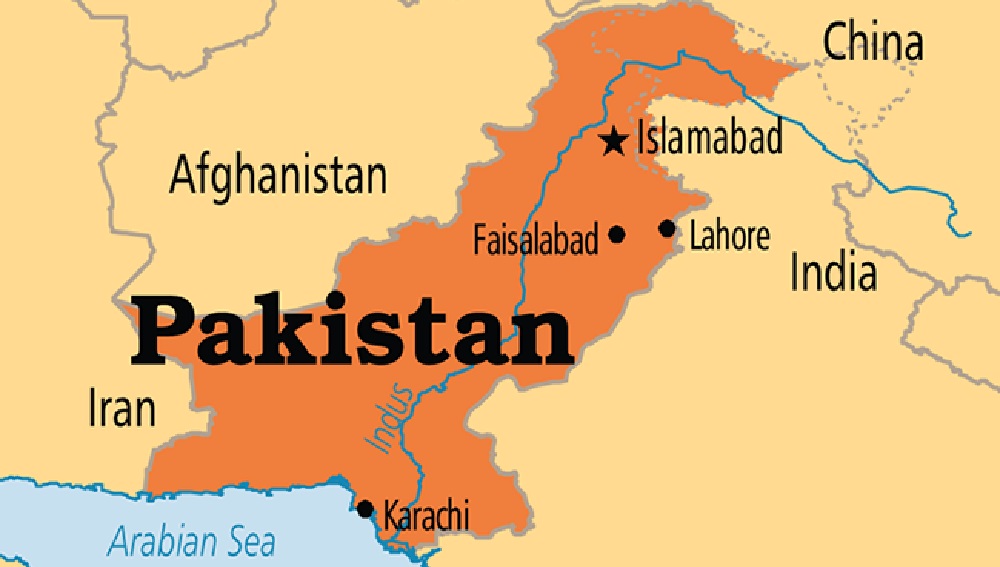
Turkey’s foreign minister said Saturday he expected Egypt to join a joint defence agreement between Turkey, Saudi Arabia and Pakistan designed to stabilize the region, calling the country a “natural partner on all issues”.
“I believe that at the next stage Egypt will also be among us in the alliance. We already act toward one another as if we were alliance members,” Foreign Minister Hakan Fidan said in an interview.
A drone struck US assets at an Egyptian port on the Mediterranean last month, marking the first drone attack on Egyptian territory since the outbreak of the Iran war.
Fidan said the agreement does not target a specific country.
“There is no common threat that we have put in writing,” he said, according to the news agency.
Pakistan’s foreign ministry said Friday the pact meant an attack on any member would be regarded as an attack on all, adding it was “intended to strengthen collective deterrence”.
AFP
Foreign
Spain imposes border checks on Italy over migrant dispute
Spain on Saturday started border checks on travellers arriving from Italy, responding to similar measures Rome imposed following an unprecedented migrant rush into the Spanish north African enclave of Ceuta.
“I don’t see a lot of the word ‘diplomacy’ used in these decisions, not by the Italian government, nor by the Spanish government,” said one 36-year-old Italian tourist, Maria Celeste Grillo, who had just flown into Madrid.
She said she had not seen any added checks as she stepped off the plane, but found their implementation “sad”.
Spain announced Friday it would proceed with the heightened controls, citing “persistent irregular migration pressure” facing Italy — deepening a row between the EU partners and NATO allies.
Spain’s left-wing government has complained that Italy’s hard-right government on July 31 unfairly imposed one month of border checks on travellers from Spain — suspending the EU’s Schengen Area visa-free travel arrangements — because of the Ceuta influx.
More than 70,000 migrants had crossed from Morocco into the Ceuta enclave on July 30 and 31, though almost all of them subsequently returned to Morocco within 48 hours.
The inflow alarmed European nations, especially right-wing ones urging tougher rules on irregular migrants. However, rules for Ceuta mean migrants cannot travel onward to continental Europe without passing another layer of border checks.
Spain’s interior ministry said the new checks on incoming travellers from Italy would apply until September 7.
AFP
-
News22 hours agoSee Black Market rate of the Dollar to Naira today 10th August, 2026
-
Metro8 hours agoMilitary Airstrikes Wipe Out Nine Terrorists In Borno
-
Politics8 hours agoOsun APC Raises Alarm Over Alleged Plot to Blackmail Police With Hired Protesters
-
News8 hours ago‘Helicopter Brought Money For Kidnappers’ – Kwara Victims Rejects Govt’s Claim Of No Ransom
-
Politics8 hours agoOsun election: Atiku, Aregbesola storm Osogbo for Najeem Salaam
-
News21 hours agoTop army officer confesses on why he planned coup against TInubu, identifies officers involved
-
News8 hours agoMeet twins who secured NNPC jobs in 2026 without connections
-
Metro8 hours ago23-Year-Old Nigerian Law Student Dies After Incident at 4-Storey Hostel on Lagos Campus

Warning: Undefined variable $user_ID in /home/naijuinz/public_html/wp-content/themes/zox-news/comments.php on line 49
You must be logged in to post a comment Login