News
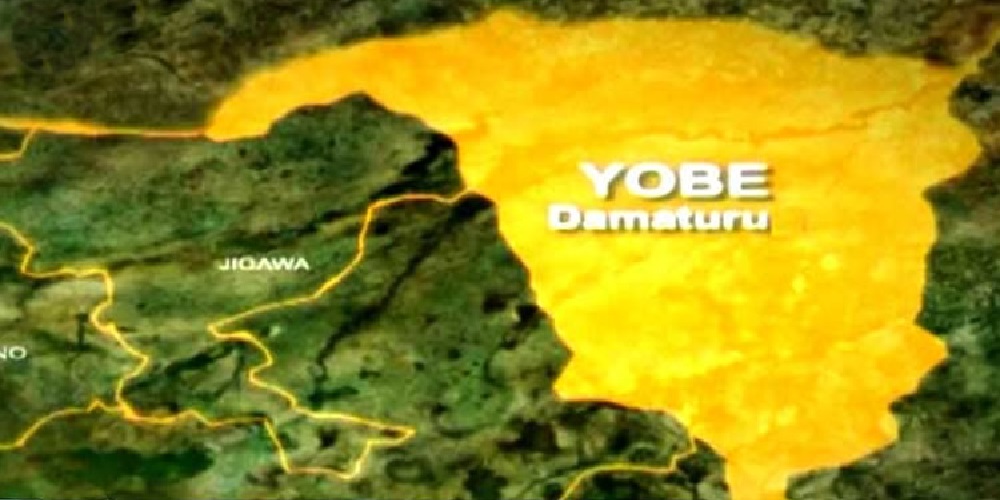
Yobe: NULGE protesters back LG autonomy
- /home/naijuinz/public_html/wp-content/plugins/mvp-social-buttons/mvp-social-buttons.php on line 27
https://naijablitznews.com/wp-content/uploads/2024/02/yobe-state-map.jpg&description=Yobe: NULGE protesters back LG autonomy', 'pinterestShare', 'width=750,height=350'); return false;" title="Pin This Post">
- Share
- Tweet /home/naijuinz/public_html/wp-content/plugins/mvp-social-buttons/mvp-social-buttons.php on line 72
https://naijablitznews.com/wp-content/uploads/2024/02/yobe-state-map.jpg&description=Yobe: NULGE protesters back LG autonomy', 'pinterestShare', 'width=750,height=350'); return false;" title="Pin This Post">
The Nigerian Union of Local Government Employees, NULGE, in Nangere Local Government Area of Yobe State, has demanded full autonomy for local government administrations in the country.

The union made its position known during a peaceful rally it organised at the headquarters of the local government in Nangere on Friday.
According to reports, the protesting members of the union gathered at the entrance to the local government’s secretariat with banners and placards containing different inscriptions calling for full autonomy for local governments across the nation.

Speaking to journalists, the NULGE chairman, Umar Inusa, said the protest becomes necessary as the only language the government understands.
“We are demanding the scrapping of the joint account committee and illegal deductions from local governments’ allocations in adherence to the Fourth Schedule on Local Government in respect of revenue sources, among other things,” he said.
Inusa noted that granting autonomy to local government administrations will result in massive food production in communities.
“All of us can recall that the issue of autonomy and independence for these three arms of government to operate independently has been an issue in Nigeria. And that has led to a lot of challenges,” he said.
He expressed optimism that autonomy for the local government would strengthen democracy at the grassroots.
“Abolish JAC and credit local government funds directly from the federation account,” he said.
He then called on the Federal Government to allow the Independent National Electoral Commission, INEC, to conduct local government elections in 774 local governments across the country, saying this would provide employment opportunities for the youth.
NULGE’s protest is coming as Yobe State prepares to conduct a local government poll on Saturday, June 8, 2024.
News
Decoupling Sovereignty Index (2): The Wardrobe of Survival in a Decoupled Zone
By Max Amuchie | The Sunday Stew
In The Sunday Stew of 7 June 2026 I unveiled the Decoupling Sovereignty Index (DSI) and introduced the three vectors, Money, Land and Mind. Unveiling a measurement instrument, however, creates an immediate obligation. An index without a methodology for generating its data is an architectural drawing without a building. And last week, 27 September 2026, as a prelude to outlining the methodology of DSI, I wrote about the anatomy of becoming nobody, the systemic process where an individual slowly loses their legal and functional visibility to the state, making them institutionally nonexistent in a decoupling zone.
Today we begin to lay out, in practical terms, the operational steps necessary to actualise the DSI in the field, in the specific, dangerous and empirically rich environments for which it was designed.
Those environments are not seminar rooms. There is a comfortable, almost clinical delusion that blankets the seminar rooms of capital cities and international development agencies. In these well-lit spaces, policy analysts gather over hot coffee to measure state fragility using neat, top-down statistical sheets supplied by formal ministries. They peer through the glass of the Institutional Mirage, the appearance of formal authority without its substance, convinced that the questionnaires filled out by bureaucratic gatekeepers accurately reflect the state of the nation.
But if you want to find the true boundaries of sovereign authority, you have to leave the glass tower. And more importantly, you have to change your clothes.
When a state’s formal authority dissolves and passes to a parallel Shadow Order, the de facto authority that fills the space the state has vacated, the traditional tools of academic research do not just become useless. They become dangerous. In a zone defined by Constitutional Erasure, where the Shadow Order has locked in prominence and alternative legitimacy put in place, walking into a local motor park or a border market carrying an official clipboard, a laptop bag, or a crisp starched corporate shirt is an immediate broadcast of vulnerability. To the armed actors or parallel tax collectors who wield empirical power on the ground, that elite uniform signals an institutional threat or a high-value target for ransom.
To find the truth in these fractured spaces the researcher must learn the radical science of becoming invisible and unremarkable. This requires a systematic methodology designed to extract unvarnished data while keeping the research infrastructure as secure as possible.
One caution before the method. What follows is written for trained teams working with security planning and institutional backing. It is not a guide for solo students, casual reporters or anyone tempted to try it alone.
The objective is not invisibility for its own sake. It is the reduction of unnecessary researcher visibility where conspicuousness would distort the research environment or create avoidable danger. The researcher is not trying to disappear from the field; the researcher is trying to avoid becoming the field’s most conspicuous variable.
Whether the field site is a decoupled zone in Zamfara, Nigeria; Catatumbo, Colombia; Port-au-Prince, Haiti; or Michoacán, Mexico, the methodological principle remains the same: the researcher must minimise unnecessary visibility while allowing the environment to dictate the tool. These are four very different environments, across four distinct geographical and political contexts, but the DSI begins from the same proposition:where formal sovereignty has weakened, fragmented or been displaced by alternative systems of authority, the researcher must adapt the method to the terrain rather than force the terrain to conform to the method. The wardrobe, mode of entry, duration of presence, interview technique and degree of immersion therefore cannot be prescribed universally. The principle travels; the instrument adapts.
The Tri-Tiered Approach to Captured Spaces
At the Sundiata Post Intelligence Unit (SPIU), we recognise that a uniform approach to conflict and fragility research is tactically reckless. An environment where sovereignty has decoupled requires an agile, multi-tiered methodological framework. The environment must always dictate the tool. Depending on real-time risk, resource availability and accessibility, field tracking for the DSI is divided into three distinct operational options.
Tier 1: Remote and Proxy Tracking, the External View. Deployed when a zone is undergoing high-intensity kinetic conflict or complete physical blockade. Here, the researcher maintains zero physical footprint inside the occupied territory, relying entirely on Open Source Intelligence, satellite imagery tracking economic shifts, localised digital forums, and remote interviews with individuals who have recently fled the zone. It provides a vital macro-level baseline but inherently lacks street-level nuance.
Tier 2: Rapid Intercept, the Short Field Visit. Utilised in fluid environments where the formal state and the Shadow Orderare actively negotiating space. The researcher conducts short-duration, high-mobility field visits, executing rapid unstructured intercept interviews in transit hubs, gas stations or open markets. The investigator captures a real-time snapshot of the terrain before triggering local paranoia, and leaves on a prompt, planned departure.
Tier 3: Deep Institutional Immersion, the Richest Source. Deployed in areas where a stable, predictable alternative authority has taken over daily administration. This is the most demanding option and the one that most needs ethical justification. It is used only when less deceptive methods cannot answer the question. Where it is used, the researcher makes a deliberate, strategic choice, out of analytical methodology rather than operational compulsion, to embed within the local ecosystem by adopting a functional economic persona.
The Art of Negative Space: The Visual Assimilation Protocol
The Wardrobe of Survival is the fieldcraft principle that attire, footwear and accessories must register as unremarkable within the local economic and cultural baseline of a decoupled zone. It is the first layer of the Visual Assimilation Protocol.
In a Shadow Order space, your attire is your first and most immediate broadcast to the environment. Before you speak a single word, your clothes have already told the street whether you are an easy target, an institutional threat, an elite outsider, or someone who naturally belongs. When an operative of a Shadow Order scans a crowd, their brain algorithmically looks for threats or opportunities: state intelligence, rival groups, wealthy targets, media vans. The researcher’s attire must register as absolute zero on those scales. To conduct research discreetly, wardrobe must be treated as a tool of environmental assimilation. That single consideration governs everything that follows.
First: Eliminate the Elite Academic and Corporate Uniform. The classic wardrobe of a city-based executive, journalist or university researcher, meaning crisp ironed shirts, formal trousers, corporate shoes, designer watches and branded polo shirts, signals immediate wealth and institutional privilege. In a zone defined by sovereignty decoupling and economic hardship, this dressing announces outsider status and makes you a primary target for kidnap-for-ransom syndicates or predatory parallel tax collectors. Your clothes must match the average economic baseline of the specific micro-environment you are standing in at that exact hour. Opt for simple, functional, slightly worn clothing: plain unbranded t-shirts, durable jeans or utility trousers that look lived-in. Avoid anything that looks fresh out of a boutique.
Second: Respect Cultural and Regional Conformity. Sovereignty decoupling often intensifies along sharp regional, cultural and religious fault lines. Dressing in a way that aggressively asserts a different regional background than the local population instantly identifies you as a stranger, triggering heightened paranoia among Shadow Order gatekeepers. You do not need an elaborate cultural disguise, but your clothes must show genuine respect for local behavioural and religious norms. In deeply conservative or traditional rural enclaves, casual local daily wear replaces Western clothing for men. For women researchers, strict conformity to local modesty expectations is non-negotiable, for example carrying a hijab or mayafi (a traditional Hausa head-tie, shawl, or scarf used by women to cover the head and shoulders as a sign of modesty) where the environment demands it.
Third: Treat Footwear as a Separate Intelligence Decision. You can tell a great deal about a person’s immediate intentions or status by their shoes. Heavy high-tech tactical boots signal a security operator or foreign aid worker. Expensive polished leather shoes signal a wealthy bureaucrat from the capital. Both attract the wrong kind of attention. Your footwear must balance the practical reality of being able to move fast in an emergency with the visual aesthetic of a casual local. Wear simple, dark-coloured, broken-in sneakers or common local sandals, exactly what a local trader or commuter would wear. Comfortable enough for long distances. Completely unremarkable to any observer looking down.
Fourth: Apply the No-Brand Rule and Conceal All Accessories. Even if your clothes are casual, high-end accessories function as a homing beacon for criminal actors and Shadow Order operatives. The wealth on your body must register as zero. Leave smartwatches, gold bands and designer chronographs at your secure urban base. If you must track time in the field, use a cheap scratched plastic digital watch. If you wear prescription glasses, abandon modern designer frames for plain standard ones. Never carry a high-tech laptop backpack, a branded media camera bag or a tactical sling bag. Your field carrier is a worn common plastic bag or a cheap generic local market tote, the kind carried by millions of ordinary Nigerians every single day.
The protocol also demands linguistic and behavioural conformity. Words like sovereignty decoupling, insurgency or state decay are entirely purged from verbal interactions. The researcher never asks about territorial capture; they simply ask casual commuters how the local trade routes are flowing this season. By blending into the economic and cultural baseline of the micro-environment, the researcher disarms suspicion and guards the critical information asymmetry: you are observing them, but they must not realise they are being analysed.
The Deep Institutional Immersion Protocol: Reducing the Filter
Where prolonged observation is necessary to map the boundaries of sovereign decoupling, the Deep Institutional Immersion Protocol becomes the primary engine of data authenticity. By taking up a lowly paid job, such as a petty trader, a roadside mechanic’s apprentice, a tyre repairer’s assistant or a market labourer, the researcher greatly reduces the Hawthorne Effect: the psychological phenomenon where human subjects alter their behaviour the moment they know they are being studied.
When you are sweating behind a small wooden table of petty goods, you cease to be an academic disruption. You become a peer, and the defensive filters of the population drop far more than they ever would for a clipboard.
The immersion moves DSI data tracking from passive estimation towards direct, lived experience. Instead of guessing shadow tax compliance rates, you experience parallel taxation as a direct business expense, documenting its frequency, its enforcement mechanisms and its toll on small-scale commerce. Instead of mapping territorial boundaries from a distance, your daily movements anchor you to the coordinates where the formal state’s security footprint vanishes and Shadow Order checkpoints begin. Instead of surveying community trust, you hear in the natural flow of daily conversation a far less filtered picture of who the population actually trusts, and where cognitive loyalty is moving from the Institutional Mirage to the Shadow Order.
The Authenticity Premium, and Its Limits
We must accept that when a state’s structure decays, our traditional ways of looking at that state must adapt or die. We cannot theorise our reality using comfortable imported methodologies that assume a baseline of safety and institutional order.
Deep immersion narrows the authenticity deficit inherent in standard conflict research, and it gives the researcher a more direct chain of evidence than a questionnaire ever could.
But it has limits. One market stall is a vantage point, not a zone. The researcher is also a source of bias, and the persona shapes what people say to it. Immersion enriches the evidence. It does not replace the discipline of testing that evidence against the wider picture.
Sometimes, to expose the grandest illusions of governance, the researcher must step onto the tarmac, put on the wardrobe of the street, and live a quiet lie, just to find the truth.
From the Desk to the World
Dr. Max Nwabueze Amuchie is the CEO & Theorist-In-Chief, Sundiata Post, and Lead Researcher at the Sundiata Post Intelligence Unit (SPIU), Abuja, Nigeria. An Expert Member and Peer Reviewer at ScienceOpen, he is a member of the League of Nigerian Columnists (LNC).
X: @MaxAmuchie; Email: [email protected]
News
Shettima visits Tinubu in Lagos after UNGA
Vice President Kashim Shettima has visited President Bola Tinubu in Lagos after representing the President at the 2026 United Nations General Assembly in New York.
The visit was disclosed by the Special Assistant to the President on Social Media, Dada Olusegun, in a post on Saturday.
Shettima, who spoke with journalists after the meeting in his Lagos residence , said he had remained in regular contact with Tinubu during the President’s stay abroad.
“Well, we are quite thrilled that he is back on the seat and we have been in regular contact throughout his sojourn abroad,” Shettima said.
He said advances in science and technology had made it possible for leaders to remain engaged in governance regardless of their location.
“So we have been in regular contact, we speak almost every other day and we are updating him on developments in the nation and we are happy he is back on the seat,” he said.
Shettima also defended some of the economic decisions taken by the Tinubu administration, including the removal of fuel subsidy and the unification of multiple exchange rates.
He urged Nigerians to be patient with the administration, saying the government was introducing measures to ease the economic hardship faced by citizens.
“When we assume the mantle of leadership, our foreign reserves was a staggeringly low $3.9bn that was not enough to import fuel for one month,” he said.
He said Tinubu “had the courage and the conviction to take far-reaching decisions,” including the withdrawal of the fuel subsidy and the realignment of multiple exchange rates.
“He saved the economy. I want Nigerians to understand this fundamental truism,” Shettima said.
The Vice President acknowledged the hardship being experienced by Nigerians but said the situation would not last indefinitely.
“We appreciate the pains Nigerians are going through, but tough times do not last forever, tough people do,” he said.
Shettima said the government would roll out programmes aimed at reducing the impact of the economic hardship, including the planned launch of e-logistics in the North-East.
He said the initiative would include 10,600 electric tricycles, 300 buses and e-taxis.
He added that the government was also working on programmes to support students and other vulnerable Nigerians.
“Be rest assured that we’ll come up with programmes and projects to ease the pains of the people,” he said.
Shettima also said the administration would combine governance with politics ahead of the 2027 general elections.
“Politics is in the air, but we’ll combine politics and governance,” he said.
News
14 To Receive National Honours As FG Automates Teachers’ Awards
The Federal Government has digitalised the selection process for the 2026 President’s Teachers’ and Schools’ Excellence Awards (PTSEA), ending the manual process previously used to select outstanding teachers and schools.
The Minister of State for Education, Prof Suwaiba Said Ahmad, disclosed this in yesterday during a press briefing ahead of the 2026 World Teachers’ Day celebration scheduled for October 5.
She said 14 teachers, schools and other education stakeholders would be recognised under the 2026 awards, with the first, second and third-best teachers receiving prizes, while other awardees would receive laptops.
World Teachers’ Day is observed annually on October 5 and has been celebrated since 1994. The 2026 edition also marks 60 years of the 1966 ILO/UNESCO Recommendation concerning the Status of Teachers, which established international standards relating to teachers’ rights, responsibilities, preparation, recruitment, employment and working conditions.
Ahmad said the digital selection process was introduced in line with African Union guidelines to promote transparency, accountability, security and proper documentation in the selection of awardees.
“For the first time, the selection process coordinated by the Federal Ministry of Education was digitalised in line with the African Union guidelines to ensure certainty, accountability and reference,” she said.
She said the annual celebration, organised by the Federal Ministry of Education in collaboration with the Nigerian Union of Teachers (NUT), would focus on transforming the teaching profession and preparing teachers for the demands of a rapidly changing world.
According to the minister, the celebration would focus on five interconnected pillars; innovation, mobility, artificial intelligence, inclusion and professional excellence.
She said teachers from the 36 states and the Federal Capital Territory would participate in the October 5 celebration, including a march-past featuring state flags and cultural attire to showcase unity, diversity and cooperation.
Speaking on behalf of Nigeria Union of Teachers (NUT) President, Comrade Titus Amba, the union’s Deputy National President, Kizito Kalu, said the changing nature of education made it necessary to strengthen rather than diminish the professional role of teachers.
Kalu said technology and artificial intelligence were transforming education, but teachers must remain at the centre of the learning process.
“The NUT believes that a strong education system cannot be built without a strong, respected and adequately supported teaching profession,” he said.
He added that teachers needed to be equipped to navigate technological changes with confidence and competence.
-
News23 hours agoOyo 2027: Massive defections as PDP candidate, Accord aspirant, 3,000 others join APC
-
News22 hours agoGrand reception for FCT minister Wike at Ekpeye Kingdom on a visit to Uzugbani NEC, in Ahoada LGA today (VIDEO)
-
News24 hours agoGov Kefas cries out over incessant crime, drug abuse, attacks in Taraba
-
News24 hours agoCivil Servant Takes Ex-Wife to Court Over House, Land Ownership Documents
-
News19 hours agoConfusion As Abductors Of Oyo Corps Members Demand ₦50m Ransom For Each Victim
-
News11 hours agoWas Tinubu’s Speech AI-Generated? Elon Musk’s Grok AI Makes Strong Revelation

You must be logged in to post a comment Login