Connect with us

News

Rwanda Govt Says It Won’t Refund £270million Paid By UK In Asylum Programme Despite Cancellation

Published

on

ADVERTISEMENT
Zoom Ad
ADVERTISEMENT
Zoom Ad

Rwanda has stated that it will not refund the £270million paid by Britain for the controversial asylum seeker programme, despite the new UK government cancelling the initiative.


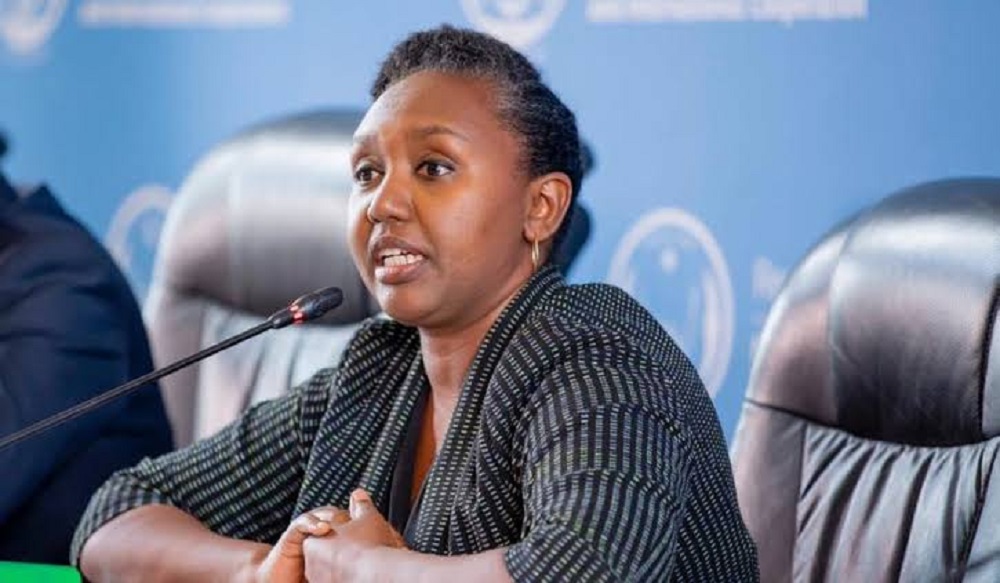
Dr. Doris Uwicyeza Picard, a representative from the Rwandan Ministry of Justice, affirmed that Rwanda had fulfilled its obligations under the agreement, which aimed to assist the UK in addressing its own asylum seeker issues.

Kigali considers the matter a “UK problem” and expects no reimbursement.

She told the BBC World Service: “We are under no obligation to provide any refund. We will remain in constant discussions. However, it is understood that there is no obligation on either side to request or receive a refund.”

Advertisement

According to Telegraph, UK had paid £270 million to Rwanda as part of the Migration and Economic Development Partnership but not a single migrant has been forcibly deported to the East African country. Only four failed asylum seekers have voluntarily flown to Rwanda after being offered £3000 to do so.

Although British ministers have not officially notified Rwanda of their intention to terminate the five-year agreement, Dr. Uwicyeza Picard acknowledged that Rwanda is aware of Sir Keir Starmer’s decision to cancel the deal, which was announced shortly after his election victory.

According to the agreement’s break clause, the UK can withdraw from two scheduled payments of £50 million in 2025 and 2026 without incurring penalties.

However, it is likely that the UK government will still be responsible for funding the asylum seekers already sent to Rwanda, numbering four individuals. Formal notification is pending, requiring a three-month notice period.

Advertisement

Dr Uwicyeza Picard said: “We were informed of the UK’s decision. We take note of the UK’s decision to terminate the agreement.

“We just want to reiterate that this was a partnership initiated by the UK to solve a UK problem and Rwanda stepped up as we have always stepped up in the past to provide safety, refuge and opportunities to migrants.”

She added: “Rwanda has maintained its side of the agreement and we have ramped up capacity to accommodate thousands of migrants and asylum seekers. We have upheld our end of the deal.

“We have put in a lot of effort and resources to accommodate those migrants. We understand that changes in government happen and incoming governments have different priorities and different policies. However, this was a state to state agreement and we believe this good faith will remain.”

Advertisement

‘Misconception of Rwanda deal’
Dr Uwicyeza Picard expressed concern at the criticism that Rwanda had faced as a result of entering into the deal with the UK. “It was because of this misconception that it was a Rwanda deal. Rwanda is not a deal, it is a country full of people whose policies are informed by the country’s recent history.”

She implicitly attacked the UNHCR, a major critic of the Rwanda scheme as being “unsafe” for migrants but which uses Rwanda to accommodate asylum seekers. “We work with organisations to take people from countries like Libya and provide them with opportunities in Rwanda,” she said.

“It beggars belief as to why Rwanda would be safe with these migrants rather than those migrants just because of the country they are coming from.”

The ending of the agreement will be complicated by a group of Sri Lankan Tamil asylum seekers who were transferred to Rwanda from the British territory of Diego Garcia in the Indian ocean.

Advertisement

The four, who landed in Diego Garcia in October 2021, hoping to sail to Canada to claim asylum, are Britain’s responsibility. They told the BBC last month they felt “isolated and unsafe” in Rwanda.

They said they have become too scared to go out and are hoping that the UK will find them a more permanent place to live, away from Rwanda. Three members of the group have had their claims for asylum approved by British Indian Ocean Territory authorities.

Audit of Rwanda scheme costs
At the weekend, Yvette Cooper, the Home Secretary, ordered an audit of the costs and liabilities of the Rwanda scheme which she hopes to publish before the summer recess at the end of July.

Labour says that scrapping the Rwanda scheme will free up £75 million in the first year of a Labour government to set up a new Border Security Command with Border Force, MI5 and the National Crime Agency (NCA) to crack down on people smuggling gangs.

Advertisement

Sir Keir pledged that the £75 million would be used to hire hundreds of extra investigators and “intelligence agents” who will be given counter-terror-style powers to prosecute gangs operating small boat routes across the Channel.

More than 90,000 migrants who were earmarked by Rishi Sunak’s government for deportation to Rwanda will be transferred to the asylum system entitling them to apply for leave to remain in the UK.

The Government also faces a multi-million pound compensation bill by more than 200 migrants who claim they were wrongly detained for flights to Rwanda this summer when there was no “realistic” prospect of their removal within a reasonable timescale.

The migrants were detained from the end of May – some in raids at their homes – but were subsequently bailed after courts ruled that there was no imminent prospect of their deportation to Rwanda. The Home Office said it had scheduled a flight for July 24.

Advertisement

A spokesman for Ms Cooper said: “This demonstrates a scandalous lack of care for taxpayer’s money – hundreds of million of pounds wasted on a gimmick that only saw four people removed in over two years. Imagine what that money could have done if it had been channelled into boosting Britain’s border security?

“Enough is enough. A Labour Government will invest in our border security with a new Border Security Command with hundreds of enforcement officers and investigators working across Europe to smash the criminal smuggling gangs making vast profit from small boat crossings.”

Continue Reading
Advertisement
Click to comment

Warning: Undefined variable $user_ID in /home/naijuinz/public_html/wp-content/themes/zox-news/comments.php on line 49

You must be logged in to post a comment Login

Leave a Reply

News

JAMB sacks staff member over extortion of candidates

Published

on

By

ADVERTISEMENT
Zoom Ad
ADVERTISEMENT
Zoom Ad

The Joint Admissions and Matriculation Board, JAMB, has sacked one of its staff members for allegedly extorting unsuspecting candidates.

The Board made this known on Monday in its bulletin, stating that the action was part of its renewed efforts to eliminate fraudulent practices within the admission and examination system.

According to JAMB, the sanction against the unnamed staff member showed that its fight against exploitation was not limited to external fraudsters but also applied to employees found abusing their positions.

“The Joint Admissions and Matriculation Board, JAMB, has terminated the appointment of one of its staff members for extorting unsuspecting candidates, in further demonstration of its renewed commitment to flushing out bad eggs from the system,” the board stated.

Advertisement

It further cautioned its employees against engaging in activities capable of undermining its credibility or exploiting candidates and members of the public.

The Board stressed that any staff members found guilty of misconduct would face severe consequences in line with established regulations.

“The Board noted that the action sends a clear and unequivocal message that its zero-tolerance policy on corruption and misconduct applies to everyone, irrespective of status or position,” it added.

The tertiary examination body reiterated that it would not shield any employee who abuses the trust placed in them by candidates or members of the public.

Advertisement
Continue Reading

News

UNICAL suspends nine students over exam misconduct

Published

on

By

ADVERTISEMENT
Zoom Ad
ADVERTISEMENT
Zoom Ad

The Senate of the University of Calabar (UniCal) has suspended nine students for one academic session over their involvement in examination misconduct.

According to a statement by the university’s public relations unit and made available in Calabar on Monday, the suspension was conveyed to the affected students in letters signed by the registrar, Chukwuka Icha.

The action, the university said, followed approval by the Senate following recommendations by its Examination Misconduct Committee (SEMC).

“The affected students have been suspended for the 2026/2027 academic session and are expected to resume their studies in the 2027/2028 academic session.

Advertisement

“Five of the affected students are from the Department of Theatre and Media Studies, Faculty of Arts,” it said.

The others are in the Department of Human Nutrition and Dietetics, Faculty of Basic Medical Sciences; the Department of Geology, Faculty of Physical Sciences; the Department of Pharmacology, Faculty of Basic Medical Sciences; and the Department of Sociology, Faculty of Social Sciences,” the statement said.

The university directed the acting chief security officer, deans, heads of departments, and other relevant units to take note of the suspension and ensure full compliance with the directive.

(NAN)

Advertisement
Continue Reading

News

FCT residents lament fresh hike in cooking gas price

Published

on

By

ADVERTISEMENT
Zoom Ad
ADVERTISEMENT
Zoom Ad

Residents of the Federal Capital Territory (FCT) have lamented a fresh increase in cooking gas prices, saying the development is forcing households to cut consumption, adjust budgets and resort to alternative cooking fuels.

Market checks across Abuja showed that Liquefied Petroleum Gas (LPG) is selling for between N1,380 and N2,000 per kilogramme, depending on location and outlet, after prices had dropped to as low as N1,250 in some areas earlier in September.

The latest increase has reversed some of the relief recorded in July, when improved supply and increased imports reportedly pushed prices down in several parts of the FCT.

For Mrs Rukayyah Muhammed, the increase has already disrupted her household budget.

Advertisement

She said she usually bought a kilogramme of cooking gas for about N1,300 but paid N1,700 at a black-market outlet around Idu Furniture area during at the weekend.

Muhammed said she had to use money set aside for transportation to make up the difference, adding that the rising cost had forced her to consider charcoal as an alternative.

“Now, I have to improvise with a coal stove and use charcoal. Sometimes, that is what I have to do,” she said.

Expressing frustration over the development, she appealed to the government to intervene, saying the rising cost of basic necessities had become unbearable for ordinary households.

Advertisement

“Honestly, I was heartbroken. Please, government should do something about it because the thing is tiring,” she said.

Another resident, Mrs Tunde, said she had noticed a sharp increase in cooking gas prices in recent times.

She said a 12kg cylinder, which previously cost her N16,500 to refill, now cost about N18,750.

Tunde said the increase had affected her household budget, adding that she sometimes resorted to an electric cooker because the gas did not last as long as she expected.

Advertisement

“The gas doesn’t even last for a month. For something that is that expensive, it should be able to serve us much longer,” she said.

She called on the government to make cooking gas more affordable and urged relevant authorities to ensure that weighing metres used by retailers were properly maintained so consumers received the exact quantity they paid for.

Similarly, Mrs Salaudeen said the increase had forced her to adjust her household spending after she had to refill her cylinder earlier than planned.

She said she usually cooked in bulk and stored food in a freezer but had resorted to charcoal for meals such as beans to reduce gas consumption.

Advertisement

“The increase is really affecting me. I can’t cook beans with gas; I have to use charcoal,” she said.

Another resident, Abdulwahab, said the price of cooking gas had risen from between N1,200 and N1,250 to about N1,500 per kilogramme in some locations.

He said he had noticed the increase since the previous week, expressing concern that salaries and purchasing power had not increased in line with the rising cost of basic necessities.

“People’s purchasing power has not increased, and salaries remain the same, while the cost of basic necessities continues to rise. This is very troubling,” he said.

Advertisement

Abdulwahab urged the government to consider measures, including subsidies, to make cooking gas more affordable.

The price fluctuation has also affected retailers, who said the increase had reduced patronage as customers now buy smaller quantities.

A gas operator with E. Adeboluwa International Limited in Life Camp, Mr Andrew, said the price rose from N1,350 to N1,500 per kilogramme.

Andrew said he noticed the increase when he resumed work recently, attributing it partly to transportation costs.

Advertisement

According to him, poor road conditions and rising fuel prices had increased the cost of transporting gas to Abuja.

He said the development had affected sales, as many customers could no longer afford to buy the quantities they previously purchased.

“Many customers now buy smaller quantities. There is no market like before,” he said.

A black-market operator, Muhammed Musa, said he noticed the latest increase about a week ago, adding that he had raised his price from N1,500 to N1,700 per kilogramme after buying from gas stations.

Advertisement

Musa said the increase had led to a decline in patronage, with some customers complaining that the commodity had become too expensive.

He said operators usually added about N200 to cover their costs, while the difference between black-market and gas station prices was generally between N200 and N300 per kilogramme.

Another black-market operator, Usman Haladu, said the price had increased from N1,400 to N1,800 per kilogramme.

Haladu, who said he noticed the increase about four days ago, explained that he was still selling his existing stock at the old price because he had yet to purchase a new supply.

Advertisement

At AA Rano Gas Station in Jabi, the manager, Nuru Sani Adam, said cooking gas was selling for about N1,380 per kilogramme.

Adam described the increase as a concern for consumers who depend on the commodity for their daily cooking needs, calling on the government to provide relief for households.

“We need things to become easier for us. I also use gas for cooking, and we need support because of the difficulties we are facing,” he said.

Small businesses that depend on LPG have also been affected by the rising cost.

Advertisement

Isyaka Mai Shayi, an Indomie and tea seller in Jabi, said he currently bought cooking gas for N1,300 per kilogramme, with 2kg costing him N2,600.

He said when he started the business about three to four years ago, a kilogramme of gas cost about N600.

Mai Shayi said the increase had raised his operating costs, as he relied on LPG to prepare Indomie and tea for customers.

He said some customers had complained about rising prices but continued to patronise his business because they had limited alternatives.

Advertisement

The vendor said he had previously increased the price of his Indomie when gas rose to about N1,100 per kilogramme but was reluctant to raise it again for fear of losing customers.

He called for measures to ease the burden on both consumers and small business owners.

The renewed increase comes barely two months after residents recorded some relief following a drop in LPG prices in parts of Abuja.

In July, market checks showed that the commodity sold for about N1,600 per kilogramme, down from as high as N2,000 in some locations. Outlets in Dutse and Gwarimpa were selling between N1,450 and N1,500, while some retailers in Kubwa, Dawaki, Bwari and Lugbe sold at between N1,650 and N1,700.

Advertisement

Prices reportedly declined further in some areas in early September, with improved supply and increased imports easing pressure on the market.

However, the latest market checks suggest that the relief has not been sustained uniformly, with prices now reaching as high as N2,000 per kilogramme in some parts of the FCT.

At the current price range, refilling a 12.5kg cylinder could cost between N17,250 and N25,000, depending on the outlet.

For households already grappling with high food, transportation and electricity costs, residents said the latest increase had made cooking gas a growing burden on their monthly budgets.

Advertisement

They called on the government and stakeholders in the LPG supply chain to address factors contributing to repeated price fluctuations and ensure more stable supply and affordable prices.

Credit: Daily Trust

Continue Reading

Trending

Copyright © 2024 Naija Blitz News