Connect with us

Economy

Dangote Refinery Imports Additional 11m Barrels Of US Crude Oil Due To Domestic Supply Shortage

Published

on

ADVERTISEMENT
Zoom Ad
ADVERTISEMENT
Zoom Ad

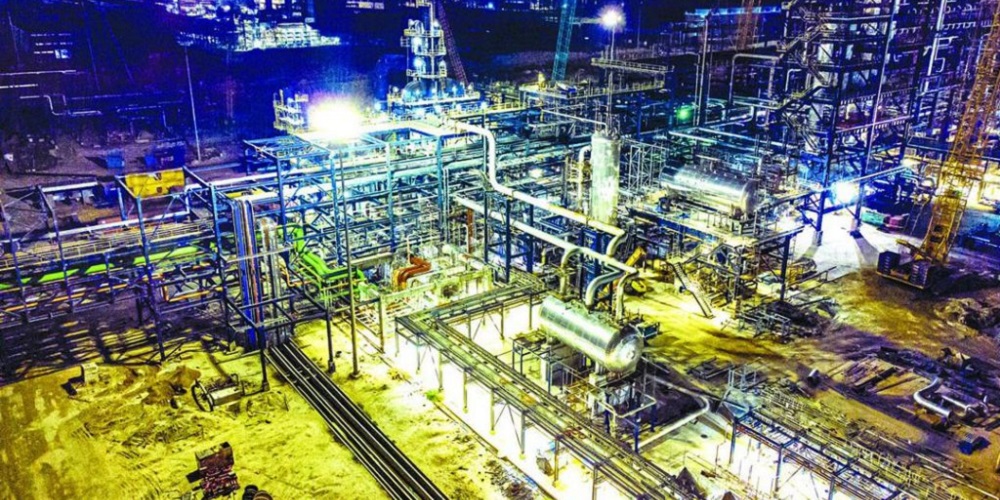
Dangote Petroleum Refinery and Petrochemicals has issued a tender for an additional 11 million barrels of US crude oil over the next six months due to Nigerian crude oil producers’ inability to meet its feedstock requirements.


The 650,000 barrels per day refinery has already received 9 million barrels of West Texas Intermediate crude from the US since the beginning of 2024 to offset unreliable domestic supplies. The new tender, closing on July 21, aims to procure two million barrels per month of WTI Midland crude for the world’s largest single-train facility located in Ibeju Lekki, Lagos, for the next six months starting in August.

In a tender reported by Bloomberg, Dangote Refinery purchased five million barrels of West Texas Intermediate (WTI) Midland crude for delivery in the upcoming months of August and September. Additionally, the company initiated a tender process to acquire an additional six million barrels of American crude for September.

This reliance on US crude highlights Nigeria’s challenges in meeting its own refining needs, attributed to issues such as crude theft, aging infrastructure, and underinvestment, which have led to a decline in production. In April, Nigeria’s daily output was only 1.45 million barrels, well below its capacity of 2.6 million barrels per day. The country recorded an estimated 30 million barrels underproduction in the first four months of 2024.

Advertisement

Dangote Refinery, crucial to Nigeria’s goal of becoming a net exporter of petroleum products, has found it necessary to import crude to sustain operations amidst insufficient domestic supply.

President of Dangote Group, Aliko Dangote, stated during the Africa CEO Forum 2024 that the refinery will need to continue importing crude as production scales up and alternative supply contracts are sought.

“It also makes economic sense for us to tender for crude. If we could source 100 percent Nigerian crude, then fine, but we can’t wait,” said Dangote.

Commenting on the challenge with sourcing crude locally, Dangote added, “there is a bit of a problem for us to source the entire volume of crude that we’re looking for domestically because we need different types and mixes. Unless crude production improves – which we pray and hope for – we need to go elsewhere.”

Advertisement

The refinery took in more than 41 million barrels of feedstock in the first half of the year as it completed test runs and gradually increased processing rates, tanker-tracking data show. Of that, about a quarter has been American supply.

According to CAS, the refinery took delivery of 11 WTI cargoes, or 9 million barrels, between February and May, contrasting with around 18 million barrels of Nigerian crude deliveries.

Nigerian National Petroleum Company (NNPC), NNPC has struggled to meet its 300,000 barrels per day obligation to the refinery due to operational constraints.

International financial analytics corporation, S&P Global, recently described the Dangote Petroleum Refinery and Petrochemicals company as capable of resolving Nigeria’s foreign exchange (forex) issue and its huge pressure on the local Naira currency, while also catalysing the country’s economic development.

Advertisement

S&P Global, headquartered in Manhattan, New York City, disclosed this during an onsite visit to the refinery as part of its sovereign credit ratings assessment of Nigeria. The team from the international rating agency were accompanied by officials from the Federal Ministry of Finance.

S&P noted that the refinery would bolster Nigeria’s oil sector and, more importantly, also have a positive impact on its growing economy.

Currently operating at 350,000 barrels per day capacity, Vice President of Oil and Gas at Dangote Industries Limited (DIL), Devakumar Edwin, recently disclosed that the refinery would scale up to at least 500,000 barrels per day capacity by July/August, commencing the refining of petrol and ultra-low sulphur diesel.

He noted that the refinery, designed to process a wide range of crudes including various African and Middle Eastern crudes, as well as US Light Oil, conforms to Euro V specifications. In addition, it is designed to comply with US EPA, European Union (EU) emission norms, the Department of Petroleum Resources (DPR) emission/effluent norms, and the African Refiners and Distribution Association (ARDA) standards.

Advertisement

While noting that most refineries were built by foreign companies, he said it is a thing of pride that a Nigerian company designed and built the world’s largest single-train refinery complex while acting directly as its own Engineering, Procurement, and Construction (EPC) contractor. The refinery which also incorporates a self-sufficient marine facility capable of handling the world’s largest vessels, can meet 100% of Nigeria’s requirement of all liquid products (Gasoline, Diesel, Kerosene & Aviation Jet) and have surplus of each of these products for export.

Continue Reading
Advertisement
Click to comment

Warning: Undefined variable $user_ID in /home/naijuinz/public_html/wp-content/themes/zox-news/comments.php on line 49

You must be logged in to post a comment Login

Leave a Reply

Economy

US: Meta To Pay $18bn Settlement Over Children’s Social Media Addiction

Published

on

By

ADVERTISEMENT
Zoom Ad
ADVERTISEMENT
Zoom Ad

American multinational technology company Meta has agreed to pay up to $18bn over the next decade to settle lawsuits brought by nearly all US states over allegations that Facebook and Instagram were designed to addict children.

The agreement, announced on Wednesday, brings an end to a federal trial in which states accused Meta of harming young users and misleading the public about the safety of its platforms.

Under the settlement, Meta will introduce stricter limits on how teenagers use Facebook and Instagram. Teenagers will generally be limited to two hours of use each day, while access between midnight and 06:00 will be blocked unless parents give permission.

The company will also disable most push notifications to teenagers during school hours and strengthen measures designed to prevent children from accessing age-restricted content.

Advertisement

However, Meta will not be required to abandon personalised recommendations or targeted advertising.

The company denied wrongdoing as part of the settlement, saying that ensuring teenagers have a safe and productive experience on its platforms is a priority.

Meta is expected to make maximum payments of about $16.7bn to 47 states, Washington DC and several US territories. California could receive about $2.2bn, while New York could receive around $1.1bn.

Another $459m will be paid to resolve state privacy claims connected to the Cambridge Analytica scandal, involving the unauthorised collection of data from millions of Facebook users.

Advertisement

The settlement also includes about $5bn in additional payments that could be made if Snapchat, TikTok and YouTube introduce similar protections for children.

The agreement could have wider consequences for the social media industry, as governments and regulators around the world face growing pressure to protect children from harmful online content and excessive social media use.

Thousands of other lawsuits remain against social media companies, with individuals, schools and government bodies accusing platforms of contributing to a youth mental health crisis involving anxiety, depression and suicide.

Meta has faced several recent legal setbacks over the safety of its platforms. Earlier this month, a New Mexico judge ordered the company to pay $567m and introduce additional youth safety measures.

Advertisement

In March, a Los Angeles jury also found Meta and Google negligent in designing their platforms and ordered the companies to pay $6m to a woman who said she became addicted to Instagram and YouTube as a child.

Meta and Google have said they will appeal those verdicts.

Not every US state accepted the latest settlement. New Mexico and Florida are continuing their legal battles against Meta.

Florida Attorney General James Uthmeier criticised the agreement, saying the payments were insignificant compared with the harm he alleges Meta’s platforms have caused children.

Advertisement

The settlement was approved by US District Judge Yvonne Gonzalez Rogers, who had overseen the federal trial.

The agreement represents one of the largest efforts yet by US authorities to force a major social media company to change how its platforms operate for young users.

Continue Reading

Economy

WhatsApp Business: Meta Introduces Charges Per-message From October 1

Published

on

By

ADVERTISEMENT
Zoom Ad
ADVERTISEMENT
Zoom Ad

Meta, the parent company of WhatsApp, will begin charging businesses for certain messages sent through the WhatsApp Business Platform from October 1, 2026.

The company announced the pricing change in a WhatsApp Business Platform update published in July 2026.

Under the new system, businesses will pay about N14 per service or qualifying utility message sent through the platform.

The charges will apply to companies using the official WhatsApp Business Platform, formerly known as the WhatsApp Business API, to manage customer conversations on a large scale.

Advertisement

Banks, fintechs, e-commerce companies, telecoms operators, logistics firms and large retailers that use the platform for customer service and transaction-related communication are among those that will be affected.

However, the new charges will not affect ordinary WhatsApp users or most small businesses using the standard WhatsApp Business app on their phones.

Currently, when a customer sends a message to a business, a 24-hour customer service window opens. During this period, businesses can respond with free-form service messages and certain utility messages without paying Meta.

From October 1, however, Meta will charge businesses on a per-message basis for service messages sent during the customer service window.

Advertisement

Meta said in its developer documentation, “Effective October 1, 2026, Meta will charge on a per-message basis for all service messages, consistent with how Meta charges for template messages. These messages have not been charged since November 1, 2024.”

The company added, “Effective October 1, 2026, Meta will charge on a per-message basis for utility messages sent in response to users (within an open 24-hour customer service window). These messages have not been charged since July 1, 2025.”

Utility messages include payment confirmations, order updates and delivery notifications.

Meta also warned businesses and Solution Providers to add a payment method before the new charges take effect.

Advertisement

It said, “For any Solution Provider or directly-integrated businesses that does not have a payment method on file by September 30, 2026, Meta will stop delivering service messages as of when they become charged on October 1, 2026.”

For Nigerian businesses, a chargeable utility or service message is expected to cost about $0.0101, equivalent to roughly N14 based on an exchange rate of about N1,340 to the dollar.

Marketing messages will cost more, at about $0.062 per message, or approximately N84 using the same exchange rate.

The charges are Meta’s fees and do not necessarily represent the total amount a business will pay. Companies using Business Solution Providers or third-party platforms to access the WhatsApp Business Platform may also face additional charges.

Advertisement

For instance, a Nigerian fintech sending 500,000 chargeable utility or service messages at $0.0101 per message would pay about $5,050 in Meta messaging fees alone.

At an exchange rate of N1,340 to the dollar, this amounts to approximately N6.8 million, excluding additional provider charges.

Although the cost per message is relatively small, the charges could significantly increase operating costs for businesses that send hundreds of thousands or millions of messages each month.

WhatsApp has become an important communication channel for Nigerian businesses, with banks and fintechs using it for customer support and transaction-related communication.

Advertisement

E-commerce, logistics and retail companies also use the platform for order updates, delivery notifications and other customer interactions.

The new pricing is part of Meta’s broader changes to WhatsApp Business, with the company gradually moving business messaging towards a per-message pricing model.

From October 1, previously free service messages and qualifying utility messages sent within an open 24-hour customer service window will become chargeable on the WhatsApp Business Platform.

Advertisement
Continue Reading

Economy

Check out Dollar to Naira exchange rate today, August 28, 2026

Published

on

ADVERTISEMENT
Zoom Ad
ADVERTISEMENT
Zoom Ad

The Nigerian naira strengthened further against the United States dollar at the official foreign exchange market, reaching a five-month high of about ₦1,338.59 per dollar on Thursday, August 27, 2026.

The latest movement places the naira among the stronger-performing currencies in Nigeria’s foreign exchange market as improved dollar liquidity and rising external reserves continue to support the local currency.

For Friday, August 28, the latest available market data puts the dollar at around ₦1,341.66 per dollar, although the NFEM closing rate for the day will depend on trading activity and may differ from live indicative rates.

Recent official-market data had shown the naira at ₦1,343.59 per dollar on Wednesday, August 26, before strengthening further on Thursday. The improvement has been linked to sustained dollar liquidity and stronger external buffers.

Advertisement

In the parallel market, the dollar remained substantially higher than the official rate. AbokiFX-related market reports showed the greenback quoted around ₦1,400 to buy and ₦1,410 to sell on Thursday, August 27.

This means Nigerians looking to buy $1 in the parallel market would need about ₦1,410, while those selling $1 could receive around ₦1,400, depending on the dealer and location.

The gap between the official and parallel markets remains significant. Based on the latest indicative official rate of about ₦1,341.66 and a parallel-market selling rate of ₦1,410, the difference is approximately ₦68 per dollar.

The naira’s recent gains have coincided with a sharp improvement in Nigeria’s foreign-exchange reserves. It was reported that external reserves had risen to about $53.34 billion, an 18-year high, while improved dollar liquidity has helped ease pressure on the local currency.

Advertisement

For importers, travellers, students paying overseas tuition and businesses with dollar obligations, the exchange rate remains an important factor in determining the naira cost of foreign transactions.

However, the actual rate available to customers may differ from the NFEM benchmark or parallel-market quotation. Banks, Bureau de Change operators and other authorised dealers may apply different rates depending on the transaction, amount, location and prevailing market conditions.

Parallel-market rates are unofficial and can change several times during the day. The Central Bank of Nigeria does not recognise the parallel market as an official foreign-exchange market.

As of the morning of August 28, 2026, the dollar is therefore trading around ₦1,341.66 on the latest indicative market data, while parallel-market quotations remain around ₦1,400–₦1,410 per dollar.

Advertisement
Continue Reading

Trending

Copyright © 2024 Naija Blitz News