…as CDS call for a ban on illegal mining for 1-2 years
… 387 persons arrested in connection with illegal mining – Army
By Gloria Ikibah
The House of Representatives has said that Nigeria loses $9 billion annually to illegal mining, while only 3 percent royalty is paid by few licensed miners in the country.
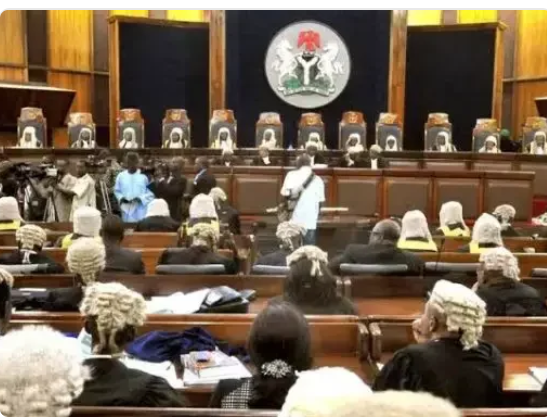
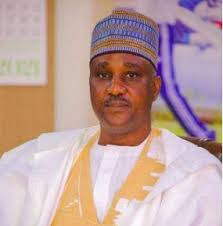
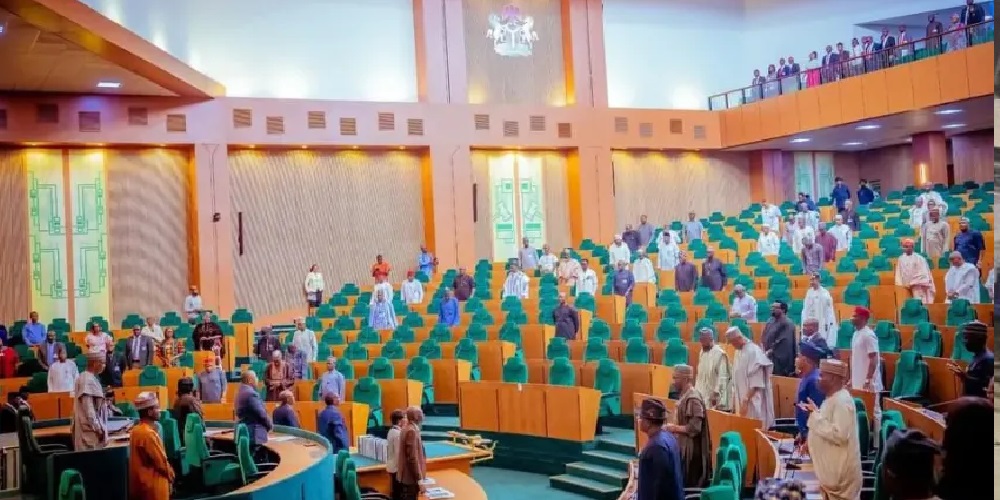
Chairman, House Commitee on Solid Mineral, Rep. Jonathan Gaza disclosed this at a public hearing organized by the House Commitee on Solid Minerals Development on the need to investigate illegal mining in the solid mineral sector on Monday in Abuja.
Rep. Gaza said the development had impeded on the country’s ability to maximize the benefits from its mineral resources.
According to him, the negative impacts of illegal mining has led to insecurity and conflicts over control of mining sites and their resources.
These conflicts he stated has developed into violence there by worsen existing political and social tensions in affected communities which has resulted in the limited data availability and inadequate measures to control this illicit practice.
He said: “This public hearing is aimed to investigating illegal mining activities, under-reporting wins (extract E-Products) by mining and quarry license operators, utilization of financial interventions in the Nigerian solid minerals sector amounting to trillions of naira within the solid mineral sector and also the Nigeria minerals and Mining Act (Amendment Bill) and Nigeria solid Minerals Development Company (establishment bill) respectively.
“The leadership of the 10th House of Assembly has found it expedient and a sense of duty to carry out these investigative hearings to necessitate transparency and accountability, public participation, policy formation and identify challenges and solutions that will ultimately lead to the revamping of our solid mineral sector.As we are all aware, illegal mining poses substantial risks to our nation’s economy, environment, and security.
“The unregulated exploitation of our natural resources jeopardizes the sustainability of the mineral sector, leading to environmental degradation and revenue loss that could otherwise benefit our communities and nation as a whole.
“It is imperative that we take as a matter of urgency, decisive steps and necessary action to address this issue and ensure that our solid mineral sector operates within the framework of the law, protecting our natural resources for future generations.
“Furthermore, as representatives of the people, the parliament is deeply worried about the loss of revenue through unregulated and illicit mining operations with the Federal Government disclosing that unlawful mining costs the country $9bn each year, with the only money coming from a 3 percent royalty paid by the few licensed miners.
“By attentively listening to their testimonies and perspectives, we can gain a deeper understanding of the challenges posed by illegal mining and develop effective strategies to combat this illicit activity. Allow me to state emphatically that the time is now, for us to work collaboratively and take immediate and decisive actions to revitalize and develop this critical sector for the overall benefit of benefits all Nigerians while preserving our environment for future generations”, the Chairman stated.
The Chief of Defence Staff, General Christopher Musa who was represented by the Director Of Operations, Air Vice Marshal Nnaemeka Ignatius Ilo, in his submission revealed that the group of persons involved in illegal mining have connections, as they often brag to have links with those at the top.
Speaking on why illegal mining have continue to take place despite measures by the federal government to curtail it, AVM Ilo stated that most people involved in the process have connections backing them up, adding that foreigners also come into the country to carry out the illegal act as far as Burkina Faso.
“The involvement of the elites in it, we can’t tell, but we know that most of the time when we catch these foreigners, they will tell us that they have connections. I don’t want to say some things, but sometimes you hand these people over and the next thing you see, they’re released.
“Talking of illegal mining, I’m going to talk about how the military sees it.There are so many other stakeholders that I want to talk about. From our various operations and the statistics that we have, we notice that, first of all, the framework guiding mining in Nigeria is very, very good. It needs to be strengthened.Why do I say so, sir?
“In 2018 or so, during the last administration, there was a ban on illegal mining in South Africa, South Africa, Sinai, Nigeria, which even established a gold mine zone. Despite that ban, mining licenses were being issued to people to mine in that zone. So the strengthening of the institutional framework is very key.
“The leader of the house made mention of something about banning mining for like a year. It is very key we do that. I know the country is going to somehow feel the effects in terms of revenue, but we need to go a little off the level in order to ensure that we get things right, so that we can decisively deal with those involved in this illegal mining.
“Then one thing we notice also is that, whether it’s coincidence or what, we can’t say, but we notice that insecurity thrives where this illegal mining is happening. Someone once said that the issue of banditry and terrorism is like a smokescreen to stop the governments and the military from dealing decisively with these people. I can’t for sure ascertain that fact, but I know fully well that there is a correlation between insecurity and illegal mining.
“We have as far as people from Burkina Faso coming to mine in Nigeria. So the strength of our borders, too, is a factor. Why I’m saying all this is that there’s need for the government to equip properly those involved to checkmate most of this illegal mining.There’s need for government to equip them properly and also give them the marching order. It’s one thing to say and another thing to see that the government is really committed to dealing with people.
“Anybody caught in this illegal mining must be dealt with decisively and examples should be made for others to know publicly that this is what the government is doing to ensure that we tackle that area.The third aspect we noted is poverty. These areas where this illegal mining takes place, the people are poor. Virtually, lack of education is also part of it.Most of them that we get, one way or the other, no formal education.
“This illegal mining is, let me say, the people perpetrating this use them. It’s their own source of livelihood, the people within that area.So the army will give a little bit of detail on some arrests that we’ve made or mining sites that we’ve raided. I’m just talking in general terms.
“So what is the way forward? The way forward from our own view is that one, we have to strengthen the regulatory framework for these mining activities.And also empower the agencies involved in checking mining activities for them to do their work. We could go into this banning of mining for a year or two and then probably get the acts right.
“Anybody seen committing illegal mining will be dealt with decisively. Engaging the international community. In 2011 in Liberia, this same issue we are facing in Nigeria was obvious in Liberia. The international community was approached after they’ve seen the atrocities of things done.And that’s when the issue of blood diorama came up. What did they do? You know, there’s a carbon dating on every mineral resource that is in an area involved.
“So they banned the Liberia diorama in the international community.Both, it’s Liberia and Sierra Leone, both. Charles Taylor was the main person because that was how they started off cash. So they banned it in the international market.So they couldn’t access this product. And of course, naturally, the mining activities started dying in those areas. So we also approached the international community.
“More so to engage the communities where these activities are done. How do we engage them? We could sort of organize lectures through the languages around there.On how sustainable, legal, sustainable mining are done. And how they can key into it. And also, the government could look into also how to give them another source of livelihood.Because sincerely, they live on this mining. Even when it is banned, it is difficult to get them out of mine. Because that is how they survive.So another source of livelihood, the government can look into, and set up a committee to look into it on how to give them another source of livelihood. While the ones that want to be involved in mining will be shown how legal, sustainable mining is being done.
“Finally, the government needs to show their willpower that they actually want to tackle this thing by ensuring that anybody, no matter how highly placed, that is involved in illegal mining, faces the books accordingly.
Speaking also at the hearing, the representative of Nigeria Army Colonel Tajudeen Lamidi said that the Nigeria Army has arrested 387 individuals in connection with illegal mining.
“The Nigerian Army conducts a wide range of operations across all the geopolitical zones of the country. I think virtually as it is now, we have the Nigerian Army deploying in almost every state of the country in one operation or the other.And because of this, what we do basically is to support those agencies that are constantly mandated to protect the critical national infrastructures of the country, including mining. And in doing that in our operations, we have to contend with illegal miners. And what we do is after arresting them, we hand them over to the appropriate agency available in that area.Some of these agencies include the Department of State Security Services, the Nigerian Police Force, and the Nigerian Security and Civil Defense Corps.
“Sometimes we do conduct operations together where we go to some of these illegal mining sites together and conduct operations. But because the Nigerian Army cannot prosecute them, we hand them over to those agencies to continue with the prosecution aspect. As contained in the memo, from December to date, we’ve arrested 387 individuals in connection with illegal mining. We also have bank rules and also some of these illegal – these minerals that were arrested, which were handed over as exhibits to those agencies for them to be prosecuted.
“In summary, I would say from December to date, in Abia, we have 10 people arrested.In Eboyi State, we have 12. The Federal Capital Territory and its environs – I mean places like Kuje, Bwari, and more, we’ve arrested 276 individuals. While in Osun State, we’ve arrested 19.In Oyo, particularly in the northern part of Oyo State, where they share bandry with Kwara State, those places are very close to the whole Oyo National Park we’ve arrested around 55 people. I think the minna, in that particular place, meets about 17 trucks loaded with Konzite.In Plateau we have 25, while in Zamfara, we have 15.
“When the APM was talking the other day, he mentioned the issue of the ban of mining activity in Zamfara. Well, sadly, we still arrested people in that community that it is still taking place.Just like I said, we continue to collaborate with the agencies that are constitutionally mandated to check illegal mining. But it is because we realize there is a nexus between insecurity and illegal mining, which the chairman also alluded to in his opening remarks, when he said, if you want, you cannot fight illegal mining without fighting security.
“If you want to actually reduce insecurity in the country, those agencies that are also mandated to fight insecurity must also fight illegal mining.So, in terms of challenges, I think the APM has touched on some of the challenges which we have. I think the APM, the civil defense men, and the man from the Ministry of Solidarity and Relief, we’ve actually been involved in the issue of illegal mining, I think, since January. When I came, I saw that they are the same people from the agencies that have been isolating us.
“The issue of those communities, the APM talked about it, there is poverty, and they are also involved in it. And I think this makes it very, very difficult to check illegal mining. It is not only the people coming from outside that are involved.The locals benefit from it. But the question is, what is the role of state, what is the role of local government in illegal mining? I think most of it is raised with the federal government. Why the state and the local government don’t actually have roles to play.I think we need to look for roles for both the state and the local government to get involved.
We also discovered some of the companies, some companies have exploitation licenses and not mining licenses. So what they do, they use one license to do the two.So I think the issue of the role of state and local government, I think I’ve talked about this. I think that so far, this is what the Nigerian army does. We’ve mandated every Nigerian army formation and unit to continue to support those agencies that are constantly mandated to fight illegal mining, towards the region and our country of illegal mining, and improve the economy.
While declaring the public hearing open, the Speaker of the House, Tajudeen Abbas who was represented by the Leader Professor Julius Ihonvbere noted that Illegal mining activity is a growing socio-economic challenge in Nigeria, adding that it has led to loss of ecosystems and increased poverty level especially among peasant farmers who depend solely on environmental resources for a living.
According to him, Nigeria is richly blessed with solid minerals, which should bring great fortune to the country and the citizens, but the wealth is largely stolen by criminal elements. According to reports, an estimated 80% of mining in the North West region is carried out illegally and the mining of large untapped mineral deposits in the area is at the root of community violence.
“A disturbing issue, which makes this Investigative Hearing very critical is the fact that various mining communities in Nigeria live in agonizing conditions, economically and socially, arising from years of neglect, and various deprivations and severe environmental degradation, air and water pollution, arising from unsafe mining practices by illegal miners.
“The impact of the unprecedented illegal mining across Nigeria which has been devastating as farmlands, crops and economic trees are not only destroyed by mining activities but reduce their benefit and values to the residents.
“The rise in illegal mining highlights fundamental social, institutional and structural problems in the country, therefore today’s interaction is aimed to provide enough guidance on curbing the menace of illegal mining, and also assess the role played by the Regulators in the process of their regulatory functions in the particularly as it relates to mining practices.
“The decision of the House of Representatives to investigate illegal mining shows our commitment and determination to take decisive steps towards addressing nefarious mining practices and the non-compliance with set standards in the solid minerals sector, including the Nigeria Minerals and Mining Act (Amendment) Bill and the Nigeria Solid Mineral Development Company (Establishment) Bill which are currently before the House, and for which a Public Hearing will be held on 17th July, 2024”, he added.