News
Retirement under present scheme a death trap – NLC
- /home/naijuinz/public_html/wp-content/plugins/mvp-social-buttons/mvp-social-buttons.php on line 27
https://naijablitznews.com/wp-content/uploads/2024/07/images-45.jpeg&description=Retirement under present scheme a death trap – NLC', 'pinterestShare', 'width=750,height=350'); return false;" title="Pin This Post">
- Share
- Tweet /home/naijuinz/public_html/wp-content/plugins/mvp-social-buttons/mvp-social-buttons.php on line 72
https://naijablitznews.com/wp-content/uploads/2024/07/images-45.jpeg&description=Retirement under present scheme a death trap – NLC', 'pinterestShare', 'width=750,height=350'); return false;" title="Pin This Post">
*Says, nations pension scheme pauperizes workers at retirement

By Francesca Hangeior.

The Nigeria Labour Congress, NLC, has raised the alarm, claiming the present pension scheme is pauperising workers at retirement.
According to NLC, retirement under the present scheme may have become a death sentence for many retirees and this has many consequences for behaviour of workers in active service.
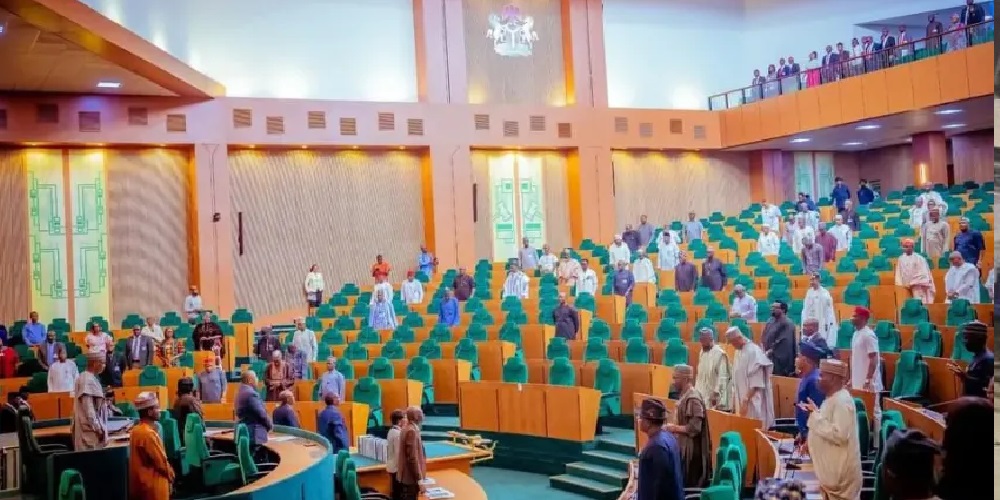
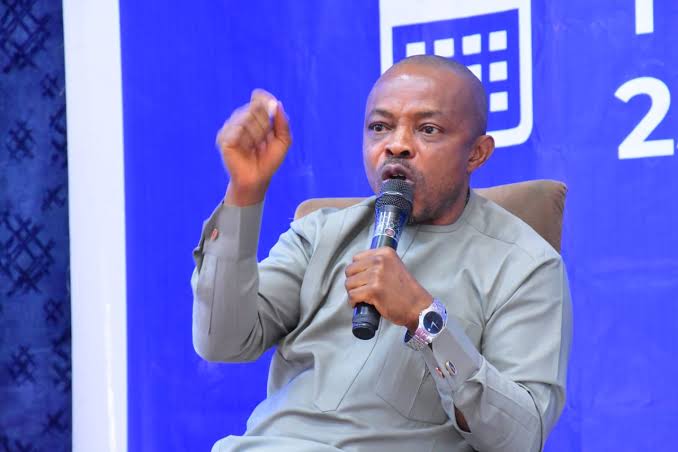
President of NLC, Joe Ajaero, who raised the alarm in a remark at a retirement summit in Abuja, with the theme “Challenges, Strategies, Prospects and Opportunities at Retirement in Nigeria”, faulted the alleged over N360 billion pension arrears owed by the federal government to its retirees.
He said “The pension scheme, as it currently stands in Nigeria, unfortunately falls short of its fundamental purpose; to provide for workers in their old age. The medium for storing Pensions which is the Naira has maintained an unstable value and has kept depreciating over the years. It is only a stable platform that can truly serve as a solid store of value that can sufficiently maintain the value of contributions when workers retire.
“Pensions are meant to offer security and peace of mind, ensuring that retirees can enjoy their golden years without financial stress and in good health. However, the reality for many of us is starkly different.
“It is worrying that most of retired members encounter not just health challenges but many others leading to untimely deaths because of the character and nature of our Pension scheme which pauperises them financially at retirement.
“Retirement under the present scheme may therefore become a death sentence for many and this has many consequences for behaviour of workers in active service.
”The federal government it is alleged owes nearly N260 billion in pension arrears, with federal parastatals accounting for an additional N40 billion. Some states have arrears stretching up to eight years. In the private sector, reports indicate that many companies are in arrears of up to three years, deducting contributions from workers’ salaries without remitting them to the respective Pension Fund Administrators (PFAs).
“In 2021, PENCOM according to its fourth quarter 2021 report, appointed recovery agents realised from 36 defaulting employers N984.23 million, representing N406.42 million as principal contribution and N577.87 million as penalty. The Micro-Pensions designed for the informal sector remain inadequately activated, further complicating the financial security of our informal economy workers.
”The non-contributory Pensions funds are still subject to severe lootings by those who are supposed to manage them without consequences. The Maina and the former Accountant General issues are still very fresh in our minds.
“As usual, people get away with all manners of mind-boggling heist in our nation. We had wished that the various statutory agencies saddled with the responsibility of protecting workers are alive to their responsibilities. These challenges create an atmosphere of fear and uncertainty for the average worker approaching retirement in Nigeria.”

News
Nigeria-Côte d’Ivoire Reaffirm Strong Ties as Ambassador Nwaobiala Presents Credentials
By Gloria Ikibah
Nigeria and Côte d’Ivoire have reaffirmed their commitment to deepening bilateral relations and advancing regional cooperation following the formal presentation of Letters of Credence by Nigeria’s Ambassador to Côte d’Ivoire, His Excellency Ezenwa Chukwuemeka Nwaobiala.
The ceremony, held at the Presidential Palace in Abidjan on 18 June 2026, officially marked the commencement of Ambassador Nwaobiala’s diplomatic assignment after his appointment by President Bola Ahmed Tinubu. The envoy was accompanied by his wife, Lady Chidinma Nwaobiala, during the presentation to President Alassane Ouattara.
During the event, Ambassador Nwaobiala conveyed the goodwill of the Nigerian President to his Ivorian counterpart and reaffirmed Abuja’s commitment to strengthening the long-standing relationship between the two West African nations.
According to a statement issued by the Ministry of Foreign Affairs, President Ouattara welcomed the Nigerian envoy and underscored the importance of the enduring friendship between both countries, expressing his willingness to work closely with the ambassador to expand cooperation in areas of shared interest, particularly regional integration and economic development.
The ceremony highlighted the strong diplomatic ties between Nigeria and Côte d’Ivoire and reinforced their common resolve to promote peace, stability and prosperity across the West African sub-region.
Speaking later at a reception organised in his honour by members of the Nigerian community in Côte d’Ivoire, Ambassador Nwaobiala reflected on the deep historical and cultural links between the two countries.
The ambassador also expressed appreciation to President Bola Ahmed Tinubu and the leadership of the Ministry of Foreign Affairs for the confidence placed in him, pledging to serve Nigeria with dedication and integrity.
“Nigeria and Côte d’Ivoire are bound not only by geography, but by history, shared aspirations and an unwavering commitment to the ideals of African unity and prosperity.
“I express gratitude to President Bola Ahmed Tinubu and the leadership of the Ministry of Foreign Affairs for the confidence reposed in me and pledge to undertake my responsibility as Ambassador with humility, a sense of duty and firm resolve to advance the enduring interests of Nigeria while strengthening the bonds of friendship and partnership between the two brotherly nations”, he said.
Ambassador Nwaobiala further assured Nigerians and his host country of his determination to promote stronger cooperation and mutual understanding throughout his tenure.
He pledged his “commitment to fostering greater understanding, mutual respect and productive collaboration for the benefit of the peoples of the two countries,” while urging the international community to embrace dialogue and partnership as the foundation for global progress.
“Nations around the world should continue to build bridges and partnerships, in place of walls and partitions”, he added.
His presentation of credentials comes as Nigeria continues to strengthen diplomatic engagement across Africa, with renewed emphasis on regional integration, economic cooperation and collective efforts to advance peace, security and sustainable development within the Economic Community of West African States (ECOWAS) and beyond.
News
Nigeria Needs Policy and Legislative Resilience to Turn Reforms into Results, Says Hajiya Fatima Usman-Katsina
Head Federal and National Assembly Affairs, Hajiya Fatima Y. Usman-Katsina has called on federal and state governments to adopt Policy and Legislative Resilience (PLR) as a practical framework to strengthen institutions, improve fiscal discipline, deepen citizen participation, and ensure that Nigeria’s ongoing reforms deliver measurable results.
Usman-Katsina said Nigeria is at a critical governance moment, with major reforms moving from legislation into implementation amid rising fiscal, political, security and development pressures.
She noted this in a statement she personally signed stating that” while laws and policies are important, their real value depends on the capacity of institutions to sustain implementation, adapt to changing realities, and remain focused on citizen-centred outcomes.
“Nigeria does not only need new laws and policies. It needs institutions that can sustain reforms, adapt under pressure and deliver measurable outcomes for citizens,” she said.
According to her, Policy and Legislative Resilience refers to the ability of governments, particularly sub-national governments, to respond effectively to political, fiscal and development challenges through stronger policies, laws, regulations and implementation systems.
She explained that many well-intentioned policies fail not because they lack vision, but because the institutions responsible for implementation often lack the resilience, coordination, accountability and feedback mechanisms required to turn policy ambitions into results.
“Resilience is not a passive state, it is a matter of inner strength, determination, persistence and the willingness to look inward and move forward with clarity of purpose,” Usman-Katsina stated.
She observed that PLR is especially important for Nigerian states as they confront revenue pressures, rising expenditure obligations, service delivery gaps, security concerns and growing citizen expectations.
She added that state governments must look inward, optimise existing revenue systems, eliminate bottlenecks, improve the quality of expenditure, and strengthen the link between budgets, laws, and visible development outcomes.
Usman-Katsina identified four core pillars of Policy and Legislative Resilience.The first is inclusive representation, communication and coordination, ensuring that governors, budget planners, legislators, MDAs and citizens are connected through credible consultation and feedback mechanisms.
The second is sustainable policy and legislative support, which requires continuous review, advocacy, regulatory stability and institutional routines that preserve reform objectives beyond political cycles.
The third is strengthened oversight, involving joint monitoring by communities, legislators and implementing agencies to improve accountability, reduce wastage and ensure that public spending produces tangible benefits.
The fourth is internal optimisation and consolidation, which requires governments to identify savings, improve revenue collection, remove bottlenecks, streamline regulations and align state-level policies with national development priorities.
She stressed that citizen engagement must move beyond ceremonial consultation to become a standard part of policy design, budgeting, legislative review, implementation tracking and public accountability.
“Citizens are no longer passive recipients of policy. They are active stakeholders whose priorities, experiences and feedback must shape how laws are designed, budgets are prepared, and projects are implemented,” she said.
Usman-Katsina also called for community-led needs assessments to be institutionalised as part of legislative and budget processes, noting that policies become more resilient when they are rooted in the lived realities of communities.She further stated that Nigeria’s ongoing reform environment provides a timely opportunity to embed PLR into governance systems. She said reforms in taxation, public finance, social investment, security, health, human capital development and sub-national governance will only achieve lasting impact if supported by resilient institutions and measurable implementation frameworks.”PLR is about turning reforms into systems that last. Done right, it creates governance value chains that improve service delivery, attract investment, support local enterprise, strengthen inclusive security, raise incomes and expand employment,” she added.She urged governments, legislatures, MDAs, development partners, and civic actors to adopt PLR as a practical tool to improve policy implementation, legislative effectiveness, fiscal accountability, and citizen trust.Usman-Katsina concluded that Nigeria’s reform momentum must now be matched with resilient institutions, inclusive governance, evidence-based decision-making and a stronger culture of accountability.
About Hajiya Fatima Y. Usman-Katsina
Hajiya Fatima Y. Usman-Katsina is Head, Federal and National Affairs. She is also the Pioneer Female Head of Peace and Inclusive Security at the Nigeria Governors’ Forum.
News
Court sends Sowore to Kuje Prison
The Federal High Court in Abuja has ordered activist and AAC presidential candidate Omoyele Sowore remanded at Kuje Correctional Centre pending a ruling on his bail.
Justice Mohammed Umar made the order Monday after Sowore failed to appear in court on June 16.
The judge had revoked his bail and issued a bench warrant for his arrest.
—Motion for stay filed—
Sowore’s new counsel, Adeyinka Olumide-Fusika, has now filed a motion seeking to stay the court’s earlier decision.
Justice Umar adjourned the matter to June 24 to hear the application.
Sowore arrived in court Monday with supporters, some carrying placards.
He’s being prosecuted by the DSS over X and Facebook posts where he allegedly called President Bola Tinubu “a criminal”.
He denies the allegations.
The DSS was represented by Akinkolu Kehinde, SAN, who made the oral application for the bench warrant on June 16.
-
Sports22 hours agoCuracao Picks First World Cup Point In Goalless Draw With Ecuador
-
News21 hours agoCome back to ‘authentic PDP’ – Lagos PDP tells Bode George
-
News10 hours agoJAMB ends affiliated degree programmes in Colleges of Education
-
News10 hours agoFull List: Winners Of By-Elections In Kano, Rivers, Others
-
Entertainment21 hours agoPopular media influencer Peller completes bride price rites for Jarvis ahead of marriage
-
News20 hours agoUS, Iran to begin fresh talks after deadly strikes
-
Politics22 hours agoEnugu North by-election: APC candidate emerges winner
-
Metro10 hours agoSad: Unidentified lady slumps, dies on Ajah bridge in Lagos

Warning: Undefined variable $user_ID in /home/naijuinz/public_html/wp-content/themes/zox-news/comments.php on line 49
You must be logged in to post a comment Login