Connect with us

News

Reps Commences Process To Amend CIPSMN Act 2007

Published

on

ADVERTISEMENT
Zoom Ad
ADVERTISEMENT
Zoom Ad
 
 
By Gloria Ikibah 
 
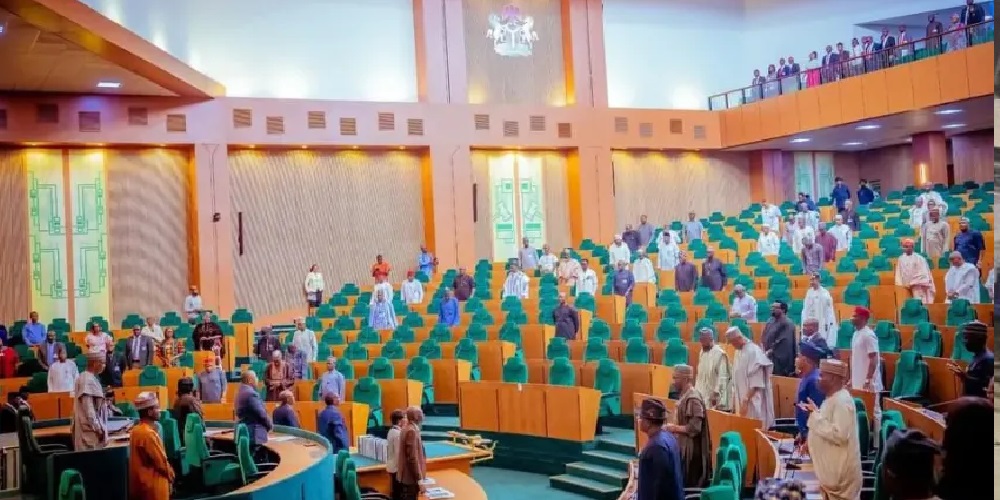
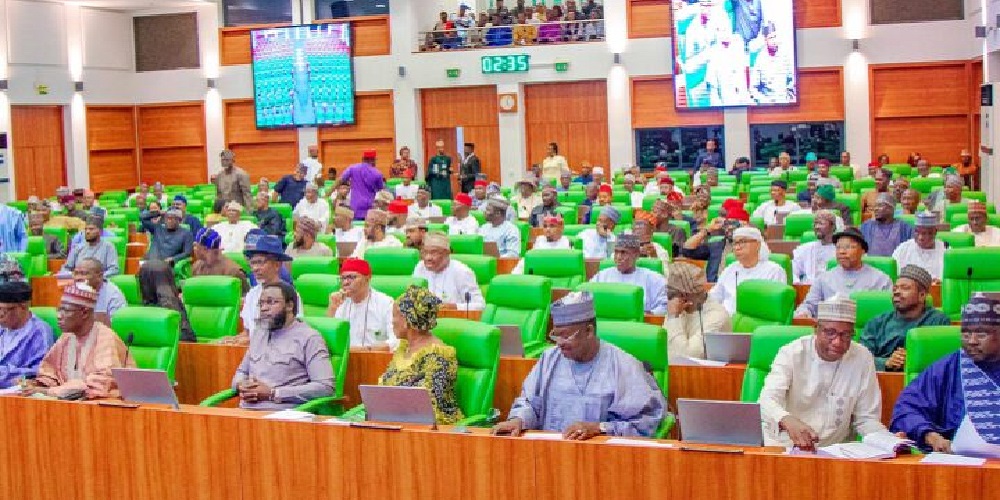
The House of Representatives has started the process of amendment of “A Bill For an Act To Amend The Chartered Institute of Purchasing And Supply Management of Nigeria Act, 2007 To be In Tandem With What Obtains In Procurement Professional Practice Across The Globe And For Related Matters ( HR. 346/2924)”.
 
Declaring the session open, Speaker Tajudeen Abbas, said the public hearing reinforces the dedication of the House to an open, participatory and consultative parliament as enumerated significantly in the Legislative Agenda and demonstrated in the recent open NASS Week organized to interface with the masses of our country. 
 
The Speaker who was represented by the House Leader, Rep. Julius Ihonvbare, said that public hearing is a key legislative process put in place  by the parliament to provide relevant stakeholders and other members of the public  a robust window to be part of the parliamentary practice. In so doing, your views, feelings and aspirations   are captured in the legislative framework to guarantee better legal outputs. 
 
He said: “Effective procurement and supply processes play a vital role in economic growth and development and essentially provoke efficient public service delivery, hence the need to reform the Chartered Institute of Purchase and Supply Management to modernize the profession in line with global standard practice to stimulate enhanced proficiency on the part of the practitioners and to foster greater positive results in public and private governance”.   
 
Giving his submission the Bureau for Public Procurement (BPP) asked the House not to pass the bill seeking to amend the Chartered Institute of Purchasing and Supply Management of Nigeria, as the amendment being sought will largely bring the institute in conflict with the mandate of the Bureau.
 
Representative of the Director General of BPP, who is the Director of Civil Infrastructure, Nasir Bello said allowing the amendment being sought by the bill will bring the institute in conflict with the mandate of the Bureau.
 
Bello said having reviewed the Bill, the Bureau, is of the view that allowing the amendment to section 1(c) which seeks to “(c) providing training, education and examination of persons desiring to become professional procures as well as procurement auditors according to the provisions of the Act whether in Nigeria or abroad” will bring it in conflict with section 5(k) of the Public Procurement Act.
 
In addition, he said amending section 12 as contained in the amendment bill will also bring it in conflict with global standards and the provision of the Procurement Act, adding that the institute should rather focus on its primary role in relation to purchasing procurement, store, materials, warehouse, logistics management or procurement chain management in Nigeria and other parts of the world. 
 
He said: “It should not be allowed to delve into function functions of the Bureau in relation to procurement and Public procurement in particular. In carrying out its mandate as stipulated in Section 5 (k) of the PPA, the Bureau has several higher institutions of learning handling courses on Procurement. The institute may change its name but the scope of its mandate should remain, as it is contained in its extant law.
 
“Notwithstanding the foregoing, should the House be inclined towards allowing the proposed amendment (without the Bureau necessarily conceding). The Bureau wishes to draw attention to the provision of Section 5(s) of the PPA which vests in the Bureau as the Regulator of Public Procurement in Nigeria, the mandate to co-ordinate relevant training programs to build institutional capacity”.
 
The Director further stated that the provision of the intended training by the Institute, especially in the area of Public Procurement, must be co-ordinated by the Bureau, as the regulatory Agency for Public procurement in Nigeria.
 
According to him, the PPA, 2007 allows the National Council on Public Procurement and the Bureau of Public Procurement as the Regulatory Authorities responsible for the monitoring and oversight of Public Procurement, harmonizing the existing Government policies and practices by regulating, setting standards and developing the Legal framework and professional capacity for Public Procurement in Nigeria; and other related matters.
 
Bello explained that the Act is to remove all impediments that had hitherto prevented effective and efficient management of public procurement in Nigeria including the private sector, adding that some of the major impediments included lack of competition and transparency, non-publication of contract opportunities, non-prior disclosure of rules to be used in the selection process, lack of standard bidding documents and setting practice guidelines for procurement practitioners, allow free entry and exist and align with global best practices in line with the UNCITRAL Model Law through multi- stakeholder engagement.
 
He added that the world has moved onto specialization and sector-based professionalization of public procurement. We now have within the same country or across different continents provisions for specialized services and their co-existence. 
 
Earlier in his remarks, the Chairman, House Committee on Public Procurement, Rep. Unyime Idem said the bill is priority bill because of the important role it has played in shaping professionals in the field of purchasing and supply chain management in Nigeria and the development of high standard professional skill, ability and integrity among all those engaged in procurement practice.
 
He said the House committee was committed on Public Procurement to upholding the legal and institutional framework for the enthronement of transparency, accountability, value for money and efficiency in the procurement of works, goods and services within Ministries, Departments, Agencies, and Parastatals as stipulated in the Public Procurement Act, 2007. 
 
He said Strict adherence and due process compliance with the PPA, 2007 is mandatory for all MDAs, to avoid legal repercussions and ensure the efficient and ethical utilization of public resources.
Ends

Continue Reading
Advertisement
Click to comment

Warning: Undefined variable $user_ID in /home/naijuinz/public_html/wp-content/themes/zox-news/comments.php on line 49

You must be logged in to post a comment Login

Leave a Reply

News

Watch FCT minister Nyesom Wike on TVC by 5pm today as he speaks on Rainbow Coalition, 2027 elections

Published

on

ADVERTISEMENT
Zoom Ad
ADVERTISEMENT
Zoom Ad

The Minister of Federal Capital Territory FCT Nyesom Wike will today speak on the essence of Rainbow Coalition, President Bola TInubu and the 2027 general elections .

Continue Reading

News

Fresh Crisis: Atiku, Malami, Others Fingered As EFCC Begins Fresh Probe Of Mambilla Power Deal

Published

on

ADVERTISEMENT
Zoom Ad
ADVERTISEMENT
Zoom Ad


The Economic and Financial Crimes Commission (EFCC) has constituted a team to investigate individuals named in alleged questionable dealings linked to the Mambilla Hydroelectric Power Project, following a recent ruling by the International Chamber of Commerce (ICC) in Paris, France, in favour of Nigeria.

Sources familiar with the development told Premium Times that the investigative team is being supervised by the Chairman of the EFCC, Ola Olukoyede.

The investigation comes days after the ICC tribunal dismissed major claims brought before it by Sunrise Power and Transmission Company Limited against Nigeria over the 3,960-megawatt Mambilla Hydroelectric Power Project in Taraba State.

Advertisement


The company had made a claim against the Federal Republic of Nigeria, demanding $680 million as a settlement sum and interest in respect of another arbitration in which it is claiming over $2.7 billion in compensation and interest.

Delivering its verdict on Thursday, the tribunal directed Sunrise and its promoter to refund Nigeria’s legal fees of $11.8 million. It also rejected Sunrise’s claim for an order that Nigeria should pay the company $400 million in satisfaction of the settlement sum of $200 million and the default sum of $200 million.

The tribunal insisted that Leno Adesanya, the promoter of Sunrise, is bound by the arbitration agreement with Nigeria pursuant to the settlement agreement, adding that it has jurisdiction over Nigeria’s counterclaim against him and his firm.

Advertisement

According to sources, EFCC investigation will focus on individuals mentioned in the tribunal’s findings over payments and transactions that the panel described as raising concerns or ‘red flags.’

The tribunal revealed that many Nigerian politicians and individuals who held public offices were named as associates or officials who had dealings with Adesanya

The officials include former Vice President Atiku Abubakar, his then-wife Jennifer Douglas, Abubakar Malami, Olu Agunloye, Sambo Dasuki, his son Abubakar Dasuki, Abdullahi Yola, and Dere Awosika.

Malami, a former Attorney-General of the Federation (AGF), was severely criticised by the tribunal for acting against Nigeria’s national interest. He was accused of maintaining an “inappropriate relationship” with Adesanya, and entering into a corrupt deal. Already, Mr Malami is facing trial after the EFCC accused him, his wife, and son of conspiring to conceal, disguise and retain about N8.7 billion proceeds of unlawful activities.

Advertisement

Atiku, former vice president of Nigeria, was named by the tribunal in its review of a $500,000 payment made by Adesanya on 30 January 2003 from the Swiss bank account of his offshore company, China Castle Investments Ltd, to a US bank account belonging to Ms Douglas, Atiku’s ex-wife.

The payment was made less than four months before the Mambilla BOT contract was purportedly awarded to Sunrise by then Minister of Power and Steel, Olu Agunloye. Mr Adesanya told the tribunal that the money was part of a foreign-exchange transaction carried out for Atiku through his bureau de change business.

But the tribunal said that the explanation was not supported by documentary evidence. It said Adesanya did not produce records showing the underlying naira payment, the exchange rate applied, instructions from Atiku or his aides, correspondence concerning the transaction or documentation establishing its commercial purpose.

The tribunal also noted that neither Atiku nor Ms Douglas provided a witness statement or declaration supporting the explanation.

Advertisement

It noted that Atiku had led a Nigerian government delegation to Beijing in July 2002, which included Adesanya, during which the Nigerian government and the Chinese state-owned NCPEC signed a memorandum of understanding covering, among other projects, the Mambilla project.

However, Atiku has denied being indicted by the tribunal and said he was not responsible for awarding the contract.

Agunloye, a former minister of Power and Steel, was linked to payments he described as part of “medical expenses”. He is currently standing trial over charges relating to the Mambilla power project.

The tribunal also questioned payments of $1.74 million made to Abubakar Dasuki, the son of Sambo Dasuki, a former National Security Adviser (NSA), adding that the transaction raised “considerable red flags.”

Advertisement

The tribunal said Dasuki failed to substantiate his claim that the payment was a loan, citing inconsistencies in his evidence, the absence of a loan agreement and the lack of records showing how the transaction was accounted for by Sunrise.

Yola and Awosika were also named among those involved in alleged bribery and the receipt of controversial payments.

Sources told Premium Times that the EFCC may invite Atiku and his ex-wife, Douglas, for questioning in the coming days or weeks.

Advertisement
Continue Reading

News

Atiku Challenges Tinubu Over Third Straight UNGA Absence, Questions ‘American Baggage’

Published

on

ADVERTISEMENT
Zoom Ad
ADVERTISEMENT
Zoom Ad

Former Vice President Atiku Abubakar has demanded an explanation from President Bola Ahmed Tinubu over his decision to stay away from the United Nations General Assembly for the third consecutive year.

Atiku’s criticism followed the Presidency’s announcement that Vice President Kashim Shettima would represent Tinubu and lead Nigeria’s delegation to the 81st Session of the UNGA in New York. The 2026 General Debate is scheduled for September 22 to 28.

In a statement issued on Sunday by his Senior Special Assistant on Public Communication, Phrank Shaibu, Atiku said Tinubu had been absent from the 79th UNGA in 2024, the 80th in 2025 and would again not attend the 81st session in 2026.

Atiku, the presidential candidate of the African Democratic Congress, said the repeated delegation of the Vice President could no longer be regarded as routine diplomatic representation.

Advertisement

He argued that the UNGA provides heads of government with an important platform to advance their countries’ interests, hold bilateral meetings, attract investments, pursue trade opportunities and engage development partners.

According to him, while Shettima could effectively represent Nigeria, the Vice President’s participation could not completely substitute for the President’s personal presence and visibility at a major international diplomatic gathering.

Atiku further argued that Nigeria could lose opportunities for investment and development financing when the President is absent from such high-level engagements.

“The cost is eventually transferred to ordinary citizens: fewer investments mean fewer businesses and fewer jobs,” he said.

Advertisement

The former vice president also questioned reports that Nigeria’s Permanent Representative to the United Nations, Jimoh Ibrahim, had secured a seat for Tinubu close to United States President Donald Trump during the General Assembly.

“The seat was secured, but the President disappeared,” Atiku said.

He also questioned reports that the Tinubu administration had spent up to $9 million on American lobbyists, asking why Nigeria would commit such funds to lobbying efforts in the United States while the President repeatedly stayed away from the UN gathering in New York.

“What exactly did Nigerians purchase with that money?” Atiku asked.

Advertisement

Questions over Tinubu’s US legal history

Atiku subsequently raised questions about Tinubu’s past legal proceedings in the United States, citing Case No. 93 C 4483 before the US District Court for the Northern District of Illinois.

He referred to the forfeiture proceedings involving funds held in accounts in Tinubu’s name and those of associated companies, alleging that US court documents linked the funds to narcotics trafficking and money laundering.

Atiku said the proceedings ultimately resulted in the forfeiture of approximately $460,000 to the US government.

Advertisement

However, he stressed that he was not claiming Tinubu was legally barred from entering the United States.

“We are not asserting that Tinubu is legally prohibited from entering the United States. The Presidency has announced no such restriction,” Atiku said.

He nevertheless questioned whether Tinubu’s past legal history in the US had any connection with his repeated absence from the UNGA.

“Nigerians are therefore entitled to ask whether Tinubu’s three consecutive UNGA absences have anything to do with this documented American history,” he said.

Advertisement

Atiku called on the Presidency to explain the reason for Tinubu’s absence if there was no legal, diplomatic, medical or personal impediment preventing him from attending.

“Has one man’s personal history become a burden on Nigeria’s diplomatic engagement?” he asked.

He also questioned whether the President’s absence could affect Nigeria’s diplomatic engagement with the United States and other countries.

Atiku concluded by demanding greater transparency from the Presidency over the decision to send Shettima to the UNGA for a third consecu

Advertisement
Continue Reading

Trending

Copyright © 2024 Naija Blitz News