BY BOLAJI AFOLABI


Until a few weeks back, a vast majority of Nigerians probably did not know, and never heard the name before. Perhaps, just a few in and around the highly lucrative oil sector know him. But all that changed on June 18, 2024, when he delivered an incongruous statement that not only shook the highly lucrative sector but also snowballed into a frenzy, creating palpable tension in the polity. While addressing journalists in Port Harcourt, Farouk Ahmed, Chief Executive Officer, Nigerian Midstream and Downstream Petroleum Regulatory Authority, (NMDPRA) said: “Dangote Refinery is still in the pre-commissioning stage. It has not being licensed yet. We have not licensed them yet.”
Taken aback by his comments, even as journalists were still processing Ahmed’s comment, the NMDPRA boss went further: “I think they are at about 45 percent completion …… so, in terms of quality, currently, the AGO quality in terms of sulphur is the lowest as far as West Africa’s requirement of 50 ppm is concerned.” Not done, Ahmed threw a sucker punch: “Dangote Refinery as well as some (other) refineries produce between 650 to 1,200 ppm …..so, in terms of quality, their quality is much more inferior to the imported quality.” 
As expected, Farouk’s “Port Harcourt homily” has reverberated across the sector. It has elicited public outrage from primordial and latter-day oil and gas experts, public analysts, economic experts, social commentators, the media and all. While some view it as insouciant and discombulated, few others equate it with a display of crass arrogance. They perceive it as calculated mischief and an expression of bottled emotions. Popular opinion was that Ahmed’s statement could be inimical to the growth of the nation’s energy sector where Dangote leads with his recent multibillion dollar investment. Smaller, smarter modular refineries are also becoming attractive to many investors keen on contributing to national economic development.
Disturbed about Ahmed’s inglorious, infamous tantrums, an otherwise unobtrusive, sober and measured Aliko Dangote, had to come out from his quiet and withdrawn cocoon to engage the sector’s regulatory agencies. Africa’s richest investor among many things spoke about alleged sabotage by some elements within the oil sector; about the inability of International Oil Companies, (IOCs) to supply crude to his refinery and booby traps aimed at frustrating the refinery. The billionaire entrepreneur concluded that the comments were aimed to soil and sully his integrity and pooh-pooh his uncommon investment in the nation’s economy. Some industry experts agreed that the disparaging, denigrating, and derogatory comments by Ahmed could be likened to “the voice of Jacob and hand of Esau.”
Worried about the future of his monumental perspiration in enabling the project, Dangote as though speaking for the energy sector released a statement on July 21, 2024, detailing his refinery’s position and other necessary details for national information and enlightenment. The refinery’s products according to him, do not only comply with set standards but have also been scientifically confirmed to surpass the quality of similar products elsewhere. Waxing technical, Dangote said a “parts per million” (ppm) what is now at 32 which was a massive leap from previous 665ppm – considered the best quality in Nigeria at that time. The world’s largest single train refinery is therefore superior in quality compared to imported equivalents. His refinery he stated, was already exporting products to some European countries and Singapore.
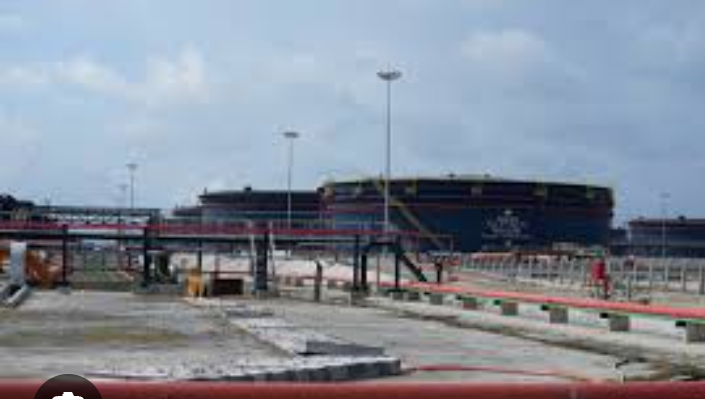
From available data, the $20 billion Dollars facility is designed to process a wide range of products including Africa and Middle Eastern crude, and the USA Light Tight. At full capacity, it can meet the country’s entire demand for petrol, diesel, kerosene, and jet fuel as well as having surpluses for export. Also, it is ingeniously designed and operated to comply with the USA Environmental Protection Agency, (EPA); European emission norms; Department of Petroleum Resources, (DPR) emission and effluent norms; the African Refiners & Distribution Association, (ARDA) standards, and other global requirements. According to comments by oil and gas experts, there are undeniable proofs that Dangote Refinery, and other modular refineries including Aradel, Waltersmith, and few others meet every operational and environmental standard as set by national, regional, and global regulatory agencies. So, why the growing attacks and denigration of home-based enterprise by regulatory agencies.
Given the national importance of the matter, and considering its possible micro and macro effects of national economy, energy security, and technology development, the House of Representatives, which also has oversight responsibilities over federal regulatory agencies, and players in the sector waded into the matter. In a first of it’s kind excursion, the leadership of the 360-member parliament visited at the refinery for on-the-spot assessment of the facility. Speaker Abass Tajudeen lauded Dangote for establishing the refinery which is a significant asset in Nigeria’s quest for self-sufficiency in petroleum products. He lauded Dangote for positioning the behemoth as beacon of hope for Nigeria to navigate through the turbulent waters of energy supply challenges. Tajudeen noted that the technological monument was a critical stride in the transformation the landscape of petroleum production in Nigeria and contributing immensely to employment generation.
An obviously frustrated Dangote thanked the lawmakers for their timely response which underscores their firm commitment to national development. The multivalent industrialist enjoined the National Assembly to set up a high-powered committee to ascertain the veracity of the brickbats on the refinery. He advocated impartial assessment to unravel hidden matters, determine what best serves the interest of Nigeria and promised to adhere to whatever resolutions reached by the parliament. Peeved by the antics of regulators to slow-down the smooth commencement of full operations at the refinery, a usually quiet, calm and cool-tempered Dangote further revealed that the regulators actions are detrimental to the technological emancipation and economic development of the most-populous black nation in the world.
Not minding the mindless strip and savage tactics, wrongful vilification, and vacuous intentions deployed, and exhibited in throwing darts at Dangote and other private players in the industry, majority of Nigerians are sympathetic to the plight of these businessmen. Without prejudice to any of their past errors, many people believe that Dangote, Waltersmith, Aradel, and other modular refineries have demonstrated unusual patriotism, grit and ruggedness in championing a noble and novel cause. These indigenous companies that are dedicated to the exploration and production of oil and gas resources have overcome numerous natural encumbrances and human treachery on their pathways.
Aside their successful forays into the murky, vicious, and slanderous oil sector which is filled with perennial backstabbing and blackmailing, they are also making veritable in-roads into other sub-sector of the industry which in the long run will be of immense benefit to Nigeria and citizens. Just as Dangote refinery is projected to earn over $25 billion dollars in revenue and exports when fully operational, other modular refineries are also contributing respectably towards solving economic challenges. Waltersmith’s 5,000bpd modular refinery which successfully began commercial exports from it’s Ibigwe field, Imo state in 2008, contributing about 300 million litres of refined products annually is not only providing direct and indirect employment but also growing local and national economy. Same can be said of the Aradel Refinery which produces about 11,000bpd, and Agbarha-Otor Refinery which hopes to produce about 60,000 bpd and is expected to commence commercial operations in November 2024.
Contrary to whatever invertebrate narratives and puerile conjectures being bandied about the state of these refineries, their operational guidelines, and corporate governance is anchored on strict adherence to global best practices. They ensure that every level of operations must be done rightly, transparently, and methodically in conformity with laid down rules and procedures. Accusations that Dangote is monopolistic is extremely petty, lazy, and nonsensical. The NNPC has been a perennial drainpipe on the nation’s economy, as its four refineries are under eternal turnaround maintenance while idle workers are permanently on the country’s wage bill.
Even if the NMDPRA’s position is true, Dangote, and other Nigerian-owned refineries deserve better from the regulatory agencies. Their actions clearly contradicts the agenda of Federal Government in boosting local industries, and attracting offshore investors. Perhaps one needs to reiterate that for any country to get foreign direct investment, every potential investor takes frank, and unambiguous assessment of such country’s industrial policy. The comments of NMDPRA, and position of other regulatory agencies about Dangote, and other modular refineries is inimical to the vision of government in it’s quest for meaningful economic growth of all sectors, particularly the oil sector which is the live wire of national development.
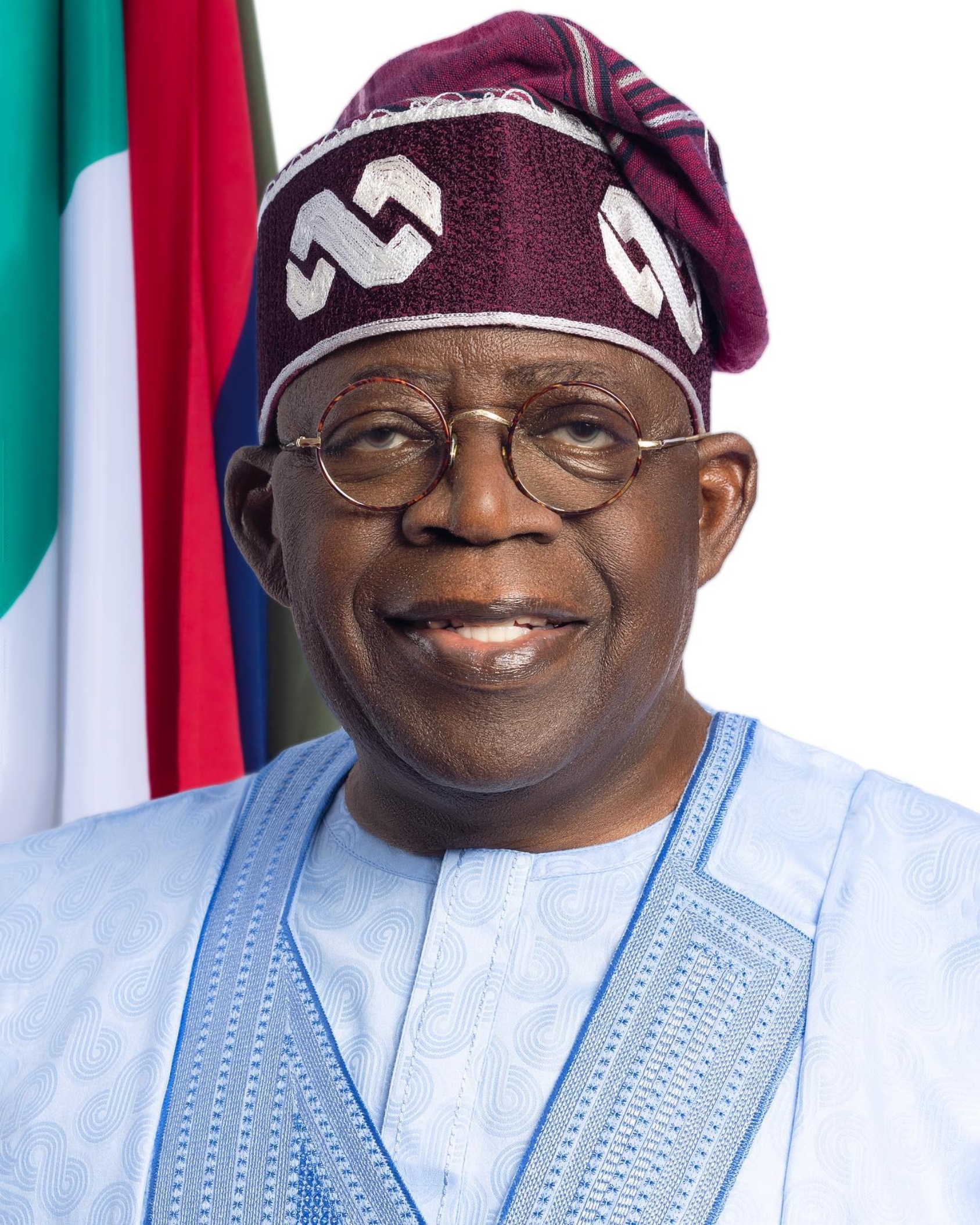
Happily, President Bola Tinubu has taken bold, decisive decision by directing the NNPC to ensure Dangote and other refineries procure crude oil in Naira. This laudable intervention coming immediately after Senator Heineken Lokpobiri’s; Petroleum Resources Minister (Oil) meeting with Dangote, and leadership of NNPC, NMDPRA and NUPRC is timely and pro-active. With the presidential directive, it is expected that the hedges and beef between Dangote and NNPC will be fully resolved in national interest such that the refinery and other modular refineries can function without encumbrances. Nigerians are hopeful that with the resolution of the needless impasse, Dangote and other modular refineries producing at full capacities, would bring numerous positives to the sector and Nigeria’s economy. There would be availability of products and domestic supply security; employment generation; boosting SMEs operations; increased foreign exchange reserves; technology development; improved GDP; economic diversification; establishment of manufacturing industries and other benefits.
*BOLAJI AFOLABI, a development communications specialist, was with the Office of Public Affairs in The Presidency.*