Connect with us

Economy

Restrict tariff plans to seven, NCC tells telcos

Published

on

ADVERTISEMENT
Zoom Ad
ADVERTISEMENT
Zoom Ad

The Nigerian Communications Commission has issued a directive to all telecommunications operators in the country, mandating them to restrict the number of available tariff plans to a maximum of seven.


A tariff plan is a structured pricing scheme that outlines the charges and conditions under which telecommunications services are provided to subscribers.

The NCC also approved new tariff guidelines for operators, which it said were designed to enhance transparency, improve consumer understanding, and foster fair competition amongst licensees of the commission.

The commission disclosed this in a document posted on its website and signed by the Executive Vice-Chairman of the commission, Aminu Maida.

Advertisement

The document read partly, “The number of tariff plans offered per operator is limited to seven and the number of bundles offered per operator is limited to 100.

“There are no limitations to the number of Add-ons a subscriber can opt into. However, each operator must have in place a mechanism that informs subscribers of the number of Add-ons they have at the point of purchasing another Add-on. Subscribers must be able to check (via USSD string, SMS) the number of Add-ons purchased.”

Checks by our correspondent showed that the two major telecommunications companies currently offer more tariff plans than the stipulated number in the directive.

MTN has eight tariff plans, Etisalat has seven, Airtel has 10 plans and Glo offers its customers four tariff plans.

Advertisement

In the document, titled, ‘Guidance for the Simplification of Tariffs,’ the NCC stated that the full disclosure of all tariff components and conditions is mandatory, asking telcos to ensure that all marketing and promotional materials are clear and comprehensible.

The NCC added that operators should prioritise consumer education and transparency in all communications to ensure subscribers can make informed choices.

“Develop and submit detailed migration plans to transition subscribers smoothly to new tariff plans, without loss of service quality or benefits.

“All promotional elements must receive prior approval from the Commission and should be offered as standalone products with clear terms and validity periods.

Advertisement

“Submit comprehensive periodical reports detailing all active tariff plans, bundles, promotions, and Quality oS metrics. The guidance shall take effect on July 29 and will remain valid and binding on licensees until further reviewed by the commission,” the regulators said.

Meanwhile, operators have debunked claims of a tariff increase approval by the commission.

A text sent to our correspondent by the Chairman of the Association of Licensed Telecom Operators in Nigeria, Gbenga Adebayo, on Saturday simply stated, “Telcos have not been granted any approval for tariff review.”

Also, calls and text messages sent by our correspondent showed that the rates are still the same.

Advertisement
Continue Reading
Advertisement
Click to comment

Warning: Undefined variable $user_ID in /home/naijuinz/public_html/wp-content/themes/zox-news/comments.php on line 49

You must be logged in to post a comment Login

Leave a Reply

Economy

Telcos to spend $76 billion CapEx in five years

Published

on

By

ADVERTISEMENT
Zoom Ad
ADVERTISEMENT
Zoom Ad

Telecommunication operators in Nigeria and other parts of Africa are expected to inject over $76 billion as capital expenditure (CapEx) into their various networks in five years.

GSMA said this projection is for between 2025 and 2030. It, however, said that for the investment to translate into improved coverage, quality and capacity, there is a need for an improved regulatory and cost environment.

According to the telecom body, markets that have reduced rights-of-way costs, enabled infrastructure sharing and provided regulatory predictability are seeing faster and broader capital deployment.

Infrastructure-sharing models in particular are emerging as a structural solution for extending coverage into areas where individual operator economics alone cannot justify the investment, it said.

Advertisement

MTN Nigeria’s quarterly CapEx this year has been extremely aggressive, starting with N390.3 billion in Q1 and reaching N620.5 billion by H1, while Airtel Africa invested $389 million in Q1 2026 alone, its highest first quarter rollout.

Both operators are front loading investments to expand 4G/5G coverage and fibre infrastructure.
For FY 2025, MTN Nigeria’s CapEx surged to N1 trillion, more than doubling from N443.5 billion in FY 2024. This was driven by aggressive investment in broadband coverage and spectrum leasing.

CapEx intensity stood at 19.3 per cent of revenue, reflecting heavy reinvestment into infrastructure.

Airtel Africa CapEx rose to $884 million in FY 2026, a 31.9 per cent increase year-on-year. The company rolled out over 3,250 new sites and expanded fibre by 3,200 km, with plans to accelerate spending to $1.1 billion in FY 2027.

Advertisement

Both operators are scaling aggressively to meet surging data demand and smartphone penetration.

MTN’s investment intensity is higher relative to revenue, while Airtel is focusing on pan-African expansion with Nigeria as a key growth driver.

For FY 2026, Airtel reported 47.5 per cent constant currency revenue growth in Nigeria, showing strong returns on its infrastructure push.

Airtel Africa is balancing pan African expansion with Nigeria as a key growth driver. Its CapEx is more diversified across regions but still heavily weighted toward network densification.

Advertisement
Continue Reading

Economy

NAICOM revokes Nigeria Reinsurance’s licence, appoints Muiz Banire as receiver/liquidator

Published

on

By

ADVERTISEMENT
Zoom Ad
ADVERTISEMENT
Zoom Ad

The National Insurance Commission, NAICOM, has revoked the operating licence of Nigeria Reinsurance Corporation over its failure to meet the statutory Minimum Capital Requirement, MCR, and appointed Dr. Muiz Banire, SAN, as Receiver/Provisional Liquidator to wind up the company’s affairs.
The appointment took effect on August 3, 2026, following the cancellation of the corporation’s certificate of registration by the insurance regulator.

In a public notice dated August 4, 2026, Banire said he was appointed by NAICOM, in exercise of its statutory powers, to take charge of the receivership and liquidation of Nigeria Reinsurance Corporation (RR-002).

According to the notice, the company’s licence was revoked after it failed to comply with the prescribed Minimum Capital Requirement applicable to its category of licence within the stipulated compliance period, in accordance with the Nigerian Insurance Industry Reform Act (NIIRA) 2025 and other extant laws, regulations and guidelines.

Banire said his appointment empowers him to immediately trace, recover, secure and take possession of all assets belonging to the company, collate and settle its liabilities in accordance with the NIIRA 2025, liaise with NAICOM on matters relating to the liquidation, and submit periodic reports to the Commission.

Advertisement

He also directed banks, financial institutions, insurance policyholders and members of the public not to honour any instruction relating to the company except those issued by him or persons expressly authorised by him.

As part of the liquidation process, Banire announced that all bank accounts belonging to Nigeria Reinsurance Corporation had been frozen with immediate effect pending further directives from his office.

He warned that any transaction carried out without his authorisation would be at the risk of the parties involved.

“Members of the general public, banks and financial institutions in Nigeria are hereby informed that no financial transactions should be conducted pursuant to any instruction from anyone except those that I issue as the Receiver/Provisional Liquidator,” the notice stated.

Advertisement

According to him, only instructions bearing his official seal and stamp as a legal practitioner, or those issued by persons duly authorised by him, will be recognised throughout the liquidation process.

The regulatory action marks a significant enforcement measure by NAICOM and underscores the Commission’s resolve to ensure that insurance and reinsurance companies operating in Nigeria comply with statutory capital requirements designed to safeguard policyholders and strengthen the financial stability of the industry.

The liquidation process is expected to involve the recovery and realisation of the company’s assets, verification and settlement of valid claims and liabilities, and the orderly winding up of its affairs in accordance with the provisions of the law.

The public notice serves as formal notification to policyholders, creditors, banks and other stakeholders that all dealings concerning Nigeria Reinsurance Corporation must henceforth, be channelled through the Receiver/Provisional Liquidator until the liquidation process is concluded.

Advertisement
Continue Reading

Economy

See Black Market Dollar To Naira Exchange Rate Today 5th August 2026

Published

on

ADVERTISEMENT
Zoom Ad
ADVERTISEMENT
Zoom Ad

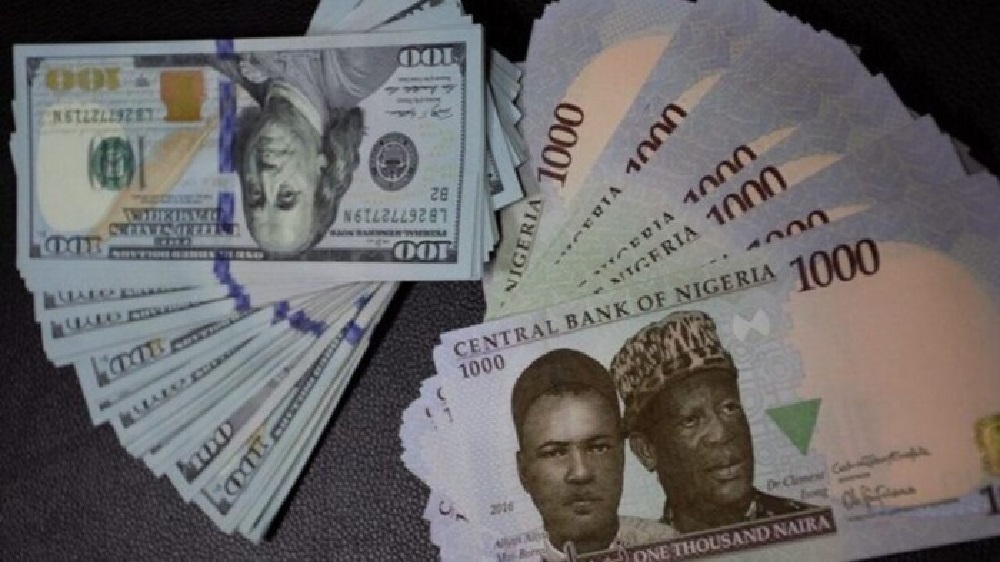
The Black Market Dollar-to-Naira Exchange Rate for 5th August 2026 Can Be Accessed Below.

NOTE: The exchange rate changes hourly. It depends on the volume of dollars available and the Demand. This means…you can buy or sell 1 dollar at a certain rate, and the price can change (high or low) within hours.

The official naira black market exchange rate in Nigeria today, including the Black Market rates, Bureau De Change (BDC), and CBN rates.

The exchange rate fluctuates hourly based on the supply and demand of dollars in the market.
What’s the dollar to naira black market today, 5th August 2026?
The exchange rate for a dollar to naira at Lagos Parallel Market (Black Market) players sell a dollar for ₦1425 and buy at ₦1410 on Wednesday, 5th August, 2026, according to sources at Bureau De Change (BDC).
Please note that the Central Bank of Nigeria (CBN) does not recognize the parallel market (black market), as it has directed individuals who want to engage in Forex to approach their respective banks.

Advertisement

Dollar to Naira Black Market Rate Today
Dollar to Naira (USD to NGN) Black Market Exchange Rate Today
Selling Rate ₦1425
Buying Rate ₦1410
Dollar to Naira CBN Rate Today
Dollar to Naira (USD to NGN) CBN Rate Today
Highest Rate ₦1364
Lowest Rate ₦1361

Continue Reading

Trending

Copyright © 2024 Naija Blitz News