Connect with us

News

N1tn spent to fight insecurity in six months – Report

Published

on

ADVERTISEMENT
Zoom Ad
ADVERTISEMENT
Zoom Ad

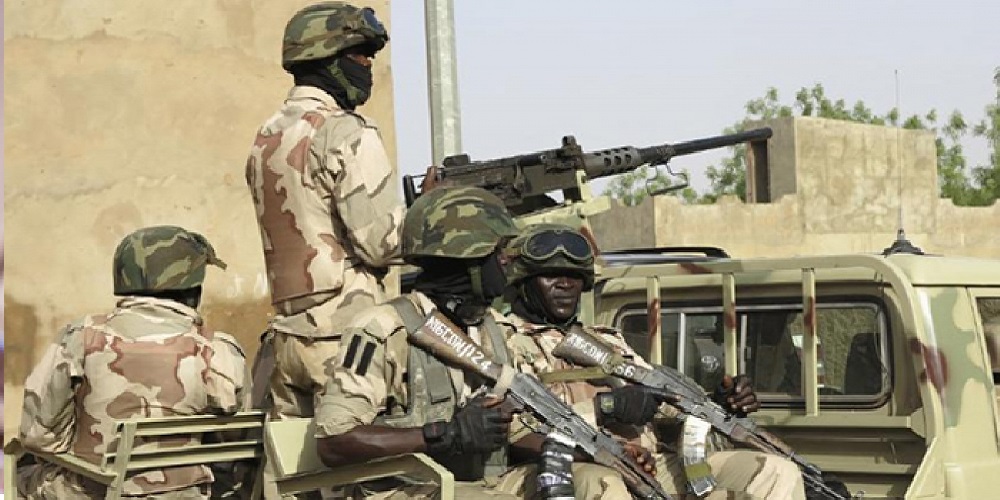
The Federal Government disbursed a total of N1.03tn to boost the fight against insecurity and terrorism between January and June 2024.


In the budget implementation report for the first half of 2024 obtained by our correspondent through Open Treasury, a website that monitors government spending, the amount represents a disbursement rate of 42.80 per cent from its appropriation of N2.41tn and a balance of N1.38tn.

Despite this spending, no fewer than 5,801 Nigerians were killed in terrorist attacks, and 4,348 citizens were abducted in the first seven months of 2024.

Data sourced from an Indigenous intelligence outfit, Beacon Consulting, revealed that the number of fatalities was recorded during the various attacks witnessed in 574 Local Government Areas across the country.

Advertisement

A breakdown, according to geopolitical zones, showed that 2,223 persons were killed in the North-East, representing 33 per cent of the total incidents, in which 1,609 individuals were killed and 614 kidnapped in 88 Local Government councils.

In the North-West, 125 councils recorded attacks leading to the death of 2,023 individuals while 2,607 were abducted.

No fewer than 96 councils recorded incidents in the North-Central region out of which 1,102 residents lost their lives and 847 were kidnapped.

South-West recorded attacks in 106 councils which led to the death of 434 individuals and 93 were abducted. Also, 275 persons were killed and 145 abducted in 81 councils of the South-South.

Advertisement

While, in the South-East, 358 fatalities and 42 abductions were reported across 78 Local Government Areas

Insecurity has severely hindered socio-economic development in Nigeria, impacting various aspects of life throughout the country. The widespread threat of violence and crime arises from multiple sources, transcending from terrorism into banditry, cattle rustling, and kidnapping for ransom.

Despite the government’s promise to tackle the menace by investing in advanced attack machinery, insurgents continue to operate with relative ease. Although the number of attacks and casualties has decreased, the persistent threats highlight the ongoing challenges in achieving comprehensive security.

Meanwhile, the Federal Government disbursed N9.53tn to Ministries, Departments, and Agencies as budgetary allocations in the first six months of the 2024 budget year.

Advertisement

The figure indicates a 24 per cent disbursement rate from the total appropriation of N38.83tn leaving a balance of N29.3tn.

The funds were disbursed to over 500 MDAs between January and June 2024 for its operations and infrastructure development in the country, according to data obtained and analysed by our correspondent using Open Treasury, a website that monitors government spending.

This development came amidst reports of poor funding by the government to MDAs.

Recently, the Accountant-General of the Federation, Mrs Oluwatoyin Madein, admitted that the government had yet to begin implementation of the capital component of the 2024 national budget.

Advertisement

She said the decision to continue with the implementation of the 2023 budget was taken after consultation with the Minister of Finance and Coordinating Minister of the Economy, Wale Edun, and the Minister of Budget and Economic Planning, Atiku Bagudu.

However, the situation may impair the government’s January-December budget cycle, vis-à-vis its national development plan 2021-2025.

A breakdown of the data revealed that the Ministry of Finance topped the list with the highest allocation of N4.96tn, a 36.94 per cent disbursement rate of its N13.43tn appropriation leaving a balance of N8.47tn.

The increase in allocation for the finance ministry is likely due to its salary payment duties.

Advertisement

This was followed by the defence ministry with a payment of N1.03tn. This means a disbursement rate of 42.80 per cent from its appropriation of N2.41tn and a balance of N1.38tn.

The education ministry got funding of N600.25bn indicating a 29.52 per cent disbursement rate from its total allocation of N2.03tn while the police affairs ministry received an allocation of N424.13bn in six months, representing 42.17 per cent disbursement rate from its appropriation of N1.01tn.

On economic spending, the document stated that the government spent N1.28tn on defence and security, N859.9bn on economic affairs, N314.5bn in the health sector, N784.37bn in the education sector, and N103.5bn on social protection within the review period.

Other sectors including general public services got N5.42tn, public order and safety got N764.98bn, environmental protection (N11.67bn), housing and communities (N175.49bn) and recreation, culture and religion got (N31.79bn).

Advertisement

Speaking on the insecurity issue, a security consultant and Fellow of the Institute of Security, Nigeria, Chigozie Ubani, said there was a critical need for a comprehensive approach to national security.

He noted that despite repeated recommendations to the Federal Government, current efforts were ineffective.

Ubani lamented the cycle of arrests, detentions, and subsequent bail of suspects without addressing the underlying social and economic factors contributing to insecurity.

“We are running a reactionary police system. When it happens, we then move. We arrest people, detain them, and later bail them. The other day, we charged them to court. It’s just reactionary.

Advertisement

What we’ve not done is to look at the social and economic angles to security. We might be lucky, but if not, we might have a bloody situation, because people are hungry. This is one of our major problems,” he stated.


Continue Reading
Advertisement
Click to comment

Warning: Undefined variable $user_ID in /home/naijuinz/public_html/wp-content/themes/zox-news/comments.php on line 49

You must be logged in to post a comment Login

Leave a Reply

News

INEC showcases Tinubu, Shettima’s personal details ahead of 2027 elections

Published

on

ADVERTISEMENT
Zoom Ad
ADVERTISEMENT
Zoom Ad

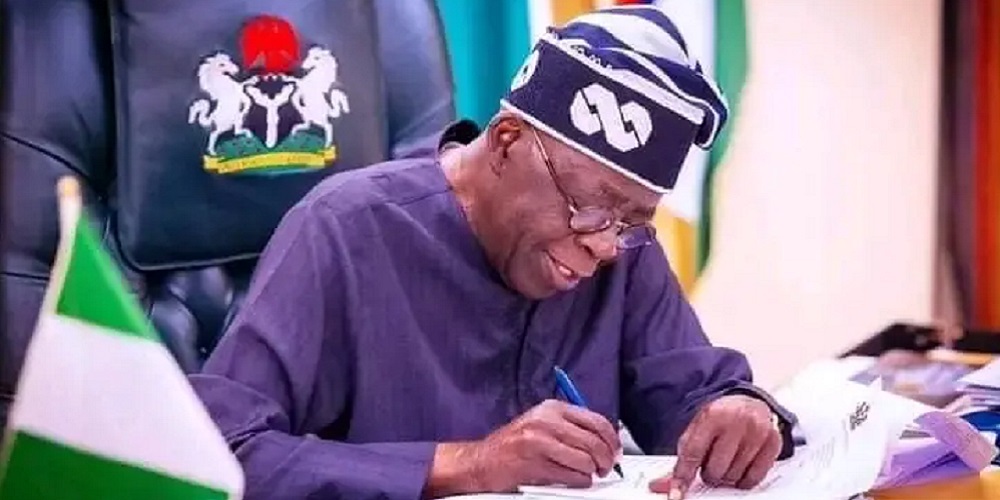
Electoral Commission has begun the public display of the personal particulars and academic credentials of presidential candidates for the 2027 general election.

The exercise, which took off on Saturday, features documents submitted by President Bola Tinubu of the All Progressives Congress and running mate, Vice President Kashim Shettima.

Copies of Tinubu’s Form EC9 sighted showed his Bachelor of Science degree in Business Administration from Chicago State University, United States, which his transcript indicated was awarded “with honours” on June 22, 1979.

The form also carried his National Youth Service Corps discharge documents, which showed he served in Oyo State from December 1982 and was demobilised in November 1983.

Advertisement

His work history, as listed in the form, showed three employers: Mobil Nigeria Limited, where he worked from 1983 to 1992 and left on account of “advancement”; the Lagos State Government, where he served from 1999 to 2007 until the “legal end of tenure”; and the Federal Government of Nigeria, where he has worked from 2023 till date.

The years listed against his primary and secondary school attendance in the same form were entered as “0000,” with only his university qualification, a B.Sc obtained in 1979, indicated.

The President’s personal information section listed his date of birth as March 29, 1952, and his age as 74.

It also listed his birthplace as Lagos, his residential address as No. 4, Queen’s Drive, Ikoyi, and his occupation as “politician.”

Advertisement

For Shettima, the displayed documents traced his education from primary school.

His Certificate of Primary Education, issued by the Ministry of Education, North-Eastern State, showed he attended Lamisula I Primary School between 1972 and 1978, finishing second out of 22 pupils in his final year, with English, History and Religious Knowledge listed as his strongest subjects.

His West African Examinations Council result, obtained at Government Secondary School, Potiskum, in June 1983, showed six credits and passes, including a distinction in Religious Knowledge and Economics.

He proceeded to the University of Maiduguri, where records showed he bagged a Second Class Upper Division degree in Agriculture in August 1989, before earning a Master of Science in Agricultural Economics from the University of Ibadan.

Advertisement

His NYSC discharge certificate indicated he served from October 1989 to October 1990.

The display, contained in Form EC9, is a statutory requirement under Section 29(3) of the Electoral Act, 2026, which mandates INEC to publish candidates’ particulars within 21 days of receipt.

In a statement, the commission explained Form EC9 contains the credentials, personal particulars and affidavits submitted by candidates.

“Form EC9 contains the credentials, personal particulars and affidavits submitted by candidates sponsored by political parties,” INEC stated.

Advertisement

The documents were displayed at INEC offices nationwide, including its Lagos State office in Sabo-Yaba and Local Government Area offices within affected constituencies.

The Electoral Act empowers members of the public to apply to INEC for certified true copies of nomination forms and other documents submitted by candidates, and to seek legal redress over allegations of false declaration or forgery.

Campaigns for the presidential and National Assembly elections are scheduled to begin on August 19, while those for governorship and state assembly elections will follow later, in line with the commission’s revised timetable.

Advertisement
Continue Reading

News

Elon Musk reveals Nigeria had four million more births than EU

Published

on

ADVERTISEMENT
Zoom Ad
ADVERTISEMENT
Zoom Ad

Richest man globally, Elon Musk has said Nigeria alone had four million more births than the entire European Union.

Musk made the claim on his X account on Saturday, citing his artificial intelligence chatbot, Grok, as the source of the information.

“Nigeria alone had 4 million more births than the entire EU last year,” he wrote on X.

Musk’s remarks highlight Nigeria’s high birth rate compared with the European Union.

Advertisement

Available data from Musk’s Grok showed that Nigeria recorded an estimated 7.8 million births in 2025, while the European Union had 3.5 million births.

This means Nigeria recorded approximately four million more births than the EU.

Recall that in February 2026, the United Nations Children’s Fund, UNICEF, said 14 million Nigerian children had their births officially registered over the previous two years, marking significant progress in legal identity coverage.

Africa’s most populous country continues to record a high birth rate, placing further strain on its already fragile economy.

Advertisement

World Bank data showed that Nigeria’s poverty rate stood at 63 percent in 2025 amid rising economic hardship fueled by the skyrocketing cost of living.

Meanwhile, the Emir of Kano, Muhammadu Sanusi II, said at the 31st Nigerian Economic Summit that, for the first time, the country’s economy was growing faster than its population, which is estimated at 250 million.

Daily Post

Advertisement
Continue Reading

News

Presidency reacts to Onaiyekan’s comment, says he’s not speaking for Christians, insists Catholics supporting Obi

Published

on

ADVERTISEMENT
Zoom Ad
ADVERTISEMENT
Zoom Ad

The Presidency has rubbished comments by Cardinal John Onaiyekan criticising the administration of President Bola Tinubu, insisting that the Catholic cleric was expressing a personal and political opinion rather than speaking on behalf of Christians in Nigeria.

Daniel Bwala, Special Adviser to the President on Policy Communication, made the remarks in a post on his X account on Saturday.

Bwala’s comments came in response to Onaiyekan’s criticism of the Tinubu administration after the recent visit of the Catholic Bishops’ Conference of Nigeria, CBCN, to the President.

The cardinal had accused the government of being more focused on winning by all means than addressing the country’s challenges.

Advertisement

Reacting, Bwala alleged that Onaiyekan was speaking for the Catholic Church and not the entire Christian community, claiming that the institution largely supported Labour Party presidential candidate, Peter Obi, during the 2023 election.

He argued that the cardinal’s comments were political rather than spiritual, adding that not all Catholics supported Obi during the election.

According to Bwala, President Tinubu was within his rights to disagree with the bishops’ assessment of Nigeria’s economy, maintaining that the administration’s position was backed by “facts, statistics and numbers.”

The presidential spokesman also contended that there is a broader Christian body comprising different denominations, including the Catholic Church and the Catholic Bishops’ Conference, whose position, he said, should remain neutral rather than political.

Advertisement

Bwala said: “Cardinal Onaiyekan, wasn’t speaking for Christian’s, he was speaking for Catholics, the very institutions rooting for Peter Obi @PeterObi infact likely the institution where Peter Obi also said in 2022 “take back your country “.

“Therefore , Cardinal is more political than spiritual. And not all catholic members are supporting peter Obi. The president @officialABAT was well within his right to disagree with their assertion as regards Nigeria’s economy based purely on facts, stats and numbers factored into context.

“Ironically, the same priest would rebuke their members if the members said “we are suffering or we are poor” they would tell them to rather say “we are doing great and or we are rich even when they are suffering or poor”

“There is a body comprising all Christian’s including the Catholics and catholic bishops conference and that body’s position is neutral and should be so, otherwise it is political.”

Advertisement
Continue Reading

Trending

Copyright © 2024 Naija Blitz News