Economy
Marketers Reveal Date Port-Harcourt Refinery Will Begin Operations
- /home/naijuinz/public_html/wp-content/plugins/mvp-social-buttons/mvp-social-buttons.php on line 27
https://naijablitznews.com/wp-content/uploads/2024/07/images-64.jpeg&description=Marketers Reveal Date Port-Harcourt Refinery Will Begin Operations', 'pinterestShare', 'width=750,height=350'); return false;" title="Pin This Post">
- Share
- Tweet /home/naijuinz/public_html/wp-content/plugins/mvp-social-buttons/mvp-social-buttons.php on line 72
https://naijablitznews.com/wp-content/uploads/2024/07/images-64.jpeg&description=Marketers Reveal Date Port-Harcourt Refinery Will Begin Operations', 'pinterestShare', 'width=750,height=350'); return false;" title="Pin This Post">
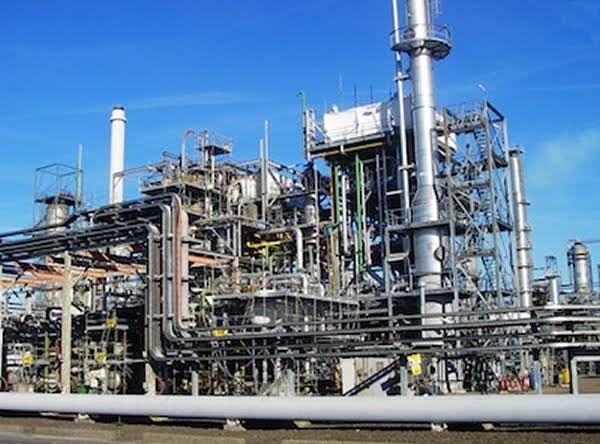
The Independent Petroleum Marketers Association of Nigeria (IPMAN) has revealed that the Port Harcourt Refinery will indeed commence operations in August 2024.

The refinery is expected to deliver between 10 and 12 million litres of petrol daily, potentially increasing the national supply to 11 to 15 million litres per day.
IPMAN’s National Operations Controller, Zarma Mustapha, confirmed this in an interview on Channels TV on Thursday.

He said that the refinery will operate autonomously and abide by current market prices with minimal government interference.
“There is this understanding that the Port Harcourt refinery is going to perform independently and sell at whatever prevailing market price for them to recover their cost.
“It is not going to be run like a government entity as it has been before. I believe that the refinery coming up, will really boost the demand and supply of PMS to nothing less than 11 to 15 million litres daily.
“I am confident and optimistic that this August deadline is going to be a realistic deadline. It will come on stream and fully produce all the necessary components that the refinery is supposed to produce. At least, at its capacity of 0,000 barrels, can give you 10 to 12 million litres of PMS,” he said.
When asked if fuel prices will reduce once the refinery begins to function, Mustapha replied:
“It depends on how much they are willing to sell. How much did they get the crude? Because they’re buying the crude at an international price too. They have to pay back the loan they took also.
“The $1.5 billion is a loan they took from one of these African financial institutions. I don’t know which one among them. They took the loan with the promise of paying back with whatever recoup from the earnings of the refinery”.

Economy
Naira depreciates to N1,397/$ in parallel market
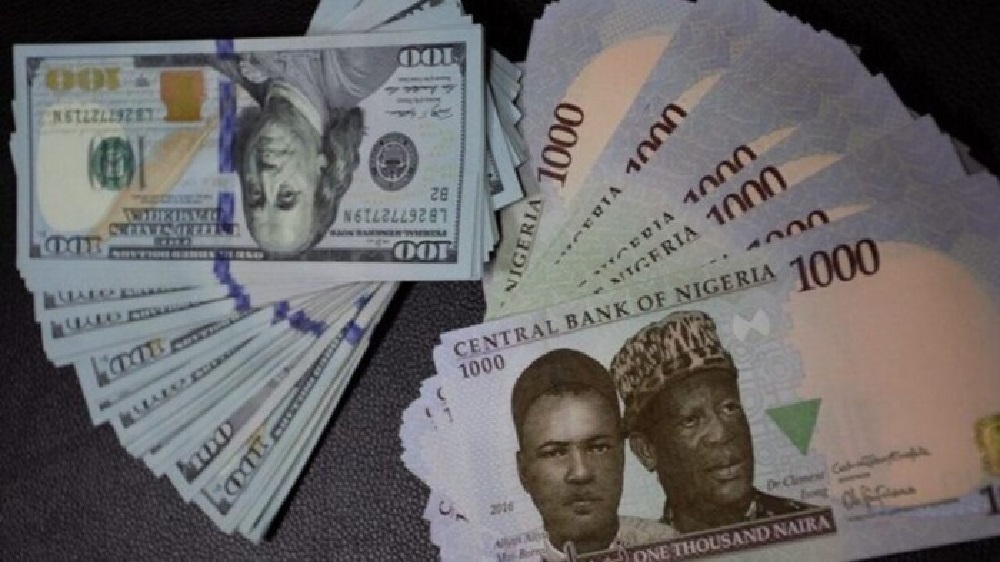
The naira on Friday depreciated to N1,397 per dollar in the parallel market from N1,390 per dollar on Thursday.
Likewise, the naira depreciated to N1,365 per dollar in the Nigerian Foreign Exchange Market, NFEM.
Data from the Central Bank of Nigeria, CBN, showed that the indicative exchange rate for the market rose to N1,365 per dollar from N1,359.75 per dollar on Thursday, reflecting N5.25 depreciation for the naira.
Consequently, the margin between the parallel and official markets widened to N32 per dollar from N30.25 per dollar on Thursday.
The turnover in the interbank foreign exchange market recorded its fourth daily decline by 42.5 per cent to $73.6 million from $128.2 million on Thursday.
This week, the naira strengthened by N1 per dollar in the official market, with turnover in the interbank foreign exchange market climbing to N683.2 million, representing a 76.7 per cent rise compared to N386.54 million recorded the previous week.
However, the local currency weakened in the parallel by N2 against the greenback.
Economy
See Dollar to Naira exchange rate today, June 5, 2026
The Nigerian naira maintained a relatively stable performance against the United States dollar at both the official and parallel foreign exchange markets as traders monitored liquidity conditions and demand pressures.
Data from the Central Bank of Nigeria’s Nigerian Foreign Exchange Market (NFEM) showed the naira trading around ₦1,361 to the dollar, reflecting a largely steady trend compared to recent sessions. The most recent NFEM rate published by the apex bank stood at approximately ₦1,361.05/$, while trading during the week remained within the ₦1,359–₦1,365 range.
Market data from recent official trading sessions also indicated that the naira had strengthened modestly in early June, supported by improved foreign exchange supply and sustained interventions aimed at enhancing market liquidity.
At the parallel market, commonly referred to as the black market, the dollar traded at between ₦1,390 and ₦1,405 on Friday, depending on location and transaction size. Several market trackers reported buying rates around ₦1,380–₦1,395 and selling rates between ₦1,393 and ₦1,405 per dollar.
The gap between the official and parallel market rates remained relatively narrow compared with previous months, reflecting ongoing efforts to improve transparency and liquidity in the foreign exchange market.
Currency dealers said market participants continue to watch foreign portfolio inflows, crude oil earnings, and Central Bank policies, all of which remain key factors influencing the naira’s direction in the coming weeks.
As of June 5, 2026, the dollar exchanged at about ₦1,361 in the official NFEM market, while parallel market transactions ranged from approximately ₦1,390 to ₦1,405 per dollar.
Economy
Nigeria Tops Global Crypto Transfer Rankings as Adoption Hits 40%
Nigeria has emerged as the world’s leading market for cryptocurrency transfers, with adoption reaching about 40 per cent of the population, underscoring the growing role of digital assets in addressing foreign exchange constraints, inflationary pressures and cross-border payment challenges.
The development highlights how millions of Nigerians are increasingly turning to cryptocurrencies and stablecoins as alternatives to conventional financial channels amid persistent economic uncertainties and difficulties accessing foreign currency.
According to industry data, Nigeria now ranks among the most active cryptocurrency markets globally, with digital assets becoming a mainstream tool for remittances, savings, payments and international transfers.
The country’s growing influence in the digital asset ecosystem comes despite years of regulatory uncertainty and crackdowns on some cryptocurrency platforms. Yet, market activity has remained resilient, driven largely by retail users seeking faster and cheaper alternatives to traditional financial services.
Meanwhile, data from blockchain analytics firm Chainalysis shows that Nigeria recorded approximately $59 billion in cryptocurrency transactions between July 2023 and June 2024, placing it among the world’s largest crypto markets.
Around 85 per cent of those transactions were valued below $1 million, indicating strong participation by individuals and small businesses rather than institutional investors.
Analysts say the trend reflects broader economic realities, including the depreciation of the naira, high inflation and rising demand for efficient cross-border payment solutions.
Industry operators argue that cryptocurrencies are increasingly being used for practical purposes rather than speculation.
Chief Operating Officer and co-founder of Busha, Moyo Sodipo, said users are beginning to recognise the everyday utility of digital assets.
“People are starting to see the real-world utility of cryptocurrency, especially in day-to-day transactions,” he said.
He further noted that crypto is increasingly being used for bill payments, mobile airtime purchases and retail transactions.
Stablecoins which are pegged to major currencies such as the US dollar, have emerged as a key driver of adoption. Chainalysis estimates that stablecoins account for roughly 40 per cent of Nigeria’s crypto inflows, making the country the largest stablecoin market in Sub-Saharan Africa.
The growing use of stablecoins has been linked to persistent foreign exchange shortages and the need by businesses and individuals to preserve value in the face of currency volatility.
Chief Executive Officer of Yellow Card, Chris Maurice, said stablecoins provide businesses with access to dollar-denominated assets when conventional channels are constrained.
“About 70 per cent of African countries are facing an FX shortage, and businesses are struggling to get access to the dollars they need to operate,” Maurice said.
Prior to retail payments, digital assets are also becoming increasingly important for remittances and cross-border trade. Industry stakeholders say cryptocurrency-based transfers offer faster settlement times and lower transaction costs compared to traditional channels.
The surge in adoption comes as Nigeria gradually moves towards a more structured regulatory framework for digital assets. The country has shifted from an era of restrictions to one focused on licensing and oversight, with authorities seeking to balance innovation with consumer protection.
Experts believe that regulatory clarity, combined with growing digital literacy and widespread smartphone adoption, could further accelerate cryptocurrency usage across the country.
However, they also caution that issues relating to consumer protection, fraud prevention, taxation and market stability will remain critical as the sector continues to expand.
For policymakers, Nigeria’s leadership in global crypto transfers presents both an opportunity and a challenge: harnessing innovation to deepen financial inclusion while ensuring adequate safeguards in an increasingly digital financial system.
-
Metro24 hours agoTragic End: Missing Port Harcourt Woman Confirmed De@d After Suspected ‘One-Chance’ Abduction
-
Metro23 hours agoAbductors give conditions for release of ex-Defence spokesperson Rabe Abubakar, wife
-
Metro24 hours agoISIS Bride And Her Mother Charged After They Helped Dad Buy 15-Year-Old S£x Slave For £7,500 For Purposes Of R@ping
-
News24 hours agoAt Last, Kidnappers Reveal 4 Conditions To Release Abducted Oyo Pupils And Teachers
-
News14 hours ago‘It’s out of place’ , don’t compare Ogbomoso and Adelabu kidnaps – Presidency tells Nigerians
-
News23 hours agoCBN Imposes N100M Penalty On Inadequate Processing Of Forex Documents
-
News23 hours agoHouseholds groan as cooking gas price hits N2,400/kg
-
News24 hours agoPolice confirms safe rescue of ex-minister of power’s sister, twin children

Warning: Undefined variable $user_ID in /home/naijuinz/public_html/wp-content/themes/zox-news/comments.php on line 49
You must be logged in to post a comment Login