
Sports
Super Eagles in coaching crisis ahead of crucial AFCON qualifiers

- /home/naijuinz/public_html/wp-content/plugins/mvp-social-buttons/mvp-social-buttons.php on line 27
https://naijablitznews.com/wp-content/uploads/2024/06/images-2024-06-06T112556.926.jpeg&description=Super Eagles in coaching crisis ahead of crucial AFCON qualifiers', 'pinterestShare', 'width=750,height=350'); return false;" title="Pin This Post">
- Share
- Tweet /home/naijuinz/public_html/wp-content/plugins/mvp-social-buttons/mvp-social-buttons.php on line 72
https://naijablitznews.com/wp-content/uploads/2024/06/images-2024-06-06T112556.926.jpeg&description=Super Eagles in coaching crisis ahead of crucial AFCON qualifiers', 'pinterestShare', 'width=750,height=350'); return false;" title="Pin This Post">


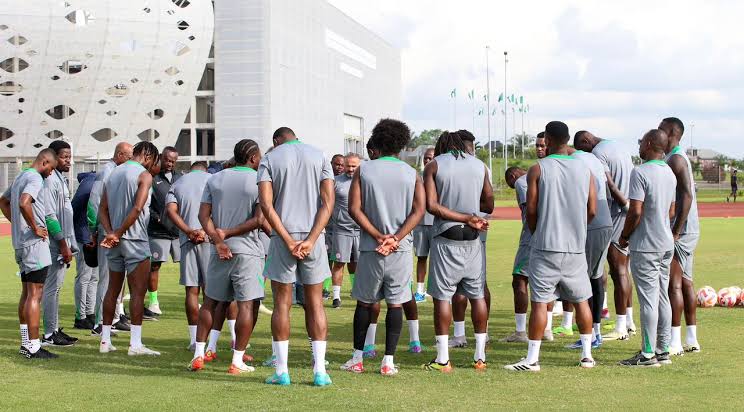
The Super Eagles of Nigeria are facing a critical coaching crisis ahead of the 2025 Africa Cup of Nations (AFCON) qualifiers set to kick off in September.
Drawn into Group D alongside the Cheetahs of Benin, Rwanda’s Amavubi, and Libya, the Super Eagles are competing for a spot in the upcoming AFCON tournament. However, they are currently without a head coach following the resignation of Finidi George, who stepped down after poor results in the 2026 FIFA World Cup qualifiers.
The three-time African champions are set to face Gernot Rohr’s Benin Republic and Rwanda in Group D, with the top two teams advancing to the tournament in Morocco. The Super Eagles will begin their campaign at home against Benin on September 7th at the Godswill Akpabio Stadium in Uyo, before travelling to Kigali for a matchday two clash against Rwanda at the Amahoro Stadium on September 10th.
During Finidi’s brief tenure, the Super Eagles struggled, suffering a 2-1 defeat to the Benin Republic in Abidjan and managing only a 1-1 draw against South Africa at the Godswill Akpabio International Stadium. These results have left Nigeria winless after four matches, sitting in fifth place in Group C with just three points, putting their chances of qualifying for the 2026 FIFA World Cup in serious jeopardy.
Despite weeks of speculation, the Nigeria Football Federation (NFF) has yet to appoint a new head coach for the Super Eagles. This absence of leadership just weeks before the 2025 AFCON qualifiers poses a significant challenge for the team, which is eager to rebound from their runners-up finish at the 2023 AFCON.
With less than a month remaining before their first 2025 AFCON qualifying match, the urgency for the NFF to appoint a competent coach cannot be overstated.
The Super Eagles face an increasingly challenging path without a head coach to guide them through these crucial encounters.

Manchester City have formally appealed the Premier League commission’s verdict in the club’s long-running financial case involving 115 charges, insisting that the decision contains serious errors and that they are innocent of the allegations.
The Premier League champions confirmed on Friday that they had submitted a comprehensive appeal on Thursday, October 1, 2026, challenging the findings of an independent commission.
The commission found that Manchester City had arranged what it described as “sham” contracts with several commercial partners between the 2009/10 and 2017/18 seasons.
According to the findings, the arrangements formed part of an alleged “disguised funding scheme” designed to artificially inflate the club’s revenue by approximately £830 million.
In a statement released on Friday, City strongly rejected the commission’s conclusions, arguing that the verdict was fundamentally flawed and should not stand.
The club maintained that the decision contained substantial errors of law, principle and fact, raising questions about the reliability of the findings.
Manchester City also insisted that they possess extensive evidence to support their defence and challenge the accusations brought by the Premier League.
The club’s statement read:
“Manchester City Football Club can confirm that at 7pm on Thursday 1st October 2026 the Club lodged its comprehensive Appeal against the opinion of the Premier League Commission, in relation to the Premier League disciplinary matter.
“The Club’s firm position is that, on multiple grounds, the opinion contains clear material errors, of law, principle and fact and is unsafe.
“The Club is innocent of the accusations made by the Premier League and a comprehensive body of irrefutable evidence exists in support of all of its positions, relating to this case.
“We will continue to respect due process and are necessarily restricted in what we can say further until all proceedings are complete.”
The appeal marks another major development in one of English football’s most closely watched financial disputes.
Manchester City’s case centres on allegations of financial rule breaches spanning several seasons. The club has consistently denied wrongdoing and has maintained its position throughout the proceedings.
With the appeal now formally lodged, attention will turn to the next stage of the legal process and the arguments presented by both sides.
The outcome could have significant implications for Manchester City and the Premier League’s efforts to enforce its financial regulations.
Manchester City have formally appealed an independent commission’s ruling that the club breached Premier League financial regulations, escalating a long-running dispute that could have major consequences for the English champions.
The club confirmed that it filed its appeal at 7pm on Thursday, October 1, just hours before the Premier League’s deadline on Friday.
City, who have consistently denied wrongdoing, are challenging the commission’s findings, arguing that the ruling contains “clear material errors” of law, principle and fact.
The appeal marks another major development in a financial case that has dragged on for years. In February 2023, the Premier League charged City with more than 100 alleged breaches of its financial regulations covering the period between the 2009/10 and 2017/18 seasons.
At the heart of the case is the commission’s finding that City used what it described as “sham” commercial contracts to disguise funding arrangements and artificially inflate the club’s reported revenues.
The commission linked more than £830 million to the disputed funding scheme and concluded that City had breached both Premier League and UEFA financial regulations. It also found the club guilty of failing to cooperate fully with the league’s investigation.
The controversy dates back to the years following City’s 2008 takeover by Abu Dhabi-based ownership, a period during which the club transformed into one of European football’s most powerful sides.
During the years under investigation, City enjoyed remarkable success on the pitch, winning multiple Premier League titles and other major trophies while expanding their commercial operations and spending significantly on players.
However, the commission’s findings focus on whether the club’s financial reporting and commercial sponsorship arrangements complied with the league’s rules.
City are expected to renew their argument that additional funding associated with sponsorship agreements originated from the Abu Dhabi government rather than the club’s owners.
That position was rejected by the independent commission during the original proceedings, but the club is now seeking to overturn the findings through the appeal process.
The case will be reviewed by a separate three-member appeal panel, which will examine the grounds presented by Manchester City and determine whether the original ruling should stand.
Under the Premier League’s current regulations, the appeal process is expected to be completed within 12 weeks. The hearing is limited to five days, while the panel has 30 days to deliver its decision.
However, City could challenge the application of the accelerated timetable, arguing that the charges were filed in 2023 and the original hearing took place in 2024, before the introduction of the new rules.
The appeal also leaves uncertainty surrounding the punishment City could face if the commission’s findings are ultimately upheld.
Possible sanctions under Premier League rules include a points deduction, a financial penalty, a transfer restriction or other disciplinary measures.
With the appeal now formally lodged, the high-profile dispute remains unresolved, leaving the club’s financial record and potential disciplinary consequences subject to further proceedings.
Manchester City have vowed to continue defending their position, setting the stage for another crucial legal battle with the Premier League.
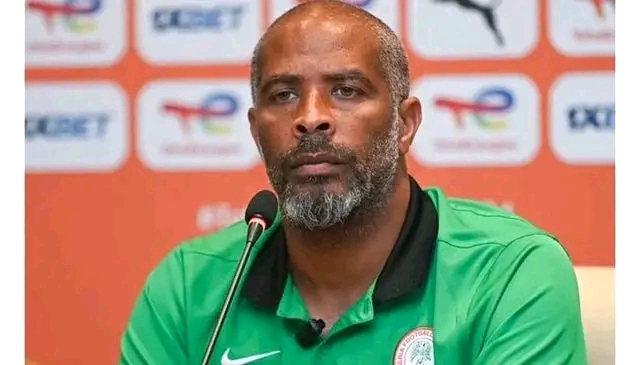
Super Eagles head coach Eric Chelle has vowed to revive Nigeria’s 2027 Africa Cup of Nations (AFCON) qualifying campaign, insisting his side must secure maximum points from their double-header against Tanzania in November.
Chelle’s confidence comes despite Nigeria’s humiliating 3-0 defeat to Guinea-Bissau in Bissau, a result that dealt a major blow to the Super Eagles’ qualification hopes.
The defeat was particularly disappointing after Nigeria opened their qualifying campaign with a hard-fought 2-1 comeback victory over Madagascar in Uyo.
Reflecting on the heavy loss, Chelle admitted that Guinea-Bissau were the better team, acknowledging that their aggression, intensity and determination proved decisive.
“They were more aggressive than us,” the Franco-Malian coach said after the match.
Despite the setback, Chelle maintained that Nigeria’s qualification hopes remain alive, shifting his attention to the crucial back-to-back encounters against Tanzania in November.
“We have two games against Tanzania in November, we have to win both games,” he stated.
The Super Eagles coach also pointed to Nigeria’s upcoming home fixture against Guinea-Bissau as another opportunity to recover lost ground and settle scores after the disappointing defeat in Bissau.
With four matches remaining in the qualifying campaign, Nigeria still have opportunities to turn their fortunes around. The remaining fixtures include two meetings with Tanzania, a return clash against Guinea-Bissau and another encounter with Madagascar.
Chelle did not hide his disappointment with the team’s performance in Bissau, describing it as the worst display he had witnessed from his players.
However, he expressed continued faith in the squad, urging the players to take lessons from the defeat and remain focused on securing qualification for the 2027 AFCON.
For the Super Eagles, the November double-header against Tanzania could prove crucial in determining the direction of their qualifying campaign.

Wike fires Amaechi: You failed as Speaker, Governor and Minister For 24 Years(Photos)

Nigeria’s Ambassador to Hungary, Abass Ogwime, Selected to Commission Hungarian-African House in Budapest

‘Tinubu Must Go’: Yobe Youths Protest Economic Hardship, Insecurity


-

 News17 hours ago
Independence Day: NNPCL Slashes Petrol Price With N66 Discount for Nigerians
-

 Metro16 hours ago
‘I Hit Her With a Pistol, Hacked Her With Machete’ — Suspect Confesses to Killing Girlfriend in Enugu
-
 News19 hours ago
Nigeria Bids Farewell to Reverend Okoye, Ex-Aso Villa Chaplain
-
 News14 hours ago
2027: Wike rallies support for Tinubu In Akpor kingdom, Insists He’II resign as Minister should president lose FCT, Rivers(Photos)
-

 News16 hours ago
Watch moment, traditional rulers present kola to FCT minister Wike at ongoing town hall meeting in Akpor kingdom, Obio/Akpor LGA
-
 Sports16 hours ago
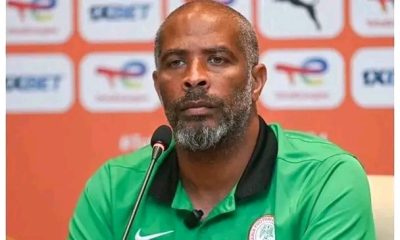
AFCON 2027: Chelle Vows Super Eagles Will Bounce Back, Targets Tanzania Double
You must be logged in to post a comment Login