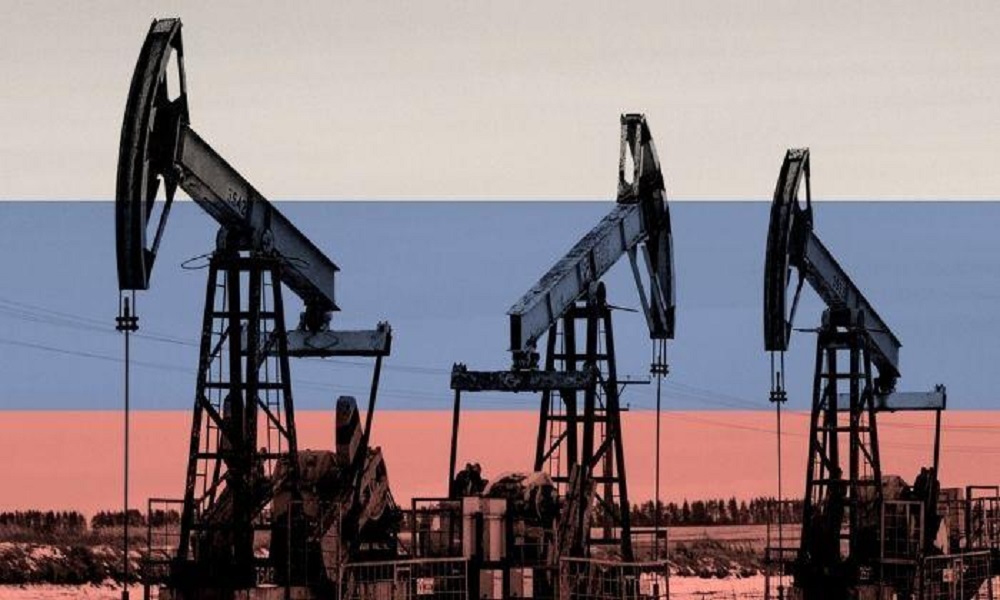
The Nigerian oil and gas industry is a cornerstone of the nation’s economy, significantly impacting both regional and global energy markets, with several billionaires shaping its landscape through substantial investments and strategic leadership.


Nigeria, as Africa’s largest oil producer, contributes about 2.5 million barrels per day to the global oil supply as of 2023, positioning it as a key player in the industry. Oil exports account for over 90% of the country’s foreign exchange earnings and roughly 70% of government revenue.
According to the National Bureau of Statistics, the oil and gas sector contributed 6.21% to the real GDP in Q1 2023. 
Despite its robust output, the sector faces challenges such as fluctuating global oil prices, which have seen significant volatility over recent years. For instance, oil prices fell dramatically in early 2020 due to the COVID-19 pandemic, with Brent crude dropping below $20 per barrel, though it has since recovered to around $90 per barrel in 2024.
Each of these billionaires not only contributes to Nigeria’s economic vitality but also exemplifies the global intersection of wealth, industry, and innovation in the energy sector.
Here are Nigerian billionaires in the oil and gas industry, according to BusinessDay Findings
1. Aliko Dangote — Dangote refinery
As of August 11, 2024, Aliko Dangote, Africa’s richest person with a net worth of $12.56 billion, is advancing in various sectors. His Dangote Refinery, inaugurated on May 22, 2023, in Lekki, Nigeria, is set to be the largest single-train refinery globally, processing 650,000 barrels of crude oil daily with a $19 billion investment. The refinery aims to eliminate Nigeria’s fuel import reliance by producing gasoline, diesel, jet fuel, kerosene, and LPG, and will also export surplus products. Covering 2,635 hectares in the Dangote Industries Free Zone, it features three offshore moorings and is expected to go public by early 2025. Despite early delays, it began producing diesel and aviation fuel A1 in January 2024. Dangote is also focused on agribusiness projects contributing to Nigeria’s development.
2. Theophilus Danjuma — SAPETRO
South Atlantic Petroleum (SAPETRO), founded by General TY Danjuma in 1995, is an indigenous oil exploration and production company involved in the full upstream value chain and operating in four African countries. The company has notable involvement in the Akpo deepwater field off Port Harcourt, contributing to Nigeria’s oil sector. Danjuma envisioned SAPETRO as a key player in Nigeria’s oil industry, aiming to support the country’s economic development. Recently, Danjuma announced his retirement from his role as Chairman of SAPETRO. According to Forbes, as of 2015, Theophilus Danjuma had an estimated net worth of $750 m.
3. Adewale Tinubu — Oando
Adewale Tinubu is a business executive and lawyer who serves as the Group Chief Executive of Oando PLC, a leading African energy solutions provider. He holds a Bachelor of Law from the University of Liverpool and an MBA and Master of Law from the London School of Economics. Tinubu began his career in corporate law in 1992. Oando PLC, listed on both the Nigerian and Johannesburg Stock Exchanges, evolved from a petroleum marketing company into an integrated energy group under his leadership. Tinubu co-founded Ocean and Oil Group (now Oando) in 1993 and led Oando’s acquisition of ConocoPhillips’ Nigerian operations in 2014 for $1.8 billion. Tinubu has been recognized by Forbes as a prominent figure in African oil and has received awards such as “Entrepreneur of the Year” from Ernst & Young in 2015 and “African Business Leader of the Year” from Africa Investor in 2011. Oando’s subsidiaries include OVH Energy, Axxela Limited, and Oando Energy Services, with OVH Energy having a significant distribution network in Nigeria.
4. Folorunsho Alakija — Famfa Oil
Folorunsho Alakija, Nigeria’s richest woman with an estimated net worth of $1 bn according to Forbes as of 2020, is a prominent businesswoman and philanthropist. She is vice chair of Famfa Oil, which holds a stake in the Agbami Oilfield, an offshore asset operated in partnership with Chevron and Petrobras. The Agbami field has been active since 2008 and is expected to continue through 2024. Alakija began her career as an executive secretary at Sijuade Enterprises before founding a tailoring business, Supreme Stitches (later Rose of Sharon House of Fashion). Her entrepreneurial success led her to Famfa Oil. She successfully defended her ownership rights in a legal dispute with the Nigerian government over a claimed 50% stake. Alakija also founded the Rose of Sharon Foundation, which supports widows, orphans, and the underprivileged.
5. Dr. Bryant (ABC) Orjiako — Seplat
Dr. Ambrosie Bryant Chukwuemeka (ABC) Orjiako, a surgeon, co-founded Seplat Petroleum Development Company PLC, a leading Nigerian oil and gas firm listed on the London and Nigerian stock exchanges. Seplat achieved a 41% profit surge in the first half of 2022, benefiting from rising energy prices. His business interests span oil, gas, construction, real estate, pharmaceuticals, and shipping. Dr. Orjiako is also a philanthropist, founding the Daniel Orjiako Memorial Foundation, and serving as a member of the London Stock Exchange Group’s Africa Advisory Group.
6. Tunde Afolabi — Amni International Petroleum Development
Tunde J. Afolabi is the Chairman/CEO of Amni International Petroleum Development Company Limited (Amni), which he co-founded in 1993 as a Nigerian independent oil and gas exploration and production company. Amni, which has been a pioneer in offshore oil and gas activities in West Africa, operates offshore blocks OML 112 and OML 117 in Nigeria and is expanding into Ghana and other regions. With gas reserves of 3.5 trillion cubic feet, Amni is well-positioned for the global gas market. Afolabi, who has over 40 years of experience in the industry, holds a BA and MSc in Geology from Franklin & Marshall College and Tulane University, respectively. He has received honorary Doctor of Technology degrees from Ladoke Akintola University and Ajayi Crowther University and is involved in various professional and socio-political activities across Africa.
7. Bola Shagaya — Practoil Limited
Bola Shagaya, one of the richest women in Nigeria, founded Practoil Limited, which imports and distributes base oil in Nigeria and supports local blending plants. She initially made her mark by importing and distributing photographic materials, introducing the Konica brand to Nigeria and West Africa. Shagaya has also ventured into real estate and fashion, maintaining a notable presence beyond business. She holds a degree in Economics from Ahmadu Bello University and studied Accountancy at Armstrong College in California, USA.
8. Benedict Peters — Aiteo Group
Benedict Peters, founder and CEO of Aiteo Group and Bravura Holdings, is an African billionaire with interests in oil, gas, and mining. He established Aiteo, Africa’s largest indigenous oil producer, and Bravura Holdings, which operates in platinum, lithium, steel, copper, and gold across various African countries. In 2014, Aiteo acquired a controlling stake in Oil Mining Lease (OML) 29 and the Nembe Creek Trunk Line (NCTL) in the Eastern Niger Delta. Aiteo produces nearly 100,000 barrels of oil per day, contributing over five per cent of Nigeria’s daily oil production. In November 2023, Aiteo launched a new grade of crude called Nembe in partnership with the Nigerian National Petroleum Corporation (NNPC). Peters, known as Africa’s “Green Baron,” focuses on securing critical minerals for green technologies. His investments support electric vehicles and lithium batteries, with an emphasis on sustainability, innovation, and responsible mining. Peters also manages philanthropic initiatives aimed at rural community development and improving education access, guided by his deep Christian faith.
9. Alhaji Sayju Dantata — MRS oil Nigeria Plc
Alhaji Sayyu Dantata, a key figure in Nigerian business, significantly contributed to MRS Oil Nigeria Plc, formerly Texaco Nigeria Plc. MRS Oil, headquartered in Lagos, operates 586 retail stations across Nigeria, offering gasoline, marine, and aviation fuels, and supplies premium lubricants like Stallion and Premier Motor Oil from its blending facility. In 2009, the company acquired Chevron’s downstream assets in West Africa, including the Texaco brand, enhancing its market position and acquiring valuable human capital. MRS Oil also has interests in Ovlas Trading & Supply, Corlay Global SA, and Koggi Shipping.
10. Gabriel Ogbechie — Rainoil Limited
Gabriel Ogbechie, a Nigerian billionaire and philanthropist, founded Rainoil Limited in 1997, growing it into a significant player in the oil and gas industry. With operations covering the entire downstream value chain, Rainoil owns three large petroleum storage depots in Oghara, Calabar, and Ijegun Egba, each with a capacity of 50 million litres. The company also operates over 150 retail stations and LPG plants, supported by a fleet of 250 tank trucks. Ogbechie’s philanthropic efforts through The Gabriel Ogbechie Foundation include scholarships, healthcare services, and youth employment programs. His journey began with a single truck for diesel supply in 1996.
11. Fredrick Obateru Akinruntan — Obat oil company
His Imperial Majesty Fredrick Obateru Akinruntan, the Nigerian monarch of the Ugbo Kingdom in Ondo State, founded Obat Oil in 1981. The company has grown to become one of Nigeria’s largest privately held oil firms, operating over 50 gas stations nationwide and owning one of Africa’s largest tank farms with a 65 million-liter capacity. In March 2014, Forbes estimated Akinruntan’s net worth at $300 million, ranking him as Africa’s second-richest king and Nigeria’s richest in 2014. He is also known for his luxury, owning a custom-built 2012 Rolls-Royce and being the first black person to purchase a 2014 Bentley model. His son, Prince Akinfemiwa Akinrutan, is the current managing director of Obat Oil.
12. Winifred Akpani — Northwest Petroleum & Gas Company Limited
Winifred Akpani, a prominent Nigerian businesswoman and entrepreneur, holds a Bachelor of Science in Mathematics from the University of Benin and a Postgraduate Diploma in Computer Science from the University of Lagos. She is a Fellow of the Institute of Chartered Accountants of Nigeria and the Institute of Directors. Akpani began her career as a trainee accountant at Oni Lasebikan and Co. (now Ernst & Young) in 1987 and later joined Arthur Anderson & Co. (now KPMG) where she became a Chartered Accountant in 1990. In 1992, she founded Northwest Petroleum & Gas Company Limited with an initial capital of 200,000 Naira, starting with diesel distribution and expanding to include international oil trading and investments in the Nigerian oil and gas sector. Northwest Petroleum, established in 1998, focuses on the marketing of petroleum products and has been involved in the official export of Nigerian crude oil since 2014. The company operates globally and engages in corporate social responsibility initiatives. Akpani also founded and manages Midwestern Oil & Gas Company Limited and was elected Chairman of the Depot and Petroleum Products Marketers Association of Nigeria (DAPPMAN) in 2019.
13. Tope Shonubi — Sahara Energy
Tope Shonubi is a co-founder and Executive Director of Sahara Group, which he co-established in 1996 with Tonye Cole and Ade Odunsi. Sahara Group is an international energy and infrastructure company focused on petroleum and power distribution in Africa. Under Shonubi’s leadership, Sahara Energy has become a major player in the energy sector, with significant operations in Nigeria, Ivory Coast, and Ghana. In 2023, Sahara Group acquired two LPG vessels to support clean energy and has invested in storage terminals across Africa to improve energy security and access.
14. Prince Engr. Arthur Eze — Atlas Oranto Petroleum
Prince Engr. Arthur Eze is a prominent businessman and political figure. He hails from a royal family. Eze attended St. Augustine Secondary School in Nkwere, Imo State, and later earned a degree in Mechanical Engineering from California State University, Long Beach (1974–1978). In 1991, he founded Atlas Oranto Petroleum, the largest privately held Nigerian exploration and production group, holding 22 oil and gas licenses across 12 African jurisdictions, including Nigeria and Equatorial Guinea. The company operates with regional offices in West Africa, a technical base in Lagos, and headquarters in Abuja. Additionally, Eze established Triax Airlines in 1992, following Nigeria’s airline deregulation, operating from Enugu Airport with a fleet of three Boeing 727 aircraft.
15. Ernest Azudialu – Obiejesi — Nestoil
Ernest Azudialu-Obiejesi joined his family’s business in 1978 and later founded Obijackson West Africa Limited in 1983. He holds a doctorate in Business Administration from the International School of Management in Paris. In 1991, he established Nestoil, an EPCC company specializing in pipeline construction and related facilities, which has become Nigeria’s largest indigenous EPCC company in the oil and gas sector. Azudialu-Obiejesi also founded Neconde Energy Limited, which operates OML 42. He is the founder and chairman of the Obijackson Foundation, which focuses on education, empowerment, skill acquisition, infrastructure, healthcare, and cultural enrichment in Nigeria.
16. Mohammed Indimi — Oriental Energy
Mohammed Indimi is a Nigerian businessman and philanthropist, founder and chairman of Oriental Energy Resources (OER). With over 20 years in Nigeria’s upstream oil and gas sector, he is also a co-founder of Jaiz Bank. Oriental Energy, founded in 1990 and headquartered in Abuja, focuses on oil exploration and production, operating assets including the Ebok and Okwok fields offshore Nigeria and OML 115 in the southeastern offshore region. As of October 2023, Indimi’s net worth was estimated at $500 m by Forbes as of 2015. Oriental Energy has developed an offshore production hub at the Ebok Terminal for crude oil storage and offloading.
17. Mike Adenuga — Conoil
Mike Adenuga, a Nigerian billionaire with a net worth of $6.7 bn according to Forbes as of August 14, is the second richest person in Nigeria. He is known for his ventures in telecommunications and oil production. Adenuga founded Globacom (Glo), Nigeria’s second-largest telecom operator with over 60 million subscribers and operations in Ghana and Benin, and built the Glo-1 submarine Internet cable connecting Nigeria to the U.K. He also owns Conoil Producing Limited, which operates six oil blocks in the Niger Delta and was the first indigenous company to commercially strike oil in Southwestern Ondo State in 1991. Adenuga’s education includes degrees in Business Administration from Northwestern Oklahoma State University and Pace University. He has received the Grand Commander of the Order of the Niger (GCON), a Yoruba tribal chieftaincy title, and was honoured with the Commander of the Legion of Honour by French President Emmanuel Macron in 2018.
18. Audrey Joe-Ezeigbo — Falcon Corporation Limited
Audrey Joe-Ezeigbo co-founded Falcon Corporation Limited in 1994, a Nigerian midstream and downstream energy company involved in oil and gas, engineering, construction, and real estate. As Deputy Managing Director, she has significantly shaped the company’s growth. Recognized with numerous awards, including the Ernst & Young Entrepreneur of the Year West Africa 2014 Award, Audrey is also an author of four books and a global speaker. She is committed to sharing knowledge and empowering entrepreneurs, driven by her philosophy to fully utilize her talents and abilities.
19. Augustine Avuru — Seplat
Augustine Avuru began his career at the Nigerian National Petroleum Corporation (NNPC) and later worked at Allied Energy Resources before co-founding Seplat Petroleum Development Company in 2009. He served as Seplat’s CEO from 2010 until 2020, when he became a non-executive director. Under his leadership, Seplat was listed on both the London Stock Exchange and the Nigerian Stock Exchange. Avuru holds 60,098,823 shares in Seplat, and in 2021, the value of his stake increased by $53.74 million due to a 94% rise in Seplat’s share price, reflecting global demand for crude oil.
20. Femi Otedola — Forte oil
As of August 2024, Femi Otedola, with a net worth of $1.3 bn according to Forbes as of August 14. His wealth is derived from various ventures including commodities and energy. Otedola was formerly the chairman of Forte Oil PLC, a publicly listed oil marketing company, and is currently the executive chairman of Geregu Power PLC, where he owns over 70% of the shares. He also founded Zenon Petroleum and Gas Ltd, which was influential in the Nigerian diesel and kerosene markets. Additionally, Otedola owns properties in Lagos, Dubai, London, and Monaco, and holds shares in Zenith Bank and FBN Holdings.
21. AbdulWasiu Sowami – Ardova Plc
AbdulWasiu Sowami, a key player in Nigeria’s oil and gas industry, gained prominence after acquiring Forte Oil from Femi Otedola in 2018 through his company Ignite Investments and Commercial Limited. The acquisition, reportedly worth around $250 million, led to the rebranding of Forte Oil as Ardova Plc in 2020. He was involved in a legal dispute requiring him to pay a $19 million arbitration fee to Otedola related to the Forte Oil acquisition. Ardova operates mainly in the downstream petroleum sector and has expanded into other energy-related areas, including acquiring Enyo with 95 petrol stations across Nigeria. Known as a “silent billionaire,” Sowami has built strong business relationships with international trading companies, securing a trading line exceeding $100 million.
22. Tony Elumelu — Heirs Oil & Gas Limited
Tony Elumelu, a Nigerian entrepreneur and philanthropist, is the Founder and Chairman of Heirs Holdings, an investment company focused on transforming Africa through investments in financial services, hospitality, power, energy, technology, and healthcare. Heirs Holdings owns Heirs Oil & Gas Limited, which operates Nigerian oil block OML17 with a production capacity of 50,000 barrels per day and 2P reserves of 1.2 billion barrels. Elumelu also founded The Tony Elumelu Foundation in 2010 to support young African entrepreneurs, having identified nearly 16,000 entrepreneurs and creating a digital ecosystem of over one million Africans, while partnering with global development agencies.
23. Folawiyo Yinka — Yinka Folawiyo Petroleum
Yinka Folawiyo Petroleum Company Limited, founded in 1992, operates under an Oil Prospecting License (OPL) 309 granted in June 1991 as part of Nigeria’s Indigenous Allocation Programme. The company’s parent, Yinka Folawiyo & Sons, established in 1957, initially focused on import/export between Nigeria and Europe and was incorporated as a Limited Liability Company in 1967. Yinka Folawiyo Petroleum operates the Aje field, Lagos state’s first oil-producing field, contributing to the growth of Nigeria’s indigenous oil and gas sector.
24. Emeka Okwuosa — Oilserv Limited
Engr. Emeka Okwuosa, with over 40 years in engineering and management, is the founder and Chairman/Group CEO of several companies in Africa’s oil and gas sector, including Oilserv Limited, Frazimex Engineering Limited, Frazoil Exploration and Production Limited, Frazpower Limited, Ekcel Farms Limited, and Crown Energy Resources Ltd. His experience includes pipeline and facilities maintenance, project management, and drilling services across various regions. He also chairs the Sir Emeka Okwuosa Foundation, which supports healthcare, education, and infrastructure, and the Dame Irene Okwuosa Memorial Hospital in Anambra State. Okwuosa has received multiple awards, including the National Productivity Order of Merit Award and the PETAN Lifetime Achievement Award.
Credit: BusinessDay