News
A MINISTER’s TEMPEST AND TELECOMS SURVIVAL
- /home/naijuinz/public_html/wp-content/plugins/mvp-social-buttons/mvp-social-buttons.php on line 27
https://naijablitznews.com/wp-content/uploads/2024/08/images-2024-08-21T085907.256.jpeg&description=A MINISTER’s TEMPEST AND TELECOMS SURVIVAL', 'pinterestShare', 'width=750,height=350'); return false;" title="Pin This Post">
- Share
- Tweet /home/naijuinz/public_html/wp-content/plugins/mvp-social-buttons/mvp-social-buttons.php on line 72
https://naijablitznews.com/wp-content/uploads/2024/08/images-2024-08-21T085907.256.jpeg&description=A MINISTER’s TEMPEST AND TELECOMS SURVIVAL', 'pinterestShare', 'width=750,height=350'); return false;" title="Pin This Post">
By Sonny Aragba-Akpore.

The new “National Digital Economy and E-Government bill “ maybe an albatross described in Samuel Taylor Coleridge,s “The Rime of the Ancient Mariner”.And as Coleridge puts it in his master piece “Water,water everywhere,but nor to drink”.That is the irony with our situation now.

And the Minister of Communications, Innovation and Digital Economy, Bosun Tijani thought differently when he boasted two weeks ago that the new bill when enacted was capable of revolutionizing the nation’s economy with a projected revenue of $18.3 billion by the turn of 2026.
> But this appears to be a mere projection and perhaps a gamble at best.
> Does the Minister know that like most things and people within a troubled economy, telecommunications is also troubled?
And at a time when spirited efforts are needed to cushion the troubles, should a Minister be in hot pursuit of a new law that he claims will boost the economy by about $18.3 billion by 2026?.There may be other reasons for this new bill other than what we know.
Perhaps he thinks foisting a new law on the sector which at best would create multiple layers of regulations and more burden for the operators will make a positive difference?
But stakeholders are worried that a brazen law ,which is viewed as self serving,is the least needed now especially when foreign direct investments and investors are scared stiff about bringing in their money to a wobbling economy.
The new bill, if translated to an Act, is a potential albatross that will hang menacingly on the necks of everybody including the Minister.
These fears were made very clear last week in Lagos when stakeholders gathered to review the sector and its needs and concluded that there are bigger headaches than bringing in a new law now.
It was lamentation all the way and no one saw any light at the end of the tunnel.
Even those who were austere with their words couldn’t keep their characteristic cool anymore.We are all victims of poor network services and the operators claim to be helpless citing several reasons especially paucity of funds due to declining investments and recorded losses among others.
> But despite the Minister,s obsession to push this bill down the throats of everybody including the legislators,there are more troubling days ahead the telecommunications industry.
> At the Lagos gathering last week, Bolaji Balogun, a pioneer telecommunications revolution leader and one of the original promoters of Econet Wireless Nigeria ( now Airtel after several name changes), who worked side by side with Strive Masiyiwa at the Digital Mobile License (DML ) bidding in January 2001, told the gathering in Lagos that the sector requires a minimum of $1billion yearly investment if we are to get out of the woods and have robust telecommunications services.
The-well attended event was hosted by Bismarck Rewane led Financial Derivative Limited.
But the Minister was conspicuously missing as stakeholders bemoaned the pitiable state of the sector especially now that foreign investors are scared of bringing their money to a wobbling economy.
> “No investor would be excited in bringing in one dollar and get 66 cents in return “ one stakeholder lamented.
> It’s as bad as that and one thinks the Minister should have been more interested in raising the investment profile of the sector before hurriedly packaging a bill that he claims will be a game changer. How? worried participants queried last week.
> But the Minister appears to be running a solo race as he had not earned the confidence of the industry players except for those who come to massage his ego. Even those with whom he was in the trenches and pushed very hard for his appointment are now on the sidelines waiting for him to fail. Their excuse is that he has jumped ship so he should swim or sink alone because like one worried stakeholder put it “the Minister went to sleep too early forgetting that so much work is left undone to revive the sector, certainly not his fancy bill”.
> The Global System for Mobile Communications Association (GSMA) has also echoed these concerns, stating that the telecom industry’s financial health in recent years has been insufficient to support its capital-intensive operations.
In Its 2024 reports on the Nigerian digital economy, the GSMA warned that high inflation levels have driven up costs for mobile service providers, further impacting profitability and investment potential.
>>> Balogun who Heads, Chapel Hill Denham emphasized that the sector’s yearly investment of the $1 billion is primarily to meet the country’s service quality standards.
“We cannot secure this nation without improving our digital infrastructure,” Balogun stated. “Our digital infrastructure has the power to transform Nigeria’s economy. While significant investments have been made, much more work remains and this requires more funds “.
> The economic downturn has been worsened by the Central Bank of Nigeria’s (CBN) unification of the foreign exchange market in June 2023, leading to a sharp devaluation of the naira.
The currency plummeted from N471/$ before the move to N1,043.09/$ by December 28, 2023, and further to N1,570.99/$ by August 12, 2024.
This devaluation has inflicted heavy losses on the telecom sector, with Airtel Africa and MTN Nigeria reporting a combined N1.29 trillion in foreign exchange (FX) losses alone.
MTN Nigeria also posted its first loss since its 2019 listing on the Nigerian stock exchange, recording a N137 billion deficit.
Foreign investment in Nigeria’s telecom sector has also taken a hit, with serious nosediving from $456.83 million in 2022 to $134.75 million in 2023, according to the National Bureau of Statistics (NBS).
Writing on the new bill ,a very knowledgeable analyst explained that “ in Part XV, under Miscellaneous, which is annotated as Supremacy of National Digital Economy and E-Governance Act, the Bill which is confusingly called an Act, states as follows: “Notwithstanding the provisions of any other law but subject to the provisions of the Constitution of the Federal Republic of Nigeria, in all matters relating to the digital economy and e-government, the provisions of the Act shall override the provisions of any other Law.; and The Regulatory agency shall establish regulations on the use and adoption of new and emerging technologies as it relates to information technology.”
Provisions in the new bill will override the Cybercrimes (Prohibition, Prevention, etc) Act, 2015; Nigerian Communications Act 2003; The National Broadcasting Commission Act Cap N11 Laws of the Federation of Nigeria 2004; National Information Technology Development Agency (NITDA) Act 2007, and, in fact, there is already a very controversial Bill at the National Assembly which seeks to amend the existing NITDA Act. And then, this new one entirely.
> “This particular Bill will set up a regulator for the digital space which may be given the rapacious opportunity to swallow up other Acts before it. That may be the only way to accommodate a new regulator in these days that the current administration is trying to trim the size of governance. The dollar sign is only a ruse, a smokescreen that will evaporate at the approach of reality.”
Another analyst explained that while the bill will enable e-government and boost digital literacy among government workers, section 62 of the draft seeks to override the provisions of any other law in all matters relating to digital economy and e-government. Thus creating imminent power tussles between existing government agencies who already cater to some part of what the bill covers.
The National Digital Economy and E-Governance bill as the Minister explains “will enable government businesses including contracts to be conducted electronically.”
“The National Information Technology Development Agency (NITDA) will be responsible for implementing the bill when passed.” the Minister confirmed.
This bill is filling the gap where immediate past Minister left off after a failed attempt to smuggle in a new bill to super impose NITDA on everyone.
By reintroducing this spectre of a bill,this Minister may know more than all of us do.
The Digital Economy and E-Governance Bill mandates electronic records and contracts within government organizations. It also stipulates a fine of not less than ₦1 million per individual and not less than ₦10 million for corporations who fail to comply with the frameworks, guidelines, and regulations under the act.
Strangely this new bill also seeks to create a new ICT division not in tandem with existing laws established by the Nigerian Communications Commission (NCC) and the National Information Technology Development Agency (NITDA).
Analysts are however worried that instead of creating an amorphous law, ”the Minister could have sent a working paper to the President to direct different institutions on how they can come together and achieve e-governance, ”adding that the ultimate desire is the success in the collaborative nature of the Bill development process.”
> But the Minister thinks otherwise .”The Digital Economy Bill will bring Nigeria closer to e-governance when enacted. The country lags behind other African countries—Ghana, Mauritius, South Africa, and Tunisia—that have been identified with high e-government development indexes. The move will also contribute to Nigeria’s goal of increasing digital literacy rates. “
The new bill when enacted would warehouse mega regulatory powers in the National Information Technology Development Agency (NITDA) whose original Act in 2007 limited its purview to research and development and policies for ICT growth.
NITDA will wield enormous authority in the sector including but not limited to infrastructure development and management,hitherto under the Nigerian Communications Commission;NCC, thus leading to a dirge for the foremost regulator of repute.
The new bill when passed into An Act of parliament will gradually confine the NCC to the dustbin of history as the only law that will override the new Act is the Nigerian Constitution.The document is so beautifully couched that even legal minds are bewildered.
News
2027: Tinubu’s details incompletes as primary, secondary qualifications missing from INEC EC9 documents
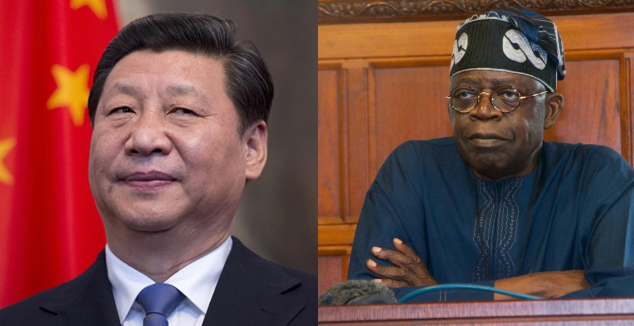
President Bola Tinubu failed to include primary and secondary school qualifications in the educational qualifications section of the personal particulars submitted to the Independent National Electoral Commission, INEC, for the 2027 presidential election.
The documents, published by INEC on Saturday in line with its revised timetable for the 2027 general election, contain the nomination papers and supporting credentials of presidential and vice-presidential candidates.
A review of Tinubu’s EC9 nomination form shows that the President listed only a Bachelor of Science (B.Sc.) degree in Business Administration obtained from Chicago State University in 1979 under the educational qualifications section.
The sections provided for his primary and secondary school qualifications were left blank.
However, Tinubu attached copies of his university degree certificate and National Youth Service Corps, NYSC, certificate to his nomination papers.
In the form, the President stated that he was born on March 29, 1952, in Lagos and described his occupation as “Politician.”
He also declared that he worked at Mobil Nigeria Limited between 1983 and 1992 before serving as Governor of Lagos State from 1999 to 2007.
He listed his current employer as the Federal Government of Nigeria from 2023 to date and stated that he had never been dismissed from public service.
News
“Greatest Threat Is Misinformation, Not Technical Glitch” – INEC Chairman Tasks Media On Osun Poll Coverage
The Chairman of the Independent National Electoral Commission, INEC, Prof. Joash Amupitan, SAN, has described misinformation and disinformation as the greatest threat to the August 15 Osun State Governorship Election, urging the media to prioritize verified and ethical reportage.
He made the call on Saturday in Osogbo during an interactive session with media executives, describing journalists as the “Fourth Estate of the Realm” and critical stakeholders in the democratic process.
“However, your role as the Fourth Estate is critical to the survival of the process. In this final day window, the greatest threat we face is not technical failure, but the pathology of misinformation and disinformation,” the INEC Chairman said.
“Fake news, manufactured election-day panics, and the unauthorized declaration of parallel results are direct assaults on our public peace and democratic stability.”
He said the Commission has accredited field reporters through its dedicated portal “because we want you to see everything,” and in return demanded “a commitment to verified, ethical, and dispassionate reporting.”
“Verify your facts before you broadcast. When a glitch occurs in a single polling unit, do not report it as a systemic failure across the entire state,” Prof. Amupitan charged.
“Use your channels to educate voters: remind them that No PVC means No Voting, and that vote-buying remains a criminal offense that our partners at the EFCC and ICPC have been mandated to curb.”
Giving an update on readiness, the Chairman said the just-concluded mock accreditation proved the resilience of the BVAS.
“The Bimodal Voter Accreditation System (BVAS) demonstrated optimal field resilience. On average, it took between 30 seconds to 2 minutes to successfully verify a voter using either their fingerprints or facial recognition,” he stated.
“As a result, we have increased the total number of BVAS for the election from 4,427 to 5,130 so as to service split polling units in large PUs in Ife East, Irewole, Egbedore, Ede North, Osogbo. In the process, we increased the number of back-ups from 664 to 1,328 for quick intervention in case of any malfunction.”
Prof. Amupitan also addressed insecurity, saying INEC has moved “from reactive monitoring to proactive prevention” through ICCES. He listed hotspot LGAs to include Atakumosa East and West, Boripe, Ede North and South, Ife Central, Ifedayo, Ila, Osogbo, Ifelodun, and Oriade.
On inclusivity, he reaffirmed the Commission’s commitment to vulnerable voters.
“Democracy is incomplete if it excludes vulnerable populations. The Commission has integrated practical assistive devices across polling locations based on our disability mapping in Osun State. We have provisions for braille ballot guides for visually impaired voters; magnifying glasses for voters with albinism and low vision; EC40H poster manifests for hearing-impaired citizens and Priority Voting Queues for Persons with Disabilities (PWDs), pregnant women, nursing mothers, and the elderly,” he said.
The Chairman said 32,000 NYSC members have been engaged as ad-hoc staff via the INECPRES portal and that training for Supervisory Presiding Officers has been concluded.
“We do not care who wins the election; we only care how they win. Our sole job is to ensure that the process is clean, that every valid vote counts, and that the declaration reflects nothing but the true sovereign will of the Osun electorate,” Prof. Amupitan concluded.
The session had in attendance National Commissioners, the Osun REC Barrister Oluwatoyin Babalola, NUJ and BON leadership, Bureau Chiefs, Editors and other senior media executives.
News
Coalition want explanation over alleged BVAS failure in Osun mock accreditation exercise
A group, aegis of Coalition of Concerned Nigeria Citizens (CCNC), has called on the Independent National Electoral Commission (INEC) to immediately explain the alleged widespread failure of the Bimodal Voter Accreditation System (BVAS) during Saturday’s mock accreditation exercise conducted ahead of the August 15 Osun State governorship election.
The group alleged that the mock accreditation, designed to test the commission’s readiness for the election, experienced significant technical challenges after commencing in selected polling units across the state, raising concerns about INEC’s preparedness for the governorship poll.
In a statement signed by its spokesperson, Comrade Raufu Sodiq, popularly known as “Oluomo Success,” the coalition claimed that although the exercise was scheduled to begin at 8:30 a.m., it started behind schedule in some polling units. It further alleged that less than 40 minutes after the exercise commenced, many BVAS machines stopped recognising fingerprints, facial features and Permanent Voter Cards (PVCs), preventing the successful accreditation of voters in the affected locations.
Describing the development as disturbing, the group said a mock accreditation exercise should ordinarily boost public confidence in the electoral process, adding that the reported malfunction of the accreditation devices during the test exercise had instead raised questions about the commission’s level of preparedness.
The coalition argued that accreditation remains the foundation of every credible election because it determines voter eligibility and protects the integrity of the electoral process. According to the group, any failure at that stage could undermine public confidence in the outcome of the election if not urgently addressed.
CCNC also queried why such challenges allegedly occurred despite what it described as years of preparation and substantial public investment in electoral technology. It called on the Osun Resident Electoral Commissioner and the national leadership of INEC to provide a comprehensive explanation on the cause of the reported BVAS malfunction and disclose measures being taken to prevent a recurrence during the August 15 governorship election.
Among its demands, the coalition asked INEC to clarify whether the reported glitches resulted from software, hardware or configuration problems, explain its contingency plans for the 3,763 polling units across Osun State, replace any faulty BVAS machines and consider conducting another mock accreditation exercise before the election to restore public confidence.
“We believe in strong democratic institutions and do not want to see INEC fail. However, public confidence must be built on competence, transparency and accountability. The people of Osun deserve an election where every eligible voter can cast their vote without avoidable technological failures,” the statement read.
The group further urged the Chairman of INEC to personally address Nigerians before the governorship election by explaining the outcome of the mock accreditation exercise, outlining corrective measures and assuring voters that all identified technical challenges would be resolved before Election Day.
INEC had organised the mock accreditation exercise to assess the functionality of the BVAS and other electoral processes ahead of the governorship election scheduled for August 15 across the state’s 3,763 polling units.
-
News10 hours agoJust in: After Hugh Backlash, FIFA finally Scrap Infantino’s £15B World Cup Private Investment Proposal
-
News10 hours ago‘Stop complaining about Buhari, others for your failures,’ Atiku slams Tinubu
-
News10 hours agoColonel Behind Alleged Tinubu Coup Plot Admits Failed Promotion Pushed Him, Reveals How He Was Lured By Army Chiefs
-
News9 hours agoHow Prison Inmate on D*ath Row Livestreamed On TikTok, Earned Money From Ogun Prison
-
News9 hours agoINEC Rejects PDP’s Submission Of Jonathan As 2027 Presidential Candidate
-
News6 hours agoPresidency reacts to Onaiyekan’s comment, says he’s not speaking for Christians, insists Catholics supporting Obi
-
News9 hours agoSAD: FRSC Enugu Sector Commander Is Dead
-
News8 hours agoUK PM Burnham slams Infantino, says he’s the ‘wrong man’ to lead FIFA

Warning: Undefined variable $user_ID in /home/naijuinz/public_html/wp-content/themes/zox-news/comments.php on line 49
You must be logged in to post a comment Login