Connect with us

Foreign

Venezuela hit by nationwide power outage

Published

on

ADVERTISEMENT
Zoom Ad
ADVERTISEMENT
Zoom Ad

A blackout left most of Venezuela without power Friday in what authorities blamed on sabotage of the national electrical grid — the latest crisis to hit the country after a disputed presidential election.


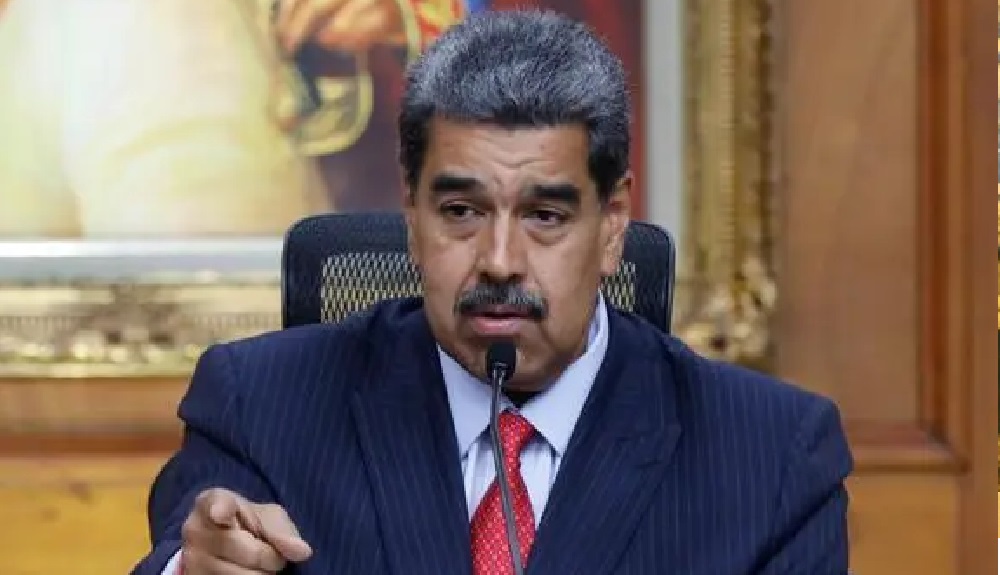
Venezuela experiences frequent blackouts, which President Nicolas Maduro’s government routinely attributes to unproven conspiracies to overthrow him.

Authorities reported the outage across 24 states began shortly before dawn, and by late afternoon power began to return to parts of Caracas, the southwestern state of Tachira and western Merida, AFP correspondents reported.

“I remain alongside the people on the front lines in the battle against this criminal attack targeting the national electricity system. Desperate fascism is attacking the people, but together we will win,” President Nicolas Maduro wrote on social media.

Advertisement

Earlier, Communications Minister Freddy Nanez reported “an electrical sabotage … which has affected almost the entire national territory.

The worst countrywide outage to strike Venezuela, in March 2019, lasted several days.

“It’s complicated to get around without electricity. We don’t know what’s going to happen during the day,” said Anyismar Aldana, a 27-year-old cashier on her way to work in Caracas, in the working-class neighborhood of Petare.

“People are afraid that it will happen again (like in 2019).” When the power goes out “we don’t work, we don’t know what to do for food,” she added.

Advertisement

Western regions such as Tachira and Zulia, once capitals of the oil industry, experience daily power outages.

“We woke up to the blackout,” said Carlos Pena, 39, owner of a small chicken shop in the centre of Caracas who came to work to “see if we can sell everything so that it doesn’t go to waste.”

– Economic collapse –

Maduro’s government has accused the United States and the political opposition of orchestrating the power failures.

Advertisement

Opposition leaders and experts, however, blame corruption and a lack of investment and expertise for the outages.

Over the past decade, Venezuela has experienced an unprecedented economic collapse that has seen more than seven million Venezuelans flee the country as GDP plunged 80 percent.

Nanez said the government had put in place “anti-coup protocols” after the blackout, citing the recent July 28 election — the result of which has been widely disputed.

Maduro was proclaimed the winner but the government-aligned National Electoral Council (CNE) has refused to release detailed data to verify the result.

Advertisement

The opposition says its candidate, Edmundo Gonzalez Urrutia, won the election by a landslide, releasing polling station-level data to back up that claim.

– Opposition candidate summoned –

Gonzalez Urrutia on Friday ignored a third summons to appear before prosecutors over his claims he was the rightful winner of the vote.

Prosecutors said if he failed to appear an arrest warrant would be issued.

Advertisement

Gonzalez Urrutia is accused of “usurpation of functions” and “forgery” for the opposition’s release of electoral results data.

The opposition candidate has accused Attorney General Tarek William Saab of pursuing politically-motivated charges and of not providing “guarantees of independence and due process.”

Maduro has previously threatened to jail Gonzalez Urrutia and opposition leader Maria Corina Machado, accusing them of being responsible for post-election protests and violence.

At least 27 people have been killed — including two military personnel — and almost 200 wounded, with 2,400 arrests, in protest-related violence since the election.

Advertisement

The United States, the European Union and several Latin American countries have refused to recognize Maduro as having won without seeing detailed voting results.

Brazilian President Luiz Inacio Lula da Silva said Friday that he “does not accept Maduro’s victory or that of the opposition. The opposition says it won.

“He (Maduro) says he won but there is no proof. We demand proof,” Lula told a local radio station.

AFP
Advertisement
Continue Reading
Advertisement
Click to comment

Warning: Undefined variable $user_ID in /home/naijuinz/public_html/wp-content/themes/zox-news/comments.php on line 49

You must be logged in to post a comment Login

Leave a Reply

Foreign

Iran Unable To Import Petrol Amid US Naval Blockade

Published

on

By

ADVERTISEMENT
Zoom Ad
ADVERTISEMENT
Zoom Ad

Iran is struggling to import enough petrol to offset weak domestic production, as a US naval blockade cuts off supply routes into the country, a senior Iranian official has said.

Vice President Mohammad Jafar Ghaempanah linked the shortage directly to the blockade, which has left Tehran unable to bridge the gap between local output and demand.

“Petrol production is insufficient, and because of the US naval blockade, we cannot import it,” the official IRNA news agency quoted Ghaempanah as saying on Wednesday.

The shortage has pushed Iranians into long queues outside petrol stations in recent days, deepening the economic strain building on the country as its war with the United States increasingly plays out through financial and supply pressure rather than direct confrontation.

Advertisement

The conflict began on February 28, after which Iran seized control of the strategic Strait of Hormuz, prompting Washington to respond with a naval counter-blockade of Iranian ports.

Amid the fuel crunch, President Mohsen Haji-Mirzaei’s chief of staff said on Monday that petrol quotas would be reviewed, though he gave no further details on what changes might follow.

Ghaempanah also took aim at how Iran distributes its heavily subsidised fuel, arguing that the existing system favours those who own several vehicles over those with none.

“The distribution of petrol in the country is inequitable. Owners of several vehicles benefit from subsidies, unlike those who do not own one,” he said.

Advertisement

Iran remains one of the world’s major oil producers and has long offered some of the cheapest fuel globally, a legacy of decades of heavy subsidies that makes any move to alter pricing a politically delicate issue for the government.

Continue Reading

Foreign

Royal Family Gathers As Norway’s King Harald’s Condition Worsens

Published

on

By

ADVERTISEMENT
Zoom Ad
ADVERTISEMENT
Zoom Ad

Norway’s King Harald V is in an “extremely serious” condition in hospital, according to the country’s royal household.

The 89-year-old monarch has been receiving treatment at Oslo University Hospital for more than a week after being diagnosed with haemolytic anaemia, a rare blood condition that reduces the number of red blood cells in the body and can cause fatigue and shortness of breath.

King Harald’s wife, Queen Sonja, and his son, Crown Prince Haakon, have cancelled their royal engagements and gathered at his bedside. Other members of the royal family, including Crown Princess Mette-Marit and Princess Astrid, have also reportedly visited the hospital.

Crown Prince Haakon, 53, is the heir to the Norwegian throne and has been serving as regent while his father is on leave.

Advertisement

Norway’s Prime Minister Jonas Gahr Støre also cancelled a planned trip to Germany, where he was due to meet Chancellor Friedrich Merz.

Advertisement

“The whole nation is with us as we send warm thoughts to the king and the rest of the royal family,” Støre said.

Members of the public have begun leaving flowers in Palace Square outside the Royal Palace in Oslo as concerns over the king’s health grow.

Advertisement

King Harald has experienced several health problems in recent years and has had to reduce his royal duties. In 2024, he was fitted with a pacemaker after becoming ill while on holiday in Malaysia.

He has been on the Norwegian throne since 1991 and is Europe’s oldest serving head of state.

The royal family has faced several health and personal challenges this year. Crown Princess Mette-Marit underwent a lung transplant in June after being diagnosed with a rare form of pulmonary fibrosis in 2018.

The transplant came shortly after her son, Marius Borg Høiby, was sentenced to four years in prison after being convicted of two counts of rape. Høiby, who is not a royal figure, has denied the most serious charges and is appealing the sentence.

Advertisement

Earlier this year, documents also revealed Mette-Marit’s frequent contact with the late convicted sex offender Jeffrey Epstein. She later apologised to the king and queen for her three-year friendship with Epstein and said she had shown “poor judgement”.

Continue Reading

Foreign

UK’s Newborn Babies To Be Tested For Rare Genetic Condition In National Trial

Published

on

By

ADVERTISEMENT
Zoom Ad
ADVERTISEMENT
Zoom Ad

Newborn babies in England will be tested for spinal muscular atrophy (SMA) as part of a new five-year national trial examining whether the rare genetic condition should be added to routine newborn screening.

The study, led by Professor Laurent Servais, a paediatric neuromuscular disease specialist at the University of Oxford, will examine whether screening for SMA is effective, practical and cost-effective for the NHS.

The programme will begin with a phased rollout in Birmingham, Manchester and London before expanding nationally. It is expected to screen about 400,000 babies initially, with a full national rollout eventually reaching around 600,000 newborns each year.

Researchers expect the screening programme to identify about 60 babies with SMA annually. Children diagnosed through the programme will be followed for five years to assess their development, including when they learn to sit and walk, their quality of life and the level of care they require.

Advertisement

SMA is a rare genetic condition affecting about one in 10,000 people. It damages the motor neurons responsible for controlling movement and can cause muscle weakness.

In its most severe form, babies may initially appear healthy but can develop weakness, difficulty supporting their heads, breathing problems and problems swallowing within their first months of life. Without treatment, some children can die within their first few years.

Professor Servais said early diagnosis is important because once symptoms appear, some of the damage cannot be reversed.

The new screening programme follows a pilot study in the Thames Valley, which identified Teddy, a child from Chesham, with SMA when he was eight weeks old in 2023.

Advertisement

Teddy was diagnosed before he developed symptoms and was able to begin treatment quickly. He now takes the medicine Risdiplam every day and, at two and a half years old, is developing normally.

His parents, Hattie and James, said they had known very little about SMA before Teddy’s diagnosis and described the news as devastating. However, they were relieved that the condition had been detected before symptoms appeared.

The Thames Valley pilot screened more than 30,000 babies and Teddy was the only child identified with SMA.

SMA screening will be carried out using the existing NHS newborn blood spot test, commonly known as the heel-prick test. The test currently checks babies for 10 rare but serious health conditions.

Advertisement

Former Little Mix singer Jesy Nelson has also campaigned for newborns to be tested for SMA after her twin daughters were diagnosed with the condition at six months old.

Nelson said the introduction of newborn screening was a victory for families affected by SMA and could give future children a brighter start.

Researchers hope the national study will provide strong evidence about the medical benefits and potential cost savings of detecting SMA before symptoms develop.

Advertisement
Continue Reading

Trending

Copyright © 2024 Naija Blitz News