Health
Paternity uncertainty remains high, DNA test reports reveal
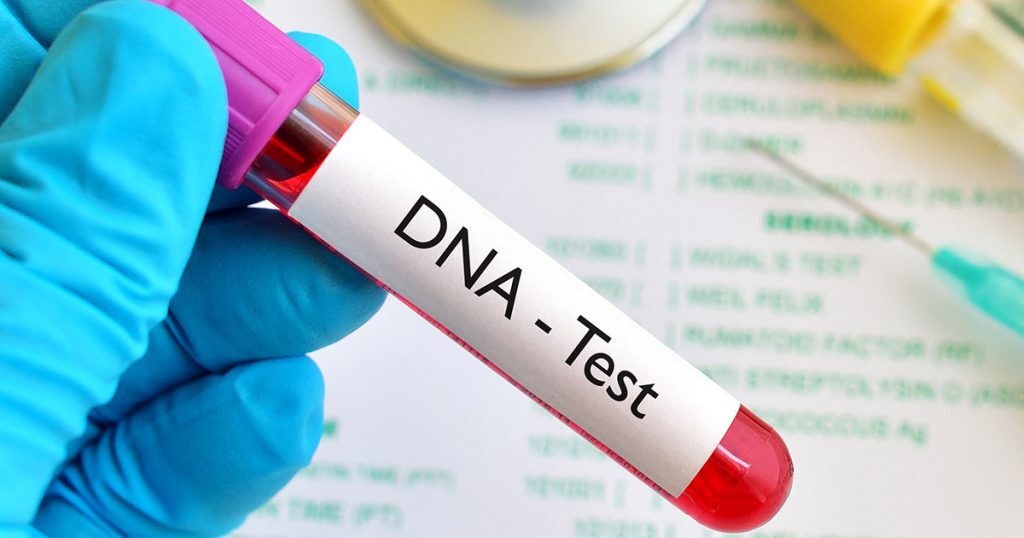
A leading DNA testing centre in Lagos, Smart DNA, has released its 2024 report on DNA testing in Nigeria.

The report unveils astonishing findings that shed light on societal dynamics, economic factors, and changing family structures in Nigeria.
The report, News Agency of Nigeria reports showed paternity uncertainty remained high.

It said 27 per cent of paternity tests came back negative, indicating more than one in four men tested were not the biological fathers of the children.
It also showed Immigration Tests surge, indicating the “Japa” trend was high.
The report noted increase in DNA tests for immigration purposes, growing more than any other test type, as more Nigerians seek opportunities abroad.
The trend suggested a number of parents with dual citizenship were processing paperwork for their children’s emigration
On regional dominance, it showed Lagos dominated.
About 73.1 per cent of DNA tests were conducted in Lagos with a stark divide between Mainland (67.5 per cent) and Island (32.5 per cent).
This concentration highlighted the economic divide in Lagos and across Nigeria, raising questions about access to such services in other parts.
It also showed the Yoruba accounted for 53 per cent of tests, followed by Igbo (31.3 per cent), with Hausa at 1.20 per cent.
Smart DNA’s Operations Manager, Elizabeth Digia said: “These findings offer a unique window into changing dynamics of families and society.
“The high rate of negative paternity tests and surge in immigration-related testing are particularly noteworthy.
“They reflect broader societal trends that merit further discussion and research.
“The concentration of testing in Lagos also raises important questions about accessibility and awareness of DNA testing services across Nigeria.
“As a company, we’re committed to expanding access to our services nationwide while maintaining the highest standards of accuracy and confidentiality,” she said.

Health
From ₦370k to ₦570k Monthly: Delta Doctors Get Massive Pay Rise
In a bold move to tackle the growing shortage of medical professionals, Delta State Governor, Sheriff Oborevwori, has approved a significant salary increase for doctors across the state, alongside a new tax-free allowance for house officers.
The announcement was made by the State Commissioner for Health, Joseph Onojaeme, during a press briefing, where he revealed that entry-level doctors will now earn ₦570,000 monthly, up from the previous ₦370,000.
House officers are also set to benefit, with their earnings rising from just over ₦250,000 to above ₦350,000, boosted by a newly introduced ₦100,000 tax-free “MORE Special Allowance.”
Why the Pay Raise?
According to the commissioner, the decision was driven by concerns over the low turnout of doctors in the state’s ongoing recruitment exercise.
Despite receiving over 6,000 applications for more than 700 health worker positions, the number of qualified doctors who showed up fell short of expectations—raising alarm over staffing gaps in the healthcare system.
Government’s Strategy
The state government believes the improved salary structure will:
Attract more qualified doctors
Retain existing medical professionals
Strengthen healthcare delivery across Delta State
Joseph Onojaeme also reassured the public that the recruitment process will remain strictly merit-based, stressing that no form of payment or favoritism will be tolerated.
Big Picture
With Nigeria facing an ongoing brain drain in the medical sector, Delta State’s move is seen as a strategic attempt to compete with better-paying opportunities abroad and in the private sector.
If successful, this could set a precedent for other states struggling to keep their healthcare workforce intact.
Health
Resident doctors begin indefinite strike Tuesday
The Nigerian Association of Resident Doctors has declared an indefinite nationwide strike beginning at 12:00 a.m. on Tuesday, April 7, 2026, citing what it described as the Federal Government’s plan to halt the implementation of the revised Professional Allowance Table, a key component of agreements reached after its 2025 industrial action.
The decision, which threatens to disrupt healthcare services across public hospitals in Nigeria, was reached at the end of the association’s virtual Extraordinary National Executive Council meeting held on Saturday.
Speaking on the outcome of the meeting, NARD National President, Dr Shuaibu Ibrahim, described the development as “unfortunate,” blaming the Federal Government of Nigeria for pushing doctors toward another industrial action.
“The National Executive Council was informed about the Federal Government’s decision to remove the Professional Allowance Table, a development deemed unfortunate,” he said.
“Following extensive deliberations, the NEC resolved to embark on a total industrial and comprehensive strike beginning at 12:00 a.m. on Tuesday, April 7, 2026.”
The crisis stems from the implementation of a revised Professional Allowance Table negotiated between NARD and the Federal Government following a prolonged strike in 2025. The agreement included improved remuneration packages for resident doctors, covering call duty allowances, shift allowances, rural posting incentives, and non-clinical duty payments.
Although implementation was initially scheduled to commence in January 2026, delays pushed the rollout to February. However, NARD alleged that the government is now planning to discontinue the process by April, a move the association says undermines trust and violates prior agreements.
Healthcare analysts note that disputes over allowances and welfare have been a recurring issue in Nigeria’s health sector, contributing to frequent strikes by medical unions, including the Nigerian Medical Association. These disruptions often reduce access to healthcare services, particularly in public hospitals that cater to the majority of Nigerians.
Outlining the association’s demands, Ibrahim called for the immediate reversal of the government’s decision and settlement of all outstanding entitlements.
“We demand the reversal of the decision to cease the implementation of the PAT starting in April 2026,” he said.
“There must be immediate payment of promotion arrears and salary arrears in affected centres, as well as the prompt conclusion of the process of paying the 2026 Medical Residency Training Fund.”
“We also insist on the immediate processing and payment of the outstanding 19 months’ arrears of the Professional Allowance.”
He further urged members of the association nationwide to remain united.
“The NARD leadership calls on its members to unite in the fight against this injustice and to pursue it to a logical conclusion,” Ibrahim added.
The planned strike raises concerns about the potential impact on Nigeria’s already strained health system. Resident doctors form the backbone of service delivery in tertiary hospitals, handling a large proportion of patient care.
According to health sector data, Nigeria faces a severe shortage of medical personnel, with doctor-to-patient ratios far below the World Health Organization (WHO) recommended standard of one doctor to 600 patients. Estimates suggest Nigeria’s ratio is closer to one doctor per 5,000 patients, particularly in underserved areas.
An indefinite strike could lead to the shutdown of outpatient services, delays in surgeries, and increased pressure on private healthcare facilities, raising concerns among patients and health advocates.
Stakeholders have called for urgent intervention to avert another disruption in the health sector, warning that repeated strikes could worsen the ongoing brain drain among Nigerian doctors seeking better working conditions abroad.
As the strike deadline approaches, attention is now on the Federal Government to engage with NARD and resolve the dispute, with millions of Nigerians potentially affected if negotiations fail.
Economy
EU Unveils €290m Investment Package to Deepen Ties with Nigeria
By Gloria Ikibah
The European Union has announced a major upgrade in its relationship with Nigeria, unveiling a €290 million investment package aimed at boosting key sectors including digitalisation, healthcare, agriculture and migration management.
The announcement was made on the sidelines of the Eighth Ministerial Dialogue in Abuja, co-chaired by Nigeria’s Minister of Foreign Affairs, Yusuf Maitama Tuggar, and the EU’s High Representative for Foreign Affairs and Security Policy, Kaja Kallas.
The funding, part of the EU’s Global Gateway strategy, will support seven new projects designed to strengthen economic cooperation and reflect what both parties described as a renewed political commitment to deeper bilateral ties.
Speaking at the event, Ms Kallas said: “In the current
geopolitical context, the European Union is keen to enhance its partnership with Nigeria. Bringing more EU investment to Nigeria, aligning with the Renewed Hope agenda for the Nigerian Federal Government is a key priority for both sides in this regard”.
EU Commissioner for International Partnerships, Jozef Síkela, highlighted the broader impact of the initiative, stating: “Together with Nigeria, we are investing in the modernisation of the digital sector, a stronger health system and in the development of agriculture. These Global Gateway investments create new quality infrastructures, sustainable jobs and long-term economic opportunities that benefit the Nigerian people, but also create new opportunities for Europe”.
A significant portion of the package — €131 million — is earmarked for digital development. The funding will support the expansion of broadband infrastructure, including the rollout of 90,000 kilometres of fibre optic cable, aimed at improving connectivity and reducing internet costs for millions of Nigerians currently without access. It will also fund the development of secure digital public systems and support large-scale training initiatives under Nigeria’s technical talent programme.
In the health sector, €55 million has been allocated to boost local pharmaceutical production. Through a new credit line backed by the European Investment Bank, Nigerian companies will gain access to preferential loans to support the manufacturing of medicines and vaccines. The initiative will also include vocational training programmes to build expertise within the workforce.
Agriculture is set to receive €86 million in additional support, focusing on cocoa and dairy value chains. The funding will facilitate access to finance for businesses and smallholder farmers, while also promoting climate-smart agricultural practices. The move aligns with Nigeria’s ambition to expand milk production and strengthen its cocoa exports to European markets.
Meanwhile, €16 million has been dedicated to migration-related initiatives. The funds will support the reintegration of returning migrants and enhance efforts to combat human trafficking and smuggling networks. The EU says it will continue to assist stranded migrants wishing to return home voluntarily, while also strengthening support systems to help them rebuild their lives.
The latest commitments add to existing EU-backed projects in Nigeria, including investments in transport infrastructure in Lagos, renewable energy development, democratic governance, and efforts to combat gender-based violence.
With these new agreements, total EU and Team Europe commitments to Nigeria since 2025 now stand at €962.5 million, underscoring what officials describe as a rapidly evolving and increasingly strategic partnership.
-
News20 hours agoJust in: Ex-Senate president, Saraki, others to face death penalty charges
-
News20 hours agoNigeria Rules Out IMF Bailout as Reforms Gain Ground –Finance minister, Edun
-
News15 hours agoKwankwaso has decided to be Obi’s running mate-Ibrahim Abdulkarim reveals
-
News20 hours agoHunger looming in Nigeria as Tinubu’s economic policies summersault- IMF cautions
-
Sports15 hours ago“Any attempt to lose to Arsenal, ends Mancity’s dream of title race”-Guardiola
-
News15 hours agoJust in: Tinubu assents 2026 Appropriation Bill, 2025 Budget Extension
-
News19 hours agoTragedy averted as man parks SUV on 3rd Mainland bridge jumps into lagoon
-
Education15 hours agoBREAKING: JAMB set to release first batch of 2026 UTME results today

You must be logged in to post a comment Login