News
Revealed: Powerful Nigerians own four commercial banks in our country-Liberia’s VP
- /home/naijuinz/public_html/wp-content/plugins/mvp-social-buttons/mvp-social-buttons.php on line 27
https://naijablitznews.com/wp-content/uploads/2024/09/Jeremiah-Kpan-Koung-1000x600.jpg&description=Revealed: Powerful Nigerians own four commercial banks in our country-Liberia’s VP', 'pinterestShare', 'width=750,height=350'); return false;" title="Pin This Post">
- Share
- Tweet /home/naijuinz/public_html/wp-content/plugins/mvp-social-buttons/mvp-social-buttons.php on line 72
https://naijablitznews.com/wp-content/uploads/2024/09/Jeremiah-Kpan-Koung-1000x600.jpg&description=Revealed: Powerful Nigerians own four commercial banks in our country-Liberia’s VP', 'pinterestShare', 'width=750,height=350'); return false;" title="Pin This Post">
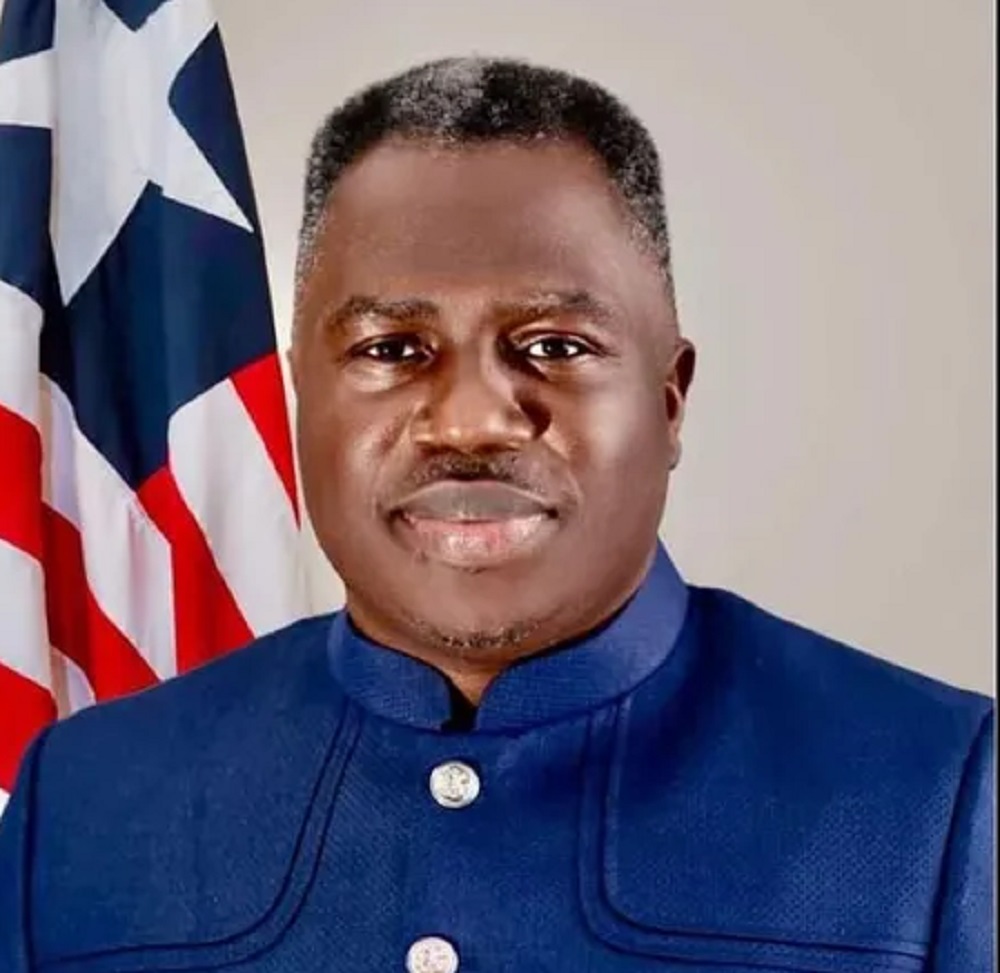
Liberia’s Vice President, Jeremiah Kpan Koung, has said that Nigerians now own about half of Liberia’s commercial banks.

He said this during the 17th Annual Banking & Finance Conference organized by the Chartered Institute of Bankers of Nigeria (CIBN) in Abuja on Tuesday.
Koung, speaking to an audience of banking professionals and government officials, praised the role Nigerian banks play in Liberia’s economic landscape.

He emphasized that Nigerian investors have been instrumental in increasing market competition, boosting efficiency, and providing credit lines to support private sector growth.
The Liberia’s Vice President said: “We welcome and applaud the expansion of Nigerian-owned banks in Liberia. The presence and increase in Nigerian-owned businesses, especially banks, are helping to increase market competition and improve efficiency.
“These banks continue to play major roles in providing jobs and establishing credit lines to support the development of our private sector. Presently, there are four (4) Nigerian-owned banks operating in Liberia out of a total of eight (8) commercial banks. This is a clear sign that Nigerians remain interested in investing in Liberia, and as a government, our doors remain open to you.”
He expressed his government’s openness to further investment from Nigerian banks, noting their critical role in job creation and economic development.
Koung also touched on Liberia’s efforts to integrate into the West African Monetary Zone and the Economic Community of West African States (ECOWAS), with a vision to adopt a single currency regime.
He explained that the Central Bank of Liberia is working on a new monetary policy framework that will align with the region’s economic integration goals. However, Koung warned that achieving this vision will require collective economic responsibility from all member states, including managing debt and stabilizing exchange rates.
Koung said: “Currently, the Central Bank of Liberia is working on the monetary policy framework to meet the requirements for the West Africa Monetary Zone. As you may be aware, it is expected that Liberia, Ghana, Gambia, Guinea, Sierra Leone, and Nigeria will work towards the implementation of a single currency regime to achieve economic integration.
“This policy framework will lay the foundation for the realization of a common currency for all ECOWAS member states. However, to achieve this vision, we have a collective responsibility to make sound economic decisions to reduce our debts and stabilize our exchange rates.”
The vice president further emphasized the need for investment banks in Liberia, noting that the country’s only development bank, the Liberia Bank for Development and Investment (LBDI), lacks the capital necessary to finance the country’s ambitious economic transformation agenda.
As a result, Liberia has had to rely on multilateral development institutions like the African Development Bank and the World Bank to finance large-scale projects. Koung called for more investment in Liberia’s banking sector to address this gap.
In his closing remarks, Koung expressed optimism that the Abuja conference would inspire new policy directions to enhance the banking sectors in both Nigeria and Liberia.
He highlighted the potential for greater collaboration between the two countries, particularly in the areas of trade, investment, and financial services.
However, checks on the website of Central Bank of Liberia (CBL) showed that there are nine commercial banks in Liberia.
The four linked to Nigerians are Ecobank Liberia Limited (EBLL), United Bank for Africa Liberia Limited (UBALL), Access Bank Liberia, and Guaranty Trust Bank Liberia (GTBL).
The other five banks in Liberia are Liberian Bank for Development & Investment (LBDI), International Bank Liberia Limited (IBLL), Global Bank Liberia Limited (GBLL), Sapelle International Bank Liberia Limited (SIBLL), and Afriland First Bank LIBERIA Limited (AFBLL).

News
State Police: Sharia council warns FG against rushed constitutional amendment
The officials of the Supreme Council for Shariah in Nigeria (SCSN) have warned against a rushed constitutional amendment to create state police, urging the Federal Government and the National Assembly to ensure wider consultations before taking a final decision on the proposed reform.
The Council, in a statement issued on Sunday and signed by its Secretary General, Nafiu Baba Ahmad, said it had been closely monitoring the ongoing national debate and legislative process on state police, describing the issue as one with far-reaching implications for justice, national unity and the country’s future.
It also stated that Nigeria was facing one of the gravest security crises in its history, with thousands of innocent lives lost, millions displaced and widespread destruction of agriculture, businesses and livelihoods, leaving many communities living in fear.
According to the Council, while every sincere effort aimed at improving national security should be welcomed, state police should not be presented as a quick or magical solution to the country’s security challenges.
The SCSN argued that the failures of the existing security architecture were rooted largely in inadequate funding, corruption, insufficient personnel, poor welfare, weak intelligence gathering, obsolete equipment and ineffective coordination among security agencies.
It further maintained that these structural deficiencies would not disappear simply by transferring policing powers to state governments, insisting that the country’s immediate priority should be the comprehensive reform and strengthening of existing security institutions through better funding, recruitment, modern technology, intelligence gathering, border security, accountability and professionalism.
Besides, Baba-Ahmed also expressed concern over what he called the apparent haste with which constitutional amendments on the issue were being pursued, stressing that changes affecting Nigeria’s security architecture should never be rushed but should instead be subjected to broad national consultations, transparent public hearings and genuine consensus among stakeholders.
He said the Council was disappointed with the proceedings of the National Assembly, noting that many Nigerians believed the process had fallen short of the openness, inclusiveness and thorough consultations expected of such a critical constitutional matter.
The Council, however, commended lawmakers who insisted on due process, wider consultations and the national interest, saying their principled stand reflected the essence of democratic representation and deserved the appreciation of Nigerians.
It further cautioned against any arrangement that could allow state police to become instruments of political intimidation or discrimination, warning that Nigeria’s complex religious, ethnic and political diversity required a policing system that guarantees equal protection for every citizen under the Constitution.
The SCSN therefore called for strong constitutional safeguards, independent oversight institutions, transparent and merit-based recruitment, professional training standards, effective complaints mechanisms, judicial and legislative oversight, sustainable funding and firm guarantees against abuse of power before any state police structure is established.
It urged President Bola Tinubu, the leadership of the National Assembly, state governments and other relevant stakeholders to conclude comprehensive nationwide consultations and adequately address the concerns of Nigerians before proceeding with any constitutional amendment on state police, while praying that Almighty Allah grants the nation’s leaders the wisdom and sincerity to make decisions that will strengthen justice, preserve national unity and restore lasting peace and security.
News
Tinubu government begins 2026 Tertiary Institutions National Laureate Programme
● Institutions directed to Constitute Laureate Committees as Nigeria Begins Search for its Finest Academic Research
The Tertiary Institutions National Laureate Committee has formally announced the commencement of the 2026 National Laureate Programme, marking the inaugural edition of what is expected to become Nigeria’s foremost national platform for recognising outstanding student academic research, innovation and scholarly excellence across tertiary institutions.
The launch of the Programme signals a major milestone in the Federal Government’s commitment to promoting research excellence, strengthening the nation’s knowledge economy and placing scholarship at the centre of Nigeria’s development agenda.
The National Laureate Programme, inaugurated by the Federal Government under the leadership of the Honourable Minister of Education, Dr Tunji Alausa, CON, is designed to identify, evaluate, celebrate and reward exceptional undergraduate dissertations, master’s theses and doctoral research produced in accredited Nigerian tertiary institutions.
Supported by an annual research prize fund of ₦365 million, the Programme ranks among Nigeria’s most prestigious academic recognition initiatives and reflects the Federal Government’s determination to encourage original research, innovation and solutions capable of addressing national and global challenges.
Beyond recognising academic excellence, the Prize is intended to strengthen Nigeria’s research ecosystem by promoting innovation, encouraging the commercialisation of research outputs, supporting industrial development, inspiring future researchers and establishing scholarship as a strategic national asset.
As part of the commencement of the 2026 edition, all accredited universities, polytechnics, colleges of education, monotechnics, military institutions and other eligible tertiary institutions are requested to immediately commence internal preparations for participation.
Every eligible institution is expected to constitute an Institutional Laureate Selection Committee made up of experienced academics with proven research records, unquestionable integrity and the capacity to conduct objective evaluations in accordance with the approved National Laureate Programme framework.
Institutions are also required to formally submit the names and designations of the Chairman, Secretary and members of the Committee, after which the Committee will coordinate the institution’s participation in the Programme.
Following the institutional evaluation process, each participating institution is expected to nominate up to eighteen outstanding research works, comprising six undergraduate dissertations, six master’s theses, and six doctoral theses in the case of universities, or their equivalents for polytechnics, monotechnics, colleges of education, and other tertiary institutions, drawn from the six approved thematic areas, such as Agriculture, Teaching Innovation, Medicine and Health Sciences, Engineering, Science, and Technology, Law, Arts and Social Sciences.
The Programme offers Star Prizes of ₦35 million for the undergraduate category, ₦50 million for the master’s category, and ₦100 million for the doctoral category.
In addition, 15 Thematic Laureate Awards, valued at ₦12 million each, will be presented to other outstanding winners.
Institutions are reminded that every nominated research work must first be formally submitted as required under the National Policy for the Nigeria Education Repository and Databank (NERD) and assigned a valid National Document Number (NDN) before it can be considered for the National Laureate Programme.
This requirement reinforces the Federal Government’s commitment to research integrity, proper documentation and the preservation of Nigeria’s academic output within the national knowledge infrastructure.
The Committee further reminds participating institutions that the National Laureate Programme operates a rigorous three-tier evaluation system, comprising Institutional, Regional, also referred to as Zonal, and National assessments.
This multi-layered process has been designed to guarantee transparency, fairness, objectivity and merit in the selection of the country’s finest academic research.
Institutions are therefore encouraged to conduct their internal assessments with the highest standards of professionalism and impartiality, recognising that only the very best research works will progress through the successive stages of evaluation.
The management of every participating institution is responsible for constituting its Institutional Laureate Selection Committee in accordance with the approved guidelines. Once constituted, the institution’s approved NERD Focal Officer (NFO) is required to designate the Committee members through NFO dashboard on NERD.
This formal designation grants authorised members secure access to make entries, evaluate submissions and digitally manage the institution’s participation on the national Laureate Dashboard throughout the Programme.
The National Laureate Committee also calls on Nigerian professional bodies and associations to play an active role in safeguarding the integrity of the Programme by nominating distinguished scholars and subject experts for appointment into the Regional Laureate Selection Committees across the six geopolitical zones of the Federation.
Professional bodies representing agriculture, science, engineering and technology, medicine, law, arts and social sciences, teaching, and related disciplines are encouraged to submit nominations of suitably qualified experts with established records of scholarship, peer review, integrity and professional leadership.
Those appointed will participate in the independent regional evaluation of research submissions before the national assessment. All nominations will undergo rigorous screening based on merit, experience, integrity, diversity and conflict of interest requirements to ensure that the Programme maintains the highest standards of credibility and academic excellence.
Institutions and professional bodies are advised to conclude the selection of committee members and subject matter experts by 15 August 2026 while the submission of institutional entries will continue until the 31st of August 2026.
It noted that submissions would include mandatory digital transmission as provided in the guideline on the National Laureate portal.
Describing the Programme as a landmark national investment in intellectual capital, the Chairman of the National Laureate Committee, Emeritus Professor Abubakar S. Sambo (OON), said the National Laureate Programme was designed to elevate academic excellence to national prominence, encourage world-class research, inspire innovation and recognise scholars whose work has the potential to transform lives, industries and the future of Nigeria.
He encouraged every eligible institution and every relevant professional association to participate actively in ensuring the success of the inaugural edition of the Programme.
Further information, including detailed guidelines, committee manuals and application procedures, is available on the National Laureate Programme website at www.nationalaureate.ng.
Additional guidance may also be obtained through the Committee Guide and the Application Guide available on the website.
Issued by:
Ita Ekpenyong
Spokesperson
National Laureate Committee
News
Troops rescue 34 abductees, nab ISWAP informant, recover arms
Troops of the Nigerian Army have, in the last 24 hours, rescued 34 kidnap victims, apprehended suspected ISWAP informants and recovered arms and ammunition in coordinated operations nationwide.
This is contained in an operational report made available to the News Agency of Nigeria (NAN) on Sunday.
The report said that troops of Operation HADIN KAI rescued 31 kidnap victims from terrorists along the Buratai-Kamuya road in Biu Local Government Area of Borno.
It said the rescue followed a swift response after troops of 135 Special Forces Battalion detected ISWAP/JAS terrorists abducting civilians from four vehicles through CCTV surveillance.
According to the report, troops immediately deployed a quick reaction force, engaged the terrorists and forced them to abandon the victims and flee, with one motorcycle left behind.
“In another operation, troops of 145 Battalion conducted a fighting patrol to the Turoh general area of Damasak in Mobbar Local Government Area.
“The terrorists reportedly fled on sighting the troops, leaving behind two motorcycles and illicit drugs recovered during exploitation of the area.
“Also, troops of 232 Battalion Tactical apprehended a suspected ISWAP informant at Garaha Market in Hong Local Government Area of Adamawa,” it said.
In the North-West, the report revealed that troops of Operation FANSAN YAMMA engaged terrorists moving with rustled cattle in Tsafe Local Government Area of Zamfara.
It added that the troops’ superior firepower forced the terrorists to withdraw in disarray during the encounter.
The report also revealed that troops of Operation MESA rescued a kidnapped woman and her two children along the old Obajana-Jakura-Tajimi road in Lokoja Local Government Area of Kogi.
According to the report, preliminary investigation revealed that the victims were abducted on July 29 from a Ruga settlement in the Gada-Biyu area of the same local government.
“In Plateau State, troops of Operation Enduring Peace responded to reports of an attack on a herder in Bassa Local Government Area.
“The assailants had fled before the troops arrived, while the deceased and recovered cattle were handed over to the victim’s family,” it added.
In the South-East, the report said the troops of Operation UDO KA recorded a major breakthrough with the arrest of three suspected terrorists linked to the ambush of troops in Imo on May 4.
It added that the operation, conducted in Delta and Imo states, followed intelligence obtained from earlier arrested suspects.
According to the report, troops recovered four AK-47 rifles, one FN rifle, a pistol, 11 AK-47 magazines, two FN magazines, 239 rounds of assorted ammunition, a fragmentation jacket and other military items from terrorist camps.
“The recovered weapons included rifles earlier carted away during the May ambush on troops, while further exploitation led to the discovery of another terrorist camp containing additional arms and ammunition,” it said.
-
Entertainment24 hours agoWhy I Don’t Want Any Of My Children To Make Music – Davido
-
Economy24 hours agoCooking Gas Price Reduces, See New Amount Per KG
-
Metro24 hours agoJust in: Fire guts Federal Mortgage Bank HQ in Abuja
-
News23 hours agoWhy I Need To Go Beg God — Ex-JAMB Registrar
-
News24 hours agoABU lecturer dies in road crash
-
News24 hours agoPolice probe video of officers attacking gold seller in Lagos
-
Metro24 hours agoKidnapped Benue Seminarian Escapes From Abductors
-
Foreign23 hours agoIS Fighters Overrun Two Niger Military Bases, 38 Soldiers Confirmed Dead

Warning: Undefined variable $user_ID in /home/naijuinz/public_html/wp-content/themes/zox-news/comments.php on line 49
You must be logged in to post a comment Login