Connect with us

News

Economic Hardship: Nigerians Resorting to Extreme Measures for Survival

Published

on

ADVERTISEMENT
Zoom Ad
ADVERTISEMENT
Zoom Ad
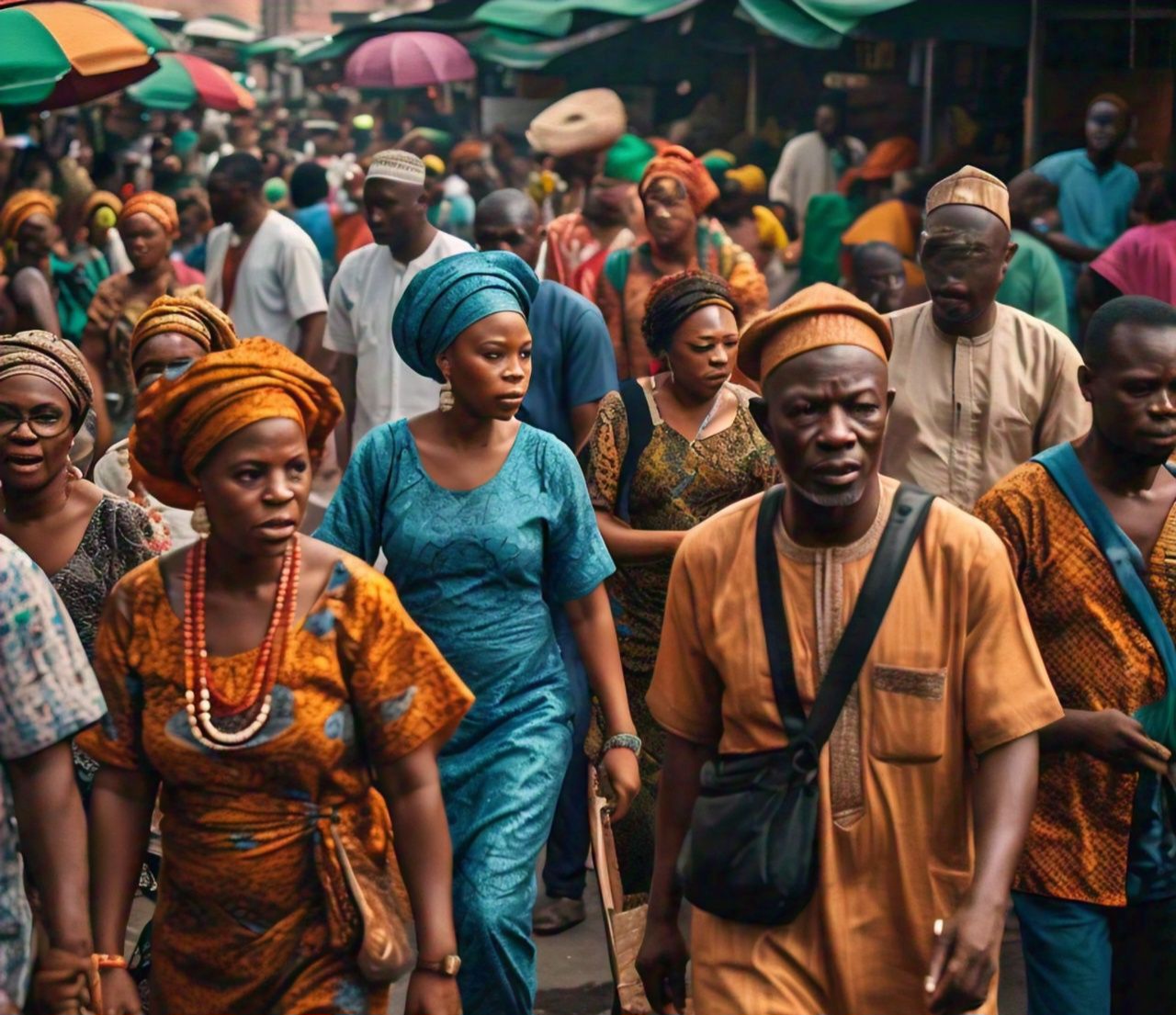
Amidst the worsening economic crisis in Nigeria, fueled by soaring prices of fuel and inflation, citizens have been forced to adopt unconventional survival strategies, including the consumption of animal feed in some cases. As daily necessities become more expensive, many are turning to desperate measures just to make ends meet.
In Plateau State, women in Jos have resorted to feeding their families with maize chaff, locally known as ‘dusa’, typically reserved for animal consumption. Mrs. Gladys Tonggang, a concerned resident, expressed shock upon hearing about a pregnant mother of four using ‘dusa’ to feed her children after grinding it into a meal. With increasing demand, the price of this animal feed has reportedly risen by N500.
The effects of this economic downturn extend beyond food choices. A mechanic, Mr. Monday Adetola, shared that his customer base has significantly dwindled as fewer people can afford to drive their cars, leading to a reduction in vehicle maintenance needs. Similarly, a tailor named Murtala Musa has had to close his shop and switch to selling noodles and eggs due to the lack of customers.
In Ekiti State, a civil servant, Mr. Deji Ilori, disclosed that his family is skipping meals and relying on less nutritious food options as the cost of living skyrockets. With fuel prices reaching N1,000 per liter, he has abandoned his car and turned to public transportation, drastically altering his daily routine and diet. Other residents, like Uwamba Favour, a small business owner, are facing mounting expenses and dwindling profits, forcing them to sell products at cost price just to avoid further losses.
In Osun State, some women in Osogbo have resorted to street begging to feed their families. Taiwo, a mother of two, narrated how her husband’s struggles as a driver have left them dependent on neighbors for basic food supplies. Similarly, Usman Faruk, a student at Obafemi Awolowo University, has been working as a laborer to sustain himself, though even this is not enough to cover his food expenses.
Public transportation has also become a preferred option for many in Akwa Ibom State, where civil servants and private individuals alike are parking their vehicles due to the prohibitive cost of fuel. Estate surveyor, Madam Chinyere Ndon, now restricts her movements to essential trips, while tricycle operator Mr. Odudu Umoh laments the low profitability of his business due to the high cost of fuel and low passenger turnout.
In Cross River State, many residents have turned to urban farming to combat the rising cost of food. Even civil servants are using any available land to grow crops such as cassava, vegetables, and yams, while some, like Mr. Genesis, have transformed their homes into small farms to sustain themselves. Others are selling off personal items to cope with the harsh realities.
Meanwhile, in Ogun State, residents like Mr. Bolade Adeniyi, a taxi driver, have adapted by working only during peak hours, supplementing their income with backyard farming. Civil servants like Mr. Olorode Akinlabi have even turned their personal vehicles into commercial ones, ferrying passengers after work to meet financial obligations.
Kaduna State residents are also feeling the brunt of the crisis, with some families eating only once a day. In rural areas, people are relying on the goodwill of neighbors or resorting to wild plants for food. In Benue, citizens have stopped making non-essential trips due to high transportation costs, and many are growing their own food to survive.
Across Nigeria, the economic hardships have led to various survival strategies, from farming in urban spaces to selling off possessions. However, the common cry from citizens is for government intervention to ease the burden through fuel price adjustments and support for those struggling to provide for their families. Without such measures, the nation’s most vulnerable may continue to endure unimaginable hardship.

Continue Reading
Advertisement
Click to comment

Warning: Undefined variable $user_ID in /home/naijuinz/public_html/wp-content/themes/zox-news/comments.php on line 49

You must be logged in to post a comment Login

Leave a Reply

News

Ooni welcomes baby girl with Olori Oluwatosin

Published

on

By

ADVERTISEMENT
Zoom Ad
ADVERTISEMENT
Zoom Ad

The Ooni of Ife, Oba Adeyeye Enitan Ogunwusi, has welcomed the birth of a baby girl with his wife, Olori Oluwatosin Ogunwusi.

This is contained in a statement on Sunday in Ile-Ife by the Ooni’s Senior Media Officer, Mr Sodiq Lawal, on behalf of the Director of Media and Public Affairs, Mr Moses Olafare.

Olafere expressed gratitude to God for the safe delivery, describing the newborn as a divine blessing to the House of Oduduwa.

According to him, the Ooni thanked Almighty Olodumare for His grace and faithfulness, which made the successful delivery possible.

Advertisement

“The Royal Father prayed that the newborn princess will grow in wisdom, grace, honour and divine favour throughout her lifetime.”

He added that both Olori Oluwatosin and the baby princess were in excellent health.

He quoted the Ooni as further praying for God’s continued protection over the royal family and for enduring peace, prosperity and abundant grace for the House of Oduduwa.

The Ooni wished the newborn princess a purposeful, honourable and fulfilled life under God’s guidance.

Advertisement
Continue Reading

News

10th Senate processed over 1,000 bills in three years – Plang

Published

on

By

ADVERTISEMENT
Zoom Ad
ADVERTISEMENT
Zoom Ad

Chairman of the Senate Committee on Labour, Employment and Productivity, Diket Plang, has said the 10th Senate has processed more than 1,000 bills in its first three years in office, with over 200 already signed into law by President Bola Tinubu.

Plang, who represents Plateau Central Senatorial District, said the upper chamber had also adopted several resolutions through motions and carried out extensive oversight of Ministries, Departments and Agencies (MDAs), describing the period as one of the most productive in Nigeria’s legislative history.

Speaking in an interview to mark the third anniversary of the 10th Senate, the lawmaker said the chamber’s committee system had also enabled lawmakers to closely monitor government performance and budget implementation.

“At the moment, the Senate has had over 1,000 bills. About 900 have passed either second or third reading, and we have over 200 bills that have been signed into law,” he said.

Advertisement

“So, for me, there is a lot of achievement in terms of making laws. We have had very important motions with beautiful resolutions and sufficient oversight functions as far as the first three years of the Senate are concerned.”

“Each of the ministries, departments and agencies brings its proposals during budget defence, and you go back to find out what has been achieved and what has not been achieved. It helps us know what government has been able to do,” he said.

On the recently passed State Police Bill, Plang commended President Bola Tinubu for supporting what he described as one of Nigeria’s most difficult but necessary constitutional reforms.

He argued that creating state police would strengthen intelligence gathering because officers recruited from local communities understand the language, culture and terrain better than officers deployed from other parts of the country.

Advertisement

“The locals know the language, they know the terrain, they know the culture of where they are policing. Information gathering and rapid response to criminality will improve significantly,” he said.

The senator also dismissed fears that governors would abuse state police, insisting that constitutional safeguards and oversight by the National Police Council, National Assembly and State Houses of Assembly would prevent excesses.

“No governor will employ people from his community and ask them to oppress their own people. There are oversight mechanisms that will check abuse,” he said.

He explained that although the bill had passed both chambers of the National Assembly, it still requires approval by at least 24 State Houses of Assembly before it can be transmitted to the President for assent as part of the constitutional amendment process.

Advertisement

Plang added that the reform would improve Nigeria’s police-to-population ratio through fresh recruitment across the states while creating employment opportunities for thousands of young Nigerians.

Commenting on the recent xenophobic attacks against Nigerians in South Africa, Plang urged both governments to pursue diplomacy rather than retaliation.

He said, “It is unfortunate that brothers are turning against one another. There should be immediate engagement between the Nigerian and South African governments. Rather than retaliation, both countries should sit down and resolve these issues as brothers.”

Advertisement
Continue Reading

News

Tinubu’s Remarks On Flyovers Not Directed At Oborevwori – Waive

Published

on

By

ADVERTISEMENT
Zoom Ad
ADVERTISEMENT
Zoom Ad

Member representing Ughelli North, Ughelli South and Udu Federal Constituency in the House of Representatives, Rt. Hon. (Revd.) Francis Ejiroghene Waive, has said President Bola Tinubu’s recent remarks cautioning state governments against constructing unnecessary flyovers were not directed at Delta State Governor, Rt. Hon. Sheriff Oborevwori.

Waive, in a statement, argued that the flyovers completed and those under construction in Delta State were necessitated by persistent traffic congestion in their respective locations, adding that the projects were undertaken after due consideration of the state’s infrastructure needs.

According to him, the Federal Government had, on several occasions, acknowledged Delta State’s strides in road infrastructure and flyover construction, alongside other developmental achievements, before similar projects gained momentum in other states.

He maintained that Governor Oborevwori had pursued infrastructure development without neglecting key sectors of the state’s economy, insisting that the administration had continued to invest in roads, bridges, healthcare, education and social welfare programmes.

Advertisement

“The flyovers constructed and those currently under construction by Governor Sheriff Oborevwori are absolutely necessary. Deltans can testify that they are all located in areas where severe traffic gridlock is a regular occurrence,” Waive said.

The lawmaker dismissed criticisms of the projects by opposition figures, describing them as politically motivated and disconnected from the realities on the ground.

He expressed confidence that the governor’s performance would earn him another term in office, saying residents of the state remained committed to the continuation of the administration’s M.O.R.E. Agenda in synergy with President Tinubu’s Renewed Hope Agenda.

Waive urged Governor Oborevwori to sustain the pace of infrastructure development through the construction of more roads, bridges and flyovers, while expanding social investment programmes aimed at improving the welfare of the people.

Advertisement

He also congratulated the governor in advance on what he described as his expected victory in the 2027 governorship election, expressing optimism that the administration would continue to deliver democratic dividends across the state.

Continue Reading

Trending

Copyright © 2024 Naija Blitz News