
News
NERC asks Discos to procure minimum 398MW embedded power



By Mario Deepromoter
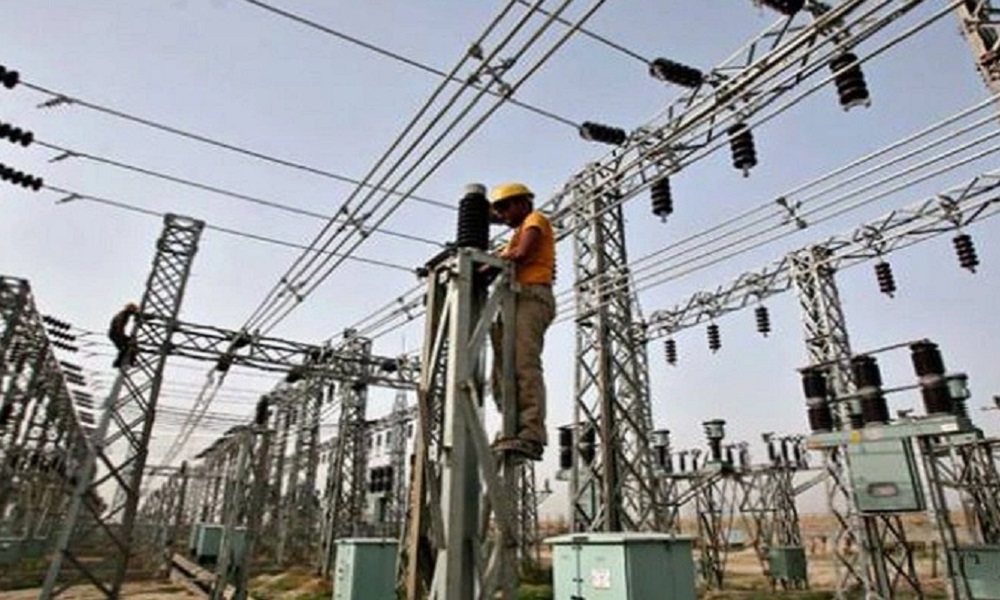
The Nigerian Electricity Regulatory Commission has mandated electricity Distribution Companies to procure a minimum of 398MW of embedded generation to enhance the reliability of power supply across the country.
Embedded generation (also known as distributed generation or distributed energy resources) refers to electricity generation or storage plants connected to a distribution network rather than the transmission network or the national electricity grid.
The NERC’s directive is contained in the September 2024 Supplementary Order to the Multi-Year Tariff Order 2024, which applies to the 11 Discos in Nigeria.
Under the order, each Disco is required to secure 10 per cent of its 2024 load allocation from embedded generation sources. This measure is expected to address supply issues and improve electricity delivery to consumers.
For instance, in the case of Kano Disco, the commission said, “Kano Disco is obligated by this order to procure a minimum of 27MW capacity of embedded generation, being 10, of its 2024 load allocation, to improve supply reliability and sustain delivery of a minimum service level under the SBT (Service Based Tariff).
“A minimum of 14MW (i.e., 50 per cent) of the embedded generation capacity must be sourced from renewable energy sources.”
The commission outlined the embedded generation capacity requirements for Kano Electricity Distribution Plc as 27MW; Port Harcourt Electricity Distribution Plc, 28MW; Yola Electricity Distribution Plc, 11MW; Abuja Electricity Distribution Plc, 61MW; and Jos Electricity Distribution Plc, 22MW.
Others include Ikeja Electricity Distribution Plc, 60MW; Ibadan Electricity Distribution Plc, 48MW; Eko Electricity Distribution Plc, 51MW; Enugu Electricity Distribution Plc, 31MW; Benin Electricity Distribution Plc, 33MW; and Kaduna Electricity Distribution Plc, 26MW.
The directive forms part of efforts to address ongoing power supply challenges in the country.
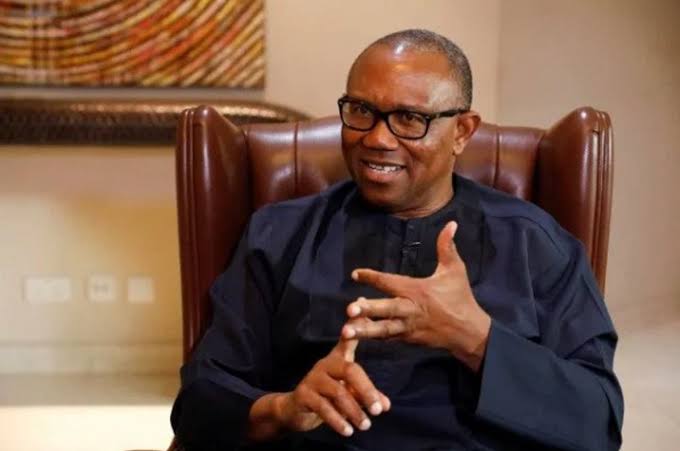
Presidential candidate of the Nigeria Democratic Congress (NDC), Peter Obi, has raised concerns about his personal safety ahead of the 2027 general elections, saying he is not certain he will be alive when Nigerians go to the polls.
Obi made the remarks during an interview on Arise TV on Thursday, where he discussed the political environment ahead of the election and called for a peaceful and democratic process.
The former Anambra State governor said he had been subjected to petitions and investigations in different places, adding that he remained uncertain about what could happen to him before the election.
“As I speak to you, I have also petitioned, I’ve been investigated everywhere. I still hear that I’m not even sure whether I’ll still be alive at the end of this,” Obi said.
He said he was relying on God for protection, while expressing uncertainty over the circumstances surrounding him.
“I’m praying to God for His protection because at this stage, I’m not sure what is happening,” he added.
Obi also appealed to political actors, particularly state governors, to create an environment where presidential candidates and other contestants can campaign freely ahead of the 2027 polls.
According to him, governors have the right to support candidates of their choice, but should not prevent candidates from opposing parties from carrying out their campaigns.
“Some of them will be campaigning for presidency tomorrow. They will be campaigning for other offices tomorrow. Let’s have peace,” he said.
The NDC candidate recalled his tenure as governor of Anambra State, saying he allowed politicians from other parties to campaign in the state, including those supporting candidates who were opposed to him.
Obi’s comments come amid increasing political activity and debate over the conduct and security of the 2027 elections. He has repeatedly called for a peaceful, credible and issue-based electoral process, while urging political actors to avoid actions that could undermine democratic participation.


Francis-Xavier Sosu, Ghanaian member of parliament, collapsed on stage while delivering a speech.
Sosu was addressing students at the Ghana Institute of Management and Public Administration (GIMPA) in Accra on Thursday when he began to show signs of dizziness, according to video posted by Joy Online, a local media outlet.
Pausing his address, the lawmaker attempted to hold on to the podium but was unable to continue his speech or stand upright.
A man and a woman approached the podium from the side of the hall to assist the lawmaker, who later collapsed into their arms as they rushed him out of the building.
A statement issued by Ivan Dzakpasu, Sosu’s chief of staff, said the MP has received the necessary medical attention following the incident.
The statement did not provide details on the nature of the incident, the medical attention received or what may have caused the MP to become unwell.
The statement urged the public to remain calm and avoid relying on unverified reports or speculation about the lawmaker’s condition.
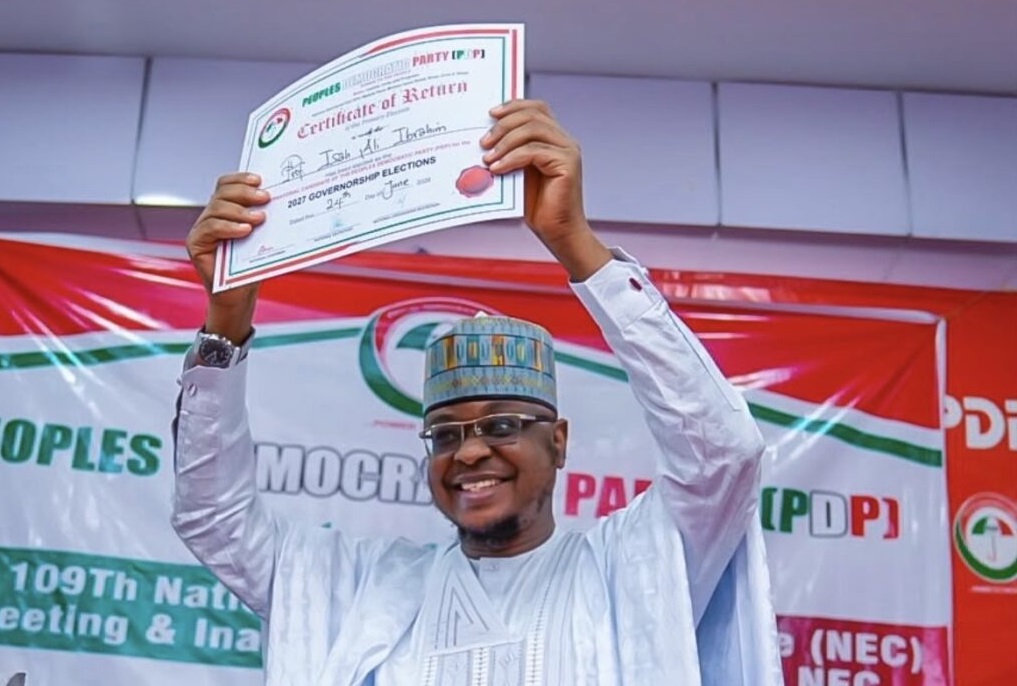
The federal high court in Gombe has nullified the emergence of Isa Pantami as the Peoples Democratic Party (PDP) candidate for the 2027 governorship election in the state.
The court, in a judgment delivered on Thursday by Amina Aliyu Mohammed, also ordered the PDP to conduct a fresh governorship primary in compliance with its constitution, guidelines and relevant electoral laws.
The judgment followed a suit filed by Usman Garry, a PDP governorship aspirant, who challenged the process through which Pantami emerged as the party’s candidate.
In May, Pantami withdrew from the All Progressives Congress (APC) governorship primary election scheduled for May 21 in Gombe state.
Pantami attributed his withdrawal from the race to the alleged breaches of the electoral process.
He eventually joined the PDP and emerged as the party’s 2027 governorship candidate in Gombe state.
The former minister secured the ticket through voice affirmation during the party’s gubernatorial primary.
Garry objected to the affirmation of Pantami as the flagbearer of the Abdulrahman Mohammed-led faction and eventually filed a suit against the former minister.
Garry had asked the court to set aside Pantami’s emergence on the grounds that the PDP did not conduct a valid governorship primary in accordance with its rules and applicable electoral laws.
After hearing arguments from the parties, the court had reserved judgment in July.
At Thursday’s proceedings, counsel to Pantami argued that he had validly resigned from the APC on May 19, 2026, before participating in the PDP primary.
The PDP also opposed the suit and urged the court to strike out the case.
Garry’s counsel, however, urged the court to dismiss the objections and grant the reliefs sought by his client.
The court, however, directed the PDP to conduct a fresh governorship primary in accordance with its guidelines and applicable electoral provisions.

2027: Peter Obi Raises Alarm Over Safety, Says He May Not Be Alive for Election

Naira Marginally Gains At Official Market

Miners’ deaths: NSCDC pledges justice, says no cover-up





-

 News21 hours ago
Video: Apo-Karshi road getting required finishing touches
-

 News21 hours ago
SAD! Four Teenage Girls Die As Boat Carrying Eight Capsizes In Jigawa
-

 News21 hours ago
US firm declares America won’t allow Tinubu rig 2027 polls in Nigeria
-

 Opinion21 hours ago
OF TEEJAY YUSUF, KOGI WEST SENATORIAL DISTRICT, AND RESPONSIVE SERVANTHOOD
-

 News20 hours ago
FG Cuts Late Tax Payment Interest as New Rate Takes Effect October 1
-

 Sports21 hours ago
FCT emerges winner of Abuja zone, book ticket to 1st Bank/Okwaraji U-16 finals
Warning: Undefined variable $user_ID in /home/naijuinz/public_html/wp-content/themes/zox-news/comments.php on line 49
You must be logged in to post a comment Login