News
Nigerian varsities working in shadows of death – Omole
- /home/naijuinz/public_html/wp-content/plugins/mvp-social-buttons/mvp-social-buttons.php on line 27
https://naijablitznews.com/wp-content/uploads/2024/09/Ayodeji-Omole.jpg&description=Nigerian varsities working in shadows of death – Omole', 'pinterestShare', 'width=750,height=350'); return false;" title="Pin This Post">
- Share
- Tweet /home/naijuinz/public_html/wp-content/plugins/mvp-social-buttons/mvp-social-buttons.php on line 72
https://naijablitznews.com/wp-content/uploads/2024/09/Ayodeji-Omole.jpg&description=Nigerian varsities working in shadows of death – Omole', 'pinterestShare', 'width=750,height=350'); return false;" title="Pin This Post">
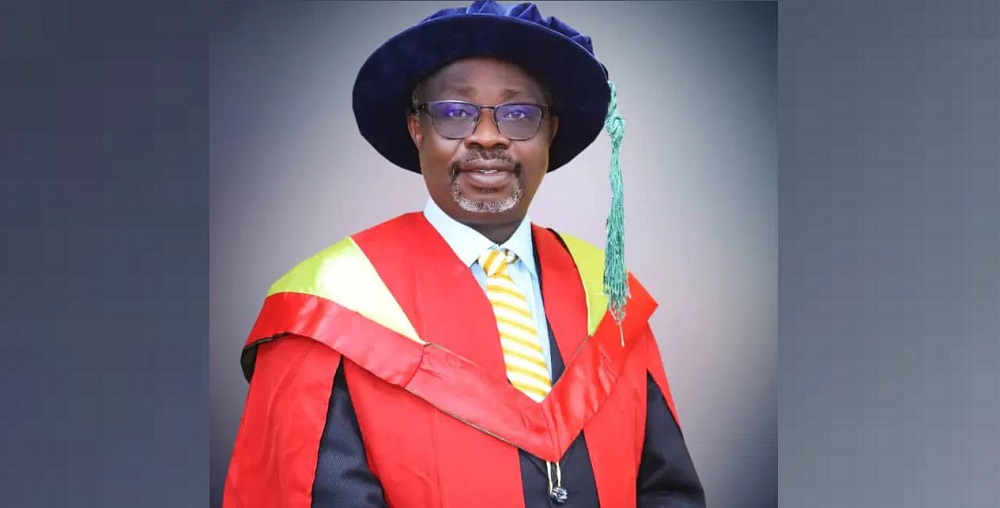
The Pro-chancellor and Chairman of the Governing Council, Ladoke Akintola University of Technology (LAUTECH), Ogbomoso, Professor Ayodeji Omole on Thursday said that the Nigerian University is under siege and currently “working in the shadows of death”.

He maintained that the university system has been captured and held hostage by many government policies especially since the advent of the so called ‘civil rule’.
Professor Omole made these assertions while delivering the 561 inaugural lecture of the university of Ibadan, entitled “working in the shadows of death”.

A former ASUU chairman, Professor Omole stated unless something urgent is done to stop government attacks on the Nigeria’s educational system, the system will die faster than anticipated
“More than ever before, the Nigeria University system is under siege and therefore ‘Working in the shadows of death. If nothing drastic is done to stop the various attacks from government and its agencies, the system will die faster than anticipated. The University system is captured and has been held hostage by many government policies, especially since the advent of the so called ‘civil rule’”.
He took a swipe at various civilian administrations who he said foisted anti-intellectual policies on the education system in the country.
According to the Professor of Forest Engineering, “Treasury Single Account (TSA) and Integrated Personnel and Payroll Information System (IPPIS). IPPIS is a mismatch with university work structure. It is incompatible with the academic calendar, and a clear violation of the University Act.
Therefore, it is illegal. Only in Nigeria is the data-base of scholars surrendered to foreign agencies in the name of cutting cost. The effects of which are threatening the very existence of the University system in Nigeria today, because it is now impossible for Universities to recruit even cleaners.”
According to the University don, “the proposed imposition of Core Curriculum Minimum Academic Standard (CCMAS) by the National Universities Commission (NUC) is another policy that will kill Nigerian Universities, faster than expected”.
While expressing sadness that the university of ibadan senate also caved in from its stance on the CCMAS introduction, Professor Omole lamented that the rigid standardization will definitely limit universities’ ability to innovate and design programmes to meet societal needs; because local content and flavour are ignored.
As a former ASUU Chairman at the University of Ibadan, Omole who appreciated the efforts of the Academic Staff Union of Universities (ASUU) and its quest for enhancing qualitative public education for children of the masses in Nigeria noted that “every financial gain the university system has been able to make is as a result of the struggles of ASUU”
He challenged Nigerian academic to “criticize policies that are inimical to national development” saying that “scholars worthy of the description should be vocal in their resistance to foreign exploitation, through the imposition of neo-liberal policies”.
To ensure sustainable development, Professor Omole harped on the need “for government and other stakeholders to ensure fair and adequate compensation for all workers, fostering a motivated workforce that is fully engaged in the pursuit of national progress”.
“Slave wages severely undermine the commitment of workers to national development and have broad, damaging effects on a country’s economic, social, and political fabric. Under-funding in Nigerian universities has led to a range of problems that affect the quality of education, research, and overall institutional performance.
This has manifested in the form of deterioration of infrastructure, poor facilities, brain drain/loss of talent, labour/student unrest, erosion of university autonomy, low morale among staff, decline in global ranking and reputation. These affect productivity, commitment, and willingness to engage in advanced research or innovative teaching methods.
In summary, the under-funding of Nigerian universities is a significant barrier to the advancement of education, research, and national development. Addressing these issues requires increased investment in higher education, better financial management, and strategic policies that prioritize the long-term sustainability and improvement of the university system.
Poor remuneration in Nigerian universities has far-reaching consequences for the future of the university system, affecting its ability to deliver quality education, retain talent, and contribute to national development.”

News
FG, states, LGAs share ₦2.551trn as June 2026 revenue
The Federation Account Allocation Committee (FAAC), at its July 2026 meeting chaired by the Honourable Minister of Finance and Coordinating Minister of the Economy, Mr. Taiwo Oyedele, has shared a total of ₦2.551 trillion among the Federal Government, the 36 States and 774 Local Government Councils as Federation Account revenue for June 2026.
The meeting, held in Abuja, was attended by the Accountant General of the Federation, State Commissioners of Finance and other members of the Committee.
The amount distributed comprised ₦1.810 trillion in Statutory Revenue and ₦740.724 billion from Value Added Tax (VAT).
From the Statutory Revenue, the Federal Government received ₦849.366 billion, the State Governments ₦430.810 billion, while the Local Government Councils received ₦332.136 billion. The oil producing States also received ₦197.610 billion as 13 per cent derivation.
The VAT distribution saw the Federal Government receive ₦74.072 billion, the State Governments ₦407.398 billion, while the Local Government Councils received ₦259.253 billion.
In all, the Federal Government received ₦923.438 billion, the State Governments ₦838.208 billion, the Local Government Councils ₦591.390 billion, while ₦197.610 billion was shared as 13 per cent derivation to the oil producing States.
FAAC noted that gross revenue available in June 2026 stood at ₦4.501 trillion, comprising ₦3.701 trillion in statutory revenue and ₦799.746 billion in gross VAT collections.
The Committee observed a strong improvement in revenue performance during the month.
Gross statutory revenue increased by ₦1.049 trillion over the figure recorded in May 2026.
The growth was driven largely by higher receipts from Companies Income Tax, Value Added Tax, Import Duty, Customs Excise Tariff Levies, Petroleum Royalties, Gas Flared Penalties, Rental Income and Miscellaneous Oil Revenue.
However, collections from Petroleum Profit Tax, Hydrocarbon Tax, Mineral Royalties and Fees recorded declines.
VAT collections also recorded positive growth.
Gross VAT revenue rose from ₦743.668 billion in May to ₦799.746 billion in June, representing an increase of ₦56.078 billion.
News
Senator Ikpea Thumbs Down Reintegration of Repentant Boko Haram Members
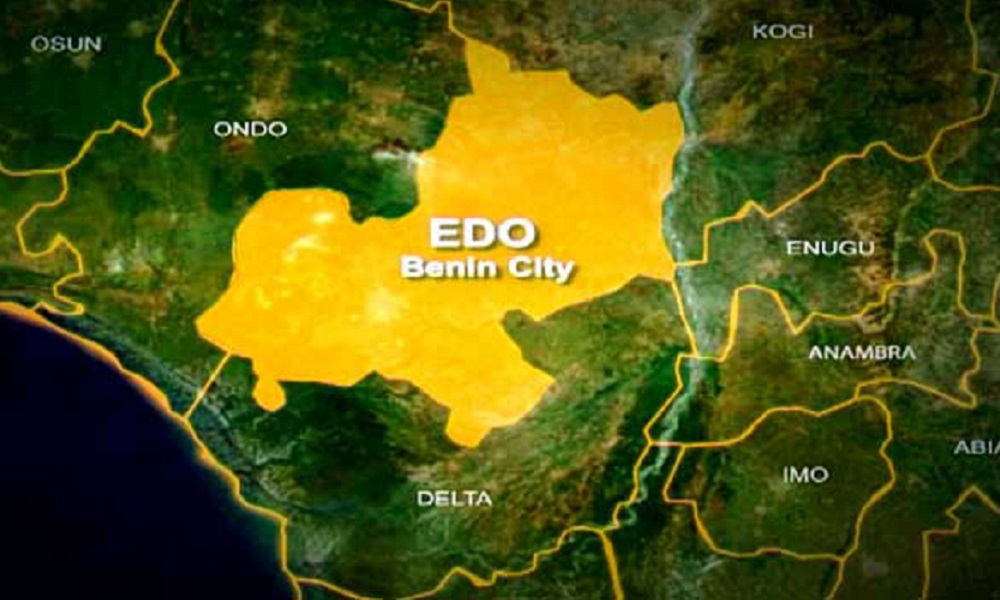
Chairman of the Senate Committee on Drugs and Narcotics, and the senator representing Edo Central, Senator Joseph Ikpea, has thumbed down the rehabilitation and reintegration of repentant Boko Haram members into society, insisting that individuals involved in terrorism should face the full weight of the law rather than be returned to civilian life.
Speaking with journalists after the inaugural meeting of the Senate Committee on Drugs and Narcotics at the National Assembly on Wednesday, Ikpea described the policy of reintegrating former insurgents as “unreasonable,” arguing that it undermines the sacrifices of security personnel and victims of terrorism.
According to him, insurgents responsible for the killing of innocent Nigerians and members of the armed forces should not be rehabilitated or reintegrated into society.
“I don’t understand the rationale behind reintegrating Boko Haram members into society. Our gallant soldiers have lost their lives protecting the country from these terrorists. If someone has committed acts of terrorism and is apprehended, such a person should face the consequences of the law,” he said.
The senator maintained that Boko Haram and other terrorist groups remain enemies of every Nigerian, irrespective of religion or ethnicity, noting that they target Christians, Muslims, civilians and security personnel alike.
Ikpea also alleged that some recent kidnapping incidents across the country could have political undertones, suggesting that certain actors may be exploiting insecurity to undermine the government ahead of future elections.
On the issue of drug control, the committee chairman disclosed that the Senate Committee on Drugs and Narcotics would review the proposed bill seeking to impose the death penalty for drug-related offences after a thorough examination of the legislation.
He explained that he was not a member of the Senate when the bill was previously debated and therefore could not comment on its current status.
“I have no idea about that bill because I was not a senator when it came up on the floor. My committee will look at it and advise accordingly. For now, I cannot say much about it,” he said.
Ikpea noted that the committee’s inaugural meeting was convened to outline its legislative agenda and oversight responsibilities.
He said one of its immediate priorities would be strengthening oversight of the National Drug Law Enforcement Agency (NDLEA) and inspecting rehabilitation centres across the country to ensure they comply with approved operational standards.
“We are planning to visit rehabilitation centres to ensure they meet the required standards. You cannot just establish a rehabilitation centre without complying with the necessary regulations. We want to ensure they are operating properly and delivering quality services,” he said.
Speaking on the proposed death penalty for drug traffickers, the senator declined to take a firm position, saying punishment for offences should be proportionate to the crimes committed and that the final decision rests with the National Assembly and the Federal Government.
“Every offence should attract punishment commensurate with its severity. Different countries have different laws on drug trafficking. Whatever the Senate and the Federal Government eventually decide will be respected,” he stated.
Ikpea further raised concern over the growing prevalence of drug abuse among Nigerian youths, warning that the trend poses a serious threat to the nation’s future.
Citing estimates that about 14 million Nigerians are affected by drug abuse, he advocated the introduction of drug education into school curricula from the primary level to discourage substance abuse from an early age.
“The youth are the leaders of tomorrow. If we fail to educate them on the dangers of drug abuse, the nation’s future will be in jeopardy. We are looking at introducing drug education into school curricula so children understand the consequences from an early age,” he said.
News
UK Backs National Assembly Security Dialogue as Push for State Policing Gathers Momentum
By Gloria Ikibah
The UK Government-funded Strengthening Peace and Resilience in Nigeria (SPRiNG) Programme has thrown its weight behind the National Assembly Security Roundtable, describing the initiative as a timely platform to advance security sector reforms, strengthen institutional accountability and accelerate discussions on state policing.
In a statement issued ahead of the roundtable, scheduled for Wednesday as part of the National Assembly Open Week 2026, it said that the engagement will bring together Nigeria’s top security chiefs, lawmakers and governors to review the country’s security challenges and identify the legislative and budgetary measures needed to improve the nation’s security architecture.
The meeting, to be held at the Conference Hall of the National Assembly Library Trust Fund, is expected to examine the support required by security agencies while also advancing constitutional reforms relating to state policing.
Among those expected at the event are the National Security Adviser, Chief of Defence Staff, Inspector-General of Police, Ministers of Defence, Interior and Police Affairs, as well as the governors of Kaduna, Katsina, Plateau and Benue — the four focal states of the SPRiNG Programme — alongside their counterparts from Kwara, Zamfara, Niger and Borno states.
Speaking on the significance of the dialogue, the Head of Development Cooperation at the British High Commission in Abuja, Cynthia Rowe, said lasting security can only be achieved through strong and accountable institutions.
She said: “Sustainable security requires strong, accountable institutions that are responsive to the needs of the people. The UK Government remains committed to supporting Nigeria’s legislative frameworks to ensure that security interventions are transparent, well-resourced, and firmly rooted in respect for human rights. This roundtable is a commendable step towards codifying reforms that will protect vulnerable communities and foster long-term stability.”
According to the statement, the roundtable’s agenda aligns closely with the SPRiNG Programme’s security sector reform objectives, with discussions expected to focus on banditry, kidnapping, farmer-herder conflicts, inter-agency collaboration, technology-driven security operations and modern approaches to community engagement.
The Team Leader of the SPRiNG Programme, Ukoha Ukiwo, said experience from the programme’s work across participating states had shown that peacebuilding efforts require solid legal backing to succeed.
“Our work across our state compacts has continually highlighted that operational peacebuilding must be backed by robust legal frameworks. The focus of this roundtable on state policing, security funding, and accountability is incredibly timely. By bridging the gap between grassroots realities and legislative action, we can ensure that informal and formal security architectures work cohesively to build formidable resilience in communities across Nigeria”, he said.
The meeting is expected to produce a comprehensive communiqué outlining priority security reforms, including recommendations on the implementation of state policing and other public safety initiatives.
It added that the SPRiNG Programme would continue to support engagements with relevant stakeholders to ensure that resolutions reached at the dialogue are translated into concrete policy actions.
-
Health19 hours agoWhat is being released to NCDC is a drop in the ocean- Senate C’ttee laments
-
News19 hours agoPolice Arrest Alleged Fake Agency DG Adeyemi
-
News19 hours agoADC Takes Congress Dispute to Supreme Court, Says 2027 Primaries Remain Valid
-
News11 hours agoSenate Moves to Amend Electoral Act After Dozens of Incumbent NASS Members Lose Party Tickets
-
Sports19 hours agoAshe declares readiness for Commonwealth Games
-
News12 hours agoDAY 26 of Projects Commissioning in the FCT:
-
News12 hours agoAkpabio Declares Open National Assembly Open Week, Charges Parliament on Transparency
-
News11 hours agoAppeal Court reserves verdict on derecognition of ADC, four parties

Warning: Undefined variable $user_ID in /home/naijuinz/public_html/wp-content/themes/zox-news/comments.php on line 49
You must be logged in to post a comment Login