Connect with us

Economy

SEC wants govt agencies to list on NGX

Published

on

ADVERTISEMENT
Zoom Ad
ADVERTISEMENT
Zoom Ad

The Securities and Exchange Commission (SEC) says it will encourage government agencies and state owned enterprises to list on the Nigerian Exchange Ltd. (NGX).


Dr Emomotimi Agama, the Director-General (D-G) of SEC in an interview with newsmen in Abuja on Thursday, said the listing of the companies on the NGX would guarantee democratisation of their operations.

Agama said the listing would also guarantee inclusiveness and wealth creation for citizens.

He said the Commission would provide incentives that would encourage as much state owned enterprises to list.

Advertisement

According to him, inclusivity is very critical, because in it, you have ownership and so we all build our industries and the country together.

The D-G said the SEC was also working towards inclusion via technology, adding that the use of technology would make the capital market more attractive, especially to the younger generation.

“That is why we encourage apps, we encourage fintech tools, and that is why we supported the inauguration of the electronic offering platform at the Nigerian exchange.

”We encourage everyone who wants to participate and is qualified to participate in this process, to turn around the way people see investing.

Advertisement

“We want investors to have a beautiful experience, to make it so easy for them that each time they feel like investing, it brings happiness to them.

”We will continue to do that through encouragement of technology, through education,” Agama said.

He said the Commission would ensure that bottlenecks usually experienced in process of investing in the market were removed to rejuvenate the country’s capital market.

(NAN)

Advertisement
Continue Reading
Advertisement
Click to comment

Warning: Undefined variable $user_ID in /home/naijuinz/public_html/wp-content/themes/zox-news/comments.php on line 49

You must be logged in to post a comment Login

Leave a Reply

Economy

NNPCL Increases Price Of Petrol

Published

on

By

ADVERTISEMENT
Zoom Ad
ADVERTISEMENT
Zoom Ad

The Nigerian National Petroleum Company Limited (NNPCL) has increased the pump price of Premium Motor Spirit (PMS), commonly known as petrol, at some of its retail outlets in Abuja.

The latest adjustment has pushed the price of petrol at affected NNPCL filling stations to ₦1,345 per litre, representing a ₦75 increase from the previous price of ₦1,270 per litre.

Checks conducted on Monday showed that NNPCL stations in parts of the Federal Capital Territory, including outlets around Gwarinpa and Wuse Zones 4 and 6, were dispensing petrol at the new price.

The increase comes amid a fresh wave of upward adjustments in petrol prices by several marketers across the country.

Advertisement

NNPCL Stations Adjust Pump Price

A staff member of an NNPCL retail outlet, who spoke on condition of anonymity, confirmed that the company had adjusted its pump price on Monday.

“Our petrol pump price was raised to ₦1,345 per litre today (Monday),” the attendant said.

The latest development means motorists who purchase 50 litres of petrol at the affected NNPCL stations will now spend approximately ₦67,250, compared with ₦63,500 under the previous ₦1,270-per-litre price.

Advertisement

The increase is expected to put additional pressure on motorists and other consumers who rely heavily on petrol for transportation and business activities.

Other Marketers Also Increase Prices

The NNPCL adjustment follows similar price reviews by several independent petroleum marketers over the weekend.

Filling stations operated by MRS, Ranoil, Empire Energy and other downstream operators reportedly increased their petrol prices by between ₦20 and ₦80 per litre in different locations.

Advertisement

The varying adjustments highlight the increasingly market-driven nature of petrol pricing in Nigeria, with retail prices differing depending on the marketer, location, supply costs and prevailing market conditions.

Motorists in Abuja and other parts of the country are therefore expected to continue seeing different pump prices from one filling station to another.

Dangote Refinery Raises Ex-Depot Price

The latest pump price increases came after Dangote Refinery reportedly adjusted its ex-depot price for petrol.

Advertisement

The refinery increased its gantry price by ₦65, taking it from the previous level to ₦1,265 per litre.

The ex-depot price is a major component of the cost structure faced by petroleum marketers before transportation, logistics, storage, operational expenses and other charges are added before the product reaches retail filling stations.

An increase at the depot level can consequently result in higher pump prices if marketers pass the additional cost on to consumers.

Rising Petrol Imports Raise Concerns

Advertisement

The latest petrol price adjustments have also emerged amid renewed concerns over the increasing volume of imported petrol entering the Nigerian market.

The development has attracted attention because Nigeria’s domestic refining capacity, particularly following the commencement of operations at the Dangote Refinery, has been expected to reduce the country’s dependence on imported refined petroleum products.

However, petrol imports have continued to account for a significant portion of the country’s total supply.

Data from the Nigerian Midstream and Downstream Petroleum Regulatory Authority (NMDPRA) reportedly showed that imported petrol accounted for 43.3 per cent of total PMS supply in July.

Advertisement

The figure has raised concerns within the domestic refining and downstream petroleum sector.

Dangote Refinery Raises Concern Over Imports

The Dangote Refinery had previously expressed concerns about the increasing volume of imported petrol into Nigeria.

The refinery reportedly threatened to restrict petrol sales to importers and marketers amid what it described as a surge in imported products.

Advertisement

The development has contributed to an ongoing debate over competition, supply sources and pricing within Nigeria’s downstream petroleum industry.

While domestic refiners are seeking to expand their share of the local market, petroleum marketers continue to source products from different suppliers based on prevailing commercial conditions.

What the Latest Increase Means for Nigerians

The latest increase in Abuja is likely to generate concern among motorists and businesses, particularly those already dealing with high operating and transportation costs.

Advertisement

Petrol price movements often have a wider impact on the economy because the product is heavily relied upon for transportation, power generation and the distribution of goods and services.

An increase in pump prices can therefore raise transportation fares and increase the cost of moving food, agricultural produce and other commodities.

For businesses that depend on petrol-powered generators and vehicles, the additional cost could also translate into higher operating expenses.

With NNPCL stations now selling petrol at ₦1,345 per litre in some parts of Abuja, motorists will be watching closely to see whether other filling stations follow with further increases in the coming days.

Advertisement

The latest adjustment also adds to recent concerns that petrol prices could continue rising if depot prices and other supply-related costs remain elevated.

Continue Reading

Economy

See Dollar to Naira exchange rate today, August 31, 2026

Published

on

ADVERTISEMENT
Zoom Ad
ADVERTISEMENT
Zoom Ad

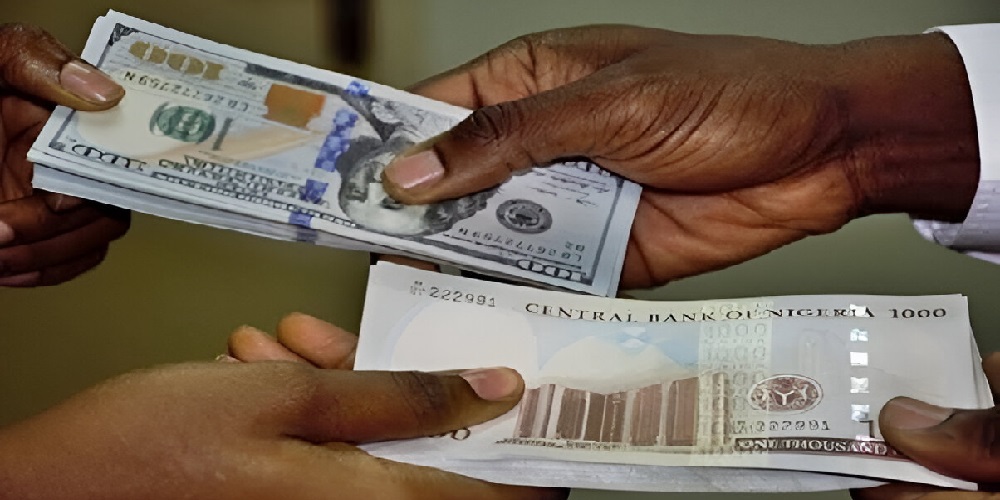
The Nigerian naira is opening the new trading week around the ₦1,300-per-dollar range, with the latest official Nigerian Foreign Exchange Market (NFEM) data showing a closing rate of about ₦1,337.29/$1 at the end of Friday’s session.

According to the Central Bank of Nigeria (CBN), the NFEM rate stood at ₦1,337.2873 per dollar on August 28, while the closing rate was ₦1,337.0000. The official NFEM rate is calculated using a volume-weighted average of transactions in the market.

The naira had strengthened during the previous week, moving from ₦1,349.99/$1 on August 24 to ₦1,337/$1 on August 28, representing an appreciation of about 0.96 percent.

In the parallel market, the dollar was quoted at about ₦1,400 on Friday, according to market data published by AbokiFX. This was ₦7 lower than the ₦1,407/$1 recorded the previous day.

Advertisement

The latest parallel-market rate leaves a gap of roughly ₦63 between the informal market and the official NFEM rate.

Meanwhile, a live indicative USD/NGN rate available early Monday puts the dollar around ₦1,346.78, although this should not be confused with the official NFEM closing rate, which reflects the most recent completed trading session.

Market data also showed continued strength in foreign exchange liquidity. NFEM turnover reached $1.06 billion in one trading session last week, while Nigeria’s foreign reserves continued to provide support for the naira.

For today, Monday, August 31, 2026, the dollar-to-naira rate is therefore around ₦1,337/$1 at the latest official NFEM close, while the parallel-market rate is around ₦1,400/$1. Rates may change as trading activity resumes and demand and supply conditions evolve.

Advertisement

It is important to note that rates offered by banks, Bureau de Change operators and other dealers may differ from the published NFEM and parallel-market reference rates because of transaction margins and market conditions.

Continue Reading

Economy

Record $947m July Remittances Bring Cardoso’s $1bn Monthly Target Within Sight

Published

on

By

ADVERTISEMENT
Zoom Ad
ADVERTISEMENT
Zoom Ad

Akpo Ojo

Nigeria recorded a staggering$947 million in remittance inflows through international money transfer operators in July 2026, the highest monthly inflow ever recorded through formal channels and approaching the $1 billion monthly target set by the Central Bank of Nigeria (CBN) Governor, Olayemi Cardoso.

International monetary transfer operators inflows reached $3.8 billion in the first seven months of 2026 (50.2 percent)!higher than the same period in 2025, pointing to a significant strengthening in flows through formal channels.

The increase, the apex bank explained, follows a series of reforms by the CBN aimed at making formal remittance channels more competitive, transparent and accessible.

Advertisement

These include a move to a more market-determined exchange rate, reforms to the regulatory framework for international monetary transfer operators, and the introduction of the Non-Resident Bank Verification Number (NRBVN), alongside closer engagement with international monetary transfer operators, banks, and the Nigerian diaspora communities.

More recently, the CBN said, it has strengthened requirements for remittance transactions to be routed through designated settlement accounts with authorised dealer banks.

The significance extends beyond the headline figure. Increasing diaspora flows through formal channels boosts foreign-exchange liquidity and transparency, supports households and investment, and strengthens Nigeria’s external financing position.

“When we set a clear ambition to reach US$1 billion a month in remittance inflows through formal channels nearly two years ago, some people thought we were dreaming. At $947 million in July, we are now approaching that milestone,” Governor Cardoso said.

Advertisement

While individual monthly figures will naturally vary, the CBN’s focus is on the broader trajectory and on sustaining the shift towards formal channels.

The significant increase in inflows recorded so far in 2026, points to the growing impact of reforms designed to make formal remittance channels more competitive, accessible and transparent.

The CBN is building on this momentum by deepening engagement with Nigerian diaspora communities and financial-sector partners across key remittance corridors.

“As part of its wider international engagements, the bank will continue to use opportunities in major global financial centres to engage diaspora communities, international monetary transfer operators, banks and other stakeholders to reduce friction, widen access and bring a greater share of remittance flows into formal channels.Governor,” Cardoso added:

Advertisement

“July is an important marker, but our focus is not on a single month. It is on creating the conditions for sustained growth in formal remittances.

“We expect to keep seeing improvement and believe Nigeria can reach and ultimately sustain monthly inflows above US$1 billion.”

Continue Reading

Trending

Copyright © 2024 Naija Blitz News