News
End Fuel Subsidies Now, to enable economy flourish-Dangote yells FG
- /home/naijuinz/public_html/wp-content/plugins/mvp-social-buttons/mvp-social-buttons.php on line 27
https://naijablitznews.com/wp-content/uploads/2024/09/Screenshot_20240924-122906.png&description=End Fuel Subsidies Now, to enable economy flourish-Dangote yells FG', 'pinterestShare', 'width=750,height=350'); return false;" title="Pin This Post">
- Share
- Tweet /home/naijuinz/public_html/wp-content/plugins/mvp-social-buttons/mvp-social-buttons.php on line 72
https://naijablitznews.com/wp-content/uploads/2024/09/Screenshot_20240924-122906.png&description=End Fuel Subsidies Now, to enable economy flourish-Dangote yells FG', 'pinterestShare', 'width=750,height=350'); return false;" title="Pin This Post">
By Kayode Sanni-Arewa

The President and Chief Executive of Dangote Group, Alhaji Aliko Dangote, has called on the Federal Government to end fuel subsidies completely.
He said the removal would help determine the actual petrol consumption in the country, as he confirmed ownership of two oil blocks in the upstream sector with an expected production date of next month.

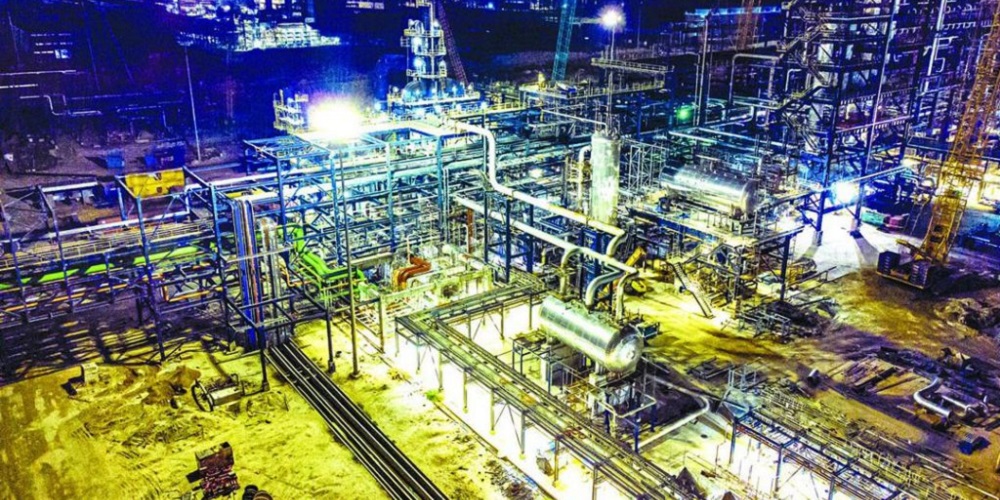
Dangote also stated that fuel production from his $20bn mega refinery in Lagos will help ease pressures on the naira. The refinery can refine 650,000 barrels of crude oil daily.
Speaking in a 26-minute interview with Bloomberg Television in New York on Monday, monitored by our correspondent, Dangote said now is the right time to end fuel subsidies.
Africa’s wealthiest man further noted that ending petrol imports will have a huge upside in easing currency pressures.
He said, “Subsidy is a very sensitive issue. Once you are subsidising something then people will bloat the price and then the government will end up paying what they are not supposed to be paying. It is the right time to get rid of subsidies.”
“But this refinery will resolve a lot of issues out there, you know, it will show the real consumption of Nigeria, because, you know, nobody can tell you. Some people say 60 million litres of gasoline per day.
“Some say, it’s less. But right now, if you look at it by us producing, everything can be counted. So everything can be accounted for, particularly for most of the trucks or ships that will come to load from us. We are going to put a tracker on them to be sure they are going to take the oil within Nigeria, and that, I think, can help the government save quite a lot of money. I think it is the right time, you know, to remove the subsidy.”
Dangote who recalled the challenges faced after the project’s launch in 2013, experiencing a five-year delay due to issues with state government and host communities and a running loan of $2.4bn, said he is personally proud to achieve the feat.
On whether the subsidy will make the refinery viable, Dangote said, “Well, you see, we have a choice of either one. We produce, we export, and when we produce, we sell locally. But we are a big private company. And yes, it’s true, we have to make a profit. We build something worth $20bn so definitely we have to make money.
“The removal of subsidies is totally dependent on the government, not on us. We cannot change the price, but I think the government will have to give up something for something. So I think at the end of the day, this subsidy will have to go.”
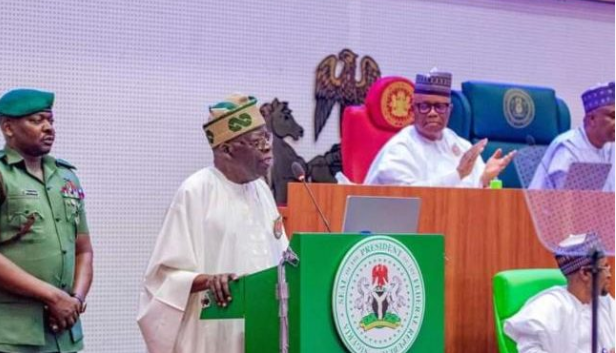
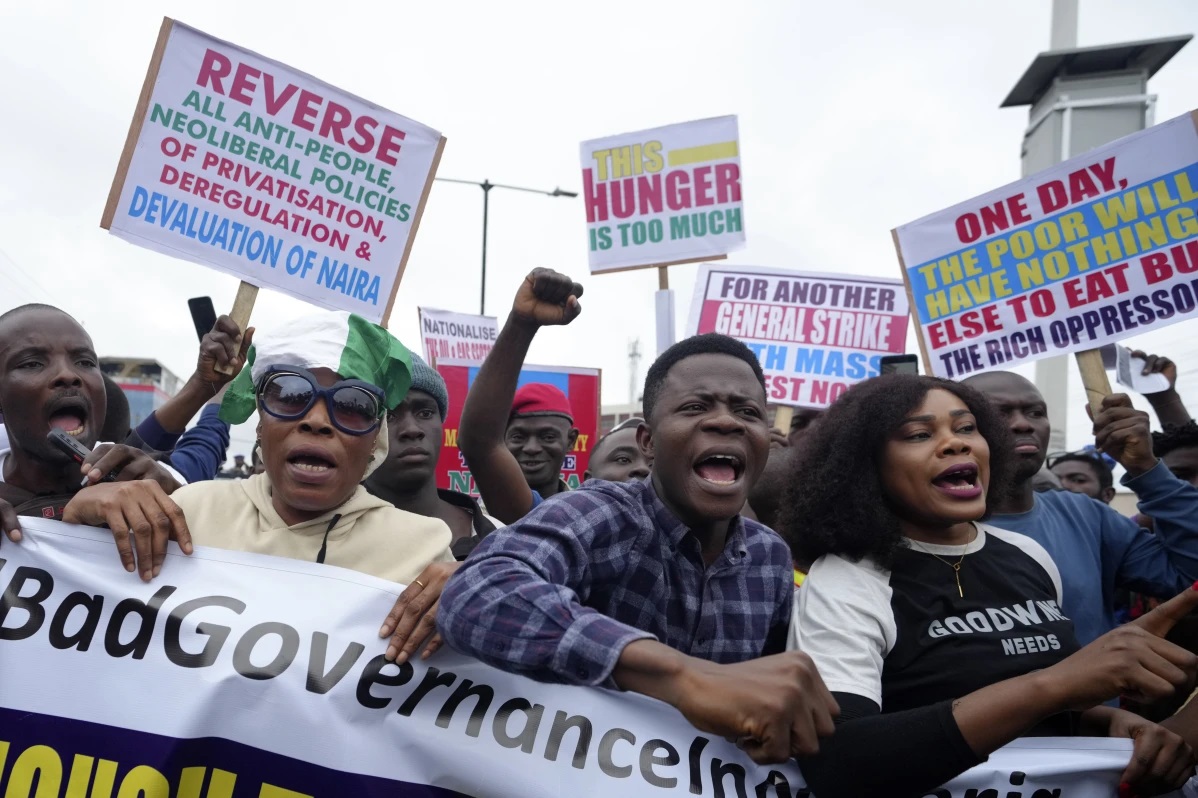
President Bola Tinubu removed the subsidy when he took office in May 2023, exacerbating a cost-of-living crisis that sparked protests, but quickly reinstated it as inflation spiked.
Another step to ending it was taken in early September when the gasoline cap was eased — though the price remains below the market level.
Nigeria, until Dangote’s refinery came on stream was fully dependent on imported petroleum products, and has been taking tentative moves to finally end the nation’s pricey fuel subsidies, which in 2022 cost $10bn.
Dangote, who has the option of either exporting his fuel or selling it domestically, said the decision on subsidies was the government’s, but added that ending gasoline imports will have a huge upside in easing currency pressures.
The naira has lost around 70 per cent of its value against the dollar since rules that pegged the currency at an artificially high level were relaxed last year.
But the scarcity of the greenback in the Nigerian foreign exchange market continues to weigh on the naira and is made worse by the need to pay for imported gasoline in dollars.
Petroleum products consume about 40 per cent of our foreign exchange,” Dangote said, adding that fuel from his refinery, which started supplying gasoline on Sept. 15 to the state-owned oil company for domestic sale, “can actually stabilize the naira.”
Continuing in the interview, the businessman revealed the details of the pricing disagreement that occurred with the Nigerian National Petroleum Company Limited.
He said the national oil company bought its current stock from the refinery at a cheaper price than its imported fuel but gave a uniform price for all products.
“There wasn’t really a disagreement, per se. NNPC bought from us on the 15th of September at the international price, which they also bought, about 800,000 metric tons of gasoline imported. So the one that they bought from us actually is cheaper than the one they are importing.
“And so when they announced our price, the guy, I don’t know whether he was authorized. It wasn’t really the real price. What they have announced is most likely that is what it cost them, including profit and other expenses.
“And then the other one is one that they imported. But the people don’t know how much they spend in terms of imports, but their importation is almost, maybe about 15 per cent more expensive than ours, you know.
“So what they are supposed to do is to sell at a basket price, or if they want to remove subsidy, they can announce that they will remove subsidy, which is okay, everybody you know will adjust it.”
On the planned crude oil sales anticipated to begin in October, Dangote said that discussions are still ongoing and a detailed agreement will be finalised this week.
Revealing details of the deal, he explained, “We will sell the crude in naira after we have bought in naira. So now we are currently working out with the committee that the exchange rate is going to be priced. It is going to be normal pricing, you know, if crude is at $80, we will pay that price at an agreed exchange rate.
“And then we will also sell in the domestic market. What that will do is that it’s going to remove 40 per cent pressure on the naira. So because, see, the petroleum products consume about 40 per cent of foreign exchange, so you know, and then, you know, it’s like you have 40 per cent of demand been taken out so that can actually stabilize the naira and even if they subsidise, they would know what they are paying for.
“The deal is to give the government something that they want. It’s also a win-win situation for all and it would benefit the country.
“Currently, discussions are still ongoing to determine the details of the agreement. They are working out something that I think would be a win-win between us and the NNPCL.
“The agreement is very robust. Well, first of all, we would have energy security where they will give us crude. For example, in October, they’re going to give us 12 million barrels, which is on average, about 390,000 barrels a day, which will sell both gasoline, diesel, and aviation fuel.”
He also confirmed ownership of two oil blocks in the upstream sector with an expected production date of next month.
Dangote tankers’ park
Meanwhile, the Federal Government has said that it is providing land for interested entities to build an expansive park for tankers lifting petrol and other products from the Dangote refinery.
This followed a routine inspection on Sunday by the Minister of Works, Dave Umahi, who raised concerns about over 3,000 fuel tankers queueing up on the new concrete pavement road.
Umahi noted that though the pavement is made of concrete the current road was not designed to handle static load and may soon deteriorate like the ever-busy Apapa road.
This minister revealed this to State House Correspondents after Monday’s Federal Executive Council meeting at the Aso Rock Villa, Abuja.
He said, “From my inspection yesterday, we discovered that we had over 3,000 fuel trucks queuing for the Dangote fuel lifting, and they were all parked on the newly constructed road.
“Technically and by design, the roads were never built for static loads. And so it has a lot of effects. So, we will have the same thing we had in Apapa that damaged the entire road until it was constructed on concrete.”
“So what FEC approved today is that the land that we have, the Federal Government land, we should put it for concession so that concessionaires would bid and whoever wins will be able to build a park. The park will be tolled so all those trucks can safely park there. And the pavement of such a park is quite different from the pavement of the road.”
Umahi also announced that the council approved various road projects. He said, “The council approved several road projects. One is a new contract for rehabilitating Maraban-Kankara-Funtua Road in Katsina state. The second is the award of a contract for the construction of a 258km three-lane carriageway, a component of the 1,000 Sokoto-Badagry superhighway section two, phase 2A in the Kebbi Section. It is to be done with continuous reinforced concrete pavement. It excludes all bridges and flyovers.
“The third one is the contract for the construction and dualisation of Afikpo-Uturu-Okiwe in Ebony, Abia, and Imo State, Section Two. The next one is the Bodo-Bonny road in Rivers State under Julius Berger. The Federal Executive Council approved an additional N80bn to complete that project, bringing the total cost to N280bn.
“The next is the third mainland bridge. The third mainland Bridge was executed under emergency work. When you have emergency work, you have to get going, measure the work, and send all your measurements and quotations to the BPP. And that’s what we did. So that has been done, and it’s also extended to Falamo and Queens Drive. It also came with solar-powered light. The essence is that all through the length and breadth of the road, the security agencies will be able to check everything happening within the length and breadth of this bridge. And we give response time to respond to any eventuality for 10 minutes. So the contract covers about four security vans and one-speed boat.”
Other contracts include the N158bn contract approved for the Lekki Port service lanes by Dangote Industries, linking Epe to Shagamu-Benin Expressway. The council also approved the N740.79bn Abuja-Kaduna-Zaria-Kano Road re-scoped with solar lighting under a 14-month completion by Julius Berger.
Umahi also named about 14 road projects and bridges affected by floods, including Ado-Ekiti-Afe Babalola in Ekiti State and Lafia-Shendam Road in Plateau State.

News
Photos/Video: Senator pays working visit to FERMA boss Agbasi over failed Gashaka Saldana federal road
…demands urgent intervention
…as Engr promises to carry out on the spot assessment to effect restoration
Senator Haruna Manu representing Taraba Central alongside his colleague Senator Babangida Hussaini, paid a working visit to the Managing Director of the Federal Roads Maintenance Agency (FERMA), Engr. Chukwuemeka Agbasi, over urgent intervention on failed Gashaka Sardauna federal in Taraba.

Senator Manu explained the critical need for repairs on the stretch linking in Gashaka LGA to Sardauna LGA, Serti – Gembu road, from Mayo -Selbe in Gashaka LGA to Nguroje in Sardauna LGA and from Lekitaba in Sardauna LGA to Gembu where the road is about to totally cave-in due to gully erosion.

Responding, Engr. Agbasi committed to conducting a formal evaluation of the road to make the necessary restoration arrangements.
Rounding up, Senator Manu urged the agency to prioritize the restoration plan to ensure the road is fixed without delay as it serves as a major link to two big local government areas in the state.

WATCH:
News
Reps Probe Lingering Bille Gas Leak, Demand Swift Action as Regulators Confirm Emissions Continue
By Gloria Ikibah
The House of Representatives Committee on the South-South Development Commission has launched an investigation into the prolonged gas leak 0in Bille Community, Degema Local Government Area of Rivers State, expressing concern over the environmental and humanitarian consequences nearly a year after the incident first came to public attention.
At an interactive session held on Thursday at the National Assembly, lawmakers questioned officials of the National Oil Spill Detection and Response Agency (NOSDRA) and Nigerian Upstream Petroleum Regulatory Commission (NUPRC) over the delayed response, conflicting official reports and the continued hardship faced by residents.
In his opening remarks, Committee Chairman, Rep. Julius Pondi, said the investigation was intended to establish the facts surrounding the incident, evaluate the response of relevant agencies and identify measures to prevent a recurrence.
He said: “The Committee approaches this engagement with an open mind. Our objective is neither to prejudge any individual or institution nor to apportion blame without due process. Rather, we seek to establish the facts, identify operational or regulatory shortcomings, ensure every stakeholder is held accountable and make practical recommendations that will strengthen environmental governance and improve regulatory oversight.”
Presenting NOSDRA’s findings, the agency’s Director of Oil Field Assessment, Cyrus Nkangwang, told lawmakers that it first became aware of the unusual gas emissions in October 2025 after receiving reports from residents of Bille Community.
He explained that the investigations detected elevated concentrations of methane, hydrogen sulphide and carbon dioxide, as well as groundwater contamination, deteriorating air quality and potential health risks for residents.
When the committee sought clarification on whether the emissions had stopped, NOSDRA admitted that the leak was still active.
Pondi asked:
“After this moment we speak, has this stopped leaking or is the leak still going on?”
The agency’s representative replied:
“It’s still leaking.”
Lawmakers also queried the apparent delay in responding to the incident despite repeated complaints from the affected community.
Explaining the circumstances, the NOSDRA official said:
“This incident is not the regular incident that attracts reportage. It is not from any facility. It is gas bubbling that enveloped the community… It started gradually and the community brought it to public attention before we became aware of it.”
Representing the NUPRC, Mr Joseph Olushola said the commission only became directly involved after a stakeholders’ meeting convened by the Ministry of Petroleum Resources on February 4, 2026.
“Our clear involvement started when that meeting was called. Before then, we had reports of investigations being carried out by NOSDRA. We also believed we should have been brought up to speed since the community had reported the incident”, he said.
He disclosed that joint investigations involving Renaissance Africa Energy, Newcross Exploration and Production, NNPC Eighteen Operating Limited and host community representatives confirmed methane emissions across approximately 1.5 kilometres of the community.
According to him, extensive field studies, laboratory analyses and geological investigations found no evidence linking the emissions to existing oil and gas infrastructure.
He explained that the evidence suggested the gas was migrating naturally from deep underground reservoirs.
“There is no relationship between the pipeline, the facility, to the signature and the structure of the gas seepage.
“This began to give an indication that this gas may be coming from deep reservoirs up to the surface. We therefore commenced detailed geological and geophysical investigations to determine the source, the trigger and the migration pathways”, he said.
Describing the incident as unusual, the NUPRC official added:
“This is novel. We have studied similar seepages around the world, but the expanse, the duration, the pressure of the bubbling and the fact that it is linked to almost every borehole and water well in Bille Community makes this a special occurrence.”
Lawmakers, however, questioned why residents had continued to suffer while investigations dragged on.
Pondi asked:
“From December to February when you got involved till now, what happened to the Bille people? Whose water has been affected? Who does not have clean water to drink? Whose farmland has been devastated? What remedial measures have you taken?”
In response, the commission said it had pursued both technical investigations and humanitarian interventions.
The commission disclosed that relief materials had already been distributed and that a medical outreach programme would begin within two weeks.
“No operator has been found culpable, but the industry decided to rally round as part of its corporate social responsibility.
“An integrated relief programme involving medical outreach, provision of potable water and safety management is ongoing while technical investigations continue”, he noted.
The regulator also acknowledged that the community’s environment had been adversely affected.
“The water is contaminated. Air is polluted. We visited and we felt it. You smell the odour”, he said.
Officials explained that temporary measures had been introduced to vent gas above rooftop level to reduce fire risks, but maintained that a lasting solution would depend on identifying and sealing the source of the seepage.
The hearing also revealed inconsistencies between reports submitted by the two regulatory agencies.
Committee members questioned a section of NOSDRA’s report indicating that the NUPRC had “no pipeline record in the area”, an assertion the commission firmly rejected.
“Emphatically, no. We have always had records of the pipelines, their operating status, pressures, temperatures and other operating parameters,” the NUPRC official said.
Asked to explain the discrepancy, NOSDRA maintained that the statement reflected discussions at an earlier stakeholders’ meeting but admitted it may have conveyed a misleading impression.
Several lawmakers criticised what they described as the slow pace of intervention.
One member remarked:
“Are we saying after eight months we cannot stop the leakage? If we cannot, then the only thing left is to relocate the village.”
Another urged the Federal Government to immediately involve the National Emergency Management Agency (NEMA), describing the situation as a humanitarian emergency.
The committee also questioned why the Environmental Remediation Fund established under the Petroleum Industry Act had not yet been deployed.
Responding, the NUPRC official said remediation could only commence after investigators identified the precise source of the gas seepage.
“Any attempt to conduct remediation now will be like plastering over cracks. We cannot begin remediation until we identify and stop the source”, he stated.
On the possibility of relocating residents, the commission revealed that it had advised the Rivers State Government to consider a managed evacuation pending the outcome of ongoing health and risk assessments.
“The laboratory analysis shows there are gases that should not normally be breathed. Government should consider a managed evacuation of the people pending further investigations”, he said.
Pondi assured residents that the House committee would sustain its oversight until a permanent solution was found, insisting that protecting lives, public health and the environment remained its foremost priority.
News
Video of Deltans scooping fuel from Tanker in Asaba surfaces online
A video depicting residents scooping fuel from a leaking tanker in Asaba, the Delta State capital, has surfaced on social media, raising fresh concerns over public safety.
The incident reportedly occurred around the City Gate area of Asaba after a tanker developed a leak, causing its contents to spill onto the road.
Rather than fleeing the scene over fears of a possible explosion, dozens of people were seen rushing toward the tanker with buckets, jerrycans, kegs and other containers to collect the leaking fuel.
Footage circulating online captured men and women crowding around the tanker as they struggled to fill their containers, apparently ignoring the dangers associated with highly flammable petroleum products.
Eyewitnesses said the leaking tanker quickly attracted a large crowd, with many residents taking advantage of the situation to gather free fuel despite the significant risk posed by the spill.
The incident has sparked widespread reactions on social media, with many Nigerians expressing concern over the hazardous behavior and warning that such actions could easily trigger a devastating fire or explosion.Africans & Diaspora
Safety experts have repeatedly cautioned the public against approaching or attempting to collect fuel from damaged tankers, noting that even a small spark from a vehicle, mobile phone, cigarette or any ignition source can ignite spilled fuel and lead to catastrophic consequences.
Fuel tanker accidents have claimed hundreds of lives across Nigeria over the years, particularly in situations where residents gathered to scoop spilled petrol before an explosion occurred.
The latest incident has renewed calls for greater public awareness on the dangers of fuel spills, with many urging motorists and residents to immediately vacate areas where petroleum tankers are leaking and allow emergency responders to secure the scene.
As of the time of filing this report, there was no official statement from the relevant authorities regarding the incident, and it remained unclear whether emergency personnel were deployed to contain the fuel leak or prevent further danger.
-
News23 hours ago2027: Peter Obi Meets Obasanjo (PHOTOS)
-
News20 hours agoVideo: New FCT CBD Bus terminal set to begin operations in September
-
Sports24 hours agoEntire Ethiopian youth football team disappears in Sweden after Gothia Cup tournament
-
News13 hours agoPhotos: Over 10 Houses Swallowed By Erosion, Scores Dislodged In Bende, Abia State, as Deputy Speaker, Ecological Funds Officials Assess Sites
-
News19 hours agoEurope on fire: Over 300,000 dislocated from their homes
-
News24 hours agoUS To Discontinue Visa Services In Abuja
-
News13 hours agoVarsity don slams Alaafin over three-hour delay, lack of apology at event
-
News15 hours agoDeregistration order: Judge Lifu’s conduct is a serious breach of judicial hierarchy-ADC Legal Adviser, Osunbor

Warning: Undefined variable $user_ID in /home/naijuinz/public_html/wp-content/themes/zox-news/comments.php on line 49
You must be logged in to post a comment Login