News
NASS to Launch Joint Probe into Petroleum Sector Malpractices, Inaugurate Committee Tuesday
- /home/naijuinz/public_html/wp-content/plugins/mvp-social-buttons/mvp-social-buttons.php on line 27
https://naijablitznews.com/wp-content/uploads/2024/03/Michael-Opeyemi-Bamidele.jpg&description=NASS to Launch Joint Probe into Petroleum Sector Malpractices, Inaugurate Committee Tuesday', 'pinterestShare', 'width=750,height=350'); return false;" title="Pin This Post">
- Share
- Tweet /home/naijuinz/public_html/wp-content/plugins/mvp-social-buttons/mvp-social-buttons.php on line 72
https://naijablitznews.com/wp-content/uploads/2024/03/Michael-Opeyemi-Bamidele.jpg&description=NASS to Launch Joint Probe into Petroleum Sector Malpractices, Inaugurate Committee Tuesday', 'pinterestShare', 'width=750,height=350'); return false;" title="Pin This Post">
The National Assembly is set to relaunch its investigation into alleged economic sabotage within Nigeria’s petroleum sector, following the decision to form a joint committee. This follows the earlier suspension of separate probes by the Senate and House of Representatives in July.

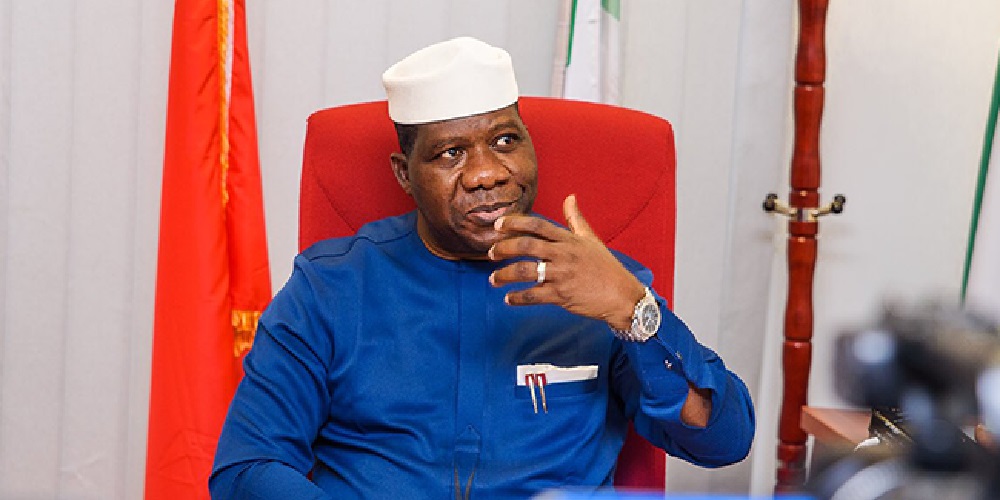
The Senate Leader, Senator Opeyemi Bamidele, who also chairs the Senate Ad-hoc Committee on this issue, revealed the latest developments in a statement on Monday.
“As we fully return to legislative duties this Tuesday, the National Assembly is prepared to revisit the pressing issues in the petroleum industry,” Senator Bamidele said. “The sector is not performing optimally, which is tied to several challenges such as crude oil theft, ongoing and ineffective maintenance of public refineries, substandard petroleum imports, and disruptions in fuel supply.”

Addressing earlier reports suggesting the Senate had suspended its investigation, Senator Bamidele clarified: “The Senate did not suspend its Ad-hoc Committee on Alleged Economic Sabotage in the Petroleum Industry. The public hearing was only postponed to resolve matters concerning the National Assembly’s procedural rules.”
He further explained that both the Senate and the House of Representatives are now ready to collaborate through a joint committee, which will pick up the investigation from where the individual efforts left off. “We are committed to uncovering the root causes of economic sabotage in the petroleum sector and establishing stronger mechanisms to make the industry more efficient,” he affirmed.
In addition to the petroleum sector probe, Senator Bamidele highlighted that both chambers are awaiting the Medium-Term Expenditure Framework (MTEF) and Fiscal Strategy Paper (FSP) from the Executive, both essential for the preparation and approval of the 2025 national budget. “The MTEF is crucial to our legislative agenda because it must be in place before the 2025 Appropriation Bill can be submitted,” he said.
Furthermore, the Senate Leader discussed the 1999 Constitution review, chaired by Deputy Senate President Senator Barau Jibrin. In the coming weeks, the committee will host retreats, call for public memoranda, and organize zonal meetings to address sections of the constitution in need of amendments.
With a highly skilled team working on the constitutional review, Senator Bamidele expressed optimism that the process would deliver meaningful reforms, adding, “This exercise promises a truly federative approach that will reshape governance in Nigeria.”

News
APC Defends Betta Edu’s Role in Tinubu’s 2027 Campaign Despite EFCC Investigation
The All Progressives Congress (APC) has defended its decision to include former Minister of Humanitarian Affairs and Poverty Alleviation, Betta Edu, in the campaign structure for President Bola Ahmed Tinubu’s 2027 re-election bid.
The ruling party maintained that Edu remains entitled to participate in political activities because she has not been convicted of any offence arising from the allegations that led to her removal from the Federal Executive Council.
The APC’s position was made public on Monday by one of the spokespersons of the party’s campaign committee, Kemi Asekun-Shittu, during an interview on Channels Television’s Morning Brief.
Edu’s inclusion in the campaign structure has generated controversy, particularly because President Tinubu suspended her from office in January 2024 following allegations relating to financial impropriety. The Economic and Financial Crimes Commission (EFCC) subsequently investigated the matter.
Defending the decision to give the former minister a role in the campaign organisation, Asekun-Shittu argued that an allegation or ongoing investigation should not be treated as proof of guilt.
She said it would be unfair to prevent Edu from participating in political activities indefinitely while awaiting the conclusion of an investigation.
According to the APC spokesperson, Edu should be allowed to continue her political career unless and until a competent authority establishes her guilt.
“I’d like to say that for Betta Edu, for example, she has not been found guilty. And it would be unfair to ask her to leave her life or refuse to live until the EFCC declares her,” she said.
Asekun-Shittu added that there remained a possibility that Edu could ultimately be cleared of the allegations against her.
“We believe that there is a very likely issue that she may not be found guilty,” she stated.
She further argued that Nigerian citizens who choose to participate in politics should not be prevented from doing so solely because they are facing unresolved allegations.
“Besides that, we also know that with politics, every Nigerian is allowed to be a politician if they choose to be. And we do not believe that we should then hold her life still or keep her stagnant until the case is decided,” she added.
The APC spokesperson also noted that the matter had remained unresolved for a considerable period.
“It’s been almost two years of that case. She does deserve an opportunity to present herself again for the party,” she said.
Edu’s reported appointment has attracted scrutiny because of the circumstances surrounding her departure from the Federal Executive Council.
She was named Director of Women Mobilisation in the APC Presidential Campaign Council for the 2027 election.
Her appointment has raised questions among critics who believe that someone previously removed from a ministerial position over allegations involving public funds should not occupy a prominent role in a presidential campaign organisation.
However, Asekun-Shittu maintained that there was a distinction between holding a public office and participating in the internal political activities of a political party.
She argued that the APC was entitled to decide who it considered suitable and capable of contributing to its campaign efforts.
“I do understand. There is no report. I also need you to see it from this angle. The fact that it’s an internal party affair,” she said.
“If we decide that she’s going to be useful and be able to work on behalf of the party, she does have a right. It’s not a public thing.”
Asekun-Shittu acknowledged that Edu had faced allegations concerning the alleged misappropriation of public funds but stressed that the matter remained under investigation.
“She was alleged to have misappropriated public funds. That matter is still with the EFCC. It is being handled. She has not been proclaimed guilty and deserves an opportunity to continue to live her life,” she said.
Edu is not the only prominent figure whose reported inclusion in the campaign structure has generated public interest.
The names of several serving government officials have also reportedly appeared on the list, including the Executive Chairman of the Nigeria Revenue Service, Zacch Adedeji; Director-General of the Budget Office of the Federation, Taminu Yakubu; and Director-General of the National Identity Management Commission (NIMC), Bisoye Coker-Odusote.
The inclusion of serving public officials has also raised questions about the composition and final status of the campaign structure.
However, Asekun-Shittu clarified that the list was still being reviewed and had not yet been finalised.
According to the APC spokesperson, the party was still consulting and deliberating on some of the names contained in the proposed campaign structure.
“With regards to the other names you have mentioned, the list is not yet final. There is a lot of deliberation still going on,” she said.
She added that changes would be made if any individual was subsequently found to be legally ineligible to participate in the campaign structure.
“If it is found out that they are not allowed to play in that turf, I believe that the needful will be done,” Asekun-Shittu stated.
The spokesperson also assured that the APC would comply with relevant laws and regulations governing political activities.
She said anyone eventually found to be unsuitable or legally barred from participating would be removed where necessary.
As preparations for the 2027 presidential election gather momentum, the composition of political campaign teams is expected to remain a subject of intense public scrutiny.
For now, the APC’s defence of Edu is based on the position that the allegations against her remain unresolved and that an investigation does not, by itself, constitute a conviction.
News
G100 Proposes Single Four-Year Term for Opposition Gov’t
The G100 has proposed a Government of National Competence based on a single four-year transition term for Nigeria’s opposition parties.
Mallam Salihu Moh. Lukman presented the proposal on Monday at the Summit of Nigeria’s Opposition Political Parties held at the Shehu Musa Yar’Adua Centre in Abuja.
Representatives of the African Democratic Congress, Allied Peoples Movement, Nigeria Democratic Congress, Peoples Democratic Party, Peoples Redemption Party and Social Democratic Party attended the summit. Presidential and vice-presidential candidates and the Minority Leader of the House of Representatives were also present.
Lukman said the proposed government would rest on competence, integrity, national inclusion and fair representation of every party that joins the effort. He said it would follow a disciplined Four-Year National Reset Programme.
“The Framework before you propose something more demanding than a merger of ambitions: a Government of National Competence, built on competence, integrity, national inclusion, and fair representation of every party that contributes to the effort,” he said.
He added that the arrangement must be secured by a political commitment to a single four-year term written into an enforceable Transition Charter.
Lukman stressed that the commitment must go beyond verbal promises. “We want to underline the word ‘enforceable.’ This gathering does not need more sincerity. Nigerian politics has never suffered from a shortage of sincere promises. What it has suffered from is promises that nobody could enforce when the person who made them changed his/her mind,” he said.
He insisted that any agreement reached must be written, witnessed and carry consequences.
Lukman recalled the history of opposition politics since 1999. He said the opposition contested the presidency divided in 2003, 2007 and 2011 but achieved victory in 2015 after parties agreed on rules of engagement. He said that discipline was abandoned in 2023, when opposition votes were split.
“The winner took just under nine million votes. One opposition candidate took close to seven million. Another took just over six million. Thirteen million votes on one side of the argument, under nine million on the other. And the side with fewer votes formed the government, lawfully, constitutionally, and entirely predictably,” he said.
On the structure of the proposed cooperation, Lukman disclosed that three standing coalition bodies are being proposed. These are a Central Leadership Committee, a Publicity and Communication Committee and a Legal Committee.
He said five Working Groups, each with one representative from every participating party, would produce working papers within four weeks. The papers would cover a National Covenant for Democratic Renewal, a Single-Term Transition Charter, a National Reform Programme, a Framework for Opposition Unity and a Roadmap to a Common Presidential Candidate.
Lukman clarified that the summit was not asking any party to dissolve or any candidate to stand down. “It is not asking any party to dissolve. It is not asking any party to disappear into another party. It is not asking any candidate to stand down this morning… That question is not on the agenda of this Summit, and any report that says otherwise will be wrong,” he said.
He urged party leaders to approach the process with candour. He warned that concealed positions had undermined previous coalition efforts.
“A hard line declared this morning is a problem that can be solved between now and the Second Summit. A hard line concealed this morning is a coalition that collapses in October, and that one will collapse in public too, only later, and at far greater cost to everybody in this room,” he said.
Lukman said the G100 convened the summit without backing any particular candidate or party. “We are not promoting any candidate, no preference among the six parties in this hall, and nothing to gain from one of you rather than another.
“Our only interest is the one stated in the Doctrine we published on August 2: that a democracy is sustained not merely by holding elections, but by the credible possibility of an alternative government,” he said.
He said the proposed framework would be developed further by the working groups and presented to a second summit for consideration and adoption.
News
2027 UTME: JAMB Tightens Facial, Biometric Checks — 5 Things Candidates Must Know
The Joint Admissions and Matriculation Board (JAMB) is strengthening identity verification for candidates ahead of the 2027 Unified Tertiary Matriculation Examination (UTME), with facial/image capture and biometric authentication remaining central to the registration process.
Prospective 2027 UTME candidates are already seeing preparations for the next examination cycle, as JAMB has published a list of 2027 approved registration centres on its official Centre Management System.
The development has renewed attention on JAMB’s use of facial and biometric technologies to establish the identity of candidates and tackle impersonation and examination malpractice.
Facial capturing: What exactly is changing?
Candidates should note that facial or image capturing is not completely new to JAMB.
The Board’s existing registration guidelines require a candidate’s photograph and all 10 fingerprints to be captured at an accredited CBT centre. JAMB also requires biometric authentication before a candidate’s registration slip is printed.
JAMB’s 2026 training manual went further by requiring participating CBT centres to use approved live cameras to capture a second image of candidates during registration.
According to the manual, the live-camera requirement was introduced to minimise manipulation of candidates’ photographs detected during previous registration exercises.
Therefore, reports describing the 2027 exercise as the year JAMB is “introducing facial capturing” should be understood in the context of an existing biometric and live-image verification system that the Board continues to strengthen.
Why is JAMB tightening facial and biometric verification?
The major objective is to prevent impersonation and substitution of candidates during examinations.
JAMB has previously warned that capturing fresh facial and fingerprint biometrics at later stages can create opportunities for substitution of candidates and examination takers.
In its policy document on curbing examination malpractice, the Board stated that fresh facial and fingerprint images could facilitate impersonation and substitution of paid examination takers. It also said it would make candidates’ images and biometric information available to relevant educational assessment bodies.
The implication is that JAMB wants the identity established during registration to remain linked to the candidate throughout the examination and admission process.
5 things 2027 UTME candidates should know
- Your face and fingerprints matter
Candidates should expect identity verification to remain an important part of registration and examination.
JAMB’s current procedure requires photograph capture and the capture of all 10 fingerprints at accredited CBT centres.
- Candidates must personally complete registration
Candidates should not hand over their registration process entirely to agents.
JAMB requires candidates to personally present their Profile Code and e-PIN at an accredited CBT centre for registration.
- Check your information before biometric authentication
Candidates are advised to carefully check their names, date of birth, gender, course and institution choices and other details before confirming the registration with their fingerprint.
JAMB states that biometric authentication is used to confirm the validity of the candidate’s fingerprint and finalise the registration.
- Use only approved CBT centres
JAMB has already published its 2027 approved registration centres, signalling that preparations for the next registration cycle are underway.
Candidates should avoid unofficial agents or centres claiming to offer special facial-capture services outside JAMB’s approved registration process.
- Do not pay for a separate “facial capture” exercise based on social-media claims
As of August 31, 2026, JAMB’s publicly available official materials do not establish a separate compulsory payment or standalone exercise described as a newly introduced “2027 facial capture.”
What the official documents establish is an existing system involving candidate photographs, live image capture and fingerprint biometrics, which JAMB continues to strengthen as part of its anti-malpractice measures.
What candidates should do now
Prospective 2027 UTME candidates should:
- Obtain and safeguard their NIN details.
- Use only their genuine identity information.
- Avoid multiple registration.
- Ensure their photograph is properly captured.
- Ensure all 10 fingerprints are captured correctly.
- Carefully verify their registration details before biometric authentication.
- Register only at JAMB-approved CBT centres.
- Follow JAMB’s official announcements rather than unverified WhatsApp, Facebook or TikTok messages.
JAMB’s official FAQ also provides procedures for candidates whose fingerprints cannot be read. Such candidates with biometric abnormalities are handled under a special arrangement by the Board.
Bottom line
The major message for 2027 UTME candidates is simple: identity verification is becoming increasingly difficult to bypass.
While facial/image capture is not entirely new to JAMB, the Board’s continued deployment of live cameras, fingerprint authentication and biometric tracking shows a clear move towards tighter candidate identification.
Candidates preparing for the 2027 UTME should therefore ensure that the identity they use during registration is accurate and genuinely theirs because their photograph, face and fingerprints are increasingly becoming part of the digital identity trail used to authenticate them.
-
News19 hours agoDetails of how Presidency spent N37.6bn on trips
-
News20 hours agoPhotos: Fubara visits Wike, meets Rep Chinda, Magnus Abe
-
Economy19 hours agoSee Dollar to Naira exchange rate today, August 31, 2026
-
News15 hours agoSAD! Unknown gunmen k!ll popular comedian, Aiza in South East
-
News11 hours agoAPM, ADC Group Demand Release Of FBI Record On Tinubu
-
News15 hours agoBuhari’s minister, Sylva finally dumps APC
-
News19 hours agoWike’s message is clear: Open your hands for people to enable you rise (Video)
-
News15 hours agoFG set to blacklist schools, publishers using unapproved textbooks from September

Warning: Undefined variable $user_ID in /home/naijuinz/public_html/wp-content/themes/zox-news/comments.php on line 49
You must be logged in to post a comment Login