Connect with us

News

ASUU To Embark On Fresh Strike, Issues 14-Day Ultimatum To FG

Published

on

ADVERTISEMENT
Zoom Ad
ADVERTISEMENT
Zoom Ad

By Mario Deepromoter

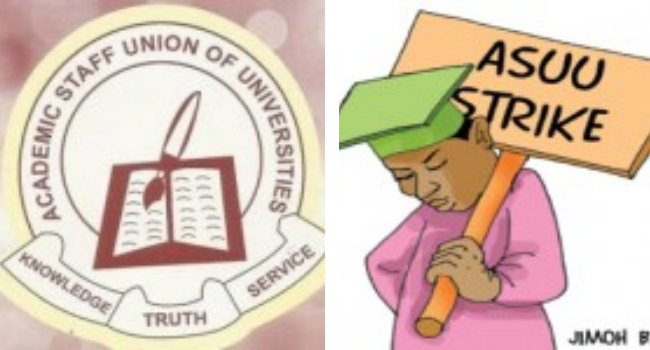
The Academic Staff Union of Universities has issued a 14-day strike deadline to the Federal Government to resolve some lingering issues dating as far back as 2009.

ASUU President, Emmanuel Osodeke in a statement issued on Wednesday, said the body is seeking the conclusion of the renegotiation of the 2009 FGN/ASUU Agreement based on the Nimi Briggs Committee’s Draft Agreement of 2021.

It also demanded the release of withheld salaries due to the 2022 strike action, and expressed frustration with the government’s lack of commitment and delay tactics.

Advertisement

It stated that these actions were generating a crisis in the public university system.

“In view of the foregoing, ASUU resolves to give the Nigerian Government another 14 days, in addition to the earlier 21 days, beginning from Monday, September 23, 2024, during which all the lingering issues must have been concretely addressed to the satisfaction of the membership of the union.

“The union should not be held responsible for any industrial disharmony that arises from the government’s failure to seize the new opportunity offered by ASUU to nip the looming crisis in the bud,” ASUU said

ASUU is also demanding the release of unpaid salaries for staff on sabbatical, part-time, and adjunct appointments affected by the Integrated Payroll and Personnel Information System, and the payment of outstanding third-party deductions such as check-off dues and cooperative contributions.

Advertisement

It added that it wants funding for the revitalisation of public universities, partly captured in the 2023 Federal Government Budget, and the payment of Earned Academic Allowances partly captured in the 2023 Federal Government Budget.

Other issues include the proliferation of universities by Federal and State Governments, the implementation of the reports of visitation panels to universities, the reversal of the illegalG dissolution of Governing Councils, and the adoption of the University Transparency and Accountability Solution as a replacement for IPPIS.

Continue Reading
Advertisement
Click to comment

Warning: Undefined variable $user_ID in /home/naijuinz/public_html/wp-content/themes/zox-news/comments.php on line 49

You must be logged in to post a comment Login

Leave a Reply

News

Price of petrol expected to drop to N900 per litre as US-Iran opens way for Strait of Hormuz

Published

on

ADVERTISEMENT
Zoom Ad
ADVERTISEMENT
Zoom Ad


Prices of oil fell sharply in Asian trading on Monday after the United States and Iran announced an agreement that would allow the reopening of the Strait of Hormuz, ending more than 100 days of disruption to one of the world’s most important energy shipping routes.

At the time of reporting, Brent crude was down by nearly 4 percent at $83.67 per barrel, while U.S. benchmark West Texas Intermediate (WTI) declined to $80.76 per barrel.

The latest drop extends a downward trend that has emerged in recent weeks amid growing speculation that a diplomatic breakthrough was imminent despite continued military escalations.

Advertisement

As a result, the petrol price is seen falling below N1000 per litre after many weeks of inflated prices at filling stations across Nigeria.

Analysts say the price will likely settle between N850 and N915 when the Strait finally re-opens and ships begin ferrying fuel supplies, easing pressure on the domestic market while helping to stabilise costs.

The breakthrough was announced on Sunday night when President Trump stated on social media that negotiations with Iran had been concluded.

He said oil would once again move through the Strait of Hormuz once the agreement is formally signed on Friday.

Advertisement

Iran also signaled its approval of the arrangement.

Deputy Foreign Minister Kazem Gharibabadi confirmed that both sides had finalised the text of a memorandum of understanding, adding that a formal signing ceremony is scheduled to take place in Switzerland later this week.

The agreement was further validated by Pakistan and Qatar, which served as the principal mediators throughout the negotiations.

Although the full terms have not been officially released, Iran’s semi-official Mehr News Agency, citing a source close to the country’s negotiating team, reported that the deal includes an end to the conflict in Lebanon, the suspension of sanctions on Iranian oil exports, the release of $24 billion in frozen Iranian assets, and assurances that Iran will not pursue nuclear weapons.

Advertisement

According to the report, sanctions relief and the release of frozen funds will occur during a ceasefire period. Mehr also indicated that Iran could gain access to $12 billion before broader negotiations commence.

For energy markets, one of the most significant provisions is the resumption of Iranian crude exports during the proposed 60-day ceasefire while talks on nuclear issues continue.

The diplomatic progress nearly unravelled shortly before the announcement after Israel launched an air strike in southern Beirut. Trump criticised the operation, saying it “should not have happened,” and subsequently urged all parties to de-escalate.

He also called for an immediate halt to Israeli attacks across Lebanon.

Advertisement

Despite optimism surrounding the agreement, market participants remain cautious. Traders are expected to closely monitor the removal of mines from the Strait of Hormuz, the formal signing of the accord, and the restoration of normal shipping activity before fully embracing expectations of supply normalisation.

After more than three months of conflict, investors are increasingly pricing in the prospect of peace and a gradual return to stability in global oil markets. However, questions remain over the durability of the agreement and how quickly normal trade flows can be restored.

Continue Reading

News

2025 Capital Budget Gets New Lease of Life as Reps Push Deadline to September

Published

on

ADVERTISEMENT
Zoom Ad
ADVERTISEMENT
Zoom Ad

By Gloria Ikibah

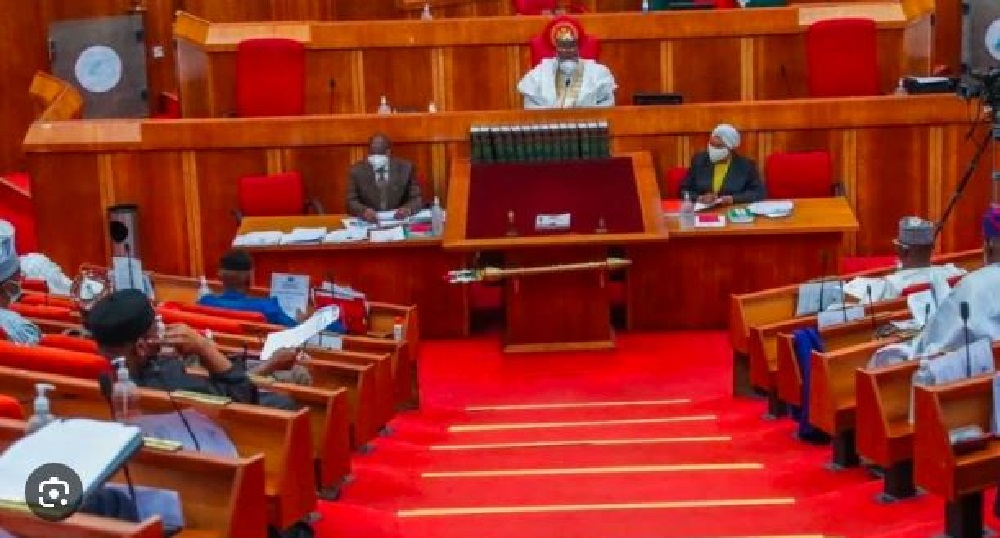
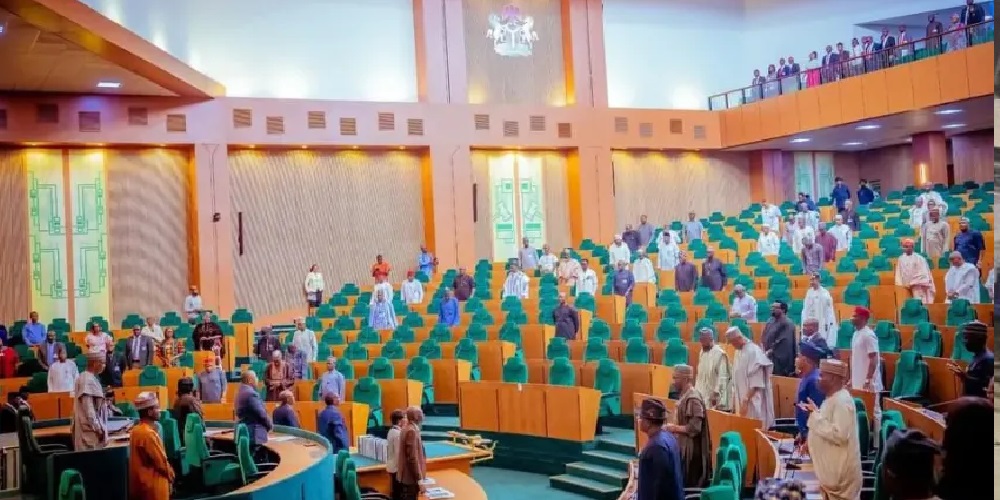
The House of Representatives has approved a three-month extension of the implementation period for the capital component of the 2025 Appropriation Act, shifting the deadline from June 30 to September 30, 2026.

The decision was taken during an emergency sitting held on Monday, as lawmakers moved swiftly to ensure the continued execution of capital projects captured in the national budget.

The legislation, which seeks to amend the Appropriation (Repeal and Enactment) Act, 2025, was designed to provide additional time for Ministries, Departments and Agencies to complete ongoing projects and fully utilise funds earmarked for capital expenditure.

Advertisement

In an unusually rapid legislative process, the bill passed through its first, second and third readings during the same plenary session after members suspended the relevant provisions of the House Standing Orders to facilitate its consideration.

Leading debate on the general principle of the bill, House Leader, Rep. Julius Ihonvbere, said the extension was necessary as several capital projects captured in the 2025 budget had not been fully implemented.

He emphasised that the amendment was not intended to alter any provision of the budget but merely to extend its lifespan by three months to allow ongoing projects to be completed.

He said: “It is very straightforward. Because some aspects of the capital appropriation will not be fully implemented, if we do not extend the life of this particular law, it will have a very grave impact on the growth and development of the national economy.

Advertisement

“The purpose essentially is to extend the lifespan. We are not touching any part of the law. It is simply extending the lifespan from June 30, 2026 to September 30, 2026. I urge my colleagues to approve this so that we can continue with the work of developing and growing our economy and country”.

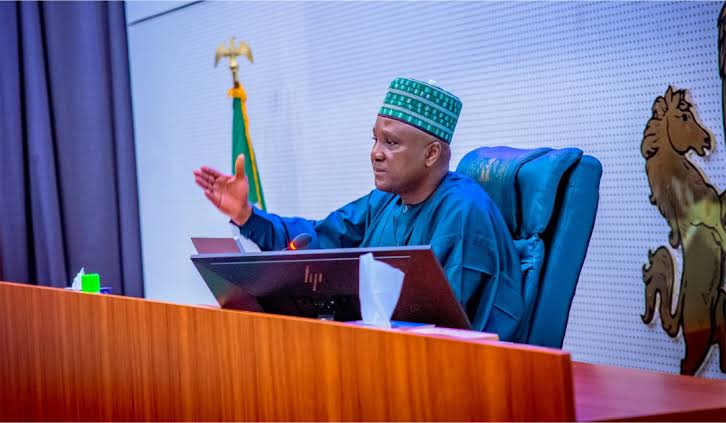
Presiding over the session, Speaker of the House, Rep. Abbas Tajudeen, acknowledged that the records provided by the Chairman House Committee on Appropriations and other relevant agencies revealed that implementation of the capital budget was yet to be completed.

“As you are aware, the 2025 budget was extended to June 30. From the records we received from the Chairman, Appropriations, and other relevant quarters, it is yet to be fully implemented. It is therefore in the best interest of this country and the National Assembly for us to extend the budget to September 30 to enable the Federal Government fulfil its obligations under the 2025 budget,” the Speaker said.

Following the adoption of the bill at second reading, the House dissolved into the Committee of Supply where it had the clause by clause consideration of the bill, and approved the three clauses, explanatory memorandum and long title of the bill.

Advertisement

The committee subsequently reported back to plenary, where lawmakers adopted its recommendations and suspended House rules to allow the bill to be read a third time and passed the same day.

The accelerated passage reflects growing concern over the pace of implementation of key infrastructure and development projects, many of which require additional time to reach completion.

With the approval, government agencies now have until the end of September to execute projects funded under the capital component of the 2025 budget, a move expected to prevent disruptions to ongoing works and improve budget performance.

The extension is also aimed at ensuring that resources already allocated for development projects are effectively utilised before the capital budget expires.

Advertisement

With the passage of the amendment, federal ministries, departments and agencies now have an additional three months to implement capital projects and utilize funds appropriated under the 2025 budget.

Meanwhile, the House also announced changes in the leadership of some standing committees.

The appointments are as follows:
• Rep. Ali Madaki – Chairman House Committee on Special Duties
• Rep. Ali Isa J.C. –  Chairman House Committee on Shipping Services,
• Rep. Pascal Agbodike – Chairman House Committee on Small and Medium Enterprises Development Agency of Nigeria (SMEDAN),
• Rep. Kelechi Nwogu –  Chairman House Committee on Hydrological Services

The Speaker urged the newly appointed committee chairmen to assume their responsibilities immediately and bring their legislative experience to bear in advancing the work of the House.

Advertisement
Continue Reading

News

Day 4 of projects commissioning as President TInubu set to commission newly constructed Court of Appeal Building

Published

on

ADVERTISEMENT
Zoom Ad
ADVERTISEMENT
Zoom Ad


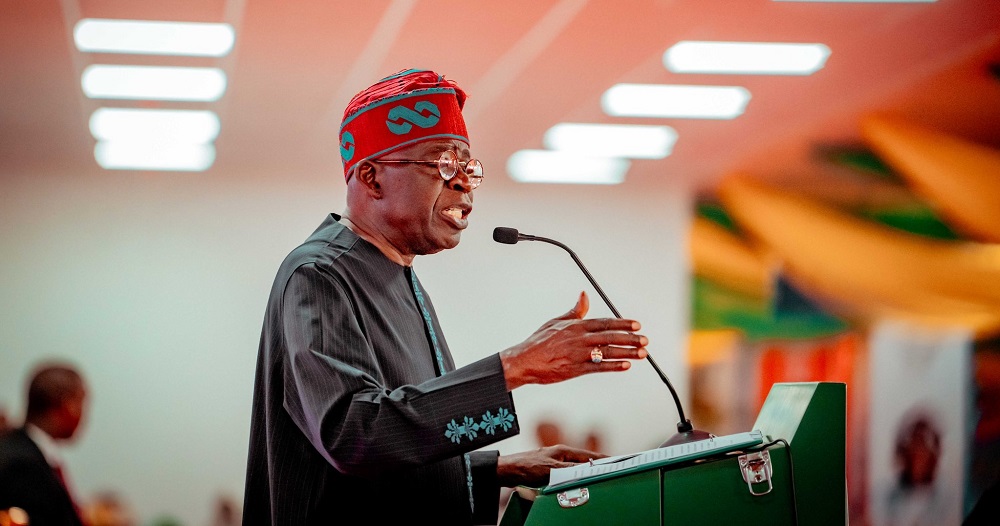
President Tinubu will commission the newly constructed Court of Appeal (Abuja Division) Building today, 15/6/26 as FCT projects commissioning enters Day 4.

#FCTProjects2026
#RenewedHopeFCT

Continue Reading

Trending

Copyright © 2024 Naija Blitz News