Connect with us

Foreign

Hezbollah Vows To Keep Fighting Israel After Nasrallah Killing

Published

on

ADVERTISEMENT
Zoom Ad
ADVERTISEMENT
Zoom Ad

Hezbollah vowed on Monday to keep fighting Israel and said it was ready to face any ground operation into Lebanon, after its leader was killed in an air strike that dealt the group a seismic blow.


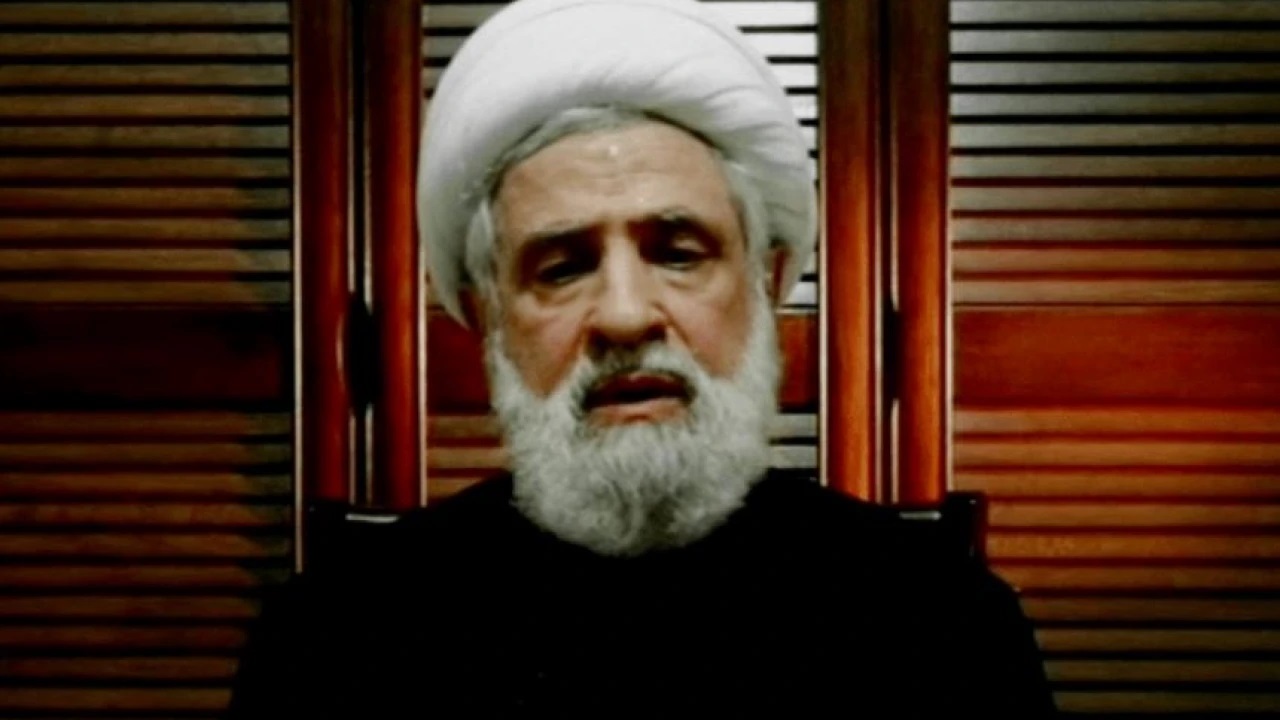
In a televised address, the Iran-backed group’s deputy chief Naim Qassem said a new leader to replace Hassan Nasrallah, who enjoyed cult status among his supporters, would be selected “at the earliest opportunity”.

He also said the group was ready for any Israeli ground offensive, even though Israel’s bombardment of its strongholds has in the past week killed a large number of its top commanders and officials.

Hezbollah began low-intensity cross-border strikes on Israeli troops a day after its Palestinian ally Hamas staged its unprecedented attack on Israel on October 7, triggering war in the Gaza Strip.

Advertisement

Israel said earlier this month that it was shifting its focus from Gaza to securing its northern border with Lebanon, in order to allow Israelis displaced since October to return to their homes.

It has also not ruled out a ground offensive in order to achieve its goals.

Israel’s strikes on Lebanon have killed hundreds and forced hundreds of thousands more to flee their homes, and left people across the region fearful of more violence to come.

Qassem said Hezbollah would continue “confronting the Israeli enemy in support of Gaza and Palestine, in defence of Lebanon and its people, and in response to the assassinations and the killing of civilians”.

Advertisement

Warning that any battle with Israel would be long, he said: “We will face any scenario and we are ready if Israel decides to enter by land, the resistance forces are ready for any ground confrontation.”

On the other side of the border, Israel’s Defence Minister Yoav Gallant told troops: “The elimination of Nasrallah is an important step, but it is not the final one.”

“In order to ensure the return of Israel’s northern communities, we will employ all of our capabilities, and this includes you,” he said.

– Beirut strike –

Advertisement

Most of Israel’s strikes have targeted Hezbollah strongholds in eastern and southern Lebanon and the southern suburbs of Beirut, the group’s main bastion.

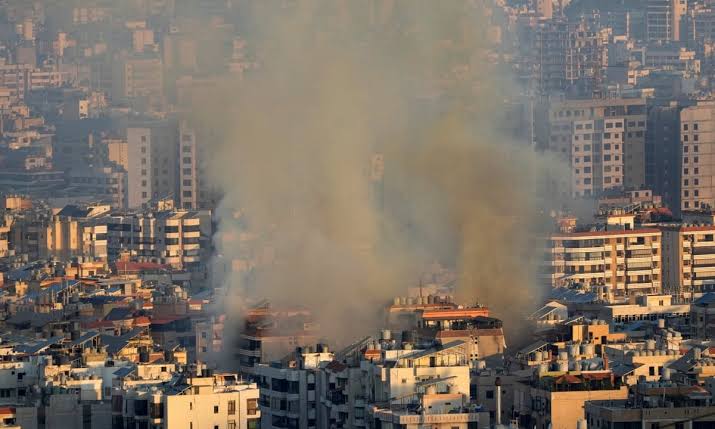
On Monday, a drone strike hit a building in the Cola district in central Beirut, with an armed Palestinian group saying it had killed three of its members.

The strike, the first in the centre of the city in years, sparked panic, with 41-year-old resident Mohammed al-Hoss saying “the kids were in shock” after his house was damaged.

“We are with Gaza and support the Palestinian cause, but our country cannot cope with us going to war,” he said.

Advertisement

“Our country is in a wretched state. They (Israel) finished with Gaza and they have come to Lebanon.”

Lebanon’s health ministry also reported the strike, saying it had killed four people and wounded four others. Israel has yet to comment.

Palestinian Islamist group Hamas later announced that its leader in Lebanon, Fatah Sharif Abu al-Amine, had been killed along with his wife and two children in another strike on Al-Bass refugee camp in south Lebanon.

The Israeli military confirmed it had “eliminated” Sharif in a strike.

Advertisement

Lebanon’s health ministry said six rescuers affiliated with Hezbollah were killed in an Israeli strike Monday.

Around Lebanon, Israeli strikes killed more than 100 people on Sunday, including 45 near the southern city of Sidon, according to the ministry.

Lebanon’s Health Minister Firass Abiad said Saturday that 1,030 people including 87 children had been killed since September 16.

UN refugee agency chief Filippo Grandi said “well over 200,000 people are displaced inside Lebanon”, while more than 100,000 have fled to neighbouring Syria.

Advertisement

Prime Minister Najib Mikati said up to one million people may have been uprooted, in potentially the “largest displacement movement” in Lebanon’s history.

– Yemen strikes –

The violence in Lebanon has raised fears of a much wider conflagration in the region.

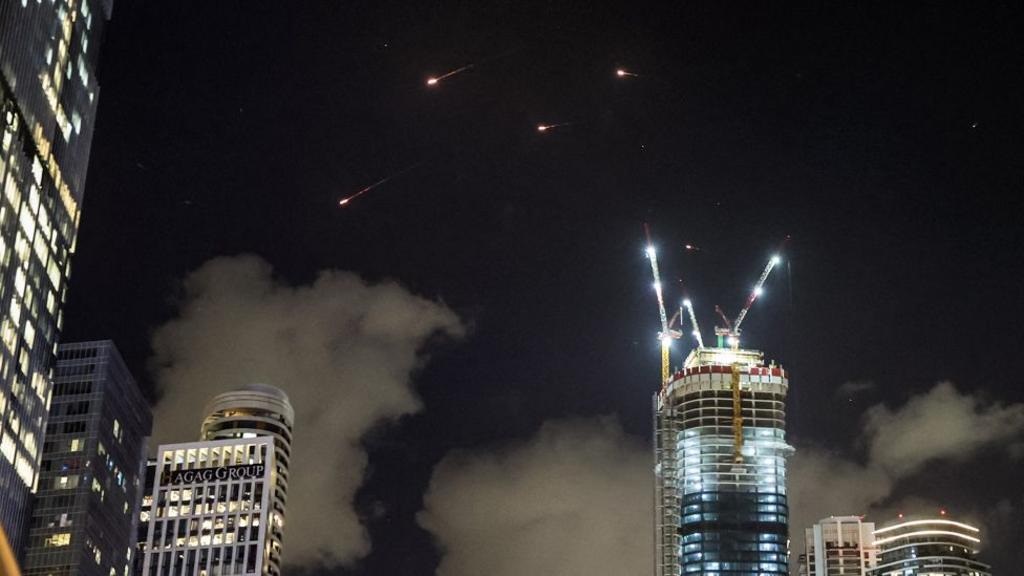
On Monday, the Israeli army said it “successfully intercepted a suspicious aerial target that crossed from Lebanon into Israeli territory”.

Advertisement

Israel said it also carried out strikes on Sunday targeting Iran-backed Huthis in Yemen that the rebels said killed four people and wounded 33.

The raids in Yemen came a day after the Huthis said they launched a missile at Israel’s Ben Gurion airport, trying to hit it as Prime Minister Benjamin Netanyahu was returning from New York.

Iran has said Nasrallah’s killing would bring about Israel’s “destruction”, though the foreign ministry said Monday it would not deploy any fighters to confront Israel.

Lebanon began a three-day national mourning period for Nasrallah on Monday, with flags flying at half-mast.

Advertisement

In Israel, some had mixed feelings about the Hezbollah chief’s killing.

“Nasrallah was responsible for the deaths of many Israelis, so it is good news,” said Matan Sofer, 24, in the northern town of Rosh Pina.

“But do we risk it getting worse, who knows?”

– Calls for halt –

Advertisement

World leaders have called for a de-escalation.

French Foreign Minister Jean-Noel Barrot met with the Lebanese premier in Beirut Monday, and said his government sought “an immediate halt” in the strikes.

He is the first high-level foreign diplomat to visit since the Israeli strikes intensified.

US President Joe Biden, whose government is Israel’s top arms supplier, said Sunday a wider war “really has to be avoided”.

Advertisement

In Gaza, AFP journalists said the number of air strikes across the territory has dropped significantly in recent days.

Hamas’s unprecedented October 7 attack on Israel resulted in the deaths of 1,205 people, mostly civilians, according to an AFP tally based on Israeli official figures that include hostages killed in captivity.

Israel’s retaliatory military offensive has killed at least 41,615 people in Gaza, most of them civilians, according to figures provided by the Hamas-run territory’s health ministry. The UN has described the figures as reliable.

Advertisement
Continue Reading
Advertisement
Click to comment

Warning: Undefined variable $user_ID in /home/naijuinz/public_html/wp-content/themes/zox-news/comments.php on line 49

You must be logged in to post a comment Login

Leave a Reply

Foreign

American power, AI and a walkout – key moments from Trump’s UN speech

Published

on

By

ADVERTISEMENT
Zoom Ad
ADVERTISEMENT
Zoom Ad

US President Donald Trump returned to the stage at the United Nations on Tuesday, where he touted his administration’s policies in front of world leaders and issued pointed threats to some of those gathered in the room.

The lengthy speech was wide-ranging, covering the war in Iran, AI, Cuba and the role of America’s military.

The BBC’s correspondents who covered the address have picked five key moments that stood out.

1. Trump pushes message of American power

Advertisement

The US president has no great respect for the United Nations – he accused it of imposing a far-left agenda – but he does relish the global platform it gives him.

He used Tuesday’s speech to tout his achievements, and claim the mantle of a peacemaker, at the same time as he issued a number of pointed threats.

Iran might be annihilated, lethal strikes on small boats suspected of drug smuggling will continue and the Cuban regime may even be toppled.

The clear message was: America is still prepared to use its military might wherever Trump thinks it might be required to secure its national interests.

Advertisement

Trump said he was “reasserting American power” and flexed what he called the country’s “unmatched military might”.

“The United States will no longer permit threats to America to gain a foothold anywhere in the Western Hemisphere,” he said.

Once again, Trump has made the full-throated assertion to the world of “America First”.

2. Cubans walk out as Trump calls nation ‘failed state’

Advertisement

Trump took aim at one of the US’s closest neighbours, Cuba, calling it “an absolutely failed state” and saying his administration has been pursuing “a fundamental change in the situation in Cuba”.

“It will fall,” he said.

The Cuban delegation walked out of the hall as Trump continued his remarks.

Over the last year, the US president become more vocal in criticising Cuba’s communist government. On Tuesday, he said it was under “enormous pressure” and “failing like never before”.

Advertisement

The US has not, however, provided a detailed picture of what it believes change will look like in Cuba.

Cuba’s foreign minister reacted angrily to Trump’s comments and accused the US president of spreading “falsehoods”.

“The US government is incapable of accepting that Cuba is and has the right to be a full sovereign and independent country,” Bruno Rodriguez wrote on X.

3. A direct threat to ‘annihilate’ Iran

Advertisement

Trump presented Iran with a stark choice at the UN General Assembly: reach an agreement with Washington and rebuild the country, or face the rapid “annihilation” of the Islamic Republic.

He then again predicted that a deal to end the war would probably follow the US midterm elections in November.

His remarks illustrated Trump’s familiar strategy of coercive diplomacy – keeping negotiations open while also threatening overwhelming force.

But his language blurred the distinction between destroying the political system and threatening Iran itself.

Advertisement

International law experts have previously expressed concern at what they called “alarming rhetoric” used by US officials, including Trump himself, who has posted that the US might “obliterate” Iran’s power plants.

References on Tuesday to leaving “no chance of survival” and “no hope” for future generations will likely have stoked similar alarm. There is also an irony in delivering this warning at the United Nations, an organisation founded to save future generations from war.

Yet the speech was not a declaration that diplomacy has failed.

It was an attempt to define the terms of possible negotiations: the US remains prepared to make a deal, but only under the shadow of an existential threat.

Advertisement

4. Trump hails new Greenland security deal

Trump also praised a new deal with Greenland under which he said the US would build two military bases in the Arctic territory.

“We will have the complete ability to do what is necessary to defend the American continent and also Europe,” he said of the deal, which he first announced on Friday.

He added that it “very much enhances” the defence alliance Nato.

Advertisement

The US, Denmark and Greenland held a joint signing ceremony at the UN shortly after Trump’s address.

Although Greenland is a semi-autonomous territory, it is part of the Kingdom of Denmark which primarily handles its foreign policy.

Trump administration officials are already hailing the agreement as enhancing US security at minimal cost – and with relationships intact.

Denmark and Greenland’s governments, however, will be hoping it ends the long-simmering disagreement that began when Trump threatened to take Greenland by force.

Advertisement

That threat shook the Nato alliance and sorely tested the US-Danish relationship.

Given Trump had tried for months to purchase or annex the semi-autonomous territory, some analysts are viewing it as a quiet win for diplomacy.

5. An attempted rebrand of AI

Trump has a penchant for branding, and in his speech he gave Artificial Intelligence a new name: Super Intelligence.

Advertisement

“The use of the word artificial makes it sound fake,” he said. “It’s not fake, it’s actually amazing. But we have to be careful.”

“Welcome to the new world of Super Intelligence – SI,” he added.

Trump has previously argued that the US must come out on top in the AI development race, saying last week: “Whoever wins AI, wins.”

The president is firmly against government regulation or introducing new guardrails – and that puts him at odds with many of those gathered at the UN.

Advertisement

For those who are calling for regulation, the question is whether the slow pace of diplomacy can keep up with AI’s rapid development.

Continue Reading

Foreign

Brazilian Jet Carrying Singer Rey Vaqueiro Overruns Runway, Catches Fire

Published

on

By

ADVERTISEMENT
Zoom Ad
ADVERTISEMENT
Zoom Ad

A Cessna 550 Citation Bravo carrying Brazilian singer Rey Vaqueiro and seven other people has overrun the runway while landing at Parelhas Airport in Rio Grande do Norte, Brazil.

The aircraft, with registration PP-WMO, was involved in the incident during the early hours of Sunday, September 13, according to aviation news platform FL360aero, which reported the incident in a post on X.

The aircraft reportedly ran beyond the runway while landing at the airport and subsequently caught fire, with both engines said to have been engulfed in flames.

Firefighters battled the blaze for approximately five hours before it was brought under control.

Advertisement

All eight people on board, comprising six passengers and two crew members, reportedly evacuated the aircraft.

Some of the occupants were said to have sustained minor injuries, while no serious injuries were reported.

The aircraft was destroyed by the fire.

The circumstances surrounding the incident remain under investigation by Brazil’s Centre for Investigation and Prevention of Aeronautical Accidents (CENIPA).

Advertisement

The incident involved a Cessna 550 Citation Bravo, a business jet commonly used for private and charter flights.

Continue Reading

Foreign

More Flights Delayed As UK Air Traffic Control Problem Causes disruption

Published

on

ADVERTISEMENT
Zoom Ad
ADVERTISEMENT
Zoom Ad


More flights are expected to be delayed in the United Kingdom (UK) after a technical problem with the country’s air traffic control system led to more than 2,000 cancellations.

A total of 291 flights were cancelled on Wednesday after 1,750 were cancelled on Tuesday, according to aviation analytics firm Cirium. Tens of thousands of passengers have been affected by the disruption.

National Air Traffic Services (NATS), the UK’s air traffic control provider, blamed the disruption on a technical glitch. Its chief executive, Martin Rolfe, apologised and said a full investigation would be carried out.

Advertisement

He admitted that resolving the problem had taken “longer than hoped”.

Foreign Secretary Ed Miliband described the outage as “unacceptable”, while Transport Secretary Heidi Alexander summoned Rolfe to explain what happened.

The disruption affected several major UK airports, including Heathrow, Gatwick, Manchester and Birmingham. Airports in Ireland also reported disruption.

At Heathrow, departures were initially paused on Tuesday before operations resumed and then faced further disruption later in the day.

Advertisement

Heathrow said its operations were recovering on Wednesday but warned passengers of further delays because aircraft and crew needed to be repositioned.

Gatwick also said flights had resumed but warned that it would take time for operations to return fully to normal.

Passengers have been advised to check directly with their airlines before travelling to airports. Heathrow said passengers should only travel if they have a confirmed flight.

The technical fault affected NATS’ flight data processing system. Rolfe said it was not the same system that failed during a major disruption in 2023.

Advertisement

However, the latest incident is the third technical problem experienced by NATS in three years. A computer shutdown in 2023 caused widespread disruption affecting around 700,000 passengers, while another outage in 2025 resulted in about 150 cancellations.

Airlines including Ryanair and Wizz Air have called for changes to NATS. Wizz Air UK managing director Yvonne Moynihan said the company needed to consider whether NATS was “fit for purpose”.

Despite the disruption, Rolfe defended the UK’s air traffic control system, saying it remained one of the best in the world.

However, former NATS air traffic control manager Doug Maclean said repeated failures were undermining the system’s reputation.

Advertisement

Even though the technical issue has been resolved, passengers are expected to face further disruption because of the backlog of flights, aircraft and crew.

NATS said it was working to restore normal operations as quickly as possible.

(BBC News)

Advertisement
Continue Reading

Trending

Copyright © 2024 Naija Blitz News