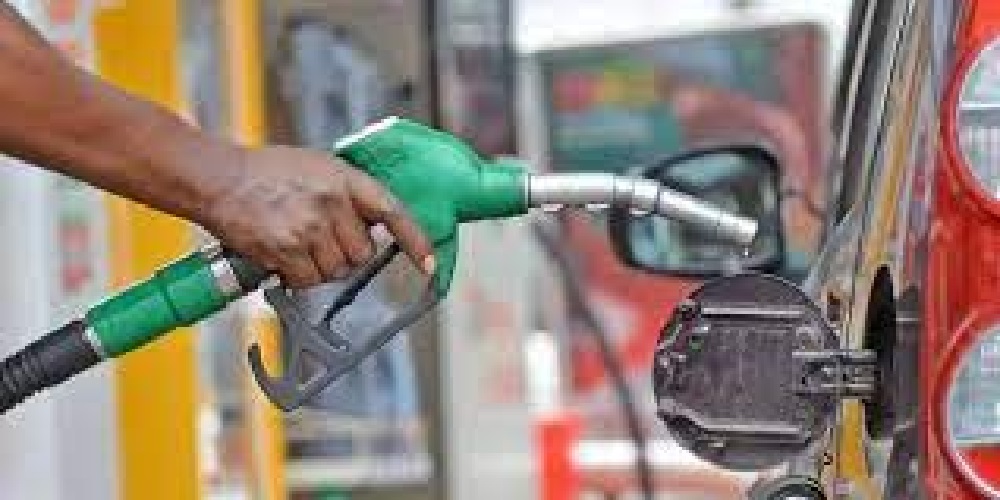
The Nigeria Labour Congress and the Organised Private Sector have called for the immediate reversal of the hike in the pump prices of Premium Motor Spirit, popularly called petrol, by the Nigerian National Petroleum Company Limited.


Retail stations of NNPC raised the price of petrol to N1,030 from N897/litre in Abuja, and in Lagos it was hiked to N998/litre from N868/litre. Other locations witnessed similar price hikes, a development that triggered anger among Nigerians.
The price hike, the second in one month, represents about 14.8 per cent or N133 rise. 
With the latest price adjustment, it means that in the less than 17 months of the current administration, the price of petrol has risen by over 430 per cent from May 29, when it took over the reins of power.
Last month, the national oil company raised the pump price of petrol to N897/litre from the official price of N617 per litre it hitherto sold in Abuja.
It came days after the NNPC said it was heavily constrained by the huge debt it owed international suppliers. The debt is estimated to be $6.8bn.
At the NNPCL mega station in Central Area, a customer told The PUNCH that the product was sold at N1,030.
The station did not display its prices on either the signboard or the pump meter, leaving customers unaware of the cost of fuel.
Instead, the new price was announced verbally by the fuel attendants, against best practices.
“I am very angry right now. I entered this station thinking their price would be better. It was only after I had wasted time in the queue that I was informed by the fuel attendant that the price had risen to N1,030,” the customer said.
This development comes days after the NNPC decided to terminate its exclusive purchase agreement with Dangote Refinery, giving room for other players downstream to buy products directly from the Dangote Refinery.
Oil marketers said NNPC’s withdrawal as the sole off-taker of petrol from Dangote refinery meant the Federal Government had systematically stopped subsidy on petrol completely.
It also meant the product would be sold to marketers on a willing buyer, willing seller basis.
The price jumped to as high as N1,200/litre in some other stations in Abuja. For instance, customers bought petrol from one of the Eterna stations in the city centre at N1,200/litre. Mobil station at Arab junction sold to its customers at N990/litre while all NNPCL stations along with Berger didn’t display its pump price.
Efforts to reach the NNPCL proved abortive as its spokesman, Femi Soneye, didn’t respond to calls to his phone lines.
Meanwhile, drivers and transporters raised the cost of fares after the petrol price hike by NNPCL and other dealers.
One of our correspondents observed that a one-way trip from Lugbe to Wuse in Abuja had increased to N1,000 from N700 previously charged.
Also, transport cost moved as fuel price hit N1,250 per litre in Borno State.
The PUNCH learnt that many filling stations, including the NNPC retail outlets, were shut down while those selling currently placed their price on N1,250 per litre.
Commercial fuel stations sold at N1,100 per litre with many stations also shut down, which caused artificial scarcity of the commodity in Katsina State. The pump price in Ilorin, Kwara State, as of Wednesday evening at NNPC stations was N1,045. At Orange Global filling station it was N1,300; Rainoil dispensed at N1210, while Total sold it at N1,210.
In Edo, most marketers sold for N1,250 per litre, it was in Delta for between N1,100 and N1,200 per litre and N1,200 to N1,250 per litre in Benue.
In Abia, fuel sold for N1,200 and N1,300, while in Yobe, NNPC sold for N1,098 and others between N1,150 and N1,170 per litre
Most stations in Ondo sold for between N970 and N1000 in the morning but changed to N1,115 in the evening.
NLC, OPS kick
The Nigeria Labour Congress condemned the hike in petrol price nationwide. The union also demanded an immediate reversal of the hike while accusing the government of only focusing on fuel price increments.
The NLC, in a statement signed by its president, Joe Ajaero, described the decision of the NNPCL as an aberration.
Ajaero stated, “Even following the logic of market forces, we find it an aberration that a private company (NNPCL) is the one fixing prices and projecting itself as a hegemonic monopoly.
“We challenge the government to go to the drawing board and present us with a blueprint for inclusive economic growth and national development instead of this spasmodic ad holism and palliative policy.
“It needs no stating the fact that the latest wave of increase has grossly altered the calculations of Nigerians once again at a time they were reluctantly coming to terms with their new realities.
“It will further deepen poverty as production capacities dip, more jobs lost with multidimensional negative effects. In light of this, we urge the government to immediately reverse this rate hike as previous increases did not produce any good results. People only got poorer.
“But more fundamentally, the government should be bold enough to tell Nigerians in advance the destination it wants to take the country.”
The Organised Private Sector also condemned the development. The Director-General of the Manufacturers Association of Nigeria, Segun Ajayi-Kadir, said the hike it would further drive up the cost of production for manufacturers.
He said, “The second increase in one month will send high costs across the value chain for the manufacturer. In terms of the distribution of our products, it means that we are going to pay much higher for it and this will of course impact the prices at which our locally produced items will go.”
The MAN DG said the PMS price hike does not bode well for the average Nigerian whose disposable income shrinks daily, resulting in fewer purchases but faces increasing transportation costs.
“Together with the fact that the disposable income of the average Nigerian has dropped, we are likely to witness a further dip in our sales figures,” Ajayi-Kadir said. “For some small and medium scale enterprises that use diesel in their processes, it is going to be an increase in costs.
“Additionally, workers who make trips are likely to request another raise to allow them to transport themselves to work. Since people will spend more on transport, it reduces the money they spend on other goods, whereas we need more purchases to support more production.”
The MAN DG noted the NNPC’s new PMS price could lead to another low in the business environment, but hoped that over time there would be a moderation in PMS prices as he recommended the Federal Government incentivise petrol cost reduction.
He added, “We already have a huge advantage in Dangote Refinery coming on stream and doing the local supply. It is a welcome development and we are very proud of that as an indigenous producer in our history.
“We are looking forward to how the government would deliberately incentivise the reduction of the cost of petrol. When we subsidised imported petrol, we could say we were subsidising consumption.
“But if arrangements could be made so that Dangote, for instance, would get crude at reduced costs, it could be a way of giving subsidy to Nigerians, but you would be subsidising production, which would be for the overall well-being of Nigerians.
“So, I believe that kind of arrangement, particularly if we intentionally and diligently increase our oil production, would be something that may have to be considered as we continue to find solutions to the rising costs of petroleum products collectively.”
The Director, Centre for Promotion of Private Enterprise, Dr Muda Yusuf, described the latest increase in PMS price as regrettably ill-timed and failed to reckon with the prevailing difficult economic conditions.
“There is always a place for political economy in the interest of the vulnerable segments of society,” Yusuf said. “The Nigerian economy is not ripe for full-blown deregulation and market principles on all fronts.”
Yusuf recommended policy sequencing as a better path, noting it would have been better if the Economic Stabilisation Bill expected to bring relief to the citizens and businesses through its proposed mitigating measures was activated and gained traction before a petrol price hike.
He added, “What the economy needs at this time are measures to ease the current economic and social challenges; not policies that would aggravate them. It is desirable to urgently cut import duties and taxes by a minimum of 25 per cent on all industrial raw materials, 18-seater passenger buses and above and cars of 2,000cc engine capacity and below.”
He also recommended customs duty exchange rate be fixed at a maximum of N1,000/$ to reduce the current prohibitive cost of imports with relevant legislation amended to that effect without prejudice to the fiscal policy measures in the Economic Stabilisation Plan.
Yusuf remarked, “The government must be ready to trade off some revenue in the current situation. There is a need to seek to achieve the maximisation of the welfare function for citizens and the productivity function for businesses. The government should not be too fixated on revenue maximisation.”
Reacting to the latest hike, the National President of the Association of Small Business Owners of Nigeria, Dr Femi Egbesola, said the association was troubled by the lack of prior notice.
He said, “While we understand the complex factors that can influence fuel prices, such as global oil market dynamics and exchange rate fluctuations, we are troubled by the lack of prior notice and clear explanations provided by the government and the NNPCL regarding this development.
“The timing of this price hike is particularly concerning, as it has the potential to further exacerbate the impact on businesses and consumers, especially the vulnerable segments of the population and those on fixed incomes, who are still adjusting to the recent increase in the national minimum wage.”
He noted that the current administration should realise that a steep price hike was bound to trigger widespread price increases, potentially reversing the recent easing in inflation.
He posited, “The immediate impact of the hike in petrol price on businesses will be severe, with fuel prices affecting supply and logistics, power generation, transportation, and factory operations.
“The cost of doing business will skyrocket, prices of goods will rise, and some firms may shut down due to low demand in the face of weakening consumer purchasing power. Of course, this will be followed by job losses.”
In a similar vein, the National Vice President, Nigerian Association of Small-Scale Industrialists, Segun Kuti-George, said it was shocking to see pump prices go up again.
“What we’re expecting, to be honest, is a possible drop in the price of PMS due to the expectation that PMS will now be sourcing from Dangote, who would be receiving crude in naira from NNPC. It was, therefore, a surprise to see prices going up again,” he said.
“Well, there is nothing that the government or people will not have explanations for, but I believe that courtesy demands either NNPC as an agent of the government or the government itself should take the time to explain these things to the people. They should give us information on what’s about to happen so that we can have a correct understanding and prepare ourselves for it, but you won’t hear anything.
“All you see is an upward review in prices, and they leave you guessing what exactly is happening. For instance, the information I gathered was that NNPC had been acting as a go-between for Dangote and marketers and paying some amount of subsidy, which accounts for the price difference between what NNPC sells and what other marketers sell. Now, NNPC has withdrawn, and it’s like everyone has to buy and sell what they buy, whether they are buying locally or importing.
“Even if that’s the case, someone should have taken the time to explain it to us, so we have a clear understanding and aren’t just guessing. Of course, this increase translates to higher costs for micro, small, and medium enterprises. It leads to an increase in prices, reduced sales, reduced profits, and ultimately, it can lead to job losses and increased unemployment. Well, we can only hope that this action will bring an end to sporadic fuel price increases and engender some level of stability.”
Additionally, an economist and investment specialist, Vincent Nwani, noted the frequency of fuel price increases this year, emphasizing its nationwide repercussion.
“This is the third time fuel prices have increased this year, which I believe is a nationwide problem. In some parts of the country, prices are above N1,500. Inflation will rise, not just the one reported by the Central Bank of Nigeria.
“Costs continue to climb, and I’m uncertain about the figures from the Nigeria Bureau of Statistics. Electricity costs are also unfavourable, and recently, it was announced that the price of driving licenses will increase.”
Dangote denies price hike
Contrary to reports that the new petrol price hike must have been triggered by an increase in the ex-depot price of the product at the Dangote refinery, officials of the refinery have denied the claim.
There were online reports on Wednesday indicating that Dangote refinery had raised the price of petrol to N977/litre, prompting NNPC to also push up its rate.
However, senior officials at Dangote refinery described the report as “fake news.”
“The NNPC should be in a position to tell you why it increased the price of petrol, go and ask them. I don’t know where you got N977 from,” an official told our correspondent.
With the new price hike, petroleum marketers said they would need more money to top up their existing orders with the NNPC.
The President of the Petroleum Retail Outlet Owners Association of Nigeria, Billy Gilly-Harry, told one of our correspondents on Wednesday that marketers would only receive the products they had bidded for after completing the differential to make up for the new price.
“We have been communicated that this is the new price the NNPC will be selling to us. The factors as to why the price change has not been told. But don’t forget that we are entering into a fully deregulated segment of the business. It means quite a lot to us because we need to go and look for more money to add to the product we have already paid for. That is why we are crying. The challenges we have as retailers are more than meets the eye. We also don’t have consistent sales because the purchasing power of the masses has been eroded. We are hoping that things will change for the future,” he said.
Gilly-Harry maintained that things would change when those in charge of the economy wore their thinking caps on how the economy should improve.
“We cannot just be sharing money after crude oil had been sold, with no direct productivity that would bring economic growth. If we are selling fuel at N1,050, the purchasing power of the people should be an average of N300,000 as the minimum salary. We should learn from how America created a growing economy,” he stated.
He stated that he had sent a letter to apply for direct PMS purchase from the Dangote refinery, saying there is no reply yet.
“We have not heard from Dangote; they have not given us any leeway that PETROAN members should come and buy PMS from them. I have written to them,” he noted.
Meanwhile, members of the Independent Marketers Association of Nigeria said the new price would affect its members as many may not be able to pay about N45m to get a truckload of petrol.
Though the association acknowledged the fact that the new price was a reflection of the full implementation of the Petroleum Industry Act in a deregulated market, the implication for members, it said, would be damning.
“The price increase will definitely affect our members because for our members to take one 45,000 litres of PMS, they will be thinking of about N45m. The capital is huge for most of our members. We keep on clamouring for this energy bank; we need banks that can sponsor this thing. We need banks that can give us soft loans in line with the cost of petroleum products so that we can service our stations,” IPMAN spokesperson, Chinedu Ukadike, stated.
Ukadike added that the interest rate in most of the commercial banks is too high, stressing that the cost of running a filling station deserves government intervention.
“Independent marketers are really suffering to acquire funds to face the challenges of deregulation,” he said.
Meanwhile, the national president of IPMAN, Abubakar Maigandi, said marketers would meet NNPC on the new price.
Opposition react
Meanwhile, opposition parties Peoples Democratic Party and the Labour Party unanimously condemned the hike in the price of petrol on Wednesday.
However, the All Progressives Congress attributed the pump price increase to market forces.
Speaking on the fuel price hike in an exclusive interview with The PUNCH, the PDP Deputy National Youth Leader, Timothy Osadolor, said Nigerians were struggling because President Bola Tinubu announced the removal of fuel subsidy without fully grasping its significance.
“I think this is a true reflection of the insensitivity of President Tinubu’s government. This incessant increase in fuel prices is a result of his policy inconsistencies and the recklessness of his government in their words and actions.
“You will recall that only a few hours after President Tinubu was sworn in, without having the backing or the knowledge of the economic situation of the country that he had just begun to govern, he started making reckless comments about the most important lifeline of the country, which is subsidy, and the oil sector.
“He was speaking without understanding the mathematics and the arithmetic behind the energy sector in the country. That statement triggered a lot of negative reactions across the economic sector of the country.
“You will recall again that just a few days after that, the naira started depreciating against the dollar. He then instructed his tax minister, who is the governor of the CBN, whose only responsibility is to increase taxes and generate revenue. However, tax generation and tax collection are not the best or ideal ways to grow any economy worldwide.”
Osadolor expressed concern over the naira devaluation, noting that Nigeria’s status as an importing nation meant everything was linked to the dollar.
He added, “He made a bogus statement about the Port Harcourt and Kaduna refineries all coming online. Meanwhile, in this year’s annual budget, we saw billions of naira allocated to the Port Harcourt refinery and other refineries in this country.
“As we speak, not only have those funds been spent, but there is no value for that money, and there is nobody in jail or being prosecuted for the misappropriation and embezzlement of those billions of naira.
“President Tinubu has shown that within the confines of the villa, he does not hear the cries of the common man in Benin, the common woman in Warri, or the common Nigerian in Daura. He is insensitive to the plight of Nigerians because he is too comfortable.’’
The National Publicity Secretary of the Labour Party, Obiora Ifoh, told The PUNCH that they warned Nigerians against voting President Bola Tinubu into office.
He said, “This is what the Labour Party has been warning Nigerians about. We told them a long time before the election that this thing would happen, that the man they planned to bring in was a tax master who would stop at nothing to inflict pain on Nigerians.
“Remember that the NNPCL boss told us that the President is comparing Nigeria with neighbouring countries where fuel sells for over N2,000 per litre. They may be targeting that now that fuel is officially above N1,000 and in some places, it may go as high as N1,600. From the look of things, it is gradually approaching the N2,000 mark.’’
He added, “There is a whole lot of confusion in this government and the centre can no longer hold. That is why we keep saying that in as much as there is nothing anyone can do now, Nigerians should continue praying to witness 2027 for them to use their votes to do the needful.
‘’But the LP has a template to reverse some of these anomalies and obnoxious policies we are witnessing to get Nigeria working again. The longer we stay with this government, the more penury Nigerians will face.”
National Chairman, Social Democratic Party, Shehu Gabam, questioned the Federal Government on what they hoped to accomplish with the ongoing increases in petroleum pump prices.
He stated, “That is the level of deterioration the country is experiencing, along with hunger, poverty, and insecurity. The challenges Nigerians are facing are suffocating them.
“For me, I don’t know what the government aims to achieve with this. I don’t understand the government’s direction or why they are discussing palliative measures.
“On one hand, they are talking about palliative support, on the other, they are taking it away from the lives of Nigerians. It goes beyond what anyone can comprehend.’
“The danger is that if you push Nigerians beyond their limits, nobody can predict what will happen. The suffering, hunger, barbarism, insecurity and violence currently occurring have never happened under any administration in Nigeria’s history.”
But the ruling APC absolved the President of blame, attributing the rising costs of petrol to market forces.
The National Publicity Director of the APC, Bala Ibrahim, stated, “Why is the opposition blaming Tinubu for this? For your information, the President is even out of the country. He is not the one who triggered this thing. This issue is purely economic. It has nothing to do with government intervention at all.
‘’For now, there is bound to be panic buying and fear of the unknown among the masses. Some people are even buying because they want to test the quality of Dangote fuel.
“This also shows you the demand for the product. This is a country with a high number of vehicles that consume fuel. But by the time these CNG buses roll out and people begin to weigh the options available to them, the price will slump.”
Bala likened the petrol price hike to what transpired during the introduction of telecommunication services in Nigeria.
“The truth is the forces of the market are different from political ones. It is the demand that determines the price alongside the supply of the product. In no time, if we allow these forces to operate in the market, you will see that they will force competition to beat down the price.
“The agreement between Dangote, the NNPC and independent marketers was sealed yesterday (Tuesday) and products have started coming into the market. Give it a few days, there will be changes. That is how market forces operate.
“We have witnessed this in the past. When GSM came newly to Nigeria, the price of an ordinary SIM card was in thousands (of naira). Today, they are begging you to collect SIM with even free credits on it. This is down to the forces of the market,’’ Bala added.
Credit: PUNCH.