Connect with us

Economy

No cause for alarm as FG adopts 88 international standards for CNG vehicle safety

Published

on

ADVERTISEMENT
Zoom Ad
ADVERTISEMENT
Zoom Ad

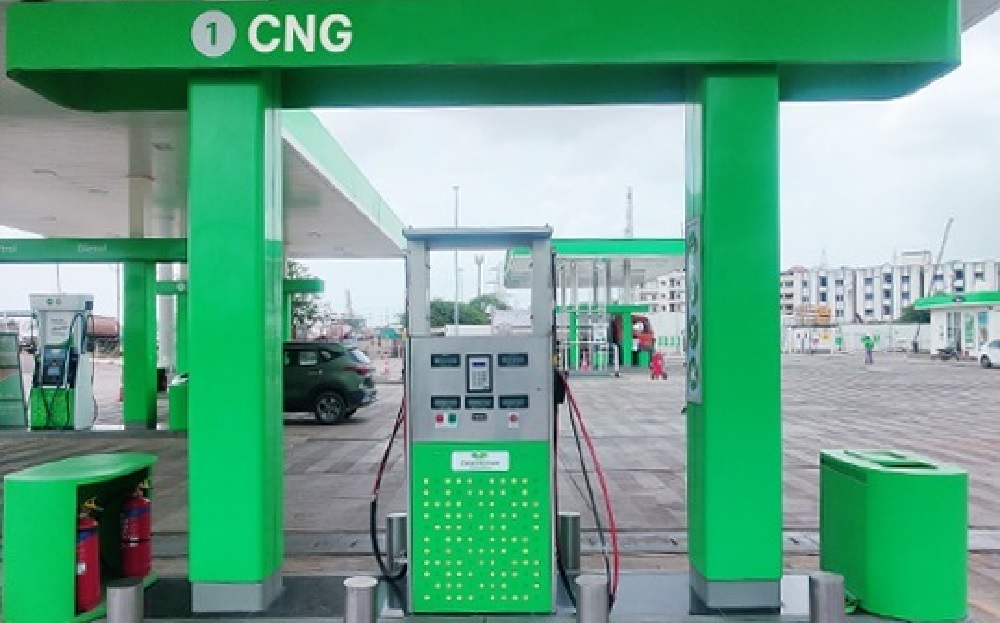
The Federal Government says it has adopted 88 international standards for Compressed Natural Gas products to bolster the ongoing rollout of various CNG initiatives across the country.


It said this procedure will ensure a smooth implementation of CNG systems in vehicles and to ensure the use of quality products in Nigeria.

The Director-General, Standard Organisation of Nigeria, Dr Ifeanyi Okeke, disclosed this in a statement issued on Sunday to commemorate the World Standards Day celebration in Abuja.

The annual celebration is themed, “Our Shared Vision for a Better World: Standards for Changing the Climate.”

Advertisement

Okeke said the event was aimed at raising awareness about the impact of standards on industrialisation and economic growth.

Recently, there have been growing concerns regarding the conversion of fossil fuel-powered vehicles to CNG vehicles, particularly about the risks of explosions and other safety hazards associated with the use of CNG as a fuel source.

These apprehensions stem from reports of incidents where improperly installed or maintained CNG systems have led to dangerous situations, raising questions about the adequacy of safety regulations and the need for more rigorous oversight.

But reacting, the SON DG said the government adopted international standards to ensure that CNG products meet rigorous safety and quality benchmarks, ultimately supporting the broader transition to sustainable energy solutions.

Advertisement

He said, “Standards are crucial in achieving these goals and in facilitating the development of renewable energy; energy efficiency and sustainable practices.

“The SON, in line with President Bola Ahmed Tinubu’s agenda, has adopted 88 international standards for Compressed Natural Gas products to support the success of CNG initiatives.

“Additionally, the SON is a member of the committee developing the Natural Gas Vehicles Monitoring System, aimed at overseeing the implementation of CNG systems in vehicles and to ensure the use of quality products in Nigeria.”

The SON boss said the organisation has also conducted factory visits to China and India to certify CNG components in its quest for safety and quality assurance.

Advertisement

“As we navigate the challenges of climate change, we must acknowledge that standards are vital for the successful implementation of mitigation strategies.

“Let me assure you that SON is dedicated to improving life through standardisation and quality assurance, fostering consumer confidence, and enhancing the global competitiveness of Made-in-Nigeria products.

“Through global collaboration, Standards bodies around the world align their activities with the Sustainable Development Goals for peace, prosperity and the welfare of people and the planet. International standards offer practical solutions which we must all identify with to become part of the solution since they are the backbone of global progress,” the statement concluded.

Advertisement
Continue Reading
Advertisement
Click to comment

Warning: Undefined variable $user_ID in /home/naijuinz/public_html/wp-content/themes/zox-news/comments.php on line 49

You must be logged in to post a comment Login

Leave a Reply

Economy

CBN tightens watch on banks over terrorism financing

Published

on

By

ADVERTISEMENT
Zoom Ad
ADVERTISEMENT
Zoom Ad

The Central Bank of Nigeria (CBN) has announced that it will be paying closer attention to how banks and other financial institutions in the country are being used, or misused, to move money that could fund terrorism.

In a statement signed by Hakama Sidi-Ali, Acting Director of the apex bank’s Corporate Communications and Investor Relations Department on Tuesday, the CBN said it has made terrorism financing supervision one of its current priorities. According to the statement, this is part of the bank’s “ongoing commitment to protecting the Nigerian financial system from abuse by illicit actors.”

What this means in plain terms is that the CBN will be looking more closely at how banks identify and manage the risk of their platforms being used to fund terrorism, how well they monitor suspicious transactions linked to terrorism financing, how they carry out sanctions ordered against specific individuals or groups, and how promptly they report suspicious activity connected to terrorism financing.

The statement explained that this new push covers four broad areas: how financial institutions manage terrorism financing risk, how they monitor transactions for signs of terrorism financing, how they carry out targeted financial sanctions, and how they report suspicious transactions linked to terrorism.

Advertisement

The apex bank said it will not be sitting back and waiting for problems to surface on their own. Instead, it plans to use a risk-based approach, which means banks and institutions seen as more exposed to this kind of risk will attract closer attention.

This will involve both on-site inspections, where CBN officials visit institutions directly, and off-site checks, where the bank reviews reports and data from a distance.

The goal, the statement said, is to support “effective Anti-Money Laundering, Countering the Financing of Terrorism and Countering Proliferation Financing (AML/CFT/CPF) controls across the financial sector,” referring to the fight against money laundering, terrorism financing, and the financing of weapons proliferation, all of which are governed by existing Nigerian laws and regulations.

The CBN also linked this move to Nigeria’s wider efforts, both at home and internationally, to fight terrorism financing and the financing of weapons proliferation, and to protect the integrity of the country’s financial system.

Advertisement

The apex Bank did not name any specific institution under investigation or give a timeline for these actions, but noted that “further supervisory engagement will be undertaken as appropriate,” suggesting that more steps could follow depending on what its checks turn up.

For the ordinary Nigerian, the announcement signals that the CBN wants banks to be more careful and more accountable in how they track the movement of money through the financial system, particularly where there is any possible link to terrorism or the funding of violent groups.

It is also a reminder that financial institutions operating in Nigeria are expected to follow strict rules designed to keep the banking system safe from being used for illegal purposes.

Advertisement
Continue Reading

Economy

FG increases pension for soldiers

Published

on

By

ADVERTISEMENT
Zoom Ad
ADVERTISEMENT
Zoom Ad

The Federal Government has approved a new pensionable salary structure for personnel of the Nigerian Armed Forces.

The new structure affects personnel in the Nigerian Army, Nigerian Navy and Nigerian Air Force and took effect from September 1, 2026.

The approval was contained in a circular issued on September 3 by the National Salaries, Incomes and Wages Commission.

Under the new arrangement, Generals, Admirals and Air Chief Marshals occupy the highest level, with their annual pensionable salaries ranging from ₦21.9 million to ₦29.75 million, depending on their salary steps.

Advertisement

The highest figure works out to roughly ₦2.48 million per month when divided by 12.

Lieutenant Generals, Vice Admirals and Air Marshals will have annual pensionable salaries between ₦16.99 million and ₦25.91 million.

Major Generals, Rear Admirals and Air Vice Marshals will receive pensionable salaries ranging from about ₦14.98 million to ₦23.9 million annually.

For Brigadier Generals, Commodores and Air Commodores, the approved annual pensionable figures range from ₦13.86 million to ₦16.39 million.

Advertisement

Colonels, Captains and Group Captains will have annual pensionable salaries between ₦8.31 million and ₦9.49 million, while Lieutenant Colonels, Commanders and Wing Commanders will fall between ₦7.55 million and ₦8.74 million.

Majors, Lieutenant Commanders and Squadron Leaders will have pensionable salaries ranging from ₦5.99 million to ₦7.01 million annually.

Captains, Lieutenants and Flight Lieutenants will receive between ₦5.28 million and ₦6.42 million.

At the junior officer level, Second Lieutenants, Midshipmen and Pilot Officers will have annual pensionable salaries ranging from ₦4.92 million to ₦5.59 million.

Advertisement

The new structure also covers non-commissioned personnel.

Warrant Officers across the three services will have annual pensionable salaries between ₦4.53 million and ₦5.17 million, while Master Warrant Officers will receive between ₦3.94 million and ₦4.93 million.

Warrant Officers will have annual pensionable salaries ranging from ₦3.46 million to ₦4.35 million. Staff Sergeants, Petty Officers and Flight Sergeants will have figures between ₦2.98 million and ₦3.76 million.

Sergeants and Leading Seamen will have annual pensionable salaries ranging from ₦2.81 million to ₦3.16 million, while Corporals and Able Seamen will receive between ₦2.48 million and ₦2.73 million.

Advertisement

Lance Corporals and Seamen will have pensionable salaries between ₦2.32 million and ₦2.58 million annually.

Privates, Ordinary Seamen and Aircraftmen will have figures ranging from ₦2.28 million to ₦2.49 million.

The government clarified that the amounts contained in the new schedule are meant for calculating pension benefits.

They should not be treated as the actual monthly salaries or take-home pay of serving military personnel.

Advertisement
Continue Reading

Economy

Black Market Dollar To Naira Exchange Rate Today 8th September 2026

Published

on

ADVERTISEMENT
Zoom Ad
ADVERTISEMENT
Zoom Ad

Dollar To Naira Exchange Rate Today 27 January 2023(Black Market)

The Black Market Dollar-to-Naira Exchange Rate for 8th September 2026 Can Be Accessed Below.

NOTE: The exchange rate changes hourly. It depends on the volume of dollars available and the Demand. This means…you can buy or sell 1 dollar at a certain rate, and the price can change (high or low) within hours.

The official naira black market exchange rate in Nigeria today, including the Black Market rates, Bureau De Change (BDC), and CBN rates.

Advertisement

The exchange rate fluctuates hourly based on the supply and demand of dollars in the market.
What’s the dollar to naira black market today, 8th September 2026?
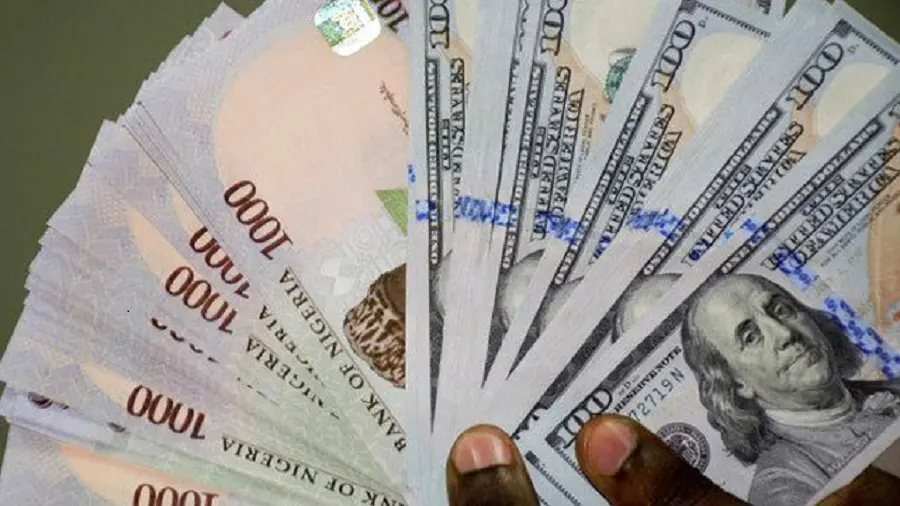
The exchange rate for a dollar to naira at Lagos Parallel Market (Black Market) players sell a dollar for ₦1405 and buy at ₦1395 on Tuesday, 8th September, 2026, according to sources at Bureau De Change (BDC).
Please note that the Central Bank of Nigeria (CBN) does not recognize the parallel market (black market), as it has directed individuals who want to engage in Forex to approach their respective banks.
Dollar to Naira Black Market Rate Today
Dollar to Naira (USD to NGN) Black Market Exchange Rate Today
Selling Rate ₦1405
Buying Rate ₦1395
Dollar to Naira CBN Rate Today
Dollar to Naira (USD to NGN) CBN Rate Today
Highest Rate ₦1320
Lowest Rate ₦1326

Continue Reading

Trending

Copyright © 2024 Naija Blitz News