Economy
Nigerian govt announces N75bn single-digit interest loans for MSMEs
- /home/naijuinz/public_html/wp-content/plugins/mvp-social-buttons/mvp-social-buttons.php on line 27
https://naijablitznews.com/wp-content/uploads/2024/02/Mohammed-Idris.jpg&description=Nigerian govt announces N75bn single-digit interest loans for MSMEs', 'pinterestShare', 'width=750,height=350'); return false;" title="Pin This Post">
- Share
- Tweet /home/naijuinz/public_html/wp-content/plugins/mvp-social-buttons/mvp-social-buttons.php on line 72
https://naijablitznews.com/wp-content/uploads/2024/02/Mohammed-Idris.jpg&description=Nigerian govt announces N75bn single-digit interest loans for MSMEs', 'pinterestShare', 'width=750,height=350'); return false;" title="Pin This Post">
The Nigerian government has approved a N75 billion loan scheme with a nine per cent interest rate for 75,000 Micro, Small, and Medium Enterprises, MSMEs, across Nigeria.

Scheduled for launch in 2025, this scheme aims to foster economic growth by targeting women and youth-owned enterprises, creating jobs, and stimulating local economies.
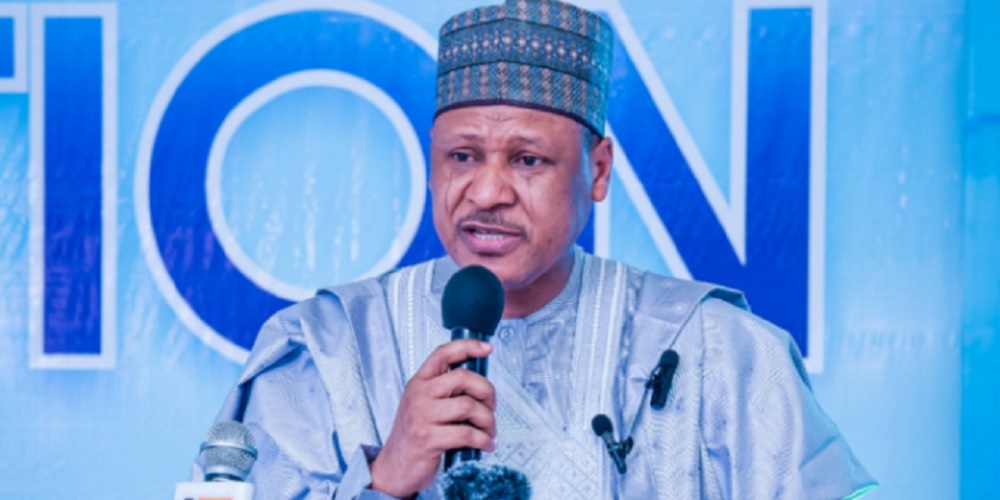
Minister of Information and National Orientation, Alhaji Mohammed Idris, outlined the project’s goals at a town hall meeting in Abuja, noting its alignment with President Bola Tinubu’s Renewed Hope Agenda.

“This scheme is a concrete manifestation of Tinubu’s commitment to economic transformation. By focusing on MSMEs, which are the backbone of our economy, we aim to diversify income streams, boost exports, and provide valuable job opportunities,” he said.
The loan, a joint effort among the Federal Government, the Bank of Industry, BOI, and state governments, offers single-digit interest rates with individual loans capped at N1 million.
This move is expected to alleviate some of the challenges MSMEs face, particularly high production costs due to recent fuel subsidy removal.
The BOI’s Enugu Branch Head, Mrs Anuli Akabogu, highlighted this during a session in Enugu, saying: “The government understands the burdens MSMEs face; this fund is intended to ease the cost of production.”
At the sensitisation event in Akwa Ibom, Commissioner for Trade and Investment, John James, urged beneficiaries to prudently utilise the loan.
“This is an opportunity to scale your businesses responsibly. MSMEs drive economies globally, and we want the same for Nigeria,” he said.
To reach potential recipients, government agencies like the Corporate Affairs Commission, Federal Inland Revenue Service, and other partners have joined efforts, touring the nation to inform business owners of the application criteria.
In Kaduna, Governor Uba Sani, represented by his Special Adviser on Economic Matters, praised President Tinubu’s dedication to economic empowerment.
He noted: “This initiative proves Tinubu is a leader who listens to the needs of Nigerians. Through this, MSMEs will revitalise not just the local economy but bolster our national strength.”
BOI officials stressed the importance of following the correct application procedures.
Tola Adekunle-Johnson, Senior Special Assistant to the President on Job Creation, cautioned applicants against fraud.
“This loan has a fixed interest rate with no hidden fees. Visit any BOI branch to apply directly; don’t fall victim to middlemen,” he advised.
The scheme requires applicants to present key documents, including a federal civil service guarantor, to qualify.
Mr Michael Agidani, BOI manager in Ogun State, shared that the bank has already begun disbursing loans, with an initial N1 billion reaching MSMEs in the state.
As the rollout begins, the initiative’s reach is expected to improve national economic resilience, expand export capacities, and fulfill Tinubu’s vision of a revitalised Nigerian economy.
Economy
CBN tightens watch on banks over terrorism financing
The Central Bank of Nigeria (CBN) has announced that it will be paying closer attention to how banks and other financial institutions in the country are being used, or misused, to move money that could fund terrorism.
In a statement signed by Hakama Sidi-Ali, Acting Director of the apex bank’s Corporate Communications and Investor Relations Department on Tuesday, the CBN said it has made terrorism financing supervision one of its current priorities. According to the statement, this is part of the bank’s “ongoing commitment to protecting the Nigerian financial system from abuse by illicit actors.”
What this means in plain terms is that the CBN will be looking more closely at how banks identify and manage the risk of their platforms being used to fund terrorism, how well they monitor suspicious transactions linked to terrorism financing, how they carry out sanctions ordered against specific individuals or groups, and how promptly they report suspicious activity connected to terrorism financing.
The statement explained that this new push covers four broad areas: how financial institutions manage terrorism financing risk, how they monitor transactions for signs of terrorism financing, how they carry out targeted financial sanctions, and how they report suspicious transactions linked to terrorism.
The apex bank said it will not be sitting back and waiting for problems to surface on their own. Instead, it plans to use a risk-based approach, which means banks and institutions seen as more exposed to this kind of risk will attract closer attention.
This will involve both on-site inspections, where CBN officials visit institutions directly, and off-site checks, where the bank reviews reports and data from a distance.
The goal, the statement said, is to support “effective Anti-Money Laundering, Countering the Financing of Terrorism and Countering Proliferation Financing (AML/CFT/CPF) controls across the financial sector,” referring to the fight against money laundering, terrorism financing, and the financing of weapons proliferation, all of which are governed by existing Nigerian laws and regulations.
The CBN also linked this move to Nigeria’s wider efforts, both at home and internationally, to fight terrorism financing and the financing of weapons proliferation, and to protect the integrity of the country’s financial system.
The apex Bank did not name any specific institution under investigation or give a timeline for these actions, but noted that “further supervisory engagement will be undertaken as appropriate,” suggesting that more steps could follow depending on what its checks turn up.
For the ordinary Nigerian, the announcement signals that the CBN wants banks to be more careful and more accountable in how they track the movement of money through the financial system, particularly where there is any possible link to terrorism or the funding of violent groups.
It is also a reminder that financial institutions operating in Nigeria are expected to follow strict rules designed to keep the banking system safe from being used for illegal purposes.
Economy
FG increases pension for soldiers
The Federal Government has approved a new pensionable salary structure for personnel of the Nigerian Armed Forces.
The new structure affects personnel in the Nigerian Army, Nigerian Navy and Nigerian Air Force and took effect from September 1, 2026.
The approval was contained in a circular issued on September 3 by the National Salaries, Incomes and Wages Commission.
Under the new arrangement, Generals, Admirals and Air Chief Marshals occupy the highest level, with their annual pensionable salaries ranging from ₦21.9 million to ₦29.75 million, depending on their salary steps.
The highest figure works out to roughly ₦2.48 million per month when divided by 12.
Lieutenant Generals, Vice Admirals and Air Marshals will have annual pensionable salaries between ₦16.99 million and ₦25.91 million.
Major Generals, Rear Admirals and Air Vice Marshals will receive pensionable salaries ranging from about ₦14.98 million to ₦23.9 million annually.
For Brigadier Generals, Commodores and Air Commodores, the approved annual pensionable figures range from ₦13.86 million to ₦16.39 million.
Colonels, Captains and Group Captains will have annual pensionable salaries between ₦8.31 million and ₦9.49 million, while Lieutenant Colonels, Commanders and Wing Commanders will fall between ₦7.55 million and ₦8.74 million.
Majors, Lieutenant Commanders and Squadron Leaders will have pensionable salaries ranging from ₦5.99 million to ₦7.01 million annually.
Captains, Lieutenants and Flight Lieutenants will receive between ₦5.28 million and ₦6.42 million.
At the junior officer level, Second Lieutenants, Midshipmen and Pilot Officers will have annual pensionable salaries ranging from ₦4.92 million to ₦5.59 million.
The new structure also covers non-commissioned personnel.
Warrant Officers across the three services will have annual pensionable salaries between ₦4.53 million and ₦5.17 million, while Master Warrant Officers will receive between ₦3.94 million and ₦4.93 million.
Warrant Officers will have annual pensionable salaries ranging from ₦3.46 million to ₦4.35 million. Staff Sergeants, Petty Officers and Flight Sergeants will have figures between ₦2.98 million and ₦3.76 million.
Sergeants and Leading Seamen will have annual pensionable salaries ranging from ₦2.81 million to ₦3.16 million, while Corporals and Able Seamen will receive between ₦2.48 million and ₦2.73 million.
Lance Corporals and Seamen will have pensionable salaries between ₦2.32 million and ₦2.58 million annually.
Privates, Ordinary Seamen and Aircraftmen will have figures ranging from ₦2.28 million to ₦2.49 million.
The government clarified that the amounts contained in the new schedule are meant for calculating pension benefits.
They should not be treated as the actual monthly salaries or take-home pay of serving military personnel.
Economy
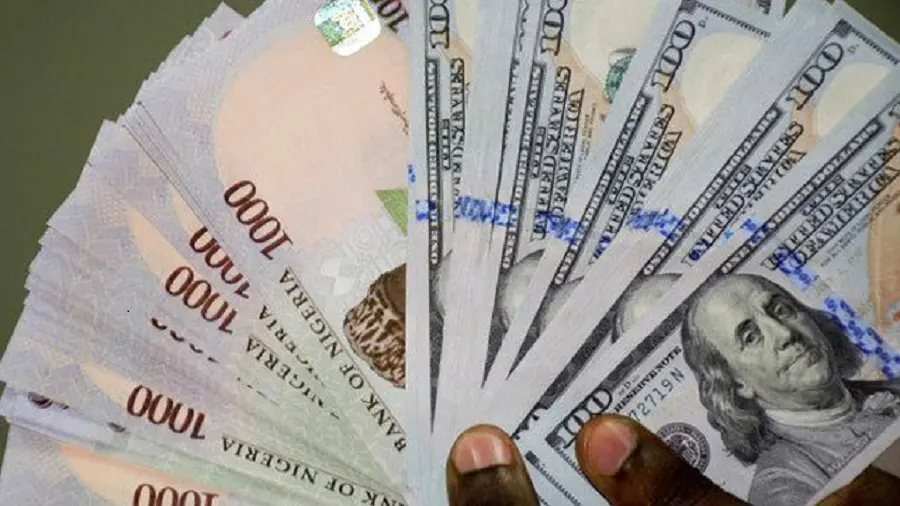
Black Market Dollar To Naira Exchange Rate Today 8th September 2026
Dollar To Naira Exchange Rate Today 27 January 2023(Black Market)
The Black Market Dollar-to-Naira Exchange Rate for 8th September 2026 Can Be Accessed Below.
NOTE: The exchange rate changes hourly. It depends on the volume of dollars available and the Demand. This means…you can buy or sell 1 dollar at a certain rate, and the price can change (high or low) within hours.
The official naira black market exchange rate in Nigeria today, including the Black Market rates, Bureau De Change (BDC), and CBN rates.
The exchange rate fluctuates hourly based on the supply and demand of dollars in the market.
What’s the dollar to naira black market today, 8th September 2026?
The exchange rate for a dollar to naira at Lagos Parallel Market (Black Market) players sell a dollar for ₦1405 and buy at ₦1395 on Tuesday, 8th September, 2026, according to sources at Bureau De Change (BDC).
Please note that the Central Bank of Nigeria (CBN) does not recognize the parallel market (black market), as it has directed individuals who want to engage in Forex to approach their respective banks.
Dollar to Naira Black Market Rate Today
Dollar to Naira (USD to NGN) Black Market Exchange Rate Today
Selling Rate ₦1405
Buying Rate ₦1395
Dollar to Naira CBN Rate Today
Dollar to Naira (USD to NGN) CBN Rate Today
Highest Rate ₦1320
Lowest Rate ₦1326
-
News22 hours agoTinubu Is Beatable in 2027, I Know Him Well — Makinde’s Running Mate, Daura
-
News20 hours agoAlleged defamation: El-Rufai’s lawyers demand ₦10bn from Defence minister, Musa
-
News21 hours agoFormer Lagos Banker Sentenced to Death for Husband’s Murder and Mutilation
-
News22 hours agoCrocodile Handler Dies After Being Mauled at Papua New Guinea Wildlife Park
-
News20 hours agoSad! Newborn Reportedly Dies After Mom Allegedly Refuses Breastfeeding Over Unfulfilled ‘Push Gift’
-
Education13 hours agoBenue Bans Phones, Extra Lessons In Schools, Warns Parents Against Abusing Teachers
-
News20 hours agoFG moves to terminate Benin-Asaba road concession over contract breaches
-
News17 hours agoTinubu Govt Tightens Foreign Travel Rules, Ministers, Security Chiefs Need SGF Clearance

Warning: Undefined variable $user_ID in /home/naijuinz/public_html/wp-content/themes/zox-news/comments.php on line 49
You must be logged in to post a comment Login