Connect with us

News

Experts Urge NASS To Ban GMO In Nigeria, Says It Is A Time Bomb

Published

on

ADVERTISEMENT
Zoom Ad
ADVERTISEMENT
Zoom Ad
…says insecurity is caused by international community
…as agric minister assures FG will protect the interest of Nigerians
By Gloria Ikibah
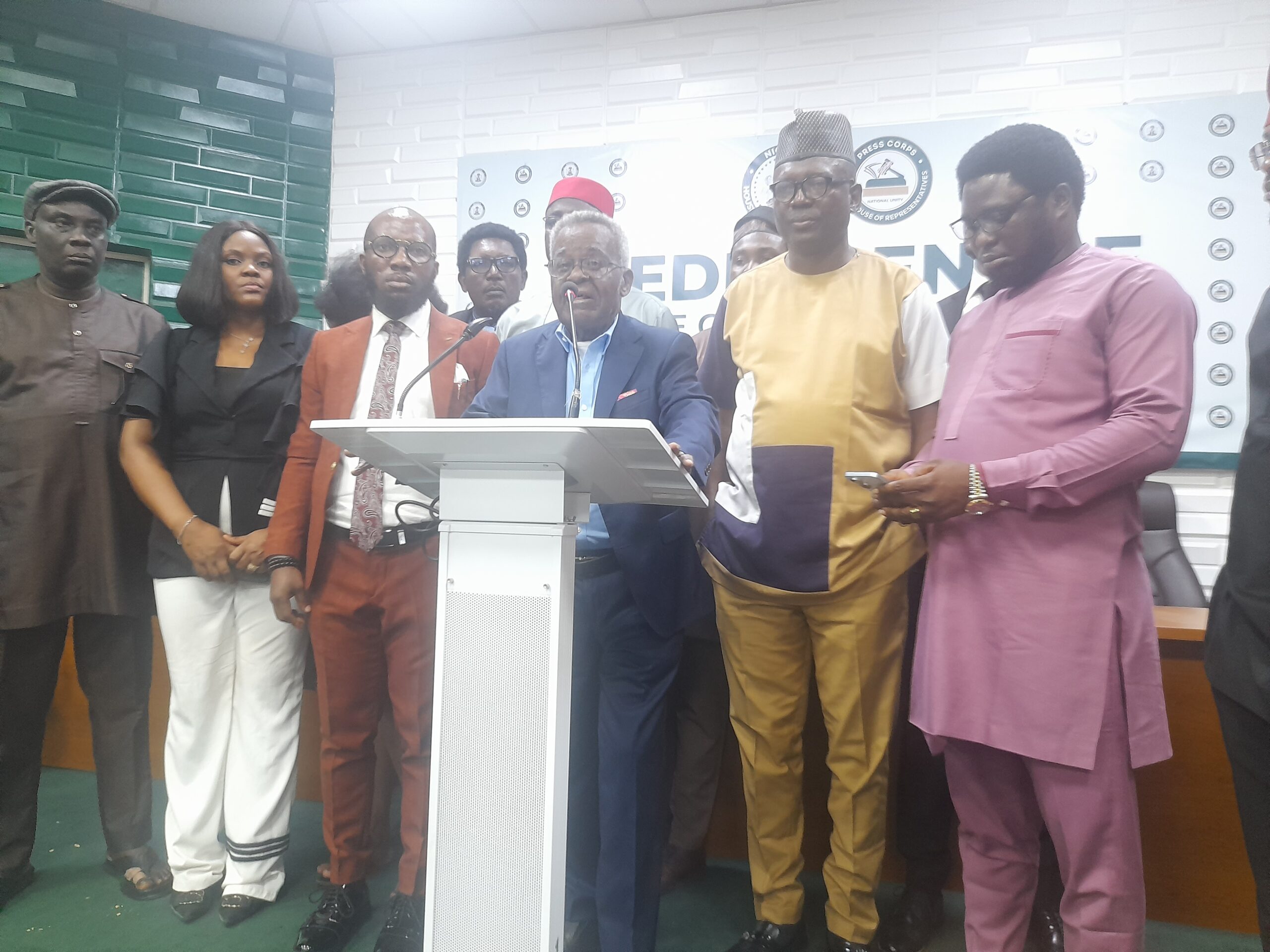
A group of experts known as the “GMO-Free Nigeria Alliance” which comprises of over 200 individuals and groups including farmers, civil society, scientists/researchers, nutritionists, legal practitioners, medical practitioners, women and youth groups have raised alarm on the negative effects of Genetically Modified Organisms on Nigeria food system, human and environmental health.
The group which urged members of the National Assembly to place a ban on GMOs in the country stating that external forces who are behind the introduction of GMOs in Nigeria have fueled insecurity.
The group which  represents millions of the Nigerian people with a share common concern disclosed this during a public hearing by the House Committee on Agricultural Production on genetically Modified Organisms (GMOs).
One of the consultant to the group, Johnson Ekpere presenting their memorandum to the Commitee said that government must take it as a personal responsibility to immediately declare a policy of no to GMO and GMO distribution and circulation in Nigeria should be halted.
He said: “We would like to see in the interim, while the argument is even going on, a national moratorium declared that even if they are not convinced that the adverse effects which majority of the experts have spoken eloquently to are obvious, even if they still want to go ahead with the investigation, pending when they reach a conclusion, GMO distribution and circulation in Nigeria should be halted.
“Because there is not a perception that you can do to Nigerians whatever you want to do and nothing will happen. And that explains some of the institutional arrogance that we witness today. To the point that someone was so audacious to say it is better to eat and die than not to eat and die.
“While we recognise the governments efforts at improving food security in Nigeria, the adoption of GMOs as a silver bullet to agricultural challenges is an error. Continuing this path holds serious implications on Nigeria’s food sovereignty, on our biodiversity/environmental sustain-ability, and on our health.
“We recommend a wholistic approach to these problems – one that addresses the root causes, ensures food security/food sovereignty, empowers the small holder farmers who are the mainstay of Nigeria’s agriculture system and builds biodiversity and overall environmental resilience.
“This Memorandum calls on the Nigerian National Assembly to ban GMOs in Nigeria and to instead, invest in Agroecology comprising of Organic Agriculture, Regenerative Agriculture, Agroforestry and other practices that are proven to be able to transform the Nigerian Food system to sustain-ability.
“GMOs do not Improve Productivity
In September 2024 the National Cotton Association of Nigeria (NACOTAN) reported that they “did not record any significant increase in their yields compared to the local seed varieties but instead, since the introduction of GM cotton seeds during the 2020/2021 farming season, yield per hectare has remained almost the same.
“They also reported that no other plant has been able to germinate on the farmlands where the GM seeds were planted, even after four years. Across the country, farmers have complained that with GMOs, productivity reduces in the second planting season, meaning farmers cannot replant these seeds but have to continuously purchase the seeds every new season.
“While some GMOs are designed to have increased levels of some nutrients, studies have revealed that other essential nutrients or functions can be reduced in the process. An in-depth scientific comparison of GM crops and their non-GM varieties shows that the assumption of substantial equivalence is false, as unexpected differences has been found. Examples include that GM soy had 12–14% lower amounts of isoflavones than non-GM soy; GM soy had 27% higher levels of a major allergen, trypsin-inhibitor, than the non-GM parent variety.
“Burkina Faso, in 2016 phased out GM Cotton because it produced a poor quality lint which fetched low prices for the farmers and amounted to millions of dollars of losses. The same variety was approved for commercial release in Nigeria, that same year.
“Nigerians’ Right to Safe Food
Decisions made by the government should be in the interest of the Nigerian people. Since this year, 2024, there has been increased demands from the Nigerian people in online media and several other fora for a ban on GMOs.
” Nigerians do not want this technology in our food and the government’s persistent approval of GMOs, means a total disregard for the rights of the people and exposes the vested interest in this technology.
“GMOs are not currently being labeled in Nigeria. Although this is important, it is not a realistic practice considering of socio-economic context; with food mostly sold in basins in open markets and in processed forms.
“Additionally, Nigerians are consuming imported processed foods bought from supermarkets without any idea that they are made from the genetically modified organisms (GMOs). The manner in which these items are imported into the country calls for serious concern” he stated.
Briefing Journalist on the aftermath of the hearing, Executive Director Center for Food Safety and Agriculture Research, Qrisstuberg Amua said international forces were reason behind insecurity in Nigeria .
He said: “From Benue State, a food basket that is becoming empty, not because Benue people are not producing food, not because they don’t have GMOs, it’s because ethnic and foreign interests have successfully, and I’m saying this boldly to the media and to Nigerians, because I’m a researcher, ethnic interests that are interested in marketing, dumping GMOs, which are agents of mass destruction. These are biological weapons. I’m a professor of bioinorganic chemistry.
“They are pushing insecurity on our nation, sponsoring it clandestinely, and I challenge the national security apparatus to look deeply into, investigate into why our farmers can’t go to farms, only to create a scenario of hunger to advertise genetically modified poisons.
“In agriculture, they are gain-of-function research outcomes. That means these transgenes, they are transgenic, can be manipulated to do exactly what they have been manipulated to do. Number one, whereas our grandparents were having children, our mothers were having children, 11, 12, 13, today, young Nigerian girls marry, and they are jumping from one fertility clinic to another, struggling to get pregnant”.
Also speaking earlier at the hearing, Minister of Agriculture and food security Sen Abubakar Kyari said the federal government would not in any way promote anything that would endanger the people .
“The government would not deliberately bring what is poisonous to the people . This forum is meant for searing ideas from the GMOs experts to find a level plane  field  for food security.
“There are seed councils and regulatory bodies, res rich institute in charge of checkmating seedlings used by farmers hence the need for a collaborative effort”, he stated.

Continue Reading
Advertisement
Click to comment

Warning: Undefined variable $user_ID in /home/naijuinz/public_html/wp-content/themes/zox-news/comments.php on line 49

You must be logged in to post a comment Login

Leave a Reply

News

AAU Celebrates Excellence: Olotu Akpodiete,VC Omonzejie Among Distinguished Awardees

Published

on

ADVERTISEMENT
Zoom Ad
ADVERTISEMENT
Zoom Ad


The Faculty of Physical Sciences, Ambrose Alli University, Ekpoma on Tuesday honoured Hon. Dr. Olotu Otemu Akpodiete, JP with a Special Award of Recognition as a Distinguished Alumnus.

Dr. Akpodiete, who is the Executive Director of the Olotu & Ekuogbe Rowland Akpodiete Foundation, OERAF, and immediate past President of Explorers Innovative Initiative, EII, received the award during the faculty’s 3rd Annual International Conference and Exhibition.
The conference was themed _“Uniting Physical Sciences for Innovation.”_

Welcoming guests, the Dean of the Faculty, Prof. F.O. Ikpotokin, commended alumni and stakeholders for their contributions to teaching, research, and infrastructural development in the department.
The Vice Chancellor, Prof. Eunice E. Omonzejie, in her opening address, congratulated the awardees, students and faculty management for upholding the institution’s tradition of excellence.

Advertisement

The keynote lecture was delivered by Prof. Daniel Okuonghae, while lead papers were presented by Prof. Mrs. Susan and Dr. Sunny Okosun.

Receiving the award, an elated Dr. Akpodiete described it as _“the best award so far I have received.”_ He dedicated the honour to members of EII for their _“unwavering support to the department in the last four years.”_

Highlighting his impact, Dr. Akpodiete said OERAF under his leadership has among others;
– Enrolled over 500 residents into the Delta State Contributory Health Insurance Scheme
– Been recognized as a Health Insurance Ambassador by Governor Sheriff Oborevwori
– Provided scholarships and cash awards to students of Delta State University, Oleh Campus and Government College, Ughelli
– Offered grants, training and support to over 100 widows, elderly women and young entrepreneurs
– Conducted security training for community leaders and vigilantes in Ughelli North and South
– Medical outreach across Ughelli North South and Udu Federal Constituency
– Support sports development across Delta State
– Water projects in Ughelli South

He also noted EII’s contributions to AAU, which include the donation of a mobile sound system, Physics and Geophysics textbooks, cash grants to students, as well as awards to the school management, Dean and lecturers during the annual Explorers Day.

Advertisement

Other recipients of the Special Award of Recognition were Hon. Odinigwe Odogi, Dr. Oluwashina Aladejubelo, Prof. Eunice Omonzejie and Mrs. Gladys Edoigiawerie.

The Chairman of the Local Organising Committee, Prof. Omi Ujuanbi, gave the vote of thanks. He appreciated participants, guests and sponsors for the success of the conference.

Continue Reading

News

Fayose To Be Inugurared REA Chairman Tomorrow (Photos)

Published

on

ADVERTISEMENT
Zoom Ad
ADVERTISEMENT
Zoom Ad


…Meets Minister of Power

Ahead of his inauguration as the Chairman of the Board of the Rural Electrification Agency (REA), former Ekiti State Governor, Ayo Fayose, has met with the Minister of Power, Joseph Olasunkanmi Tegbe.

The REA Board is billed to be inaugurated 10am tomorrow, Friday, August 7, 2026, at the Maitama, Abuja, office of the Ministry of Power.

Advertisement

It should be recalled that President Bola Tinubu had appointed Fayose as Chairman of the REA.

The Presidency said Fayose would head the REA board alongside Alhaji Ahmadu Abubakar and Engineer Ilyasu Ibrahim Makinta as members and non-executive directors, while the incumbent Director General of the agency, Abba Abubakar Aliyu, and three executive directors previously appointed will make up the remaining board members.

In preparation for the inauguration, Fayose met the Minister of Power in his office today, a meeting he said centered on plans to ensure greater effectiveness of the REA.

“I met with the Minister of Power, Engr Joseph Olasunkanmi Tegbe, today, and we had fruitful discussions,” Fayose said.

Advertisement
Continue Reading

News

State House Disowns PFIPC Budget Request as Reps Uncover Fresh Discrepancies

Published

on

ADVERTISEMENT
Zoom Ad
ADVERTISEMENT
Zoom Ad

…as FRSC defend issuance of official number plates, say documents appeared authentic

By Gloria Ikibah

The House of Representatives Ad-hoc Committee investigating the controversial Presidential Foreign Investment Promotion Council (PFIPC) on Thursday uncovered fresh contradictions in the alleged establishment of the body after the State House denied ever requesting a budget code for the council or having any knowledge of its existence.

The development came as the Federal Road Safety Corps (FRSC) defended its decision to issue seven official Federal Government number plates to the purported agency, insisting that it followed due process based on documents and representations it believed to be genuine at the time.

Advertisement

The committee, chaired by Rep. Yusuf Gagdi, is investigating the circumstances surrounding the alleged fraudulent establishment of the PFIPC and its reported inclusion in the Federal Government’s budget framework.

Representing the Permanent Secretary of the State House, Director of Administration, Abdulkadri Idris, told the committee that the Presidency never wrote to the Office of the Accountant-General of the Federation (OAGF) requesting a budget code for the council.

“I want to state that we did not send any correspondence nor any request to the Office of the Accountant-General in respect of this council. We don’t even know anything about this council. We never heard about this council until we started seeing it in the media,” he said.

Idris also rejected documents before the committee which purportedly originated from the State House, describing them as fake.

Advertisement

He explained that one of the letters was allegedly signed by an individual identified as “Akande Adewale”, described as Director of Administration and Support Services, a designation he said had never existed in the Presidency.

“I presented the list of Directors of Administration in the State House from 2003 to date, and there was no name resembling Akande Adewale.

“In addition, there is no department known as Directorate of Administration and Support Services in the State House. We have only the Department of Administration. Akande Adewale has never, ever been Director of Administration in the State House,” he said.

To support its position, the State House submitted official records previously forwarded to the Nigeria Police National Cybercrime Centre, including the list of past Directors of Administration and authentic State House letterheads.

Advertisement

Reacting to the testimony, Committee Chairman Yusuf Gagdi said the evidence exposed glaring inconsistencies between documents obtained from the Accountant-General’s Office and records from the Presidency.

“The State House has denied that it ever wrote any letter to the Accountant-General requesting for budget codes. Secondly, there is no Directorate of Administration and Support Services as contained in those documents.

“The Accountant-General responded to an office that the State House says does not exist, while the name of the signatory, Akande Adewale, is absent from all official records submitted to this committee,” Gagdi said.

He described the revelations as a significant breakthrough in the committee’s effort to determine how official government processes were allegedly manipulated.

Advertisement

The State House also denied issuing any appointment letter to the purported Director-General of the PFIPC, explaining that appointments of Directors-General are political appointments communicated through the Office of the Secretary to the Government of the Federation (SGF).

“If the President approves any appointment, the conveyance is done by the Office of the Secretary to the Government of the Federation,” Idris added.

In a memorandum dated August 6, 2026, and signed by the Corps Marshal, Shehu Mohammed, the FRSC explained how seven official Federal Government number plates were issued to the PFIPC.

Mohammed said the Corps remained committed to professionalism, transparency and strict compliance with established procedures in processing requests for official government vehicle registration.

Advertisement

He explained that every ministry, department or agency seeking official number plates must submit a formal application, which is verified through the head of the requesting institution, while newly created agencies are expected to provide their enabling law or other legal instruments.

According to him, because the PFIPC claimed to be a newly established federal agency, the FRSC subjected its request to additional scrutiny.

The Corps Marshal said the application process began with a letter dated April 4, 2025, signed by Prince Adeniyi Adeyemi on behalf of the Presidential Economic Advisory Council/Presidential Foreign Investment Promotion Council, requesting official government number plates.

A follow-up reminder dated April 11, 2025, was later received, accompanied by documents outlining the council’s mandate and a schedule of vehicles for registration.

Advertisement

Mohammed disclosed that Adeyemi personally delivered the request to the FRSC headquarters.

He added that officers also visited the website provided by the applicant, which carried a Federal Government domain name and listed several senior government officials as members of the council’s governing board.

The Corps further carried out a physical inspection of the office located at the Federal Secretariat Complex, Phase III, Second Floor, Central Business District, Abuja, where officials found the office fully operational.

“Having completed the foregoing verification processes and being satisfied with the information presented, the Corps approved and allocated seven Official Federal Government Vehicle Number Plates to the Agency,” Mohammed said.

Advertisement

The vehicles included a 2024 bulletproof Lexus LX, two Toyota Land Cruiser Sport Utility Vehicles and four Toyota Hilux vehicles, which were assigned official registration numbers ranging from PFIPC 01 to PFIPC 07 after verification of their chassis numbers.

Mohammed, however, said the Corps was later taken aback when it became clear that the PFIPC was not a recognised Federal Government agency.

“It therefore came as a profound shock to the Corps when it subsequently emerged that the Presidential Foreign Investment Promotion Council was not an approved Federal Government Agency and that the representations made by Prince Adeniyi Adeyemi were false,” he stated.

He disclosed that the FRSC had already begun the process of retrieving the seven official number plates issued to the agency and had strengthened its internal verification procedures to prevent a recurrence.

Advertisement

During the hearing, Gagdi questioned aspects of the verification process after observing that the documents relied upon by the Corps lacked standard Federal Government security features and unusually listed President Bola Ahmed Tinubu, the Secretary to the Government of the Federation, the Head of the Civil Service of the Federation and several serving ministers as members of the council’s governing board.

“Does this look normal to you?” Gagdi asked.

Responding, the Corps Marshal admitted: “No, not at all.”
He nevertheless maintained that the Corps acted based on the information available at the time, including the existence of an operational office, official-looking documents, a government-domain website and successful verification of the vehicles presented for registration.

The committee subsequently directed the FRSC to provide the current status and location of all vehicles registered under the PFIPC as investigations continue.

Advertisement

Gagdi also announced that the committee will conclude its investigation next Wednesday, directing the committee clerk to invite all relevant agencies to appear for the final phase of the inquiry.

Continue Reading

Trending

Copyright © 2024 Naija Blitz News