Connect with us

News

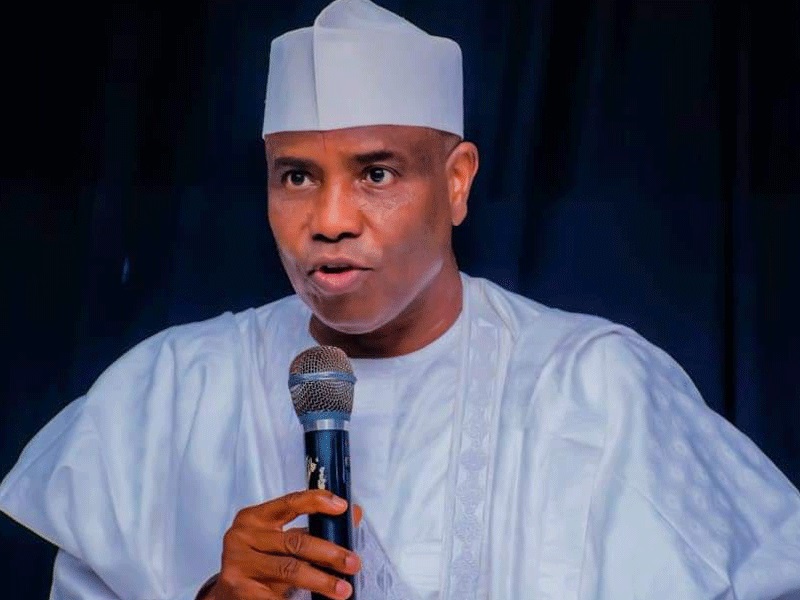
Tinubu’s tax reform bill ill-timed, says Tambuwal

Published

on

ADVERTISEMENT
Zoom Ad
ADVERTISEMENT
Zoom Ad

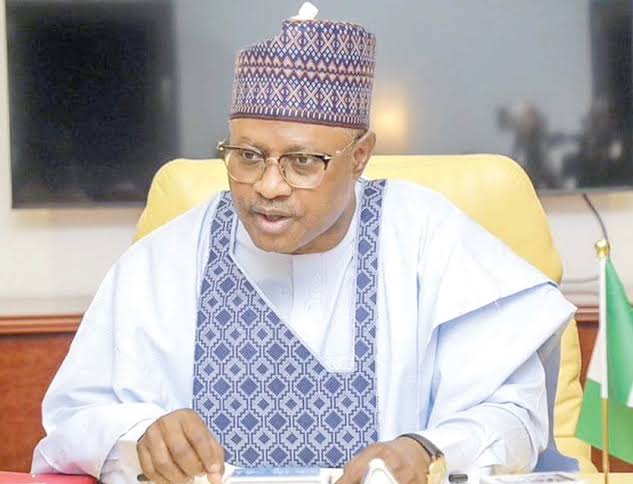
Former Governor of Sokoto State and Senator representing Sokoto South, Aminu Tambuwal, has criticised President Bola Tinubu’s proposed tax reform bill, describing its timing as inappropriate given the economic challenges being faced by Nigerians.


Tambuwal expressed his views on Sunday while distributing relief materials to flood victims and handing out starter packs to over 1,000 beneficiaries of a skills acquisition programme in his senatorial district.

Speaking at the event, he said, “Let me use the opportunity of this platform to address the issue that is raging for now, the issue of tax reform as presented by President Bola Tinubu.

“I believe this is a wrong time for any upward review of either VAT or any form of tax, the time is inauspicious, the time is very wrong.

Advertisement

“These are hard times for the people of Nigeria and what they are going through. What we require of the government is for it to focus on projects and programmes that will bring succour and relief to the people and not to increase their hardship.

“Already, we are facing hardship as occasioned by the devaluation of the naira and removal of fuel subsidy that was done by this regime; I believe we should focus on managing the hardship and see how we can bring our people out of hardship.

“The recent statistics of Nigerian Bureau of Statistics shows that over 30 million Nigerians are already in abject poverty ”

While in Shagari, the senator, in collaboration with the National Emergency Management Agency, distributed relief materials to over a thousand households victims of flooding and other natural disasters

Advertisement

Additionally, in Bodinga, the senator partnered with the National Directorate of Employment to provide skills training to over 1,000 youths in various fields.


News

Oborevwori Urges Investors To Explore Opportunities Beyond Oil

Published

on

By

ADVERTISEMENT
Zoom Ad
ADVERTISEMENT
Zoom Ad

Delta State Governor, Rt. Hon. Sheriff Oborevwori, has called for a shift away from over-reliance on oil revenue, urging both local and foreign investors to take advantage of opportunities in agriculture, energy, transportation, the blue economy, solid minerals and digital innovation.

Speaking at the close of the second day of the 2026 Delta State Economic and Investment Summit in Asaba, the governor said the state must broaden its economic base to achieve sustainable growth, create jobs and improve living standards.

He said discussions at the summit highlighted Delta State’s vast but largely untapped potential across several non-oil sectors, including agriculture and livestock, energy, transportation, the blue economy, solid minerals, digital innovation and investment-friendly legal reforms.

“We can no longer depend on one source of revenue. We must diversify our economy by attracting strategic investments into sectors where Delta State has a clear comparative advantage. That is the pathway to creating jobs, growing businesses and improving the quality of life of our people,” Oborevwori said.

Advertisement

The governor explained that the summit was designed as a private sector-led initiative, with government playing the role of facilitator by connecting investors with viable opportunities capable of delivering long-term value.

He reaffirmed his administration’s commitment to creating a conducive business environment through investor-friendly policies, infrastructure development, improved security and stronger collaboration with the private sector.

Oborevwori also disclosed that the state had acquired suitable land and taken other strategic measures to attract investments into priority sectors. He added that investment promotion missions had already been conducted in countries including China and Brazil to market Delta’s economic opportunities.

According to him, the summit has gone beyond policy discussions to become a practical platform for linking investors with viable projects and converting investment interests into real business ventures.

Advertisement

He expressed confidence that the partnerships and commitments made during the summit would translate into concrete investments capable of driving industrial growth, generating employment and positioning Delta among Nigeria’s leading investment destinations.

During the technical sessions, resource persons identified agriculture, livestock development, mining, the blue economy and investment-friendly legal reforms as key sectors with strong potential to attract long-term investments.

Speaking at the agriculture, agribusiness and agro-industry panel, former South-South Vice President of the Poultry Association of Nigeria (PAN), Chief Eta Enahoro, urged the state government to invest more in fish and poultry production, describing both industries as major drivers of job creation and economic transformation.

He said that with the right support, many young people seeking political appointments could become successful entrepreneurs through commercial poultry and fish farming.

Advertisement

Brazilian agribusiness investor Roberto Fonseca announced plans to collaborate with the Delta State Government on an integrated cattle and beef value chain covering breeding, ranching, abattoirs, meat processing, cold storage, refrigerated logistics and distribution.

Fonseca said Delta’s climate and environmental conditions closely resemble those that helped Brazil become a global leader in cattle and beef production, adding that the partnership could position the state as a major livestock hub for Nigeria and neighbouring African countries.

At the session on the blue economy and transport infrastructure, Dr. Uche Igwe called on the state government to tackle illegal and unregulated fishing in order to maximise the economic potential of its waterways.

Managing Director of Mosra Energy, Ramos Olukayode, disclosed that Delta State has more than 200 million tonnes of coal deposits in Obomkpa, Ugbodu and Ukunzu, which he said exceed the reserves found in Enugu and Kogi states.

Advertisement

He described the deposits as a significant resource that could support industrial expansion and revealed plans to establish a 600-megawatt power plant in Obomkpa, noting that more than 200 hectares of land had already been secured for the project.

Olukayode added that the area also has substantial deposits of kaolin and clay that could support manufacturing activities within the proposed industrial cluster.

Continue Reading

News

Nigeria seeks closer ECOWAS, Sahel ties to fight terrorism

Published

on

By

ADVERTISEMENT
Zoom Ad
ADVERTISEMENT
Zoom Ad

Nigeria’s Minister of Defence, Christopher Musa, has called for stronger security cooperation between the Economic Community of West African States and the Alliance of Sahel States to combat terrorism, insurgency and transnational crimes across the region.

Musa made the call on Tuesday during a three-day working visit to Cotonou, Benin Republic, where he is holding talks aimed at harmonising regional defence strategies and strengthening security cooperation.

According to a statement by his media aide, Leah Katung-Babatunde, the minister said West Africa’s complex security challenges required an inclusive and coordinated regional response.

He urged the leadership of ECOWAS and the Alliance of Sahel States to find common ground to curb the spread of insurgency across land borders and improve maritime security in the Gulf of Guinea.

Advertisement

“There is a need for a unified security alliance between the ECOWAS and the Alliance of Sahel States to defeat terrorism, dismantle cross-border criminal networks, and restore regional stability. ECOWAS and AES leadership should find a common ground to insulate land borders from insurgent spillover and strengthen maritime security along the Gulf of Guinea., ” he was quoted as saying.

Musa who was received at Cotonou International Airport by Benin’s Minister of National Defence, Gildas Agonkan.

Agonkan commended Nigeria for what he described as its leadership role in promoting peace and stability in West Africa, citing the country’s interventions in support of democratic governance in the sub-region.

He also praised the performance of the Nigerian Army contingent that participated in Benin’s National Day parade on August 1, describing Nigeria as an indispensable partner in the fight against transnational crime.

Advertisement

During the visit, Musa met with Nigerian troops stationed at Togbin, where he conveyed President Bola Tinubu’s commitment to improving troop welfare, enhancing operational effectiveness and strengthening the capacity of the armed forces.

The minister also visited the Nigeria House in Cotonou, where he was received by Nigeria’s Ambassador to Benin Republic, Mopelola Ibrahim.

The ambassador said Nigeria’s diplomatic engagement with Benin remained focused on expanding bilateral trade and strengthening joint border surveillance to tackle emerging security threats.

The Alliance of Sahel States comprises Burkina Faso, Mali and Niger, three military-led countries that withdrew from ECOWAS after disagreements with the regional bloc over sanctions and the timeline for returning to civilian rule.

Advertisement

The three countries formally exited ECOWAS on January 29, 2025, and have since deepened military, political and economic cooperation under the AES framework.

Despite their political differences, both blocs face common security threats, including terrorism, violent extremism, insurgency, arms trafficking and other cross-border crimes, particularly in the Sahel and the Gulf of Guinea.

Continue Reading

News

FG orders varsities to dismiss students involved in kidnapping

Published

on

By

ADVERTISEMENT
Zoom Ad
ADVERTISEMENT
Zoom Ad

The Federal Government has directed vice chancellors, rectors and provosts of tertiary institutions across the country to dismiss any student found culpable, after due investigation, of involvement in kidnapping or related criminal activities.

Minister of Education, Dr.Tunji Alausa, issued the directive during a meeting with the Pro-Chancellor, Governing Council and Management of the Federal University of Lafia (FULafia) in Abuja.

He also ordered heads of tertiary institutions to strengthen internal intelligence systems and deepen collaboration with the Department of State Services (DSS) and other security agencies to improve campus safety.

Alausa said the directive followed concerns over reports that some students were allegedly involved in kidnapping operations carried out outside their campuses, stressing that tertiary institutions must not become safe havens for criminal elements.

Advertisement

“If you tolerate bad behaviour for too long, it becomes a culture. Any student found culpable, after due investigation, of planning or participating in the kidnapping of fellow students has no place in our tertiary institutions. Such individuals must be dismissed. Our campuses must never become safe havens for criminal elements,” the minister said.

While noting that Nigeria’s universities, polytechnics and colleges of education remain largely safe, Alausa said recent isolated incidents involving students outside campuses underscored the need for stronger intelligence gathering and closer collaboration with security agencies.

He disclosed that he recently met with the Minister of Defence, General Christopher Musa (retd.), to develop a coordinated strategy aimed at strengthening the Safe Schools Initiative and improving the protection of learners across the country.

The minister also reiterated President Bola Tinubu’s directive that no government institution should negotiate with or pay ransom to kidnappers, warning that such actions only embolden criminal groups and undermine efforts to tackle insecurity.

Advertisement

Beyond disciplinary measures, Alausa directed governing councils and managements of tertiary institutions to establish effective internal intelligence mechanisms, maintain close ties with the DSS and other security agencies, and promptly address threats to the safety of students and staff.

He announced that the Federal Government would support security enhancement projects in tertiary institutions through the 2027 intervention programme of the Tertiary Education Trust Fund (TETFund), including perimeter fencing and other critical security infrastructure. Institutions were urged to submit proposals early for consideration.

The minister also reaffirmed the government’s commitment to expanding the Energising Education Programme in collaboration with the Federal Ministry of Power to improve electricity supply to tertiary institutions through additional solar generation and battery storage.

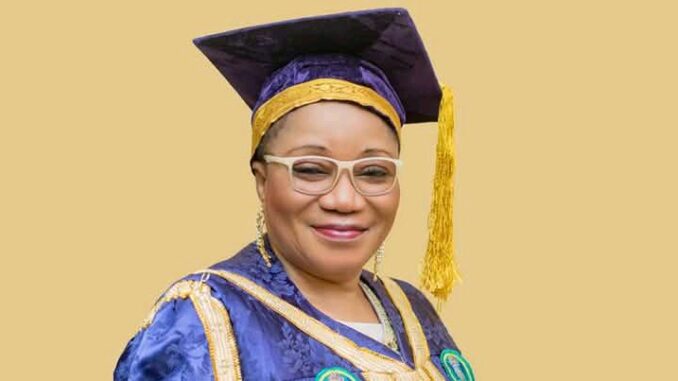
Earlier, the Pro-Chancellor of the Federal University of Lafia, Lola Akande, commended the Federal Government for its support to the institution but identified student accommodation, electricity supply to the university’s second campus and insecurity as major challenges.

Advertisement

She disclosed that some students of the university were suspected to have been involved in kidnapping activities carried out off campus, adding that the institution strongly opposed the payment of ransom, saying it would only encourage more criminality.

The Vice-Chancellor of the university, Prof. Mohammed Isa Kida, also praised the minister’s reforms in the education sector and appealed for the extension of the Energising Education Programme to the institution’s second campus, as well as additional office accommodation and staffing support.

Continue Reading

Trending

Copyright © 2024 Naija Blitz News