News
Finally, Iran releases Nobel Laureate Narges Mohammadi on medical grounds
- /home/naijuinz/public_html/wp-content/plugins/mvp-social-buttons/mvp-social-buttons.php on line 27
https://naijablitznews.com/wp-content/uploads/2024/12/Screenshot_20241204-160539-750x519-1.jpg&description=Finally, Iran releases Nobel Laureate Narges Mohammadi on medical grounds', 'pinterestShare', 'width=750,height=350'); return false;" title="Pin This Post">
- Share
- Tweet /home/naijuinz/public_html/wp-content/plugins/mvp-social-buttons/mvp-social-buttons.php on line 72
https://naijablitznews.com/wp-content/uploads/2024/12/Screenshot_20241204-160539-750x519-1.jpg&description=Finally, Iran releases Nobel Laureate Narges Mohammadi on medical grounds', 'pinterestShare', 'width=750,height=350'); return false;" title="Pin This Post">
Iran has released Nobel Peace laureate Narges Mohammadi, jailed since November 2021, for three weeks on medical grounds.

Mohammadi’s lawyer posted on social media.
Over the past quarter century, Mohammadi, 52, has been repeatedly tried and jailed for her vocal campaigning against Iran’s widespread use of capital punishment and its mandatory dress code for women.

“Based on the advice of the examining doctor, the public prosecutor suspended the jail sentence against Narges Mohammadi for three weeks and she was released from prison,” Mostafa Nili said on X.
“The grounds for her release are her physical condition after the removal of a tumour and a bone graft three weeks ago.
“The tumour was benign but she needs check-ups every three months.”
Mohammadi’s family and supporters swiftly put out a statement protesting that the three weeks’ medical leave was not enough.
“A 21-day suspension of Narges Mohammadi’s sentence is inadequate. We demand Narges Mohammadi’s immediate and unconditional release or at least an extension of her leave to three months.
“The denial of proper medical care and sufficient recovery time post-surgery has led to the rapid development of bedsores and intensified pain in her back and legs,” they said in a statement.
Mohammadi has spent much of the past decade behind bars and has not seen her twin children, who live in Paris, since 2015.
She is serving her sentence in the women’s section of the capital’s notorious Evin prison with around 50 other inmates, according to her husband Taghi Rahmani.
In June, she was sentenced to an additional year behind bars for “propaganda against the state”.
She refused to appear in court for the trial after her request for it to be held in public was rejected.
Even behind bars, the Nobel laureate has not given up campaigning, staging protests in the prison yard and going on hunger strikes.
In a letter from prison in September, she condemned the “devastating oppression” of women in Iran.
The letter was published by her foundation to mark the second anniversary of the nationwide protests that followed the death in custody of Mahsa Amini, an Iranian Kurdish woman detained for an alleged breach of the dress code.
Mohammadi won the Nobel Peace Prize in 2023, primarily for her campaigning against the death penalty in Iran. Her children collected the award on her behalf as she was in prison at the time.
Human rights groups, including Amnesty International, say Iran carries out more executions each year than any other country apart from China, for which no reliable figures are available.
Born in the northwestern city of Zanjan in 1972, Mohammadi studied physics and pursued a career in engineering alongside work as a journalist for several reformist media outlets.
In the 2000s, she joined the Defenders of Human Rights Center set up by 2003 Nobel Peace Prize winner Shirin Ebadi, an organisation of which Mohammadi remains vice president.
She was jailed from May 2015 to October 2020 for “forming and leading an illegal group”, campaigning for the abolition of the death penalty in Iran.
AFP

News
Rep OK Chinda’s political network sparks across Rivers
The battle for the political soul of Rivers State gathered fresh momentum on Monday, August 3, 2026, as supporters of the former House of Representatives Minority Leader, Hon. Kingsley Chinda, activated what appears to be an early statewide mobilisation strategy, extending their campaign machinery to all 23 local government areas and ward structures ahead of the 2027 governorship election.
The development signals that while the official electioneering whistle is yet to be blown, political camps are already laying claim to the grassroots in what analysts describe as a familiar contest where influence, structure and strategic alliances often determine who eventually occupies Brick House.
The pro-Chinda support group, Our Will, announced the expansion of its political network across the state, directing its state executive members to immediately establish functional local government and ward executives capable of driving voter mobilisation before formal campaigns commence.
State Chairman of the group, King Okene, said the organisation was determined to transform Chinda’s existing political popularity into what he described as an “unstoppable electoral mandate,” insisting that every ward must become a political fortress for the lawmaker’s governorship aspiration.
According to him, the publication of the electoral timetable has effectively opened a new phase of political calculations, making early grassroots organisation a strategic necessity rather than a luxury.
“We should double our efforts to ensure we meet the targets before electioneering campaigns officially begin. Every local government and ward structure must be fully operational within the first week of August,” he charged members.
In what appeared to be a calculated attempt to frame Chinda as the political heir to a tested governance model, President-General of Our Will, Glory Wobo, declared that the federal lawmaker’s years of public service and close political association with the Minister of the Federal Capital Territory, Nyesom Wike, have adequately prepared him for the state’s highest office.
Wobo argued that leadership is cultivated through mentorship rather than chance, maintaining that Chinda’s political apprenticeship under Wike – combined with his experience as commissioner and long-serving legislator – has equipped him with the administrative depth required to govern Rivers State.
He cited ongoing infrastructure renewal in the Federal Capital Territory as evidence of the leadership tradition from which Chinda emerged, suggesting that effective governance leaves measurable footprints rather than campaign slogans.
According to Wobo, Chinda enjoys goodwill that cuts across political parties, ethnic groups and religious divides, describing the lawmaker as a consensus figure whose appeal extends beyond partisan politics into credibility, accessibility and public service.
The latest mobilisation drive underscores the intensifying political chess game ahead of the 2027 governorship election, where aspirants are increasingly investing in grassroots structures long before formal campaigns begin.
With support groups already deploying ward-by-ward political architecture and competing camps quietly consolidating influence, Rivers State is once again demonstrating that, in Nigerian politics, the contest for power often begins long before the first ballot is printed.
News
NBC files fresh appeal, justifies N5m fine regime for broadcasters
The National Broadcasting Commission (NBC) has filed an application seeking the permission of the court of appeal to file a fresh appeal against the judgement of the federal high court in Abuja barring it from imposing N5 million fines on erring broadcast stations.
In the application filed at the court of appeal in Abuja by Dapo Akinosun, counsel to the NBC, the commission argued sanity in Nigeria’s broadcasting sector is under threat and that the public interest would be better served if the court grants the application.
In the application, the NBC urged the court to grant it leave to raise and argue a fresh issue on appeal relating to the legal capacity of MRA to institute and maintain the original suit before the lower court.
The commission argued that the defect in the earlier notice of appeal, which resulted in the dismissal of its appeal, arose “solely from an inadvertent misdescription” of its name by its lawyer.
The NBC told the court that the subsisting judgement raises questions on the commission’s statutory powers to regulate broadcasting and enforce compliance with broadcasting standards in Nigeria.
The commission argued that the subsisting judgment is capable of creating uncertainty regarding its regulatory powers if it is allowed to stand.
The NBC also argued that without the pronouncement by the appellate court on the issues raised in the appeal, its regulatory framework would be weakened.
“A weakened regulatory framework may embolden non-compliance with established broadcasting standards, thereby increasing the dissemination of false, misleading and unverified information capable of causing unnecessary public anxiety, panic and social unrest,” the NBC said.
“Absence of effective regulatory oversight may further encourage irresponsible broadcasting practices and the misuse of broadcast and digital media platforms by persons who deliberately publish sensational, inaccurate or inflammatory content to intimidate, harass or unduly influence individuals, institutions and public discourse.”
News
Senate threatens sanctions as CBN, NUPRC, NDDC, others shun committee
The Senate’s ambitious investigation into the billions of naira in oil and gas revenues suffered a setback yesterday after several key government agencies failed to honour summons before the Senate Public Accounts Committee over issues arising from the Nigeria Extractive Industries Transparency Initiative (NEITI) audit reports.
Affected were the Central Bank of Nigeria (CBN), the Nigerian Upstream Petroleum Regulatory Commission (NUPRC) and the Niger Delta Development Commission (NDDC).
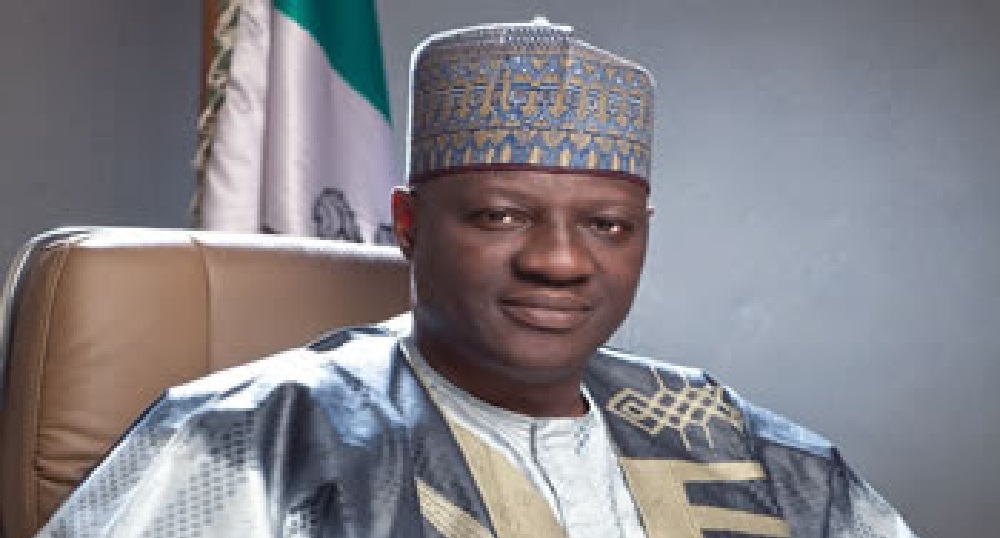
The committee, chaired by Senator Ibrahim Hassan Dankwambo (PDP, Gombe North), reacted angrily to the agencies’ absence, describing it as a blatant disregard for the National Assembly’s constitutional oversight powers and a direct affront to Nigerians who expect transparency and accountability in the management of public resources.
Yesterday’s hearing marked the commencement of a comprehensive legislative investigation into the 2021, 2022 and 2023 NEITI Oil and Gas Industry Audit Reports, a process expected to scrutinise oil sector revenues, remittances to the Federation Account, statutory financial obligations, royalty payments, regulatory compliance and the operational activities of over 60 Ministries, Departments and Agencies (MDAs), regulators, government-owned enterprises, as well as indigenous and multinational oil companies.
Despite formal invitations, public notices published in national newspapers and weeks of advance notice, the invited agencies failed to appear before the committee. Their absence forced the lawmakers to suspend the proceedings after waiting for over an hour.
Visibly displeased, members of the committee accused the agencies of treating the Senate with contempt and undermining legislative efforts to ensure accountability in one of Nigeria’s most strategic economic sectors.
Leading the criticism, Senator Babangida Hussaini described the repeated failure of government agencies to honour Senate invitations as a “recurring decimal,” arguing that such conduct erodes public confidence in democratic institutions and weakens parliamentary oversight.
According to him, the committee derives its investigative powers from the Constitution and the Senate Standing Orders, making compliance with its summons a legal obligation rather than a matter of discretion.
He lamented that lawmakers had cut short their yearly recess and constituency engagements to attend the hearing, only to discover that none of the invited agencies considered it necessary to send either their chief executives or representatives to explain their absence.
Hussaini warned that if the Senate of the Federal Republic of Nigeria could summon heads of agencies and they failed to appear without consequences, it would send the wrong message about accountability in government. He urged the committee to invoke the appropriate constitutional powers to address what he described as a disgrace to the nation.
Similarly, Senator Francis Ndubuezecriticised the agencies for failing to provide any explanation for their absence, noting that no letters were written, no excuses offered and no representatives sent to brief the committee. He argued that such conduct showed a lack of respect for the Senate and its constitutional oversight responsibilities, insisting that the integrity of the National Assembly must be protected.
Following the debate, the committee unanimously resolved to grant the defaulting agencies one final opportunity to appear before it on Thursday, August 6, 2026.
The committee also directed its secretariat to immediately communicate the resolution to all affected organisations and notify them that failure to honour the rescheduled hearing could compel the Senate to invoke its constitutional powers to enforce compliance.
MEANWHILE, the federal government has barred MDAs from awarding contracts, signing agreements, or incurring financial obligations without approved expenditure warrants and cash backing, in a move aimed at strengthening fiscal discipline and improving public financial management.
The directive, contained in a Federal Treasury Circular dated July 31, 2026, and released yesterday, introduces stricter guidelines for implementing the 2026 capital budget as the government seeks to curb the award of unfunded contracts and ensure that spending aligns with available resources.
Signed by the Accountant-General of the Federation, ShamseldeenOgunjimi, the circular was addressed to ministers, permanent secretaries, heads of extra-ministerial departments and agencies, service chiefs, the CBN Governor, the Clerk of the National Assembly, the Chief Registrar of the Supreme Court, heads of diplomatic missions and other federal institutions.
Under the new guidelines, MDAs are prohibited from issuing letters of award, signing contracts, or entering into any financial commitment unless they have first received the appropriate Warrant or Authority to Incur Expenditure (AIE) covering either the full contract value or the portion to be committed.
“In compliance with the provisions of Financial Regulations 318 and 415, respectively, no expenditure shall be incurred except on the authority of a Warrant/AIE (including employee payables),” the circular stated.
-
News21 hours agoAtiku, Obasanjo face-off may not stop until one finally dies– Shehu Sani
-
News21 hours agoKidnapped Kebbi Judge Faruku Bunza finally goes home after relaxing in abductors ‘paradise’ for one week
-
News21 hours agoTehran Denies Negotiating With US After Trump Announces Talks
-
Economy21 hours agoSee Dollar to Naira exchange rate today, August 3, 2026
-
Sports21 hours agoInfantino Could Have Earned £47m Annually From Abandoned World Cup Proposal
-
News20 hours agoINEC unveils Final list of candidates for 2027 elections, Jonathan, Nwoko, Goje, others missing
-
Education19 hours agoNYSC makes NERD clearance mandatory for corps members’ mobilisation
-
Economy20 hours agoCBN lists 5 strategies to drive next stage of Fintech growth in Nigeria

Warning: Undefined variable $user_ID in /home/naijuinz/public_html/wp-content/themes/zox-news/comments.php on line 49
You must be logged in to post a comment Login