News
Just in: FG Fires Civil Servants With Degrees From Benin Republic, Togo
- /home/naijuinz/public_html/wp-content/plugins/mvp-social-buttons/mvp-social-buttons.php on line 27
https://naijablitznews.com/wp-content/uploads/2024/10/images-55.jpeg&description=Just in: FG Fires Civil Servants With Degrees From Benin Republic, Togo', 'pinterestShare', 'width=750,height=350'); return false;" title="Pin This Post">
- Share
- Tweet /home/naijuinz/public_html/wp-content/plugins/mvp-social-buttons/mvp-social-buttons.php on line 72
https://naijablitznews.com/wp-content/uploads/2024/10/images-55.jpeg&description=Just in: FG Fires Civil Servants With Degrees From Benin Republic, Togo', 'pinterestShare', 'width=750,height=350'); return false;" title="Pin This Post">
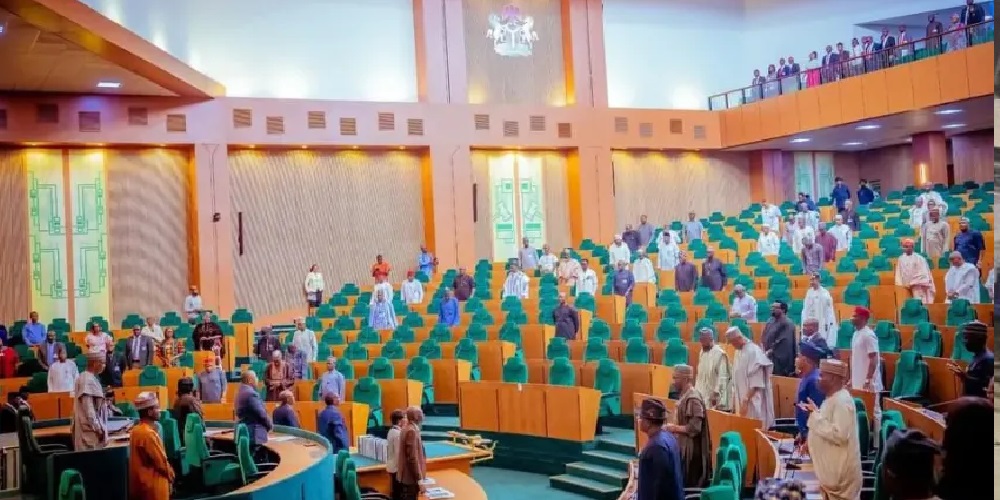
The Federal Government of Nigeria has terminated the appointments of civil servants who obtained degrees from private universities in Benin Republic and Togo between 2017 and now.

The decision stems from concerns about the credibility of degrees awarded by tertiary institutions in these countries.
Segun Imohiosen, Director of Information and Public Relations in the Office of the Secretary to the Government of the Federation (OSGF), confirmed the development on Wednesday.

This is sequel to the government’s earlier directive in August 2024, which recognized only eight accredited universities in Benin Republic and Togo as authorized to award degrees to Nigerians.
The crackdown was prompted by an undercover investigation by Daily Nigerian that revealed how a journalist obtained a degree in just two months from a university in Benin Republic and used it to enroll in the National Youth Service Corps (NYSC) program. Following the exposé, the Federal Government banned the accreditation and evaluation of degrees from institutions in both countries.
To address the issue, an Inter-Ministerial Investigative Committee on Degree Certificate Milling was set up to investigate and curb certificate racketeering. A subsequent report by the committee revealed that over 22,500 Nigerians had obtained fraudulent degrees from private universities in Benin Republic and Togo.
The former Minister of Education, Tahir Mamman, disclosed that many individuals claiming these degrees had never left Nigeria. Instead, they acquired fake certificates through racketeering networks involving both local and foreign collaborators. He noted that the fraudulent activities undermined the credibility of Nigeria’s education system.
Mamman stated, “Most of those parading the fake certificates didn’t even leave the shores of Nigeria but got their certificates through racketeering in collaboration with government officials at home and abroad. The Federal Government will ensure that all public servants with such fake certificates are removed from their positions. Private sector employers should also take similar actions.”
Although the exact number of affected workers remains unclear, sources confirmed that the OSGF had issued a directive to all Ministries, Departments, and Agencies (MDAs) to identify and terminate the appointments of employees with such questionable qualifications.
An anonymous official revealed, “There was a letter from the SGF cabinet affairs directing all ministries, departments, and agencies of government to identify and terminate the appointments of workers employed with certificates obtained from private universities in Benin Republic and Togo from 2017 to date.”
Some government agencies have already begun implementing the directive. For example, the National Youth Service Corps (NYSC) confirmed the dismissal of five staff members in compliance with the order. NYSC Director of Information, Caroline Embu, stated, “Five members of staff were affected by the directive contained in the letter from the office of the SGF. No more.”
The Federal Government’s action underscores its commitment to preserving the integrity of Nigeria’s educational and employment systems, as well as combating the proliferation of fraudulent academic qualifications.
News
Benin-Sapele Road: Umahi Apologises, Orders Arrest of Contractors Over Asphalt Removal
The Minister of Works, Senator David Umahi, has apologised to commuters, residents and businesses in Edo and Delta states over the deplorable condition of the Benin-Sapele Road, which has subjected motorists and other road users to severe hardship.
Umahi also ordered the immediate arrest of any contractor or concessionaire found removing asphalt from existing federal roads without proper authorisation, describing the practice as a destruction of public infrastructure.
The minister gave the directive on Tuesday during an inspection of major federal roads in Edo State, where he expressed deep disappointment over the condition of the Benin-Sapele and Benin-Agbor-Asaba corridors.
He said the Federal Government was concerned about the hardship being experienced by commuters and was determined to take urgent measures to restore the affected roads and ease traffic difficulties.
Umahi specifically apologised to the people of Edo and Delta states, as well as other Nigerians who use the highway.
He said: “I am very, very disappointed with this concessionaire. I offer apologies. I take full responsibility for the misdeed and for the destruction of public assets.”
The minister accused the concessionaire handling the project of lacking the technical competence, personnel and appropriate methodology required to execute the road rehabilitation effectively.
According to him, the road was in a better condition before it was handed over to the concessionaire.
Umahi disclosed that he had personally witnessed the removal of asphalt from the road during an earlier inspection conducted with the Edo State Governor, Monday Okpebholo, and had directed the contractor to stop the practice.
He said the Ministry of Works had repeatedly warned against the unauthorised removal of asphalt from federal roads, insisting that such action was contrary to government policy and amounted to the destruction of public assets.
The minister consequently directed Federal Controllers of Works across the country to ensure that any contractor or concessionaire found removing asphalt without approval was arrested.
“The Ministry of Works does not allow anybody to remove asphalt on the road. That is against the policies of the Ministry of Works,” Umahi said.
He further questioned the technical capacity and competence of the concessionaire handling the project, saying the Federal Government must ensure that companies awarded major road concessions possess the required expertise and integrity.
Umahi said the poor handling of the project had resulted in unnecessary suffering for commuters, residents and businesses along the corridor.
He, however, assured road users that the Federal Government would not allow the situation to continue indefinitely.
The minister said President Bola Tinubu was aware of the hardship caused by the condition of the road and had directed the Ministry of Works to do everything possible to restore the highway and provide relief to motorists.
He explained that although concession agreements were governed by legal and contractual provisions, the Federal Government could invoke overriding public interest where necessary to protect citizens and critical infrastructure.
Umahi also said the Federal Government would prioritise emergency intervention on the road while working towards a more permanent solution.
The minister commended youths in Edo State for remaining calm despite the prolonged hardship caused by the condition of the highway.
He said their restraint had helped prevent a possible breakdown of law and order, particularly given the frustration experienced by motorists and residents.
Umahi also praised Governor Monday Okpebholo for his intervention in the rehabilitation of federal roads across Edo State and for his commitment to infrastructure development.
Responding, Governor Okpebholo appealed to residents and youths in communities along the affected routes to remain patient and exercise restraint while the Federal Government works to address the situation.
The governor recalled the poor condition of the Benin-Ekpoma Road and said President Tinubu had responded to his appeal for the reconstruction of the road.
Okpebholo stressed the strategic importance of Edo State as a gateway linking several parts of the country, warning that prolonged disruption of movement could have wider economic and security consequences.
Concessionaire blames heavy rains
Meanwhile, the Chief Executive Officer of the concessionaire, Mr Samuel Daramola, attributed the slow pace of construction to heavy rainfall and other challenges associated with working on the busy highway.
Daramola said the company had embarked on palliative measures to keep traffic moving while construction continued.
He explained that one of the company’s initial interventions after taking over the Benin-Agbor Road was to expand sections of the highway and address the numerous potholes affecting motorists.
According to him, the company commenced palliative works because of the extent of deterioration on the road and the need to create temporary access for commuters.
The Federal Government’s latest intervention comes amid growing concerns over the condition of the Benin-Sapele-Warri corridor, a major transport route connecting communities and facilitating the movement of people and goods between Edo and Delta states.
The development has heightened calls for urgent action to prevent further economic losses and reduce the risks faced daily by motorists and commuters using the highway.
Niger Delta Herald reported that the Federal Government is also considering a review of concessioned roads across the country to ensure that concessionaires comply with contractual obligations and that road projects serve the public interest.
News
2027: Vote For President Tinubu, Other APC Candidates Or Relocate From Our Local Govt, Kuje LG Chairman Tells Residents
Chairman of Kuje Area Council, Federal Capital Territory (FCT), Mr Samuel Danjuma Shekwolo has been in the spotlight after a video surfaced on social media in which he issued a relocation directive to residents of the local government who are not ready to support and vote for APC candidates in the upcoming 2027 General Election.
Mr Shekwolo , who was seen in the video in question addressing people in a community, submitted that he will not tolerate opposition to the APC or President Bola Tinubu’s re-election bid in Kuje Area Council.
‘I have said in my area council that it’s either you are for the APC or you leave the area council. I am not mincing my words .
You know why? I cannot have the Minister and the President doing what they are doing, then on the Election Day, you will now say you want to match me. I will not agree. It’s either you are with us or you are against us’ he added.
News
Federal Character: Tinubu, Omidiran, others task 774 LG chairmen on inclusive governance, accountability
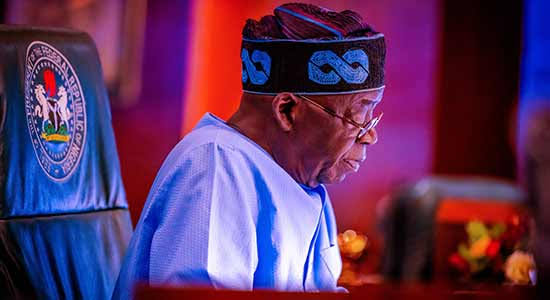
President Bola Ahmed Tinubu has tasked Local Government chairmen across the 774 councils to translate the principles of federal character into practical, inclusive and equitable governance at the grassroots.
President Tinubu, who spoke on Monday at a workshop for local government chairmen in Abuja, stressed that the effectiveness of national governance is ultimately measured by its impact on citizens at the community level.
The workshop, organised by the Federal Character Commission in collaboration with the Progressives Governors Forum, aimed at ensuring the principles of federal character are implemented diligently at the grassroots level.
The two-day workshop, themed “Translating Federal Character Principles into Local Governance: Bridging Policy and Practice,” brought together chairmen of the 774 Local Government Areas, government officials, security agencies and other stakeholders to deepen the implementation of federal character, inclusive governance and grassroots development.
In his keynote address delivered by the Secretary to the Government of the Federation, Senator George Akume, President Tinubu said Nigeria’s diversity remained one of its greatest assets, stressing that the country’s multiplicity of cultures, ethnicities and beliefs must be managed through fairness, justice and inclusion.
According to the President, Local Government Councils occupy a strategic position in Nigeria’s governance architecture because they constitute the closest interface between citizens and the state.
“Policies, no matter how well-crafted, achieve little unless they are effectively translated into action where it matters most, the grassroots,” Tinubu said.
“You must rise above sectional interests and embrace a broader national perspective that prioritises unity over division and inclusiveness over exclusion,” the President said.
Earlier in her welcome address titled “Diversity Must Become Our Strength” the Executive Chairman of the FCC, Hon. Hulayat Motunrayo Omidiran, said the workshop was designed to strengthen the connection between federal character, grassroots governance and national integration.
Omidiran described the gathering as a timely intervention aimed at reinforcing the foundations of unity, fairness, inclusion and peaceful coexistence across Nigeria.
“Our ethnic, linguistic, and religious diversities are not obstacles to nationhood; rather, they are valuable strengths capable of driving national growth when managed with equity, justice, and sincerity of purpose,” she said.
The FCC Chairman said Local Governments were uniquely positioned to manage diversity within communities through equitable distribution of opportunities, fair representation, inclusive leadership and meaningful engagement with citizens.
“The future of Nigeria depends greatly on our collective willingness to promote justice above prejudice, unity above division, and national interest above personal or sectional considerations,” Omidiran said.
Also speaking at the programme, the Minister of Defence, General Christopher Gwabin Musa called for a stronger partnership between Local Governments, communities, traditional and religious institutions, security agencies and the private sector to strengthen security at the grassroots.
In his message tagged “Strengthening Grassroots Security through Inclusive Local Leadership, Community Partnership and Inter-Agency Collaboration,” Musa said insecurity was experienced most directly at the community level, making local knowledge indispensable to effective prevention and early intervention.
“If we are serious about preventing insecurity rather than simply responding to it after it occurs, then the knowledge and experience of those closest to the people must become an integral part of our security effort,” he said.
The Defence Minister backed the proposal for the establishment of Local Government Security Coordination Committees across the 774 Local Government Areas, but stressed that the initiative would only succeed if the committees were functional rather than merely another layer of bureaucracy.
“The objective should be clear, to strengthen the connection between our communities and the security architecture of the country, improve early warning and, where possible, prevent incidents before they escalate,” Musa said.
“When we secure a farming community, we are protecting livelihoods and food production. When we secure a business district, we are protecting investment and employment,” he said.
“The objective is not to create parallel security structures, but to improve coordination, strengthen existing institutions and ensure that every stakeholder contributes effectively within his or her area of responsibility,” Musa said.
Representing the Chairman of the Progressive Governors Forum and Imo State Governor, Senator Hope Uzodimma, the Director-General of the Forum, Folorunso S. Aluko, commended the FCC for partnering with the PGF on the initiative.
Aluko described Local Government as the point where citizens encounter government most directly, noting that functioning primary healthcare centres, accessible community roads, improved sanitation and support for vulnerable citizens were tangible manifestations of government.
“When a primary healthcare centre functions, a community road becomes passable, sanitation improves or vulnerable citizens receive support, government ceases to be an abstract institution, it becomes a living source of dignity, confidence and hope,” Aluko said.
“Autonomy must always travel with responsibility. Greater authority must produce higher standards of transparent budgeting, prudent financial management, merit-based appointments, procurement integrity, audit compliance and meaningful citizen engagement,” he said.
“Local Government Chairmen are not merely administrators of councils; you are custodians of public trust and frontline builders of the Nigerian federation,” he said.
Also speaking at the workshop, the Director-General of the National Orientation Agency (NOA), Mallam Lanre Issa-Onilu, said federal character must be understood not merely as a formula for appointments, but as a principle of belonging, fairness and inclusion.
In his goodwill message at the workshop, Issa-Onilu said the central question of nation-building was how to make every Nigerian, regardless of origin or location, feel that Nigeria belonged to them.
Issa-Onilu linked the workshop to the work of the National Orientation Agency and the National Values Charter, saying national unity could only be sustained when citizens experienced fairness, justice, inclusion and opportunity alongside their responsibilities to the nation.
“Federal Character must therefore be understood as more than a formula for appointments. At its heart, it is a principle of belonging,” he said.
“When development is equitable, we are not merely distributing infrastructure; we are distributing belonging. When opportunities are fairly shared, we are not simply fulfilling constitutional requirements; we are strengthening citizens’ confidence in Nigeria,” he said,” the NOA Director-General said.
The workshop which ends on Tuesday August 25, 2026, is expected to equip the 774 Local Government chairmen with practical knowledge on applying federal character principles to governance, appointments, planning, resource allocation and development, while also strengthening community security, citizen engagement and inter-agency collaboration.
Also in attendance were the Director-General, National Primary Health Care Development Agency (NPHCDA), Dr. Muyi Aina; Director-General, National Bureau of Statistics (NBS), Adeyemi Adeniran; National President, Nigerian Institute of Town Planners Association (NTPIA), Dr. Ogbona Chime; President, Association of Local Governments of Nigeria (ALGON), Dr. Aminu Muazu-Maifata; Managing Director, Nigeria Bulk Electricity Trading Plc (NBET), Mr. Akinola Odeyemi; and Commissioner for Local Government, Kano State, Hon. Tajudeen Usman.
-
Sports16 hours agoUsain Bolt proposes to longtime partner Kasi Bennett after 13 years courtship
-
Politics20 hours ago2027 Polls: APC Has A Lot To Tell Nigeians As Achievements – Akpabio (Photos)
-
News16 hours agoTerrorists are exploiting dead persons accounts, women’s details to fund attacks- NFIU
-
News20 hours agoTEEJAY YUSUF: HAPPY BIRTHDAY TO A POLITICAL JUGGERNAUT
-
News14 hours agoTravel Advisory: Alternative route as Lagos shuts Bridge for 3Weeks
-
News19 hours agoSee Dollar to Naira exchange rate today, August 25,2026
-
News14 hours agoOver 10, 200 killed in two years under Tinubu govt — Amnesty International
-
News14 hours agoTo be defeated, drug barons must lose their wealth, Marwa declares at Cambridge

Warning: Undefined variable $user_ID in /home/naijuinz/public_html/wp-content/themes/zox-news/comments.php on line 49
You must be logged in to post a comment Login