Connect with us

News

Customs arrests 94 suspects, seizes N18b goods

Published

on

ADVERTISEMENT
Zoom Ad
ADVERTISEMENT
Zoom Ad

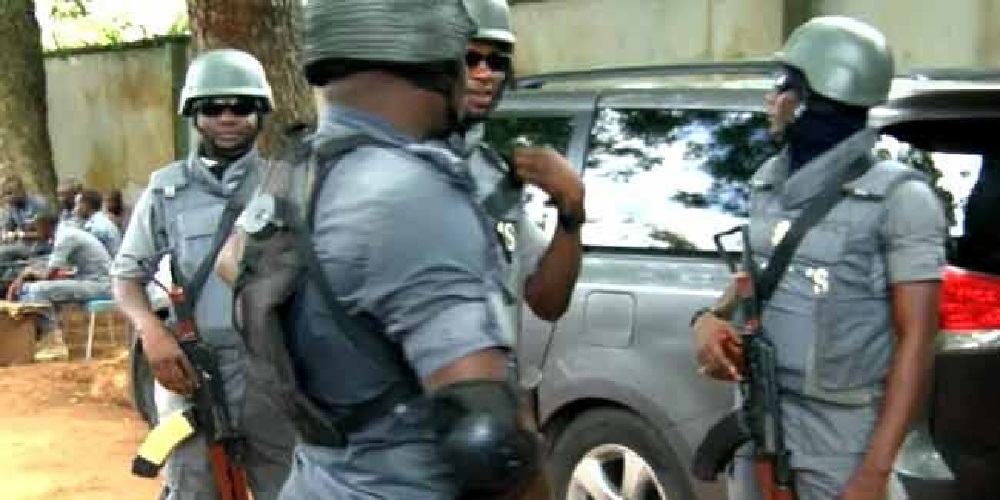
Nigeria Customs Service (NSC), Federal Operations Unit (FOU), Zone ‘A’ has arrested 94 suspected smugglers and seized goods worth over N18 billion in the last two weeks of the month.


Addressing reporters in Lagos, its Area Controller, Kola Oladeji, said: “These achievements underscore our determination to protect the  economy and security against illicit cross border trade and movement around our borders.

“We have been working relentlessly to improve smuggling detection methods, leveraging on intelligence to stay ahead of smugglers and prevent the importation of prohibited and harmful products.

“The newly inaugurated “Operation Swift Sting” has recorded remarkable success in the fight against illicit cross border trade with smuggling with an impressive arrest in just two weeks.’’

Advertisement

Through this operation, he added, “we arrested a significant amount of cannabis sativa, 4,010 bags of foreign parboiled rice in 50kg bags each, Premium Motor Spirit (PMS), along with other contraband items’’.

He continued: “It is clear that ‘Operation Swift Sting’ is delivering unbearable heat to the smuggling cartel at the same time ensuring facilitation of compliant trade with an impressive outcome.

“Ninety-four defendants were arrested in connection with some of the seizures, and six persons have been convicted for various offences.’’

This, he further said, “demonstrates their quest to bring perpetrators to justice and also ensure deterrence from illicit Trade; 707 seizures worth a total Duty Paid Value of N 18,710,143,801.24 were intercepted from January 2024 till date.

Advertisement

Prominent among the seizures, the Controller said, “are 48,912 bags of foreign parboiled rice of 50kg each,191,975 litres of Premium Motor Spirit (PMS), 7,861 kg of cannabis sativa; 6,168 pieces of dry donkey skins, 37,630 sachets of Tramadol, 207 units of motor vehicles. Some of which were arrested for short payment of duty and later cleared after payment of outstanding Duty; 6,755 cartons of foreign frozen poultry products; 1,433 bales of used clothes; 1,773 units of used refrigerator compressors and 317 cartons of illicit medicament.’’

“In addition to the seizures,” he added, “so far, in 2024 we collected revenue through careful documentary checks and issuance of demand notices to consignments that were found to have underpaid customs duty.

The sum of N1, 012, 783, 437.21 was generated through these efforts. This also underscores the importance of careful monitoring and intelligence at preventing smuggling and ensuring that all imports are properly declared and taxed.

“Smuggling operations that employ ingenious concealment methods could have significant impact on the Nation’s economy and security if not checked with modern intelligence tools. Hence, the Service is calling on citizens to support its anti-smuggling efforts by providing useful and timely information on illicit cross border trade.

Advertisement

“In the course of fighting the menace of smuggling, we also raised awareness about its dangers and the importance of complying with Customs regulations. We remain resolute in protecting the nation’s Economy, Security and Health through coordinated synergy with relevant stakeholders.

He commended security agencies, media practitioners and other stakeholders, and the public for providing timely information, support and advice and the Comptroller-General of Customs, Bashir Adewale Adeniyi and his Management for their support. “Your effort is making a significant impact,” he added.
News

Boko Haram Faction Pocketed 90% Of Nigeria’s Nearly $5.8Million Ransom Payments In One Year –Report

Published

on

ADVERTISEMENT
Zoom Ad
ADVERTISEMENT
Zoom Ad

A single faction of Boko Haram collected 90% of all ransom money paid to kidnappers across Nigeria between July 2025 and June 2026, according to a new report by SBM Intelligence, in a finding that suggests the country’s kidnap-for-ransom crisis has been effectively captured by a designated terrorist organisation.

The report, titled The Capture of Nigeria’s Kidnap Economy, found that of ₦7.779 billion ($5.78 million) paid in ransom nationwide during the period, the Jama’atu Ahlis Sunna Lidda’awati Wal-Jihad (JAS) faction of Boko Haram and its allied cells took ₦7.0015 billion from just eight recorded incidents.

“Attributing each ransom to the actor named in its reporting, the JAS faction and its allied cells account for N7.0 billion of the N7.779 billion paid around the country, a staggering 90% of all ransom collected in Nigeria this year, from just a handful of incidents,” the report stated.

By contrast, the entire diffuse population of bandits and unaffiliated kidnappers, responsible for 146 separate cases, collected only ₦719.4 million between them, or 9.2% of the national total.

Advertisement

Two abductions, ₦7 billion

SBM Intelligence traced almost the entire national ransom bill to two mass abductions carried out months apart.

In April 2026, a faction reportedly commanded by one Ali Ngulde abducted 416 people from Ngoshe in Gwoza, Borno State, issuing a 72-hour ultimatum for ₦5 billion. The report said the full amount was paid, the largest single ransom SBM has ever recorded.

Months earlier, in November 2025, gunmen abducted 315 pupils and staff from St Mary’s School in Papiri, Niger State, in what the report called “one of the worst mass abductions in the country’s history.” Multiple intelligence sources cited in the report put the ransom paid at ₦2 billion.

Advertisement

“Together, these two incidents account for N7 billion and explain almost the entire national ransom bill,” the report said.

A “bumper harvest” for terrorism

The report described the shift as a structural change in how Nigeria’s kidnap industry now functions, warning that a “designated terrorist organisation is no longer merely participating in the kidnap economy; in ransom terms, it is the kidnap economy.”

It drew a sharp contrast between the economics of ideologically-driven mass abduction and everyday criminal kidnapping. Bandits and unaffiliated kidnappers, the report found, demanded ₦13.492 billion across 146 cases but collected only 5.3% of it. JAS, meanwhile, demanded ₦9.205 billion and collected 76.1% of what it asked for.

Advertisement

“Measured by what was demanded, the kidnap economy is a crime of the many. Measured by what was actually paid, it is dominated by a single terrorist organisation,” the report said.

It added that this concentration carries strategic consequences beyond the immediate cash figures: “For a designated terrorist organisation to collect N7 billion in a single year is hardly the criminal-justice failure that it may appear to be, because, on the contrary, it is a material transfer of resources to an insurgency, one that buys weapons, pays fighters and sustains the very campaign that produces the next round of abductions.”

A record-setting demand

The report noted that 2026 marked the first year in the life of the annual series that the highest amount demanded in a single incident and the highest amount actually paid were identical, the ₦5 billion Ngoshe ransom.

Advertisement

“In every prior year, a wide gulf separated the boldest demand from the largest settlement; and the fact that the two now coincide is the clearest possible signal of a counterparty with the leverage to be paid exactly what it asks,” the report said, attributing that leverage to a group “holding hundreds of hostages, and willing to kill.”

Inversion of the naira-dollar trend

The report also flagged a break from the pattern of recent years, in which ransom sums in naira climbed while their dollar value stagnated due to currency devaluation.

In 2026, the naira strengthened even as the ransom total rose, meaning the dollar value of ransom paid, approximately $5.7 million, more than tripled from the previous cycle’s $1.66 million.

Advertisement

Call for action on financial flows

SBM Intelligence argued that the concentration of ransom proceeds in the hands of a single armed group changes the calculus for how the crisis should be addressed, calling for action to disrupt the financing rather than treat kidnapping purely as a policing problem.

“Breaking this cycle demands two actions: disrupting the financial flows that now underwrite insurgency, and addressing the economic desperation that supplies its foot soldiers,” the report concluded. “Without a coordinated strategy that targets both the profitability of the crime and its roots, Nigeria risks entrencing kidnapping not merely as a criminal industry but as a funding mechanism for the very groups that most threaten its stability.”

Advertisement
Continue Reading

News

Impeachment move: Suspected thugs invade Ondo Assembly

Published

on

ADVERTISEMENT
Zoom Ad
ADVERTISEMENT
Zoom Ad

Suspected thugs on Thursday invaded the Ondo State House of Assembly amid the lingering crisis over the alleged impeachment of the Speaker, Olamide Oladiji.

The men, said to be from Ondo town, the constituency of the embattled Speaker, reportedly moved around the Assembly complex, visiting different offices without disclosing their purpose.

A staff member, who spoke on condition of anonymity, said the development caused tension among workers as the suspected thugs moved from one office to another.

According to the source, the situation was eventually brought under control following the intervention of a lawmaker, Olajide Oguntodu, some other members of the Assembly and security personnel.

Advertisement

The source said the intervention prevented the situation from escalating, adding that the suspected thugs were subsequently forced to leave the premises.

The development came amid the unfolding leadership crisis in the Assembly, with lawmakers reportedly divided over the fate of Oladiji.

The alleged impeachment move has heightened tension around the legislative complex, with security personnel maintaining a presence to forestall a breakdown of order.

As of the time of filing this report, there was no official statement from the Assembly authorities on the alleged invasion or the circumstances surrounding the impeachment proceedings.

Advertisement
Continue Reading

News

SAD! NLC General Secretary Emmanuel Ugboaja is dead

Published

on

ADVERTISEMENT
Zoom Ad
ADVERTISEMENT
Zoom Ad

Emmanuel Ugboaja, the fifth General Secretary of the Nigeria Labour Congress and the first Nigerian lawyer to work full-time for a trade union, has died after a protracted illness.

NLC President Joe Ajaero announced Ugboaja’s passing by reading a letter from his family to members of the Congress National Executive Council meeting in Enugu. Details surrounding his death remained sketchy at the time of filing.

Born May 15, 1966, Ugboaja obtained a law degree from the University of Calabar in 1987 before entering the trade union movement in 1993. He served as General Secretary of NUCFRLANMPE from 2000 to 2005, participated in constitutional reform conferences under Presidents Obasanjo and Jonathan, and was appointed NLC General Secretary in August 2019 following a competitive selection process ratified at the NEC meeting in Kano.

His death leaves a significant void in Nigeria’s organised labour movement.

Advertisement

Vanguard

Continue Reading

Trending

Copyright © 2024 Naija Blitz News