News
Fresh respiratory virus: FG tightens monitoring, to quarantine China passengers
- /home/naijuinz/public_html/wp-content/plugins/mvp-social-buttons/mvp-social-buttons.php on line 27
https://naijablitznews.com/wp-content/uploads/2025/01/Screenshot_20250106-095447.jpg&description=Fresh respiratory virus: FG tightens monitoring, to quarantine China passengers', 'pinterestShare', 'width=750,height=350'); return false;" title="Pin This Post">
- Share
- Tweet /home/naijuinz/public_html/wp-content/plugins/mvp-social-buttons/mvp-social-buttons.php on line 72
https://naijablitznews.com/wp-content/uploads/2025/01/Screenshot_20250106-095447.jpg&description=Fresh respiratory virus: FG tightens monitoring, to quarantine China passengers', 'pinterestShare', 'width=750,height=350'); return false;" title="Pin This Post">
By Kayode Sanni-Arewa

The Federal Government on Sunday said it would activate surveillance measures for inbound passengers from China following the current surge of a respiratory virus.
Reports indicate that the virus has led to overcrowded hospitals, emergency measures and public concerns in China.

The virus, attributed to the Human Metapneumovirus, has seen cases spiking across northern Chinese provinces this winter, particularly among children. Neighbouring countries such as Cambodia, Taiwan, and Hong Kong are closely monitoring the HMPV situation, having reported a few cases but no widespread outbreaks, according to reports.
According to Chinese authorities, there has been a noticeable increase in HMPV cases, especially among children under 14 years old in northern parts of the country. Social media posts, accompanied by videos of overcrowded hospitals, have sparked fears of a larger-scale health crisis.
In response to the rising cases, the Chinese government announced measures, including constant monitoring of cases, the adoption of masks, social distancing and disinfection of public spaces to curb the increase of the virus.
The new virus outbreak is coming five years after the emergence of a novel coronavirus – COVID-19 – in Wuhan, China, which was declared a global pandemic by the World Health Organisation on March 11, 2020.
So far, COVID-19 has infected 777 million people globally and killed over seven million, according to WHO.
However, while both HMPV and COVID-19 are respiratory illnesses, there are important differences. HMPV typically causes milder symptoms such as a cold or flu, while COVID-19, caused by the SARS-CoV-2 virus, can lead to more severe health complications and long-term effects.
HMPV is also a seasonal virus, similar to other cold-causing pathogens like RSV, and infections usually peak during the winter months. HMPV, like COVID-19, spreads through respiratory droplets when an infected person coughs or sneezes and it can also spread via contaminated surfaces.
However, officials from the National Health Commission stated that while respiratory diseases are expected to rise during the winter months, the overall situation this year is less severe than last year.
Beijing also downplayed the developments as an annual winter occurrence.
China’s foreign ministry spokesperson Mao Ning said on Friday, “Respiratory infections tend to peak during the winter season. The diseases appear to be less severe and spread with a smaller scale compared to the previous year,” she said.
A pilot programme was launched by China to track pneumonia of unknown origin, ensuring labs and health agencies reported and managed cases more effectively, state broadcaster CCTV reported, quoting an administration official at a news conference.
The US Centers for Disease Control and Prevention said HMPV could cause upper and lower respiratory diseases in people of all ages, especially among young children, older adults and people with weakened immune systems.
The U.S CDC noted that HMPV is most likely spread from an infected person to others through secretions from coughing and sneezing, close personal contact and touching objects or surfaces that have the viruses on them, then touching the mouth, nose, or eyes.
“Symptoms commonly associated with HMPV include cough, fever, nasal congestion and shortness of breath. Clinical symptoms of HMPV infection may progress to bronchitis or pneumonia and are similar to other viruses that cause upper and lower respiratory infections. The estimated incubation period is three to six days, and the median duration of illness can vary, depending upon severity but is similar to other respiratory infections caused by viruses,” the US CDC stated.
Meanwhile, health authorities in Nigeria are already implementing emergency measures to monitor and manage the spread of the HMPV.
The Director, Special Duties, Office of the Director-General of the Nigeria Centre for Disease Control and Prevention, Dr John Oladejo, told The PUNCH on Sunday that the Federal Government would implement preventive measures by activating surveillance measures to curb the spread of the virus.
Earlier in November 2024, global health body WHO noted that it was closely monitoring the situation and was in close contact with national authorities in China, adding that it would continue to provide updates as warranted.
Based on the available information, WHO recommended that people in China followed measures to reduce the risk of respiratory illness, which include recommended vaccines against influenza, COVID-19 and other respiratory pathogens as appropriate; keeping distance from people who are ill; staying home when ill; getting tested and medical care as needed; wearing masks as appropriate; ensuring good ventilation; and practicing regular hand washing.
“WHO does not recommend any specific measures for travellers to China. In general, persons should avoid travel while experiencing symptoms suggestive of respiratory illness, if possible; in case of symptoms during or after travel, travellers are encouraged to seek medical attention and share travel history with their health care provider.
“WHO advises against the application of any travel or trade restrictions based on the current information available on this event,” the body added.
First detected in Pakistan in 2001, the HMPV has caused several outbreaks over the years in the Asian nation, primarily affecting children, but the virus is new to Africa as there haven’t been reported cases on the continent.
“Human Metapneumovirus was first identified in Pakistan in 2001, and outbreaks have been reported since then,” an official at the National Institute of Health, Islamabad, said.
“In 2015, a study conducted at Pakistan Institute of Medical Sciences found 21 cases of HMPV in children hospitalised with severe lower respiratory tract infections.”
Meanwhile, medical experts have stated that implementing surveillance measures against the virus was a crucial and appropriate step in ensuring that it doesn’t spread to the country.
They emphasised that surveillance should be an ongoing process carried out continuously by the government.
A virologist at the Department of Virology, College of Medicine, University College Hospital, Ibadan, Dr Moses Adewumi said, “On good day, surveillance should always be part of us. What happens most times is that despite the amount that was voted for COVID-19, we seem to have relaxed. Our people are more interested in spending the money, and after that, we probably decide to go to sleep. So, the surveillance should be a continuous thing.
“It is good that we increase our surveillance for people coming into the country, especially from China, Japan and other places, where we have the outbreaks. The government should be more involved in surveillance because most of the surveillance and all the research we do is funded by foreign bodies, so our own government should be more interested in research, in surveillance for all these viruses.
“The virus is not new but the surge may be because there is a different variant, and that is why we need to increase our surveillance and monitor it closely to curtail its introduction into the country. Experience has taught us that if we check now, we may have our people with antibodies already, and that’s a confirmation that it’s likely that this is circulating here, maybe not the exact variants that they have now.”
Also, an Associate Professor of Infectious Diseases and Genomics in the Department of Microbiology at the Adeleke University, Osun State, Oladipo Kolawole, noted that the decision by the government to implement surveillance measures was a good one, adding that it aimed to monitor and control the potential spread of the virus, ensuring public health safety as the situation developed.
Kolawole said, “The government is likely to enhance screening processes at points of entry and provide guidelines for travellers from China, this is to mitigate risks associated with HMPV. Activating surveillance allows for the early detection of cases, which is essential in managing outbreaks effectively. Monitoring travellers from regions experiencing outbreaks can help identify and isolate cases before they spread within the community.
“Also, quarantine for inbound passengers from the affected regions can significantly reduce the risk of transmission. It serves as a precautionary measure to ensure that individuals who may be infected do not unknowingly spread the virus to others. Finally, this situation underscores the importance of preparedness in public health systems.”
Meanwhile, Hong Kong has reported a few cases of HMPV following the outbreak in China while Cambodia’s Communicable Disease Control Department issued warnings about the virus, noting its similarity to COVID-19 and influenza.
Taiwan’s Centers for Disease Control said the virus poses higher risks for children, the elderly and immuno-compromised individuals.
In neighbouring India, officials said there was no need for panic as HMPV is “like any other respiratory virus.”
Punch

News
Fire security chiefs if terrorism in next 90 days if insecurity persists– Adeboye urges FG
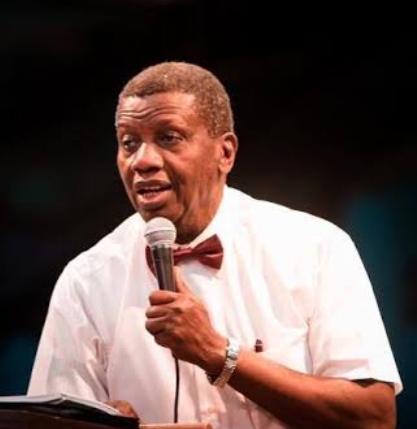
The General Overseer of the Redeemed Christian Church of God, Pastor Enoch Adeboye, has advised the federal government to give Nigeria’s security chiefs a 90-day deadline to eliminate terrorists across the country or resign from office.
Adeboye made the call in a video shared on X on Tuesday where he expressed concern over the country’s security situation and urged authorities to act swiftly against those responsible for the violence.
Addressing the government, the cleric said security chiefs should be held accountable for delivering results in the fight against terrorism.
“If I were asked to make suggestions, I would say quietly to our government, ‘Move fast and tell our security chiefs, get rid of these terrorists within 90 days or resign,” he said.
The cleric also called on the government to go beyond targeting terrorists and focus on those financing and supporting their activities.
“When giving orders to the service chiefs this time around, we should make it clear to them that they are not only to eliminate the terrorists; they should eliminate their sponsors, no matter how influential they may be,” he added.
Adeboye recalled advising a former Nigerian president to issue a similar ultimatum to security chiefs in the past, noting that although the directive was given, it was not fully enforced when the deadline elapsed.
According to him, the experience underscored the need for stronger political will and strict enforcement of directives aimed at ending insecurity.
The cleric’s remarks come amid renewed concerns over terrorist attacks, banditry and kidnappings in several parts of the country, with calls mounting for more decisive measures to tackle the security challenges.
News
Reps Demand Swift Action Over Abduction of 42 Pupils in Borno
…seek tougher protection measures for schools in high-risk communities
By Gloria Ikibah
The House of Representatives has called for the immediate rescue of 42 schoolchildren abducted from Mussa Ward in Askira-Uba Local Government Area of Borno State, as lawmakers renewed demands for stronger security around schools across Nigeria.
The resolution was sequel to the adoption of a Motion of Urgent Public Importance sponsored by Rep. Midala Balami during Tuesday’s plenary session.
Debating the motion, Rep. Balami described the abduction as a disturbing reminder of the persistent insecurity confronting communities in Borno State and other parts of the country. He emphasised that safeguarding students, teachers and educational institutions remains a core responsibility of government and warned that repeated attacks on schools continue to threaten access to education and undermine public confidence in security efforts.
The lawmaker recalled a series of high-profile abductions in the state, including the Chibok schoolgirls kidnapping, in which many of the victims are yet to be reunited with their families. He also referenced the mass abduction of more than 400 adults and children from Ngoshe, as well as several kidnappings reported along the Biu-Buratai Road and surrounding communities.
According to Balami, the recurring attacks have left families traumatised, disrupted livelihoods and contributed to declining school enrolment and attendance in vulnerable areas, as many parents fear for the safety of their children.
He argued that urgent and coordinated action is needed to secure the release of those still in captivity, restore public confidence and reassure communities that their safety remains a priority.
The lawmaker also noted growing frustration among residents who increasingly expect concrete results in the fight against insecurity rather than repeated promises.
Following deliberations, the House urged the Federal Government and security agencies to intensify efforts to rescue the 42 abducted pupils and all other victims currently being held by kidnappers or insurgents, with a view to reuniting them with their families as quickly as possible.
Lawmakers further called for enhanced protection of schools in Borno State and other vulnerable regions through increased deployment of security personnel, improved intelligence gathering and more effective rapid-response mechanisms.
The House maintained that ensuring the safety of children and protecting access to education must remain a national priority, particularly in communities that continue to face threats from criminal and insurgent groups.
In addition, the House encouraged the expansion of school protection initiatives, including early warning systems, community-based security arrangements, security awareness programmes and improved surveillance infrastructure around educational institutions.
The House further mandated its Committees on National Security, Defence, Basic Education and Legislative Compliance to engage with relevant security agencies and report back on measures being taken to secure the release of abductees and improve security around schools nationwide.
Lawmakers also urged the Federal Government to develop and implement a comprehensive Safe Schools Security Framework aimed at protecting students, teachers and educational institutions from future attacks.
News
Lawmakers Raise Alarm Over Ebola Risk, Demand Emergency Funds Support for NCDC
By Gloria Ikibah
The House of Representatives has urged the Federal Government to immediately release funds to the Nigerian Centre for Disease Control and Prevention, warning that Nigeria’s ability to respond to a potential Ebola outbreak could be undermined by persistent funding shortfalls.
This was sequel to the adoption of a motion moved by Rep. Amobi Ogah, who drew lawmakers’ attention to the recent outbreak of a rare strain of the Ebola virus in the Democratic Republic of the Congo, on Tuesday at plenary.
Debating the motion Rep. Ogah referenced reports by the Africa Centres for Disease Control and Prevention indicating that the outbreak was detected in Turi Province of the DRC on May 15, 2026.
He warned that Nigeria remains particularly vulnerable due to extensive cross-border movements and the country’s porous borders, factors that could increase the risk of disease importation.
Oga who is the Chairman House Committee on Malaria, HIV and Tuberculosis noted that on May 25, 2026, the Nigeria Centre for Disease Control and Prevention classified Nigeria as being at high risk of Ebola importation and activated emergency preparedness protocols, including placing the National Emergency Operations Centre on alert.
Despite these precautionary measures, Ogah expressed concern over what he described as a severe funding crisis affecting the agency.
According to him, the NCDC received no operational funding throughout 2025, while no capital releases had been made against its approved 2026 budget. He also stated that overhead releases to the agency had been irregular and inadequate.
The lawmaker argued that the funding constraints had significantly weakened the NCDC’s capacity to carry out essential public health functions, including disease surveillance, laboratory operations, outbreak response, logistics management and emergency preparedness activities.
“The preparedness of the Centre cannot be guaranteed under the current circumstances,” he said.
Ogah told lawmakers that the agency is currently grappling with multiple operational challenges, including unpaid contractors and vendors responsible for critical supplies and services.
He also highlighted delays in the construction of zonal laboratories, treatment centres and isolation facilities, as well as shortages of laboratory reagents and consumables needed for testing and diagnosis.
Other challenges identified include inadequate biosecurity infrastructure, limited intensive care and oxygen support systems, and insufficient resources for the training and deployment of rapid response teams across the country.
The lawmaker warned that failure to provide urgent financial support could leave Nigeria exposed to the renewed Ebola threat and other infectious disease outbreaks.
He stressed that strengthening the country’s disease surveillance and response capabilities was critical to safeguarding public health and preventing a repeat of previous epidemic emergencies.
Contributing to the debate, Rep. Billy Osawaru commended the sponsor of the motion and reminded Nigerians of the country’s successful containment of the 2014 Ebola outbreak after the virus was introduced by an infected traveller from Liberia.
He noted that Nigeria limited the outbreak to 20 cases and eight deaths through coordinated efforts by healthcare workers, emergency response agencies, the Federal Ministry of Health, the NCDC, and international partners.
Osawaru praised the courage and professionalism displayed by frontline health workers during the crisis, particularly the late Dr. Stella Adadevoh and other medical personnel whose actions helped prevent a wider outbreak.
The lawmaker, however, warned that Nigeria remains vulnerable due to its extensive land borders, heavy international travel and trade activities, and increasing regional mobility.
He expressed particular concern that the current outbreak is linked to the Bombali virus, a rare strain of Ebola for which there are currently no approved vaccines or specific treatments.
“The risk of importation remains real if proactive preventive measures are not strengthened and sustained,” he said while seconding the motion.
The House unanimously adopt the motion directed the Executive Arm of Government to immediately release funds appropriated for the NCDC to enable the agency settle outstanding liabilities and carry out its statutory responsibilities effectively.
The lawmakers also mandated the House Committee on Infectious Diseases to monitor the utilisation of the released funds and report back to the House for further legislative action.
In addition, the House called on relevant border and port authorities to intensify surveillance and screening activities at entry points across the country to prevent the importation of the disease, while the Committee on Legislative Compliance was tasked with ensuring full implementation of the resolutions.
The resolution comes amid growing concerns across Africa over the spread of infectious diseases and renewed calls for stronger investment in public health infrastructure and emergency preparedness systems.
-
News14 hours ago2022 train attack: FG re-arraigns Tukur Mamu on amended terrorism charge
-
News15 hours agoMajor Border Offensive: Over 200 Terrorists Killed as Troops Crush Camps Along Nigeria-Benin Corridor
-
News15 hours agoOyo Abduction: Tinubu inherited security challenges from PDP govt, says Nuhu Ribadu
-
News15 hours agoKano lawmaker rejoins APC after losing return ticket in NDC
-
Metro15 hours agoPanic in Ayegunle Bunu After Armed Bandits Launch Deadly Night Raid
-
Economy15 hours agoMiddle East Tensions: Oil Prices Jump as Iran Suspends Peace Talks with US
-
News5 hours agoWike Assures Protesting Teachers of Rescue Efforts, Warns Against Politicising Insecurity
-
News10 hours agoSix members of same family shot dead during domestic dispute in US

Warning: Undefined variable $user_ID in /home/naijuinz/public_html/wp-content/themes/zox-news/comments.php on line 49
You must be logged in to post a comment Login