News
Nigeria’s CNG conversion capacity increases by 2,500% – NMDPRA

- /home/naijuinz/public_html/wp-content/plugins/mvp-social-buttons/mvp-social-buttons.php on line 27
https://naijablitznews.com/wp-content/uploads/2025/01/images-4.jpeg&description=Nigeria’s CNG conversion capacity increases by 2,500% – NMDPRA', 'pinterestShare', 'width=750,height=350'); return false;" title="Pin This Post">
- Share
- Tweet /home/naijuinz/public_html/wp-content/plugins/mvp-social-buttons/mvp-social-buttons.php on line 72
https://naijablitznews.com/wp-content/uploads/2025/01/images-4.jpeg&description=Nigeria’s CNG conversion capacity increases by 2,500% – NMDPRA', 'pinterestShare', 'width=750,height=350'); return false;" title="Pin This Post">


By Francesca Hangeior.
The Nigerian Midstream and Downstream Petroleum Regulatory Authority (NMDPRA) has said that the country’s Compressed Natural Gas (CNG) conversion capacity increased by over 2,500 per cent in 2024.
Mr Farouk Ahmed, Authority Chief Executive, NMDPRA, said this on Thursday in Abuja at the inaugural Petroleum Industry Stakeholders’ Forum, organised by the Ministry of Petroleum Resources.
Ahmed said that NMDPRA supported the Presidential Compressed Natural Gas Initiative (PCNGI) by stimulating 186 new conversion centres, which triggered the county’s conversion capacity.
“The NMDPRA will continue to collaborate with the PCNGI to ensure deployment of CNG infrastructure in major cities of Lagos and Abuja, up to 100,000 conversions, while collaborating with states to develop Nigeria Gas Vehicles (NGVs) in other areas.
“The development of CNG as a viable alternative to petrol has been incentivised.
“These conversions alongside new buys have raised the Nigerian gas vehicle population to an estimated 30,000 to 50,000 vehicles and trucks, and it continues to grow daily.
“With over 400 million dollars attracted for investment in 86 and 65 new daughters and mother stations under construction, respectively, Nigeria’s refuelling capacity has therefore risen from 20 to 56,” he said.
Ahmed said that the collaboration between PCNGI, NMDPRA, and the Standards Organisation of Nigeria (SON) led to the development of standards and the NGV Monitoring System expected to be inaugurated this year.
“The NMDPRA also collaborates with the SON, the National Automotive Design and Development Council (NADDC), and the National Institute of Transportation Technology (NITT) in ensuring that our mobility CNG growth is achieved in a safe and sustainable manner,” he said.
The NMDPRA boss, however, listed some challenges facing the initiative to include establishment and operation of petroleum handling facilities without proper licensing, permits, and authorisations.
He listed other challenges to include poor collaborations for open/third-party access to facilities and lack of cooperation of some operators for effective regulatory oversight, in line with the Petroleum Industry Act (PIA) provisions.
“We implore the industry to adhere to all regulatory requirements, especially as they relate to safety, efficiency, best practices, sustainability, consumer protection, and community participation.
“As we progress into 2025, the NMDPRA will continue to consolidate on its successes for enhanced regulatory oversight.
“This will include the upgrade of our laboratories for enhanced product quality analysis and referencing, inter-agency collaborations, automation, and sustainability in the industry,” Ahmed said.



By Gloria Ikibah
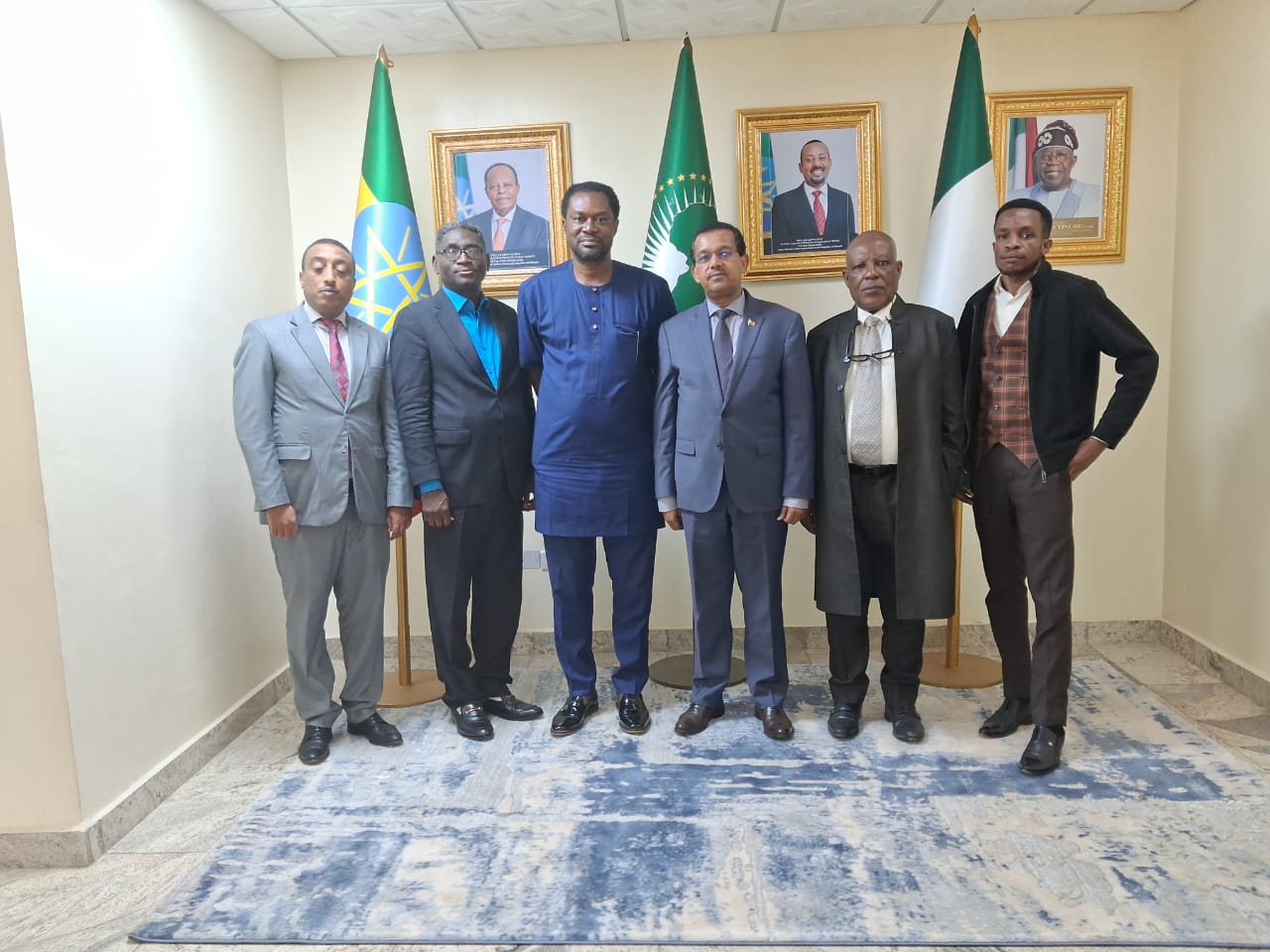
The Africa Economic Forum (AEF) and the Government of Ethiopia have agreed in principle to strengthen cooperation on key development initiatives aimed at boosting investment, trade and economic integration across Africa.
The understanding was reached during a courtesy visit by the regional management of the Africa Economic Forum to Ethiopia’s Ambassador to Nigeria, His Excellency Legesse Geremew Haile.
Leading the four-member AEF delegation, Dr Hope Uweja outlined several areas where both sides intend to collaborate, including the hosting of the AEF Annual General Meeting in Addis Ababa later this year, organising an investment summit focused on Ethiopia’s energy sector, promoting intra-African trade and strengthening cooperation with the Ethiopian Chambers of Commerce.
He said the proposed partnership will create fresh opportunities for investment, regional networking and economic collaboration across the continent.
Secretary of the AEF Governing Council, Prof. Victor Odoeme, emphasised the need for Africa to speak with a unified voice on the global stage, drawing attention to platforms such as the World Economic Forum in Davos, Switzerland.
He noted that the Africa Economic Forum has continued to expand its footprint across the continent, with representatives in 27 African countries, and appealed to the Ethiopian government to support efforts to strengthen the organisation’s presence in Addis Ababa, the headquarters of the African Union.
In response, Ambassador Haile welcomed the initiative and praised the Forum’s commitment to promoting Africa’s economic development.
“Africa has the capacity and potentials to pull together and bring prosperity to its people”, he said.
The envoy highlighted the importance of private sector-led investment in driving sustainable economic growth, pointing to the presence of Dangote Industries in Ethiopia, where the company operates cement and urea businesses, as an example of how African investments can deepen economic cooperation between countries.
He also expressed confidence that hosting the AEF Annual General Meeting in Addis Ababa will enhance the organisation’s visibility and create valuable networking opportunities for participants from across the continent.
Reaffirming Ethiopia’s support for the initiative, Ambassador Haile assured the delegation of his country’s commitment to advancing Africa’s development agenda.
“Always you can count us (Ethiopia) to provide assistance within the context of development in Africa”, he added.
The proposed collaboration is expected to further strengthen economic ties between the Forum and Ethiopia while advancing shared efforts to promote investment, regional integration and sustainable development across Africa.

By Gloria Ikibah
The House of Representatives Ad-Hoc Committee investigating the alleged establishment and operations of the Presidential Foreign Investment Promotion Council (PFIPC) has issued a final ultimatum to key Ministries, Departments and Agencies (MDAs) that failed to honour its invitation, warning that continued absence will attract constitutional sanctions.
The warning came on Tuesday after several invited agencies failed to appear before the committee during its ongoing investigation into the controversial council, whose legal status and operations have come under intense scrutiny.
The probe follows mounting concerns over how the PFIPC allegedly secured official recognition in some government processes despite claims by several federal institutions that it was never lawfully established. In recent hearings, the Office of the Head of the Civil Service of the Federation, the Ministry of Foreign Affairs, the Central Bank of Nigeria (CBN) and the Independent Corrupt Practices and Other Related Offences Commission (ICPC) have all provided testimonies as lawmakers seek to unravel the circumstances surrounding the council’s activities.
Addressing journalists after the sitting, Chairman of the committee, Rep. Yusuf Gagdi, condemned the absence of the affected agencies, describing it as a direct challenge to the constitutional oversight powers of the National Assembly.
He said: “The House of Representatives Ad-Hoc Committee investigating activities surrounding the alleged establishment and operations of the Presidential Foreign Investment Promotion Council wishes to express its profound disappointment over the failure of some Ministries, Departments and Agencies of the Federal Government of Nigeria to honour its invitation and appear before the committee today.
“The committee views this misconduct as a very serious affront to the constitutional oversight powers of the House of Representatives and an unacceptable disregard for the authority of the Parliament, which represents the sovereign will of the Nigerian people.”
Gagdi reminded the affected agencies that invitations from the National Assembly are backed by law and must not be treated as optional.
“The invitations issued by a duly constituted committee of the House of Representatives are not a matter of discretion. They are issued pursuant to the constitutional powers vested in the National Assembly under Sections 88 and 89 of the Constitution of the Federal Republic of Nigeria, 1999 (as amended). Therefore, it is a legal obligation, not an act of courtesy”, he said.
Gagdi announced that the committee had issued what it described as a final notice, directing the chief executives and accounting officers of all defaulting agencies to personally appear before the panel on Thursday with all relevant documents.
He warned that failure to comply would leave the committee with no option but to invoke its constitutional powers.
“Thursday is the final opportunity for every defaulting agency to comply. We don’t want representation. We don’t want permanent secretaries. We want the accounting officers of the agencies to appear before us with all the relevant documents requested by the committee and any other documents they consider useful to this investigation.
“Any ministry, department or agency that fails to appear without lawful justification will leave the committee with no alternative but to invoke every constitutional and statutory power available to us as the House of Representatives to compel compliance and ensure accountability.
“The committee will not hesitate to recommend and pursue every sanction permitted by law against any person or institution that deliberately obstructs or frustrates this investigation”, he stated.
Gagdi stressed that the investigation was aimed at protecting the integrity of public institutions rather than targeting individuals or organisations.
He also assured Nigerians that the committee would conduct its assignment impartially and professionally.
“This investigation is in the national interest. It is not targeted at any individual or institution, but it is aimed at establishing the facts, protecting the integrity of public administration, guarding the rule of law and ensuring that no public officer or institution operates outside the framework of the Constitution and the laws of the Federal Republic of Nigeria.
“The committee remains committed to conducting this assignment professionally, fairly, transparently and without fear or favour. However, no agency of government, regardless of its status or perceived influence, will be permitted to undermine the constitutional authority of the House of Representatives or frustrate the discharge of its legislative responsibility”, he said.
During the proceedings, the committee declined to hear from a representative of the Ministry of Finance after he introduced himself as the Deputy Director in the Cash Management Department and explained that he had been delegated by the minister.
Lawmakers ruled that only the ministry’s accounting officer will be accepted at subsequent hearings, insisting that such a sensitive investigation required the personal appearance of the relevant chief executives.
The committee noted that issues raised by the Ministry of Foreign Affairs during its testimony further underscored the need for the Ministry of Finance’s leadership to appear in person.
The hearing was adjourned until Thursday, 23 July 2026, at 12 noon, when all defaulting agencies and their accounting officers are expected to appear with the requested documents.
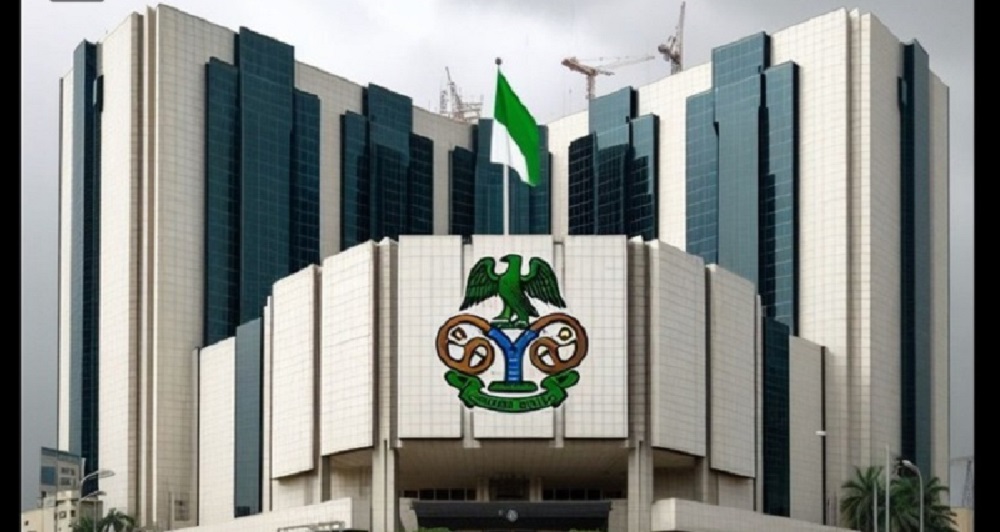
The Monetary Policy Committee (MPC) of the Central Bank of Nigeria (CBN) has retained the Monetary Policy Rate (MPR), the country’s benchmark interest rate, at 26.5 percent.
The decision was announced at the end of the 306th meeting of the MPC, held in Abuja on July 20 and 21, 2026.
All 11 members of the committee attended the two-day meeting, where they reviewed recent domestic and global economic developments before deciding to leave the benchmark lending rate unchanged.
The decision means the CBN has maintained its tight monetary policy stance amid efforts to sustain the moderation in inflation, stabilise the foreign exchange market and consolidate recent macroeconomic gains.
Details shortly…

AEF-Ethiopia Forge Partnership to Drive Investment, Intra-African Trade

PFIPC Probe: Reps Issue Final Ultimatum to MDAs, Vows Sanction for Defaulters

See Black Market Dollar To Naira Exchange Rate Today 21st July 2026



-
 News24 hours ago
Reps Probe Alleged Fake Presidential Council as Head of Civil Service Confirms Budget Participation, Approval for 314 Posts
-

 News16 hours ago
Tinubu Appoints former Ekiti Governor Ayo Fayose, 25 Other Nigerians into Federal Agencies
-
 Economy16 hours ago
Oyedele exonerates TInubu, tells Senate TInubu did not borrow N82trn debt
-

 News16 hours ago
FG denies rumours of Defence Minister Christopher Musa’s alleged resignation
-
 Entertainment9 hours ago
Popular Actor Hanks Anuku Thanks God After Life-Changing Deliverance
-

 News16 hours ago
Membership of Sunday Igboho’s security volunteers hits over 80,000
-
 News9 hours ago
“I fervently believe Obi will not go back on his one-term in office promise” – Rabiu Kwankwaso
-
 Opinion9 hours ago
OF CIPSMN’S CIRCUS SHOW, PRESIDENTIAL CENSURE, AND NATIONAL DEVELOPMENT
Warning: Undefined variable $user_ID in /home/naijuinz/public_html/wp-content/themes/zox-news/comments.php on line 49
You must be logged in to post a comment Login