Connect with us

News

Finally, Trump returns to White House after unprecedented comeback, emboldened to reshape American institutions

Published

on

ADVERTISEMENT
Zoom Ad
ADVERTISEMENT
Zoom Ad

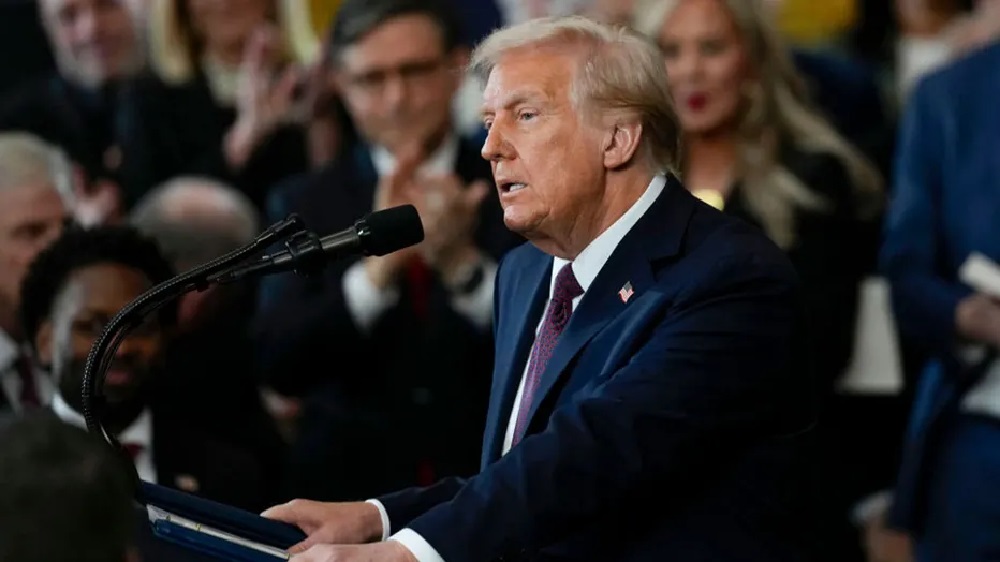
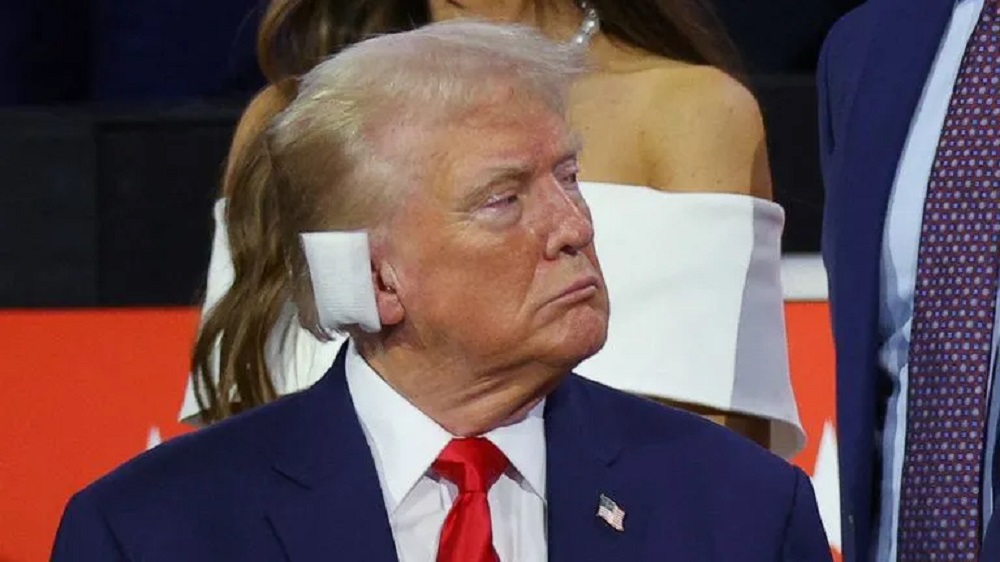
Donald Trump was sworn in as the 47th president Monday, promising a “revolution of common sense” and taking charge as Republicans assume unified control of Washington and set out to reshape the country’s institutions.


Trump, who overcame impeachments, criminal indictments, and a pair of assassination attempts to win another term in the White House, will act swiftly after the ceremony. Dozens of executive orders have already been prepared for his signature to clamp down on border crossings, increase fossil fuel development, and end diversity and inclusion programs across the federal government.

Declaring that the government faces a “crisis of trust,” Trump said in his inaugural address that under his administration “our sovereignty will be reclaimed. Our safety will be restored. The scales of justice will be rebalanced.”

Trump claimed “a mandate to completely and totally reverse a horrible betrayal,” promising to “give the people back their faith, their wealth, their democracy and indeed their freedom.”

Advertisement

“From this moment on,” he added, “America’s decline is over.”

The executive orders are the first step in what Trump is calling “the complete restoration of America and the revolution of common sense.”

Other goals will prove more difficult, perhaps testing the patience of supporters who were promised quick success. Trump has talked about lowering prices after years of inflation, but his plans for tariffs on imports from foreign countries could have the opposite effect.

Frigid weather rewrote the pageantry of the day. Trump’s swearing-in was moved indoors to the Capitol Rotunda — the first time that has happened in 40 years — and the inaugural parade was replaced by an event at a downtown arena. Throngs of Trump supporters who descended on the city to watch the inaugural ceremony outside the Capitol from the National Mall were left to find other places to view the festivities.

Advertisement

At the Capitol, Vice President JD Vance was sworn in first, taking the oath read by Supreme Court Justice Brett Kavanaugh on a Bible given to him by his great-grandmother. Trump followed moments after noon, using both a family Bible and the one used by President Abraham Lincoln at his 1861 inauguration as Chief Justice John Roberts administered his oath.

A cadre of billionaires and tech titans — including Mark Zuckerberg, Jeff Bezos, Tim Cook and Sundar Pichai — were given prominent positions in the Capitol Rotunda, mingling with Trump’s incoming team before the ceremony began. Also there was Elon Musk, the world’s richest man, who is expected to lead an effort to slash spending and federal employees.

Trump and his wife, Melania, were greeted at the North Portico of the executive mansion by outgoing President Joe Biden and first lady Jill Biden for the customary tea and coffee reception. It was a stark departure from four years ago, when Trump refused to acknowledge Biden’s victory or attend his inauguration.

“Welcome home,” Biden said to Trump after the president-elect stepped out of the car. The two presidents, who have spent years bitterly criticizing each other, shared a limo on the way to the Capitol. After the ceremony, Trump walked with Biden to the building’s east side, where Biden departed via helicopter to begin his post-presidential life.

Advertisement

Trump’s inauguration realized a political comeback without precedent in American history. Four years ago, he was voted out of the White House during an economic collapse caused by the deadly COVID-19 pandemic. Trump denied his defeat and tried to cling to power. He directed his supporters to march on the Capitol while lawmakers were certifying the election results, sparking a riot that interrupted the country’s tradition of the peaceful transfer of power.

But Trump never lost his grip on the Republican Party and was undeterred by criminal cases and two assassination attempts as he steamrolled rivals and harnessed voters’ exasperation with inflation and illegal immigration.

Trump used his inaugural address to repeat his claims that he was targeted by political prosecutions, and he promised to begin “fair, equal and impartial justice.”

He also acknowledged that he was taking office on Martin Luther King Jr. Day, which honors the slain civil rights hero. Trump said, “We will strive together to make his dream a reality,” and he thanked Black and Latino voters for their support in November.

Advertisement

Now Trump is the first person convicted of a felony — for falsifying business records related to hush money payments — to serve as president. He pledged to “preserve, protect and defend” the Constitution from the same spot that was overrun by his supporters on Jan. 6, 2021. He’s said that one of his first acts in office will be to pardon many of those who participated in the riot.

Eight years after he first entered the White House as a political newcomer, Trump is far more familiar with the operations of federal government and emboldened to bend it to his vision. Trump wants to bring quick change by curtailing immigration, enacting tariffs on imports and rolling back Democrats’ climate and social initiatives.

He has also promised retribution against his political opponents and critics, and placed personal loyalty as a prime qualification for appointments to his administration.

With minutes to go before leaving office, Biden issued preemptive pardons to his siblings and their spouses to shield them from the possibility of prosecution. He said in a statement that his family “has been subjected to unrelenting attacks and threats” and that he has “no reason to believe these attacks will end.”

Advertisement

Earlier in the day, Biden took a similar step with current and former government officials who have been the target of Trump’s anger. Biden said “these are exceptional circumstances, and I cannot in good conscience do nothing.”

Trump has pledged to go further and move faster in enacting his agenda than during his first term, and already the country’s political, business and technology leaders have realigned themselves to accommodate Trump. Democrats who once formed a “resistance” are now divided over whether to work with Trump or defy him. Billionaires have lined up to meet with Trump as they acknowledge his unrivaled power in Washington and his ability to wield the levers of government to help or hurt their interests.

Long skeptical of American alliances, Trump’s “America First” foreign policy is being watched warily at home and abroad as Russia’s invasion of Ukraine will soon enter its third year, and a fragile ceasefire appears to be holding in Gaza after more than 15 months of war between Israel and Hamas.

Trump said he would lead a government that “expands our territory,” a reference to his goals of acquiring Greenland from Denmark and restoring U.S. control of the Panama Canal.

Advertisement

He also said he would “pursue our manifest destiny into the stars, launching American astronauts to plant the Stars and Stripes on the planet Mars.” Musk, the owner of a space rocket company with billions of dollars in federal contracts, cheered and pumped his arms above his head as Trump spoke.

Trump is planning to crackdown on the U.S. southern border with a playbook that’s similar to his first term — declaring a national emergency, limiting the number of refugees entering the U.S. and deploying the military. An app called CBP One, which has allowed nearly 1 million people to legally enter the U.S. with eligibility to work, has already stopped working.

He’s expected to take additional actions — including constitutionally questionable ones — such as attempting to end birthright citizenship automatically bestowed on people born in the U.S.

Trump will also sign an executive order aimed at ending diversity, equity and inclusion programs within the federal government. [AP]
Advertisement

News

FG decries illegal mining, plans clampdown on offenders

Published

on

By

ADVERTISEMENT
Zoom Ad
ADVERTISEMENT
Zoom Ad

The Federal Government has said it will begin a clampdown and the arrest of all firms and individuals engaged in illegal mining activities in Cross River State.

This was disclosed on Tuesday by the Federal Mines Officer in Cross River State, Ayelabola Olubunmi, during a fact-finding meeting with traditional leaders and stakeholders in Butatong community, in the Boki Local Government Area of the state.

He said the government was losing millions of naira in revenue to illegal mining operations carried out by undocumented firms in forest communities across the state.

He said, “This meeting was convened following reports of influx of foreigners and private groups into communities around the Okwango division of the Cross River National Park, amid concerns over mining activities in the area. The Federal government will begin a clampdown and the arrest of all firms and individuals engaged in illegal mining activities in the state.

Advertisement

“There are a lot of mining operations in Okwa villages 1 and 2, which are enclaves in the Cross River National Park, adjoining Butatong. These operators are not known to the Federal Ministry of Solid Minerals and they do not go through legal procedures, thereby denying the Federal Government its due royalties.

“We don’t want firms to enter our forests for mining activities through the backdoor. We’ll definitely fish them out; the ministry will soon intensify sensitisation and enforcement visits to affected communities.”

The mines officer warned the traditional rulers and community leaders against granting mining consent.

He said the ministry had officially licensed firms authorised to undertake mining activities in designated parts of the state, adding that the government needed companies that could be held accountable.

Advertisement

“Mining activities must be in line with Minerals and Mining Act of 2007. For illegal miners and those aiding them, the Federal Government would treat their operations as economic sabotage”, he said.

He urged residents to remain vigilant and report mining activities that could expose communities to environmental, health and security risks.

The Clan Head of Butatong, HRH Otu Gregory Apah, urged indigenes not to harbour illegal miners and appealed to the government to provide basic social amenities to the mineral-rich community.

The Chairman of Butatong Community Council, Benedict Apah, said he was not aware of mineral deposits in Butatong itself but confirmed that mining activities were ongoing in neighbouring enclave communities, including Okwango, Okwa 1, Okwa 2 and Bumagi.

Advertisement
Continue Reading

News

Southern, Middle Belt leaders reject FG’s livestock scheme

Published

on

By

ADVERTISEMENT
Zoom Ad
ADVERTISEMENT
Zoom Ad

The Southern and Middle Belt Leaders Forum (SMBLF) has warned against the alleged attempt to take over the ethnic lands in the Middle Belt region and hand them over to Fulani pastoralists under the federal government’s new National Livestock Policy.

SMBLF said it “suspects that the true aim of this policy is the creation of permanent settlement zones for nomadic Fulani herdsmen, whose violent activities over the years have contributed to the capture and occupation of thousands of square kilometres of land across the Middle Belt and even parts of southern states.”

In a statement signed by Afenifere chieftain and Chairman of SMBLF, Oladipo Olaitan, the group stated that “apart from the genocide they (Fulani herdsmen) have been accused of carrying out in the Middle Belt, they have rendered millions homeless, and cannot be handed the lands of their victims as a reward for their heinous crimes.”

The body said it was alarmed “by the audacious attempt by the federal government to take over lands belonging to ethnic communities in the Middle Belt under a spurious pilot scheme being introduced in the name of a New National Livestock Policy.”

Advertisement

“It is striking that this experiment is being concentrated almost entirely in the Middle Belt, despite the vast expanse of sparsely populated and unused land available in many parts of the far north, where Fulani emirs dominate most of the lands,” it noted.

“The scheme is being presented as a pilot, but if it is not firmly opposed by the communities being short-changed, it will inevitably be expanded to other parts of the country, including the southern states.”

SMBLF explained that it was not opposed to modern livestock production, ranching or the development of the livestock value chain but strongly rejects what it described as “the opaque, coercive and discriminatory manner in which this policy is being pursued to the exclusive advantage of nomadic Fulani herdsmen.”

Calling on the communities and governments of the southern states to reject the policy, SMBLF told the federal government that “the Land Use Act of 1978 is not a licence for arbitrary land grabbing.

Advertisement

“It vests rural land in local councils, recognises customary rights of occupancy, and allows revocation only for overriding public interest. It also protects agricultural land, including fallow land, as continuing community property.”

The Southern and Middle Belt leaders noted that “ranching is an economic enterprise that is privately driven.” They maintained that “the government cannot disguise compulsory land acquisition for specific economic actors as public interest.”

According to them, records show that some of these nomadic pastoralists are not Nigerian citizens, and “any policy that ignores these realities while allocating vast ancestral lands to them under state protection is unacceptable to the indigenous people of the Middle Belt and the South.

“We have seen similar attempts before under different names, including the rejected RUGA and Cattle Colony proposals, which Nigerians resisted because of their implications for land ownership and demographic restructuring. The SMBLF will not accept such a policy.”

Advertisement

Meanwhile, the group demands full and transparent disclosure of the proposed ranching sites, the legal instruments for their acquisition, the ownership structure, security concerns, the beneficiaries, the size of the lands involved and the source of funding.

Continue Reading

News

INEC to display 2027 governorship, Assembly candidates’ list Saturday

Published

on

By

ADVERTISEMENT
Zoom Ad
ADVERTISEMENT
Zoom Ad

The Independent National Electoral Commission (INEC) will display the list of candidates nominated by political parties for the February 6, 2027 governorship and State Houses of Assembly elections on Saturday, August 29.

The governorship election will be held in 28 states, while State Houses of Assembly elections will take place across the 36 states of the federation.

The governorship poll will be conducted in Lagos, Ogun, Oyo, Delta, Rivers, Akwa Ibom, Cross River, Enugu, Ebonyi, Abia, Kwara, Benue, Plateau, Niger and Nasarawa states.

Other states where governorship elections will be held are Borno, Yobe, Adamawa, Taraba, Bauchi, Gombe, Jigawa, Kano, Kaduna, Katsina, Zamfara, Kebbi and Sokoto.

Advertisement

Governorship elections will not be held in Ondo, Osun, Ekiti, Edo, Bayelsa, Anambra, Imo and Kogi states.

The 22 registered political parties are expected to field fresh candidates in Lagos, Ogun, Oyo, Yobe, Borno, Adamawa, Bauchi, Gombe, Kwara and Nasarawa, where incumbent governors’ tenures will expire in 2027.

Meanwhile, political parties contesting the presidential and National Assembly elections have until Saturday, August 29, to submit their final list of candidates to INEC.

This follows the August 22 deadline for candidates to withdraw from the 2027 elections, under Section 31 of the 2026 Electoral Act.

Advertisement

The section provides that a candidate may withdraw from an election by submitting a written notice, signed by the candidate and accompanied by a sworn affidavit, personally to the political party that nominated the candidate.

The party must forward the withdrawal and affidavit to the commission no later than 90 days before the election.

INEC is expected to publish the final list of presidential and National Assembly candidates, comprising Senate and House of Representatives candidates, on Saturday, September 12.

Advertisement
Continue Reading

Trending

Copyright © 2024 Naija Blitz News