Connect with us

News

Human Rights activist turns down Gov’s political appointment

Published

on

ADVERTISEMENT
Zoom Ad
ADVERTISEMENT
Zoom Ad

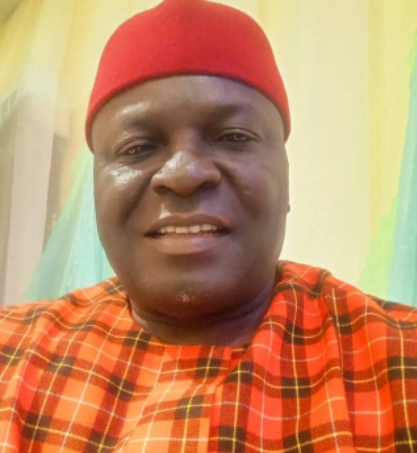
A human rights activist in Taraba State, Rikwense Muri, has rejected an appointment offered to him by Governor Agbu Kefas as Senior Special Assistant (SSA) on Project Tracking.


Mr Muri communicated his decision on Friday in a letter addressed to the governor through the Secretary to the Government of the State (SGS), Timothy Kataps.

The activist and critic of the Kefas administration is a member of the opposition All Progressives Congress (APC) in the state.

Governor Kefas announced the appointment alongside 177 others last week. However, Muri said he declined the appointment after due consultation with his party and political associates, amongst other reasons

Advertisement

However, he expressed his appreciation for the appointment and the governor’s spirit of inclusiveness.

“I write to express my heartfelt gratitude for the honour of being considered for the position of Senior Special Assistant on Projects Tracking.

“Your decision to embrace capable individuals, regardless of political affiliations, marks a commendable step toward inclusivity in governance.

“However, after extensive consultations with my party, the All Progressives Congress (APC), as well as discussions with political associates, community leaders, friends, and family, I must respectfully decline the appointment.

Advertisement

“As a dedicated member of the APC and the State Publicity Secretary of the APC Youth Vanguard in Taraba State, my commitment to the Renewed Hope agenda of President Bola Ahmed Tinubu remains steadfast.

“Given the significant investments and support our state has received under his administration, it would be inconsistent for me to abandon my party during this time of renewed focus on Taraba through the local government autonomy, massive presidential appointments, massive ongoing multi-billion naira Federal Infrastructural and interventions projects.

“Moreover, Article 9.5 of our party’s constitution stipulates that members accepting appointments from opposition administrations risk outright cessation of their membership of the party unless they do so through proper channels of the party National Secretariat.

“These were not followed in this instance and I am not ready to leave the APC at the moment.

Advertisement

“As a supporter and loyal member of the APC since 2015, I have worked tirelessly to grow the party from opposition to a ruling force in my constituency, contributing to our victories at the state assembly, House of Representatives, and Senate levels,” he said.


News

US expands sanctions aiming at Iran oil, cryptocurrency sectors

Published

on

ADVERTISEMENT
Zoom Ad
ADVERTISEMENT
Zoom Ad

The United States on Tuesday expanded its sanctions aiming at Iran’s oil sector, taking further aim at the network of petroleum shipping magnate Mohammad Hossein Shamkhani, the Treasury Department said.

Treasury Secretary Scott Bessent said the department had also frozen $130 million held in digital wallets linked to Iran’s central bank, hitting a sector that has seen increased activity since the start of the war.

The move came after US forces carried out a fourth straight day of strikes against Iran and reimposed a naval blockade, with Iran in turn hitting ships in the Strait of Hormuz, according to the International Maritime Organization.

Iran started blocking the strait — a key waterway for energy transit — after US-Israel attacks in February. Washington imposed an initial blockade on Tehran’s ports from mid-April to mid-June.

Advertisement

“This action is part of Treasury’s ongoing efforts to ramp up economic pressure on the Iranian regime after it resumed destabilizing attacks in the Strait of Hormuz,” the Treasury Department said in a notice Tuesday.

It charged that the Shamkhani network remains a key force behind Iran’s oil exports, and has expanded into global commodities trading.

The latest move took aim at more than 50 individuals, entities and vessels that it said enabled Iranian authorities to reap profit.

The Treasury Department added that it has now imposed sanctions on over 200 individuals, entities and vessels operating under Shamkhani’s patronage.

Advertisement

Shamkhani is the son of security official Ali Shamkhani, an advisor to Iranian supreme leader Ali Khamenei.

Both were killed February 28, the first day of US-Israeli attacks and the start of the Middle East war.

Bessent said the department “sanctioned multiple wallets tied to the Central Bank of Iran, resulting in the freeze of over $130 million.”

“We will continue to aggressively follow the money and deny the Iranian regime access to the proceeds of its illicit revenue schemes,” he said in a post on X.

Advertisement

Experts say digital asset platforms have been used to circumvent sanctions placed on Iran’s Revolutionary Guards and as a financial safe haven for civilians hit by soaring inflation.

Iran has largely been cut off from the global financial system due to US and European sanctions in place for years before the war. Cryptocurrency has offered a path for citizens and businesses to transact with the rest of the world.

Continue Reading

News

48 Choice Properties Linked To Ex-AGF Malami, Including Rayhaan Varsity Hotels, Forfeited To Nigerian Govt (List)

Published

on

ADVERTISEMENT
Zoom Ad
ADVERTISEMENT
Zoom Ad

The Economic and Financial Crimes Commission (EFCC) on Wednesday, secured the final forfeiture of 48 properties linked to ex- Attorney-General of the Federation and Minister of Justice, Abubakar Malami, SAN, to the Federal Government of Nigeria.

Among the forfeited properties are Rayhaan University, Kebbi State, including the Rayhaan University Permanent Site, Rayhaan University Temporary Site, Rayhaan University Third Site, the Rayhaan University Vice Chancellor’s House and Rayhaan Radio along Sani Abacha Bypass Road, Birnin Kebbi.

Delivering judgment, Justice Joyce Abdulmalik of the Federal High Court, Abuja, held that the Commission had successfully established that the properties were reasonably suspected to be proceeds of unlawful activities and were not acquired from lawful sources of income.

The properties finally forfeited to the Federal Government are: a luxury duplex at Amazon Street, Plot No. 3011 within Cadastral Zone A06, Maitama District, Abuja (File No. AN 11352); a two-winged large three-storey building situated at No. 3 Onitsha Crescent, Area 11, Garki, Cadastral Zone A03, Abuja (formerly Harmonia Hotels Limited); Plot 683, Jabi District, Cadastral Zone B04, comprising a five-storey building (now luxurious Meethaq Hotels Ltd., Jabi, with 53 rooms/suites); Property No. 3130 within Cadastral Zone A04, Asokoro District, FCT, Abuja, comprising terraces; Property No. 3 Rhine Street, Maitama, Abuja (Meethaq Hotels Ltd., Maitama, with 15 rooms); and Plot No. 1241B, Asokoro District (No. 11A Yakubu Gowon Crescent), Asokoro District.

Advertisement

Others are: Shop No. C52, Citiscape – Shariff Plaza, Plot 739, Cadastral Zone A07, Aminu Kano Crescent, Wuse II, FCT, Abuja; No. 4 Ahmadu Bello Way, Nasarawa GRA, Kano; Plot 157, Lamido Nasarawa GRA, Kano; a commercial plaza comprising commercial toilets, laundering facilities, warehouse tanks adjacent to Birnin Kebbi Market; 100 hectares of land along Birnin Kebbi–Jega Road; and another 100 hectares of land along Birnin Kebbi–Jega Road.

Others are: a four-bedroom bungalow at Gesse Phase II, Birnin Kebbi; Shops Nos. A36 and B3, Vegas Mall, Wuse II, Abuja; No. 26 Babbi Drive, BUA Estate, Abuja; No. 27 EFAB Estate, 5th Avenue, 59th Crescent, Gwarimpa, Abuja; a four-bedroom house with two-room boys’ quarters at No. 10B Doka Crescent, Abakpa GRA, Kaduna; Plot No. 13, IPENT 7 Estate, Karsana District, Abuja; a bedroom duplex with boys’ quarters at No. 12 Yalinga Street, off Adetokunbo Ademola Crescent, Wuse II, Abuja; two warehouse shops B40 and B46, Wuse Market, Abuja; acquisition of twin houses at Zone E, Apo Legislative Quarters, Cadastral Zone B01, Plot 1401, Gudu District, Abuja; and properties acquired by Khadimiyya for Justice & Development Initiative at the Academic Garden City, Birnin Kebbi, sold by the Federal Housing Authority Mortgage, namely: nine units of three-bedroom bungalows, three units of two-bedroom bungalows, and 5.4 hectares of land.

Also forfeited are the Rayhaan Agro Allied Factory in Kebbi State, including the factory buildings, factory machines and plant units, factory mosque, Rayhaan Mill staff quarters, and the Rayhaan Bustan Building.

Others are assets at Azbir Arena, Kebbi State, including Azbir Hotel, Printing Press, Gallery, Gardens, Mosque, Azbir Clothing, and Azbir Pharmacy and Supermarket.

Advertisement

Other forfeited properties include the Al-Afiya Energy tanker garage opposite Rayhaan University Health Centre along Sani Abacha Bypass Road, Birnin Kebbi; Rayhaan Security House off Sani Abacha Bypass, Birnin Kebbi; an uncompleted two-storey plaza located opposite Central Motor Park (Eastern Park), Birnin Kebbi; Amasdul Oil and Gas Ltd. filling station structure along Sani Abacha Bypass Road, Birnin Kebbi, near Jambali Automobile Workshop; the assets of Zeennoor Hotel at Kabuga Satellite Town, off Gwarzo Road, Kano, with 131 rooms; Zeennoor Mosque at Kabuga Satellite Town, off Gwarzo Road, Kano; and the old Zeennoor Hotel building.

It would be recalled that on January 6, 2026, Justice Emeka Nwite granted the interim forfeiture order following an ex parte motion moved by counsel to the Economic and Financial Crimes Commission, EFCC, Ekele Iheanacho, SAN

Sequel to the granting of the interim forfeiture order, and in compliance with the order of the court, the EFCC published the interim order in national dailies, inviting interested persons to come forward and show cause why the final forfeiture order should not be granted in favour of the Federal Government of Nigeria.

The EFCC subsequently filed a motion for the final forfeiture of all the properties.

Advertisement

Meanwhile, following the publication of the interim order, Mr. Malami, SAN, and 14 other persons, mainly his family members and associates, filed applications to show cause and also urged the court to set aside the interim forfeiture order on the properties. They further challenged the jurisdiction of the court to grant the order and urged it not to grant the final forfeiture order.

The case was heard before Justice Joyce Abdulmalik on May 27, 2026, and the matter was thereafter adjourned for judgment.

Delivering judgment on Wednesday, the court held that the EFCC had sufficiently established that the 48 properties were reasonably suspected to have been acquired with proceeds of unlawful activities, and that the respondents failed to discharge the evidential burden placed on them, as they could not show the legitimate sources of the funds used in acquiring the properties.

The court further held that the respondents merely claimed ownership of the properties without providing proof of how they acquired them with funds from lawful sources.

Advertisement

According to the court, non-conviction-based forfeiture proceedings require respondents to adduce evidence showing the lawful sources of the funds used in acquiring the properties, and not merely make bare assertions of ownership.

Continue Reading

News

93 percent of inmates are State offenders, half don’t need jail — Tunji-Ojo

Published

on

By

ADVERTISEMENT
Zoom Ad
ADVERTISEMENT
Zoom Ad

Minister of Interior, Dr Olubunmi Tunji-Ojo, has disclosed that 93 percent of inmates in Nigerian custodial facilities are state offenders, with only 7 percent held for federal offences, adding that a significant proportion of these inmates do not require incarceration in the first place.

Tunji-Ojo, who spoke on Wednesday in Abuja at the Regional Conference on the Classification of Prisoners and the Use of Technology in Prisons in Africa, jointly organised by the United Nations Office on Drugs and Crime UNODC and the African Correctional Services Association ACSA, said the Federal Government had moved decisively to decongest correctional facilities by targeting inmates jailed for minor offences.

“93% of our inmates in Nigeria are state offenders. Only 7% are federal offenders. And of this 93%, I want to tell you before this president came on board, a lot of them were for minor offences that had no need for incarceration,” the minister said.

He recounted how he ordered an audit of inmates held over minor fines and compensation judgments soon after assuming office.

Advertisement

“When I became minister, I called my permanent secretary, I called the Controller General of the Correctional Service, and I said, listen, give me the data, the record of people who are in correctional centres for fines and compensation of less than 500,000 or something. And guess what? Over 4,000 people,” he said.

According to him, the exercise exposed the futility of keeping such offenders in custody at public expense. “I said, what is the sense in this? Because I feed them in a year with more than 10 times of the fine. So how is the government benefiting? And we were able to clear that, and in one day, we decongested our correctional centre by 5% in one day. In one day,” he said.

The minister said the episode underscored a broader question that correctional authorities across Africa must confront: whether their facilities are rightly overcrowded. “The question is this. Is your correctional centre rightfully overcrowded? That is the question. You have to look at those particular offences. You will realise that more than 30, 40, 50 percent are offences that do not warrant incarceration,” he said.

Tunji-Ojo also disclosed that recidivism in Nigeria’s correctional centres had fallen sharply under the current administration, from about 13,000 cases annually in 2023 to 1,000 last year, a development he attributed to expanded access to education and vocational training for inmates. He said the correctional service currently has 62 inmates pursuing postgraduate studies, 261 in undergraduate programmes, 1,125 in formal education, 18 National Open University centres domiciled in correctional facilities, and 9,582 inmates enrolled in vocational and non-formal rehabilitation programmes.

Advertisement

He said Nigeria had also gone three years without recording a single jailbreak or attack on a correctional facility, a feat he linked to improved data management and inter-agency information sharing. He cited an incident in which an escaped inmate was rearrested after attempting to obtain a Nigerian passport using biometric data linked across security agencies. “Immediately he put his finger at the level of Nigeria immigration service to procure a passport. Immigration saw it immediately that he was an inmate. And immediately they reached out to correctional service and he was arrested right there,” he said.

The Controller General of the Nigerian Correctional Service, Sylvester Ndidi Nwakuche, said Nigeria has continued to modernise its correctional system through reforms anchored on the Nigerian Correctional Service Act, 2019.

He said effective prisoner classification has become a strategic tool for identifying inmates’ risks, protecting vulnerable prisoners, deploying resources efficiently and delivering targeted rehabilitation programmes.

Nwakuche added that integrating technology into correctional administration would enhance record management, improve information sharing and strengthen institutional accountability, stressing that no single correctional service possesses all the solutions to today’s security and rehabilitation challenges. “We have a unique opportunity to exchange ideas, share practical experiences and collectively develop solutions that will strengthen correctional systems across Africa,” he said.

Advertisement
Continue Reading

Trending

Copyright © 2024 Naija Blitz News