Connect with us

Economy

We’ve cleared outstanding $7bn Forex backlog — CBN

Published

on

ADVERTISEMENT
Zoom Ad
ADVERTISEMENT
Zoom Ad

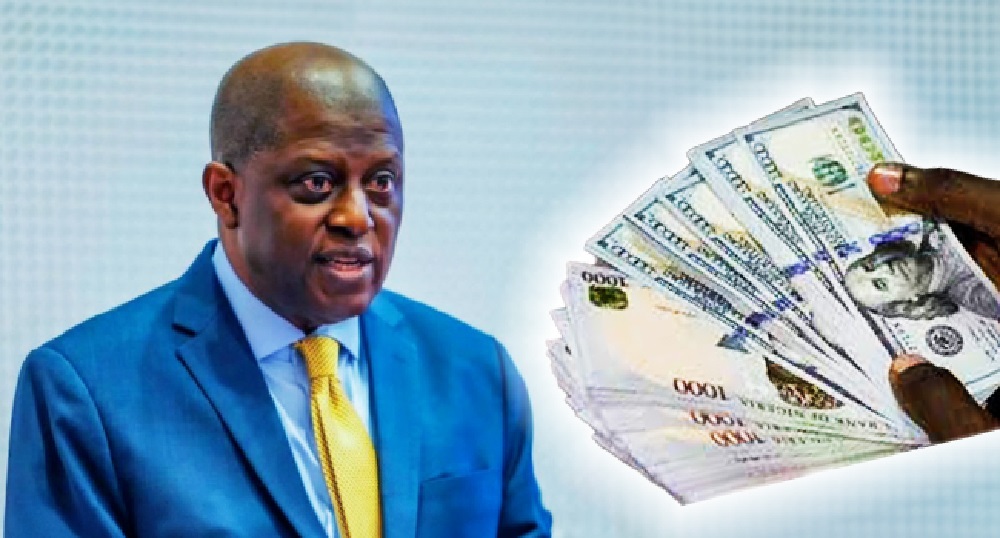
The Central Bank of Nigeria (CBN) says it has successfully cleared the $7 billion foreign exchange (FX) backlog.


The announcement was made by the CBN Governor, Olayemi Cardoso, on Wednesday, during the launch of Nigeria’s Regulatory Policy Framework at the State House Conference Hall in Abuja.

Cardoso explained that the clearance followed a comprehensive verification process carried out by forensic auditors, which has restored confidence in Nigeria’s financial system.

“We have taken decisive action to address the forex liquidity constraints by clearing the $7bn backlog, ensuring that businesses and foreign investors can now repatriate funds without delays,” Cardoso said.

Advertisement

Although the process took longer than initially expected, the CBN Governor expressed optimism about the impact of the resolution.

“While it’s unfortunate that this took longer than we anticipated, the steps taken will strengthen the market and rebuild trust among investors,” he added.

Cardoso also addressed the remaining unverified claims, assuring that payments would be made once they are confirmed by auditors.

“We are in the final stages of separating fully verified claims, and payments will be made promptly to those whose claims are validated.”

Advertisement

PEBEC Director-General, Princess Zahrah Audu, also spoke at the event, stressing the importance of a stable and predictable policy environment for businesses to thrive.

She noted that the current administration is committed to engaging stakeholders and ensuring policies are shaped with input from both the public and private sectors

“We want to ensure that business policies are formed with your needs in mind, and we are open to collaboration with all stakeholders,” Audu said.

Advertisement

Economy

NEC approves $4.5bn refinancing of $3.3bn oil-backed loan

Published

on

By

ADVERTISEMENT
Zoom Ad
ADVERTISEMENT
Zoom Ad

The National Economic Council on Monday approved the refinancing of the $3.3bn Project Gazelle Pre-Export Finance Facility through a new $4.5bn facility named Project Gazelle 2.

The approval came at the 159th meeting of NEC, held virtually and chaired by Vice President Kashim Shettima, following a presentation by the Minister of Finance and Coordinating Minister of the Economy, Dr Taiwo Oyedele, on the significance of the refinancing arrangement.

The approval allows the Nigerian National Petroleum Company Limited to refinance the outstanding balance of approximately $1.5bn under the original 2023 facility while unlocking an additional $3bn in liquidity to strengthen Nigeria’s external reserves and support ongoing fiscal and infrastructure priorities.

Senior Special Assistant to the President on Media and Communications in the Office of the Vice President, Stanley Nkwocha, revealed details of the approval in a statement he signed Monday titled ‘NEC Approves Refinancing of $3.3bn Project Gazelle to Optimise Cost, Unlock Additional Liquidity.’

Advertisement

According to Nkwocha, Council observed the significance of unlocking additional liquidity for the federation and pledged its support for the actualisation of the initiative.

Briefing journalists after the meeting, Oyedele explained that the new arrangement had been structured on considerably more favourable terms than the original facility, including a substantial reduction in the volume of crude oil pledged to secure the loan.

He explained, “The refinancing has been structured on more favourable terms than the original facility, including a reduction in the volume of pledged crude oil from 90,000 barrels of oil per day to approximately 78,750 barrels of oil per day, a 12.5 per cent reduction.”

Oyedele said the reduction in pledged volume translated directly into more crude available for the federation to sell and retain revenue from outside the terms of the facility.

Advertisement

“Under the new arrangement, an additional 11,250 barrels of oil per day for the federation will be released, while there will be a reduction in the pledged crude volumes by NNPC Limited,” he said.

The Minister described the refinancing as a dual achievement, improved liquidity access on better terms while simultaneously strengthening the country’s overall financing structure.

He stated, “While accessing additional liquidity on improved terms, the arrangement is freeing up resources for strategic national priorities while strengthening the country’s financing structures.”

In his opening remarks to Council, Vice President Shettima called for the design of a responsive, scalable and data-driven social protection policy to confront multidimensional poverty in Nigeria, framing the challenge in vivid and deeply human terms.

Advertisement

He argued, “Government policies are often heard before they are seen they speak through the price of food, the condition of hospitals, the records in schools, the strain on families, the confidence of those who invest their labour in the nation’s future, and, very importantly, the ambitions of state governments.”

The VP urged Council members to ensure that every decision reached at NEC left ordinary Nigerians with confidence that their government was attentive and responsive to their daily struggles.

“Every decision we make must assure the citizens that their government is paying attention to the pulse of the nation and is resolved to respond with competence, compassion and purpose,” he said.

Project Gazelle was originally structured in 2023 as a pre-export finance facility secured against future crude oil sales, designed to provide Nigeria with dollar liquidity to defend the naira and support foreign exchange market stability amid the sharp currency volatility that followed the administration’s unification of exchange rate windows.

Advertisement

The refinancing under Project Gazelle 2 extends and restructures that facility on improved terms, reflecting both the larger size of the new facility and NNPC Limited’s improved negotiating position following three years of oil sector reforms aimed at attracting fresh investment from international oil companies and boosting domestic production capacity.

Continue Reading

Economy

CBN lists 5 strategies to drive next stage of Fintech growth in Nigeria

Published

on

By

ADVERTISEMENT
Zoom Ad
ADVERTISEMENT
Zoom Ad

The Central Bank of Nigeria (CBN) has disclosed that the next stage of fintech development in Nigeria must focus on five important outcomes to achieve sustainable growth of the initiative.

The CBN Governor, Mr. Yemi Cardoso, said in a goodwill message at the 3rd Business Journal Fintech & Financial Inclusion Roundtable 2026 in Lagos that Nigeria’s fintech development must deliver digital financial services that are reliable, secure, fair and accessible.

Cardoso, who was represented by Dr. Rakiya Yusuf, Director, Payments System Supervision, added that Nigerians should be able to transact with confidence, including during periods of high demand.

He said, “Charges should be clear, complaints resolved promptly and failed transactions addressed without unnecessary hardship to customers, Cybersecurity and fraud prevention must remain a shared responsibility, institutions must continually invest in secure technology, effective controls and practical customer education.”

Advertisement

Mr. Babatunde Ajiboye, Assistant Director at CBN, who stood in for Yusuf, said another major strategy is to ensure that “competition must also remain open and fair, with qualified participants having equal access to essential payment infrastructure.”

The apex bank said it cannot achieve these strategies alone, saying that banks, fintech companies, mobile money operators, switches, processors, telecom companies, consumer groups and government institutions all have important roles to play to realise the outcomes.

Looking ahead, the CBN said: “The future of Nigeria’s digital financial ecosystem is promising. Our population is young, entrepreneurial and increasingly connected. Our financial institutions have demonstrated a strong capacity for innovation.

“With appropriate regulation, responsible conduct and sustained investment, Nigeria can build a digital financial system that serves as a model for Africa and the wider world.”

Advertisement

The CBN governor promised that the apex bank will continue to support innovation that solves real problems, expands access and strengthens the economy.

“We will also continue to act where market conduct, concentration, weak governance or operational risks threaten customers or the stability of the system. Our message is simple: innovation welcome, fair competition is essential and public trust must remain at the centre of everything we do.”

He commended the Business Journal Media Group for organising the Roundtable and encouraged participants to engage openly and develop practical recommendations that will advance a safer, fairer and more inclusive digital financial ecosystem in Nigeria.

Advertisement
Continue Reading

Economy

See Dollar to Naira exchange rate today, August 3, 2026

Published

on

ADVERTISEMENT
Zoom Ad
ADVERTISEMENT
Zoom Ad

The naira opened the week with a relatively stable performance against the United States dollar at both the official Nigerian Foreign Exchange Market (NFEM) and the parallel market on Monday, August 3, 2026.

Data published by the Central Bank of Nigeria showed that the official NFEM rate was trading around ₦1,368 per dollar, with the most recent available closing rate at ₦1,368.22/$ as of August 2. The CBN stated that the NFEM rate is derived from the volume-weighted average of trades executed in the market.

The official market has remained within a narrow band in recent sessions. Historical NFEM data indicate that the dollar closed at about ₦1,365.12 on July 31 and ₦1,365.53 on August 1, suggesting only mild day-to-day fluctuations in the official exchange window.

In the parallel market, commonly referred to as the black market, currency traders in Lagos quoted the dollar at about ₦1,410 per dollar for buying and ₦1,425 per dollar for selling on the latest available market update. This places the gap between the official and parallel market rates at roughly ₦57 per dollar.

Advertisement

The spread between both markets has narrowed considerably compared with the wider premiums seen during the height of Nigeria’s foreign exchange volatility in 2024, reflecting improved liquidity conditions and reduced speculative pressure in recent months.

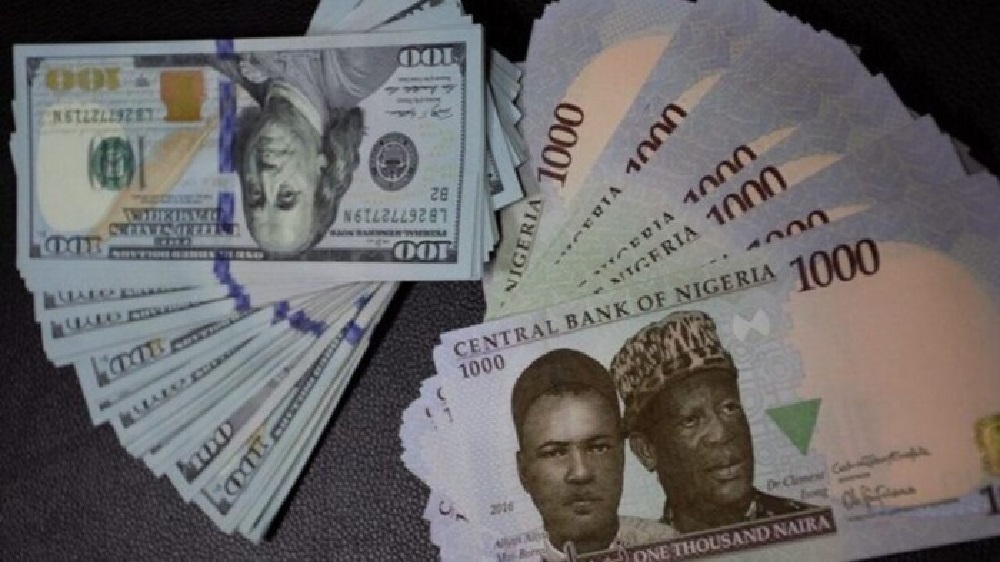
For individuals and businesses, this means $100 would exchange for about ₦136,800 at the official NFEM window and about ₦142,500 at the parallel market selling rate, depending on the channel used.

Analysts say the naira’s near-term direction will continue to depend on foreign exchange inflows from oil exports, portfolio investors, remittances, and the Central Bank’s liquidity management operations in the official market.

Advertisement
Continue Reading

Trending

Copyright © 2024 Naija Blitz News