Connect with us

News

Obi tackles Akande, says #EndSARS narrative, attempt to rewrite history

Published

on

ADVERTISEMENT
Zoom Ad
ADVERTISEMENT
Zoom Ad

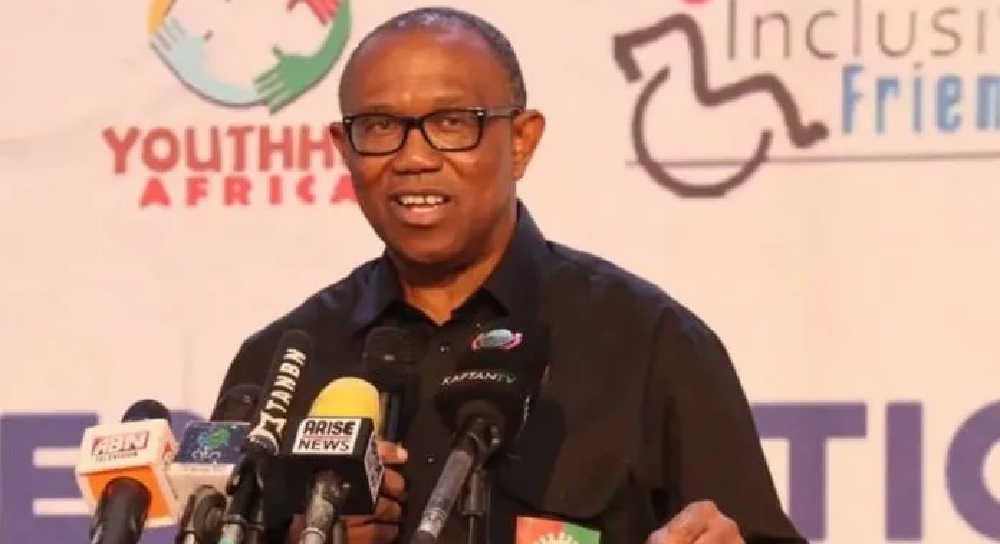
The 2023 Labour Party presidential candidate, Peter Obi, has slammed the former governor of Osun State, Bisi Akande, over his allegation that the 2020 #EndSARS protest across Nigeria was orchestrated by the Obi’s supporters, otherwise known as Obidients, to derail the ambition of the current President, Bola Tinubu.


Obi and the Obidient Movement described Akande’s narrative as an attempt to rewrite history, adding that it was insensitive to the memory of #EndSARS victims, particularly those who lost their lives.

The nationwide #EndSARS protest, which lasted between October 7 and 20, began with the demand for the disbandment of the notorious police wing called Special Anti-Robbery Squad but soon snowballed into a demand for good governance.

There were confrontations between protesters and security agents, particularly in Lagos State, where soldiers allegedly opened fire on defenceless protesters at the Lekki Tollgate.

Advertisement

In a recent podcast anchored by a popular broadcaster, Edmund Obilo, Akande claimed that the #EndSARS protest was orchestrated by Obidients to stop Tinubu’s presidential ambition.

According to him, the movement was well funded with foreign donations.

“The Obidients were behind the #EndSARS. It was manufactured in America and brought in just to stop him (Tinubu). I said the Obidients, I didn’t say Obi.

“They came from America to do the #EndSARS and later became a movement to form a party. They couldn’t form a party. It was well planned and organised with a lot of money from America,” the octogenarian asserted.

Advertisement

But in an interview with our correspondent on Thursday, Obi’s media aide, Umar Ibrahim, tackled Akande, describing his claims as misleading and insensitive to the people who died during the protest.

He said, “The allegations are not only misleading but also divisive. It is unfortunate Akande would suggest that the Obidient Movement was behind the #EndSARS protests, and even more astonishing that he would imply it was orchestrated to prevent a particular individual from becoming President.

“Well, let me be clear: the movement is a grassroots phenomenon that emerged organically, driven by the passion and dedication of Nigerians who are committed to creating a better future for our country. It’s a movement that transcends partisan politics and is focused on promoting good governance, accountability, and inclusive development.

“The #EndSARS protests, on the other hand, were a spontaneous response to the widespread discontent and frustration among Nigerian youth regarding issues of police brutality, corruption, and economic inequality. It’s a testament to the resilience and determination of our young people, who are demanding a more just and equitable society.

Advertisement

“To conflate these two distinct phenomena is not only inaccurate but also unfair to the millions of Nigerians who are genuinely committed to creating positive change. We urge former governor Akande to refrain from making unsubstantiated claims that can only serve to further polarise our society.”

Similarly, the National Coordinator of the Obidient Movement Worldwide, Tanko Yunusa, described Akande’s narrative as an insult to the memory of all #EndSARS victims, particularly those who lost their lives.

He said, “The Obidient movement outright rejects the baseless and revisionist claim by former Governor Bisi Akande. His false narrative is not only an insult to the memory of the young Nigerians who lost their lives in the fight against police brutality but also a desperate attempt to rewrite history and shift blame for the government’s failures.

“#EndSARS was a decentralised, youth-led movement demanding an end to police brutality, extrajudicial killings, and systemic oppression in Nigeria. It was not about politics, nor was it about any single individual’s presidential ambition.

Advertisement

“Rather than engaging in revisionist propaganda, we urge Akande and his associates to focus on addressing the real issues facing Nigerians today — economic hardship, insecurity, unemployment, and bad governance. The people are suffering, and no amount of misinformation or historical distortion will change that reality.”
News

Zulum Pledges More Secure, Prosperous Borno For Successor

Published

on

By

ADVERTISEMENT
Zoom Ad
ADVERTISEMENT
Zoom Ad

Borno State governor, Prof. Babagana Umara Zulum, has pledged to hand over a more stable, secure, and economically prosperous state to the next administration as he continues efforts to consolidate gains made in governance and security.

Zulum gave the assurance on when he received prominent sons and daughters of Gubio Local Government Area at the Government House, Maiduguri, alongside the APC governorship candidate for 2027, Engr. Mustapha Gubio.

The delegation, led by elder statesman Alhaji Gambo Gubio, included top political figures, retired security officers, and former public office holders from the area.

The governor said despite persistent security challenges in the state, his administration remains committed to strengthening stability and deepening development across all sectors.

Advertisement

“Security is the most difficult issue. Insha Allah, before I leave, the situation will be better than now. I will hand over a more stable, more prosperous, and more secure government to Engr. Mustapha Gubio, Insha Allah,” Zulum said.

He stressed that sustaining progress is often more difficult than achieving it, urging continued prayers and support for the APC governorship candidate.

“What matters is not just success; managing success is more difficult than achieving success itself,” he said.

Zulum also described Engr. Mustapha Gubio as a long-time associate with strong character and leadership qualities.

Advertisement

“I have known him for the past 26 years since he was a student at the University of Maiduguri. His integrity is evident; he is humane, very gentle, and composed,” he said.

The governor recalled the difficult early days of his administration in 2019, noting the sacrifices made in addressing insecurity and humanitarian crises in the state.

“When I took over the leadership of the state, in the first 55 days of my administration, I saw my children only three times. The first four years were really challenging,” he said.

He expressed appreciation to the delegation for the visit and reaffirmed his commitment to continued progress in the state.

Advertisement

Leader of the delegation, Alhaji Gambo Gubio, thanked the governor for his support and described the APC governorship candidate as a worthy successor.

He also commended Zulum’s achievements in security, infrastructure, and governance, saying the governor had made significant progress in stabilising the state.

The visit was attended by top government officials, including the APC State Chairman, Secretary to the State Government, commissioners, and special advisers.

Advertisement
Continue Reading

News

Senate Calls For Total Ban On Importation Of Textile Materials

Published

on

By

ADVERTISEMENT
Zoom Ad
ADVERTISEMENT
Zoom Ad

The Senate has asked the Federal Government to impose an outright ban on the importation of foreign textile materials as part of efforts to revive Nigeria’s struggling textile industry and stimulate local cotton production.

The upper chamber also urged the Federal Government, through the Ministries of Agriculture and Trade and Investment, to take urgent steps to resuscitate textile manufacturing across the country, particularly along the Kaduna-Kano industrial corridor, citing its potential to create jobs and address rising youth unemployment and insecurity.

The resolutions followed the adoption of a motion titled ‘urgent need to revive the textile industries in Nigeria with particular reference to the Kaduna-Kano Axis’, sponsored by Senator Sunday Katung (APC, Kaduna South) and co-sponsored by several lawmakers across party and regional lines.

Presenting the motion, Senator Katung recalled that Nigeria’s first large-scale textile manufacturing mill was established in Kaduna in 1957, a development that later spread to other regions and contributed significantly to industrial growth and employment generation.

Advertisement

According to him, government intervention policies in the 1960s and 1970s, including restrictions on textile imports, encouraged investment in local production and helped the industry flourish.

He noted that by the late 1970s and 1980s, Nigeria had about 167 textile mills employing more than 500,000 workers directly, making the sector the second-largest employer of labour after the Federal Government.

Katung further lamented the sector’s steady decline, attributing it to obsolete equipment, inadequate capital, inconsistent power supply and policy challenges.

The senator expressed concern that more than six decades after the industry’s golden era, Nigeria’s textile sector has deteriorated significantly, leaving once-thriving industrial facilities abandoned and reducing the industry to one of the weakest segments of the nation’s manufacturing sector.

Advertisement

Lawmakers who supported the motion underpinned the need for deliberate government intervention to restore the industry’s competitiveness, boost local production, reduce dependence on imports and create sustainable employment opportunities for Nigerians.

The Senate subsequently called for increased funding to the Bank of Industry (BoI) to support the revival of textile companies and requested the Federal Ministry of Agriculture to intensify efforts to encourage cotton farming, describing cotton production as critical to the survival of the textile sector.

Following deliberations, the Senate adopted the motion and urged the Federal Government to implement policies aimed at revitalising the textile value chain, from cotton farming to manufacturing and distribution, as part of broader efforts to strengthen the country’s industrial base and economic growth.

Advertisement
Continue Reading

News

Tinubu launches Ebola response task force, approves N10bn emergency fund

Published

on

By

ADVERTISEMENT
Zoom Ad
ADVERTISEMENT
Zoom Ad

President Bola Tinubu has approved the establishment of a Presidential Task Force on Ebola Virus Disease Preparedness and Emerging Public Health Threats and authorised the immediate release of N10 billion to strengthen Nigeria’s emergency response capacity against the deadly virus.

The intervention comes amid renewed concerns over the resurgence of Ebola cases in the Democratic Republic of Congo (DRC) and Uganda, prompting the Federal Government to activate measures aimed at preventing the importation of the disease into the country.

The emergency funding is expected to bolster the operational readiness of the Nigeria Centre for Disease Control and Prevention (NCDC) and support critical public health response activities nationwide.

The newly constituted Presidential Task Force will be chaired by the President’s Chief of Staff, Femi Gbajabiamila, with membership drawn from key Ministries, Departments and Agencies (MDAs), alongside representatives of state governments.

Advertisement

President Tinubu’s approval followed a high-level stakeholders’ meeting convened by Gbajabiamila to assess Nigeria’s preparedness and develop strategies to forestall any outbreak within the country’s borders.

Participants at the meeting included officials of the Ministry of Interior, the Federal Airports Authority of Nigeria (FAAN), the Nigeria Immigration Service (NIS), the Nigerian Civil Aviation Authority (NCAA), the Lagos State Government and other critical institutions involved in disease surveillance and border management.

As part of the emergency measures, the President directed all states hosting international airports and major border corridors to submit detailed preparedness plans, funding requirements and intervention needs for coordinated implementation by the Federal Government.

The Task Force is also expected to immediately intensify passenger screening at international airports through enhanced temperature checks and stricter crowd-control measures.

Advertisement

Authorities have been directed to strengthen monitoring of travellers arriving through identified high-risk routes, including flights operated by Air Uganda, RwandaAir, Air Tanzania, Air Angola, Kenya Airways and Ethiopian Airlines.

In addition, referral and isolation centres are to be activated without delay at the Lagos and Abuja international airports, while similar facilities will subsequently be established at other designated entry points across the country.

The government further ordered the mandatory deployment of QR code-based pre-arrival health declaration systems for passengers originating from, or transiting through, countries classified as high risk.

Other precautionary measures include the disinfection of departure halls, cargo terminals, baggage handling areas and other airport facilities.
President Tinubu also mandated the advisory group to engage security, diplomatic and aviation authorities on possible regulations governing flights from affected countries.

Advertisement

The Task Force is expected to recommend the designation of specific airports or terminals for high-risk flights to facilitate controlled screening and isolation procedures, as well as consider adjustments to flight schedules to minimise contact between high-risk travellers and other passengers.

The latest measures signal the administration’s determination to avoid a repeat of past public health emergencies by strengthening early detection systems, tightening border surveillance and ensuring rapid response capacity in the face of emerging disease threats.

Continue Reading

Trending

Copyright © 2024 Naija Blitz News