News
UTME 2025: Why we postponed registration —JAMB gives reasons
- /home/naijuinz/public_html/wp-content/plugins/mvp-social-buttons/mvp-social-buttons.php on line 27
https://naijablitznews.com/wp-content/uploads/2025/02/Screenshot_20250201-134846.jpg&description=UTME 2025: Why we postponed registration —JAMB gives reasons', 'pinterestShare', 'width=750,height=350'); return false;" title="Pin This Post">
- Share
- Tweet /home/naijuinz/public_html/wp-content/plugins/mvp-social-buttons/mvp-social-buttons.php on line 72
https://naijablitznews.com/wp-content/uploads/2025/02/Screenshot_20250201-134846.jpg&description=UTME 2025: Why we postponed registration —JAMB gives reasons', 'pinterestShare', 'width=750,height=350'); return false;" title="Pin This Post">
By Kayode Sanni-Arewa

The Joint Admissions and Matriculation Board (JAMB) has given reasons for postponing the commencement of registration for the 2025 Unified Tertiary Matriculation Examination (UTME) earlier scheduled to begin yesterday.
In a statement by its spokesperson, Fabian Benjamin, the board said the registration will commence on Monday, 3 February. JAMB said the postponement became necessary to allow the board implement essential adjustments to its registration templates.

It added that it was further scrutinising some Computer-Based Test (CBT) centres after discovering that they had used deceptive facilities to be approved.
According to JAMB, “These adjustments come in light of the recent suspension of certain law programmes at selected universities, as submitted to the Board by the Council for Legal Education.
The board acknowledges the disruption this may cause to candidates and other stakeholders and sincerely apologises for any inconvenience.”
News
Nigeria must punish drug pushers—Speaker Abbas
… says abuse is a menace to society
The Speaker of the House of Representatives Rt. Hon. Abbas Tajudeen, Ph.D., GCON, has said Nigeria must punish drug pushers to have a better society, saying the abuse is a menace to society.
“We must punish those who profit from drugs. We must also treat those who have become trapped by them. The dealer needs the law. The dependent person needs care,” he said, adding that, “The government is present. The law is active. The public must also participate.”
Speaker Abbas stated this on Saturday at the close of a three-day sensitisation programme against drug abuse and domestic violence held in Kaduna. The programme, which is part of the Speaker’s constituency outreach, was organised in collaboration with the National Orientation Agency (NOA).
He said, “Parents must watch for sudden changes in conduct. Schools must provide counseling and report warning signs. Pharmacists and medicine vendors must reject the unlawful sale of controlled substances.
“Traditional and religious leaders must reject silence around addiction and abuse. Neighbours must report violence. Market and transport unions must report suspicious movement of drugs. Young people must reject pressure and seek help when needed.
“Victims should seek safety, obtain medical care, preserve evidence, and report abuse. Communities must protect them, not punish them with blame or shame.”
Speaker Abbas recalled the last edition of the programme in February 2025, which heralded a four-month campaign across the North-West. “We promised to take the message beyond conference halls. We promised to engage traditional rulers, religious leaders, teachers, parents, young people, and community organisations,” he said.
He noted that Saturday’s edition of the programme showed that “we have kept that promise.”
The Speaker said NOA has taken the campaign into Kaduna’s streets and communities, while its officers are engaging market leaders, transport workers, youth groups, and traditional institutions “because prevention begins with proper information.”
While commending the Director General of NOA, Lanre Issa Onilu, and his team, Speaker Abbas equally appreciated the National Drug Law Enforcement Agency (NDLEA), Nigeria Police Force (NPF), Nigeria Immigration Service (NIS), Federal Road Safety Corps (FRSC), Nigerian Correctional Service (NCoS), National Youth Service Corps (NYSC), and the state agencies.
He said, “Drugs can impair judgement, increase aggression, and deepen poverty. But drugs never excuse violence. Every person remains responsible for his or her actions. Domestic violence is not discipline or culture. It is abuse. It harms the victim, frightens children, and weakens the community.
“The damage caused by drugs does not stop at the family door. It spreads into our streets, schools, markets, and security system. Drug trafficking gives criminal networks money. The same hidden routes can carry drugs, illegal weapons, criminal funds, and violent offenders. Drugs do not explain every crime, but they are part of Nigeria’s wider security challenge.”
The Speaker stated that “every shipment stopped can deny criminals money for weapons and recruitment,” stressing that “every person rescued from addiction is one less person exposed to violent groups.”
Speaker Abbas explained further that drug control is part of the fight against banditry and kidnapping in the North-West. “Security forces may clear the camps. Communities must help cut the supply lines,” he said, adding that, “Enforcement stops the shipment. Education reduces the demand. Treatment restores the individual. Community vigilance protects the neighbourhood.”
Speaker Abbas commended President Bola Ahmed Tinubu, GCFR, for retaining Brigadier General Mohammed Buba Marwa (rtd.) as Director-General of the NDLEA and supporting enforcement, international cooperation, public education and treatment, including a new 50-bed rehabilitation centre in Maiduguri.
He said, “The National Assembly has consistently played its part. In 2024, the House called for a preventive drug testing programme in secondary schools and directed NOA and NDLEA to expand student awareness.
“The House also moved against the indiscriminate sale of prescription medicines. We called for illegal outlets to close and for stronger joint enforcement by the responsible agencies.
“We have considered bills to strengthen the NDLEA Act. In 2025, the House called for faster investigation and prosecution of femicide, homicide, and related violence. We will continue to fund enforcement and treatment, close gaps in the law, and demand results through oversight.”
News
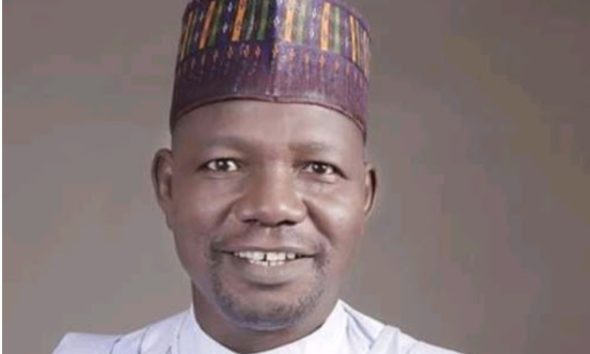
Ex-PDP Chairman Bamanga Tukur is dead
Ex- National Chairman of the Peoples Democratic Party (PDP) and prominent Nigerian businessman, Alhaji Bamanga Tukur, has died at the age of 90.
Tukur’s family confirmed to TRT Afrika that he died on Saturday at his residence in Abuja after a prolonged illness.
His burial is expected to take place on Saturday at the Lamido of Adamawa’s Palace in Yola, Adamawa State.
The late politician and businessman is survived by 17 children.
Tukur served as governor of the former Gongola State, which was later divided into Adamawa and Taraba states, during Nigeria’s Second Republic.
He later served as Minister of Industries under the military administration of General Sani Abacha and also sought to contest the Nigerian presidency.
Tukur went on to become National Chairman of the PDP, playing a prominent role in the party’s leadership and Nigeria’s political affairs.
News
Natural Disasters Destroy Up to $800bn Infrastructure Annually, CDRI Warns
By Gloria Ikibah
Natural disasters destroy between $700 billion and $800 billion worth of infrastructure globally every year, with the wider economic impact estimated to be about seven times higher.
The Director General of the Coalition for Disaster Resilient Infrastructure (CDRI), Amit Prothi, stated this while addressing international journalists covering the BRICS meetings in New Delhi, India.
Prothi called for stronger investment in disaster-resilient infrastructure as climate change increases the frequency and severity of extreme weather events.
He said. “On average, we lose about $700 to $800 billion of infrastructure every year. That’s only the direct damage. The economic cost of that damage is roughly seven times higher”.
He cited wildfires in Los Angeles, floods, earthquakes and cyclones in different parts of the world as examples of disasters causing increasingly severe damage to infrastructure and placing additional pressure on national economies.
According to him, governments need to have a clearer understanding of the risks facing critical infrastructure and ensure that resilience is incorporated into planning and construction before disasters occur.
Naijablitznews.com reports that CDRI was launched by India at the United Nations in New York in 2019 and has since grown from 24 founding members to 70 members, with the Philippines expected to become the 71st.
Its membership cuts across Africa, Asia, Europe, the Americas and the Pacific and includes multilateral institutions such as the World Bank and regional development banks.
“The coalition was created to bring practices, knowledge and experiences together so that countries can better understand and address the growing complexities of disaster risks,” Prothi said.
India remains the permanent co-chair of the coalition, while the second co-chair rotates every two years. Previous co-chairs have included the United Kingdom, the United States and France, while India and Brazil currently lead the organisation.
Prothi explained that CDRI does not directly finance infrastructure projects but works with governments to ensure that resilience is considered when infrastructure is planned and designed.
“We are the chilli in the soup,” he said, using an analogy to explain CDRI’s role.
“When countries build roads, power systems or telecommunications networks, we help them understand how those investments can withstand future risks from climate change and disasters”, he added.
He said changing climate patterns meant that governments can no longer rely solely on traditional infrastructure standards and building codes based on past experiences.
“You may not have experienced floods before, but patterns are changing. The question is how you prepare your infrastructure for those future risks,” he said.
Critical infrastructure at risk
Telecommunications, power and transport systems are among the key areas receiving attention from the coalition because of their importance during and after disasters.
Recalling his experience during Nepal’s devastating 2015 earthquake, Prothi said the failure of telecommunications infrastructure demonstrated how critical communication networks become when disasters strike.
“I was in Kathmandu during the earthquake and could send a brief message to my family. Others couldn’t contact their loved ones because telecommunications infrastructure had broken down.
“Communication is becoming increasingly critical during disasters,” he said.
CDRI is also working with governments to assess risks facing electricity networks and transport infrastructure and to incorporate risk data into infrastructure planning.
The coalition has increasingly become involved in major international discussions on disaster risk reduction, climate adaptation and resilient infrastructure, including the G20, BRICS, COP climate conferences and United Nations platforms.
During India’s G20 presidency, CDRI supported the establishment of a Disaster Risk Reduction and Resilient Infrastructure Working Group. The initiative continued under Brazil’s G20 presidency and has remained part of wider discussions on climate adaptation and resilience.
“As global conversations move increasingly toward adaptation and resilience, the relevance of disaster-resilient infrastructure is growing,” he said.
The CDRI DG, also stressed that resilience should not end with disaster preparedness and prevention, arguing that countries must have systems that allow them to recover quickly when disasters occur.
“The speed of recovery matters. The longer it takes countries to rebuild, the greater the impact on communities and national economies,” he said.
He said the coalition was exploring innovative financing options, including insurance and private-sector participation, to enable countries to mobilise funds for reconstruction more quickly after disasters.
CDRI turns to data, technology
The coalition has also developed a global risk database designed to estimate infrastructure losses across countries and identify vulnerabilities in different sectors.
Prothi said Brazil records average annual infrastructure losses of about $13 billion, while losses across Africa are estimated at a similar level.
The database enables governments to identify infrastructure vulnerabilities and develop resilience measures based on the specific risks facing different sectors.
“Different infrastructure sectors face different risks. Power transmission systems, for example, may be highly vulnerable to cyclones, while buildings may face greater risks from earthquakes,” he said.
Looking ahead, CDRI plans to develop dedicated programmes for Africa, small island developing states, mountain regions and cities, where the effects of climate change and natural disasters are becoming increasingly complex.
Prothi also identified artificial intelligence, satellite data and advanced modelling as emerging tools that could strengthen early warning systems and improve disaster preparedness.
“There is an incredible amount of work under way on using data and predictive models. This will be one of the most important conversations over the coming years,” he said.
He called for greater participation by ASEAN countries, noting that nations in the region had developed considerable experience in dealing with earthquakes, tsunamis, floods and other natural hazards.
“The expertise that countries such as those in ASEAN have developed can benefit the rest of the world, while they also gain from shared global experiences,” he said.
Prothi said stronger international cooperation would be essential as countries confront increasingly unpredictable climate and disaster risks, with resilient infrastructure becoming a critical part of efforts to protect lives, economies and essential services.
-
News9 hours agoSAD! Teenage twins die after eating bread spiked with ‘otapiapia’
-
News9 hours agoJust in: Dangote Refinery jerks up petrol price by N85
-
Sports6 hours agoAmusan Finishes 2nd As Russell Wins Inaugural World Athletics Ultimate Championship
-
News20 hours agoEmployment: Mbah Urges Enugu Youths to Seize Federal Opportunities (Photos)
-
News6 hours agoNiger unveils fresh Chief of Staff after botched coup
-
News3 hours agoEx-PDP Chairman Bamanga Tukur is dead
-
News6 hours agoNatural Disasters Destroy Up to $800bn Infrastructure Annually, CDRI Warns
-
Education2 hours agoFG endorses take over HND admissions by JAMB

Warning: Undefined variable $user_ID in /home/naijuinz/public_html/wp-content/themes/zox-news/comments.php on line 49
You must be logged in to post a comment Login