Connect with us

News

Secession: Nigeria didn’t learn from civil war, says Dogara

Published

on

ADVERTISEMENT
Zoom Ad
ADVERTISEMENT
Zoom Ad

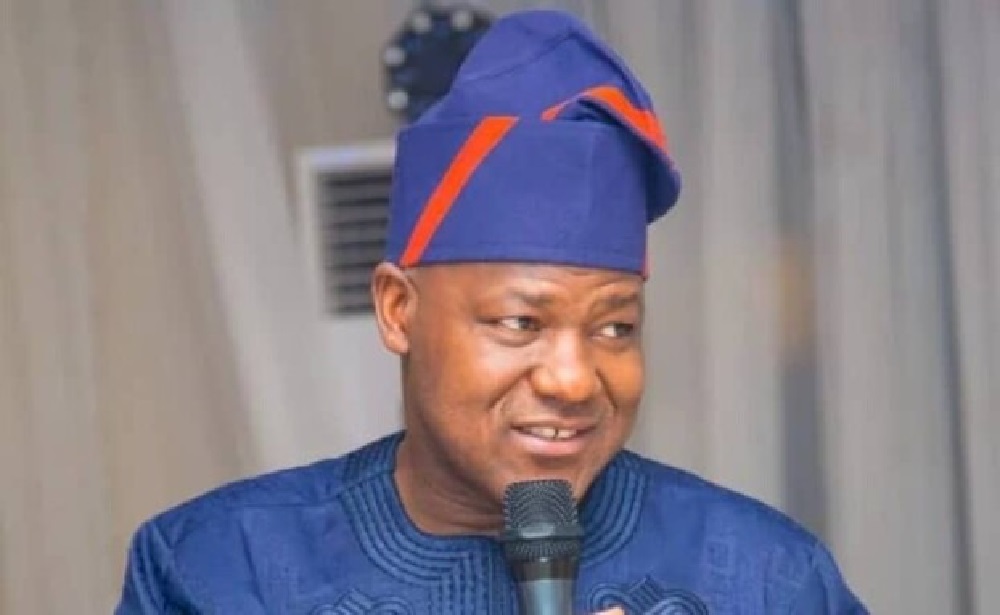
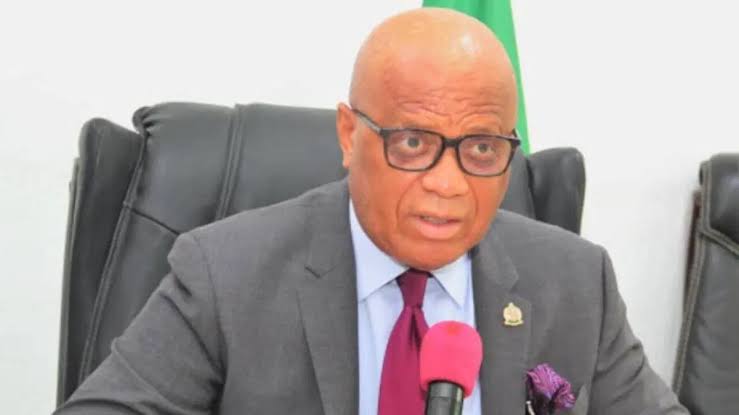
Former Speaker of the House of Representatives, Yakubu Dogara, has expressed concern that Nigeria has not learned from the lessons of its Civil War, as evidenced by the rise of secessionist movements in the country.


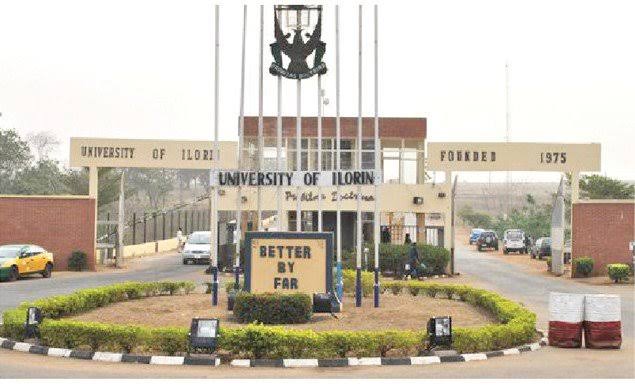
In his keynote address at the World Interfaith Harmony Week Conference and Awards, held at the Trenchard Hall, University of Ibadan, Oyo State, Dogara noted that the lack of effective nation-building since independence has led to the emergence of groups advocating for secession.

Dogara, who was represented by Timothy Golu, remarked, “We have had a number of crises since independence, the worst of which was the civil war from 1966 to 1970. Seems we didn’t learn much from that sordid episode, after all.

The evidence of our abysmal failure at nation-building are right under our noses — the formation or the rise of successionist groups such as the Movement for the Emancipation of the Niger Delta; Niger Delta Frontier Force; Indigenous Peoples of Biafra; Oduduwa People’s Congress, among others.”

Advertisement

He also decried the escalating insecurity in Nigeria, noting that has been more terrorised since the return to democracy.

He said, “Since 1999, successive administrations have struggled to address the security challenges that have plagued the nation. The Boko Haram insurgency, which started in Borno State in 2009, has evolved into a major international terrorist organization, claiming thousands of lives and displacing over five million people. At one point, Nigeria was ranked the third most terrorized country in the world.”

The former Speaker also highlighted that the breakdown of law and order had led to the rise of criminal activities, including kidnappings for ransom, banditry, and armed robberies, while ethnic and religious tensions have continued to fuel violence.

The failure to tackle these problems, according to Dogara, points to a broader issue of ineffective governance and poor responses to the underlying causes of discontent in various regions of the country.

Advertisement

Dogara expressed concern over the inability to achieve true unity in Nigeria, noting that even after decades of independence, the country has failed to integrate its diverse peoples, leading to the rise of separatist movements. He emphasized that the failure to address these issues is leading Nigeria down a dangerous path, with groups calling for secession as a result of feeling marginalised and excluded from the Nigerian state.

Dogara also stressed the role of religion in nation-building, stating that Nigeria’s religious diversity could play a key role in fostering peace, provided that the country learns to harness the values of both Christianity and Islam to promote unity.

However, he warned that without genuine efforts to address the root causes of conflict, the country would continue to face the challenges of insecurity, disunity, and calls for secession.

“Unfortunately, our history is marked by disturbing anecdotes of series of ethno – religious violence that have profoundly stymied nation building. Nevertheless, we can successfully harness and exploit the values in the two main religions in Nigeria to rein in sustainable peace.

Advertisement

Assuredly, our lives will begin to change the day we take responsibility for it. The future of peace, development and progress is very possible but only if we take the risk and accept the responsibility of consciously creating it.”

In attendance at the event were notable figures, including former President Olusegun Obasanjo, ex-governor of Ogun State, Otunba Gbenga Daniel, Sultan of Sokoto Alhaji Muhammad Sa’ad Abubakar, and President of the Christian Association of Nigeria, Most Rev. Daniel Okoh.

During the event, Obasanjo delivered a paper on the importance of love for one another and for God, with the theme “The Love of the Good, and The Love of The Neighbors,” while also calling for peace in the country.

Obasanjo was honoured with the Apostle of Peace award, and Otunba Daniel received the Apostle of Peace Gold award.
Advertisement

News

US Treasury chief vows to cut every ‘economic lifeline’ of Iran

Published

on

By

ADVERTISEMENT
Zoom Ad
ADVERTISEMENT
Zoom Ad

United States Treasury Secretary Scott Bessent on Monday laid out plans for the “economic asphyxiation” of Iran, expanding Washington’s secondary sanctions threats and warning of dire consequences for countries that decline to join the pressure campaign.

Bessent’s address comes almost six months into a war on Tehran that has ground to a stalemate, with stalled peace talks and Iran preventing most traffic through the crucial Strait of Hormuz.

“Around the globe, our objective is to sever every economic lifeline that sustains this tyrannical regime until Tehran stands alone,” Bessent told a press conference.

“We are going to hold everyone accountable, and this is economic asphyxiation of this regime.”

Advertisement

He added that countries not joining US sanctions would “share in the isolation” of Iran, and noted that Trump is making phone calls to world leaders with requests to stop their interactions with Tehran.

The Treasury Department said Monday that it has “issued determinations against five critical sectors — digital assets, technology, gold, aviation, and shipping — that the Iranian regime uses to try to prop up its failing economy.”

Bessent, meanwhile, vowed that any entity “that facilitates money laundering on behalf of Iran will be removed from the US dollar system.”

Asked if Chinese banks dealing with Iran could be targeted, Bessent said “no one is above the reach of US sanctions.”

Advertisement

The Treasury chief earlier declared that an “economic D-Day” had begun against Tehran, in a column for the Financial Times.

The United States and Israel triggered the Middle East war with a massive wave of bombing against Iran on February 28, sparking Iranian retaliation across the region.

AFP

Advertisement
Continue Reading

News

Abia begins payment of gratuities, resolves ABSU strike issues

Published

on

By

ADVERTISEMENT
Zoom Ad
ADVERTISEMENT
Zoom Ad

Abia State Government has said it has commenced the payment of gratuities to deserving beneficiaries, and also resolved issues that led to the strike in Abia State University, Uturu.

Briefing newsmen on Monday on the outcome of the state Executive Council meeting presided over by Governor Alex Otti, the state Commissioner for Information, Okey Kanu, said that this was following the state government committee set up to midwife the payment process of gratuities in the state,

He said that upon review of records from the State Pensions Board and Local Government Pensions Board, the committee determined the total outstanding gratuity liability to be N61.8 billion, covering both state and local government retirees.

“So if you have to do a summary of the outstanding gratuities between 2001 and 2010, it was N7.2 billion. Between 2011 and 2023, ending May 2023, May 29, 2023, it was N43.6 billion. May 30, 2023 to the present is N10.9 billion. That’s how the total of N61.8 billion came about.

Advertisement

“So in consideration of the magnitude of the liability, the committee examined several payment scenarios. Having in consideration as follows, the impact of the lengthy delay on the lives of pensioners, the obligation of government as a continuum, the limitations to the capacity of government to meet the established obligations while maintaining the momentum, gains in restoring our state, and the efficacy of the process.

“The committee therefore recommended that the total annual financial impact, 2026 to 2031, be fully provided in the state’s medium-term expenditure framework and subsequent yearly budgets to ensure steady implementation and to avoid further accumulation of gratuity arrears.

“That payments should be made directly to verified beneficiaries through a dedicated gratuity payment platform linked to the state’s treasury single account, TSA”, Prince Kanu Informed.

The commissioner also stated that following the intervention of the state SSG-led committee set up by the state governor, the issues that led to the strike in Abia State‌ University, Uturu, have now been resolved.

Advertisement

“And it’s important to emphasise that before that action, the Governor of the State, Alex Otti, had approved the asset demands way back in April 2026. So the subsequent delay was, therefore, not a matter of government’s unwillingness or refusal to meet those demands, but rather an issue arising from administrative and implementation processes”, the commissioner said.

“In particular, outstanding check-off dues have been paid. And a new salary scale, consolidated academic teaching allowance, ASCATA, and other related payments have been addressed and will be paid with the August 2026 salary of the affected workers. And the August salary of those workers is expected to drop any time soon, maybe within this week.

“The new salary scale for other staff at the Abia State University has also been processed and will be paid this month, this August. Consequently, it is safe to assume that all the issues regarding action by ASUU have been concluded or resolved.

Otti’s administration, he said, remains committed to constructive engagement with ASUU and other organised labour unions, while ensuring that workers’ welfare remains a priority of the Administration, stating that the issue of a suspended lecturer by the university remains the school’s internal matter.

Advertisement
Continue Reading

News

Adeleke receives new Osun CP, demands release of detainees

Published

on

By

ADVERTISEMENT
Zoom Ad
ADVERTISEMENT
Zoom Ad

Osun State Government has formally received the newly deployed Commissioner of Police, Ibrahim Zungura, with Governor Ademola Adeleke urging him to reform the state police command and secure the release of persons he described as political detainees.

Zungura, who assumed office in Osun on Monday, visited the governor alongside senior officers of the command. During the meeting, he pledged to collaborate with the state government to strengthen peace, stability and public confidence in the police.

The engagement took place amid lingering tensions between the Adeleke administration and the police, particularly during the period leading up to and following the August 15 governorship election.

Speaking at the meeting, Zungura assured the governor that his administration of the command would be impartial and focused on resolving security challenges across the state.

Advertisement

“I promise to work with the state government for peace and stability of the state. I will be fair to all, and I will prove my commitment in the next few weeks. Osun is a peaceful state, and we will work to address all outstanding issues,” he said.

Adeleke, however, said peace had not been completely restored following the election and tasked the new police commissioner with rebuilding public confidence in the command.

The governor cited a recent police operation in Ikire, where two people were reportedly killed, and alleged that the Divisional Police Officer in the area had been implicated.

“Based on all details of the attacks, I request immediate commencement of disciplinary action against the DPO. He has become a threat to the people he was posted to protect,” Adeleke said.

Advertisement

The governor presented five key demands which he said were necessary to restore peace and normalcy to Osun’s political environment.

His first demand was for the new CP to rebuild public confidence by ensuring that police officers discharge their duties professionally, impartially and with greater consideration for the public.

Adeleke also called for stronger collaboration between the state government and the police command, maintaining that his administration was asking for “no favour other than fair policing.”

He further urged Zungura to overhaul the command’s internal operations and tackle units he alleged had either been compromised or developed a reputation for political bias.

Advertisement

“I know you will be worried that Osun people see certain police units as the home base of APC thugs. There is a need to dissolve many police operational units because they have been compromised,” he said.

The governor also demanded that the police fully participate in meetings of the State Security Council, claiming that the former commissioner was last present at one of the meetings in 2024.

Adeleke’s final demand was the release of members of the Accord Party whom he identified as political detainees, alongside an end to what he described as politically motivated arrests of the party’s members.

“I also call for the release of several Accord members arrested and indeterminate as political detainees. Further arrests of our members should also stop,” Adeleke said.

Advertisement

The governor assured the new police leadership of his administration’s willingness to assist the command, but stressed that government support would not come with political conditions.

“Our government is ready to support police operations without any strings attached. What we seek is fair policing,” he said.

Zungura’s deployment to Osun followed the transfer of the state’s former substantive Commissioner of Police, Ibrahim Gotan, amid questions surrounding the neutrality of the command in the run-up to the governorship election.

Adeleke, who won a second term in the August 15 poll, said his administration was ready to extend an olive branch to all parties and stakeholders in the state.

Advertisement

“Osun deserves peace. Osun deserves justice. Osun deserves a police command that enjoys the confidence of all citizens, regardless of political affiliation,” he said.

“Let us work together to heal our state, rebuild trust and give peace a permanent home in Osun.”

Continue Reading

Trending

Copyright © 2024 Naija Blitz News