Connect with us

News

INEC Call For Stricter Laws to Curb Vote-Buying at Polling Units

Published

on

ADVERTISEMENT
Zoom Ad
ADVERTISEMENT
Zoom Ad
By Gloria Ikibah

The Independent National Electoral Commission (INEC) has urged the National Assembly to pass tougher laws restricting the possession of large sums of money within polling areas to combat vote-buying and other electoral offences.

The Director of Litigation and Prosecution INEC, Tanimu Muhammed (SAN), raised concerns over vote-buying, describing it as a serious threat to Nigeria’s democracy, at a consultative meeting with security agencies and the technical committee on electoral law reforms on Friday in Abuja.

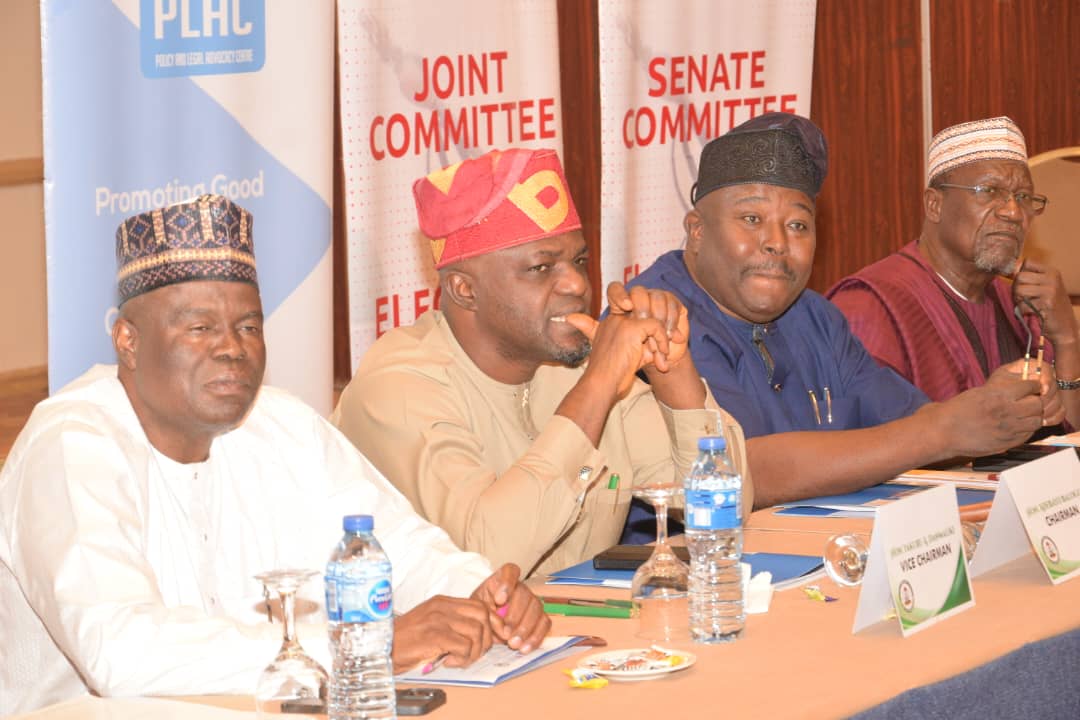
The meeting was organised by the Joint Senate and House of Representatives Committees on Electoral Matters, in partnership with the Policy and Legal Advocacy Centre (PLAC) and supported by the UK Foreign, Commonwealth, and Development Office (FCDO), and had key stakeholders in attendance to discuss electoral security and legal reforms.

Muhammed stated that politicians often claim they carry large sums on election day for party agent payments and logistics. However, he warned that unrestricted cash flow at polling units has encouraged vote-buying and undermined electoral integrity.

Advertisement

To tackle this issue, Muhammed proposed a legal limit of ₦50,000 for individuals within polling areas on election day.

“Vote-buying remains one of the biggest threats to credible elections in Nigeria. We need legislation that not only criminalizes this practice but also puts preventive measures in place,” Muhammed stated.

The commission therefore called on lawmakers to focus on amending laws to eliminate loopholes frequently exploited by politicians.

INEC officials also renewed their call for the creation of an Electoral Offences Commission, stressing that the commission currently lacks the capacity to prosecute electoral offenders effectively.

“INEC is doing its best to handle prosecutions, but we need a dedicated institution with the legal authority and resources to investigate and prosecute electoral crimes comprehensively.
“The creation of an Electoral Offenses Commission would ensure that vote-buying, ballot snatching, and other crimes are met with swift legal action,” Muhammed stated.
Ondo Resident Electoral Commissioner, Oluwatoyin Babalola, emphasised that reducing cash transactions at polling units would make it harder for politicians to influence voters with financial inducements.
“If we set a cash limit, security agencies will have clearer guidelines on what constitutes an electoral offense, making enforcement easier,” she added.
In response to INEC’s concerns, security agencies at the meeting reaffirmed their commitment to ensuring free and fair elections.
However, they acknowledged challenges, particularly in logistics and coordination.
The Commissioner of Police in charge of Election Planning and Evaluation, Abayomi Shogunle, who represented the Inspector General of Police, pointed out that inadequate resources often hamper law enforcement efforts during elections.
“We face major logistical challenges, from deploying officers to remote areas to ensuring real-time communication during elections. These are issues that need to be addressed if we are to effectively enforce electoral laws,” Shogunle said.
Despite these challenges, security agencies pledged to remain neutral and professional in carrying out their duties.
Responding to the concerns raised, the Chairman of the House Committee on Electoral Matters, Hon. Adebayo Balogun, assured that all issues discussed would be addressed in future electoral reforms.
He announced plans for a 2025 Electoral Act to replace the current 2022 version, which he said had exposed gaps during the 2023 elections.
“The 2022 Electoral Act was a significant step forward, but its implementation in the last general elections showed areas that need improvement. We are committed to strengthening our electoral laws to reflect the realities of our democracy,” Balogun said.
He emphasized that, apart from legislative reforms, there was a need for increased awareness among political parties, INEC officials, and civil society organizations on the dangers of vote-buying and other electoral malpractices.
“The Nigerian people deserve an electoral process they can trust. We must ensure that our laws are not just strong on paper but are also effectively enforced,” Balogun added.
The Senate Chairman on Electoral Matters, Senator Sharafadeen Alli, noted that while the 2022 Electoral Act was initially considered comprehensive, its implementation revealed gaps that must be closed.
“This meeting is a step towards strengthening our electoral system. The reforms we propose must reflect lessons learned from past elections and ensure that our democracy continues to evolve positively,” Alli said.
Advertisement

News

List: FG endorses 33 more universities

Published

on

ADVERTISEMENT
Zoom Ad
ADVERTISEMENT
Zoom Ad

The Federal Government has endorsed 33 new universities across Nigeria, increasing the total number of universities in the country to 309.

The approvals include seven federal universities, six state-owned universities and 20 private universities.

The seven new federal universities are the Federal University of Environment and Technology, Tai, Rivers State; Federal University of Applied Sciences, Kachia, Kaduna State; Tai Solarin Federal University of Education, Ijagun, Ogun State; Federal University of Agriculture and Developmental Studies, Iragbiji, Osun State; Federal University of Technology and Environmental Studies, Iyin-Ekiti, Ekiti State; Federal University of Agriculture and Technology, Okeho, Oyo State; and the Federal University of Health Science and Technology, Tsafe, Zamfara State.

The six new state universities are Abdulsalam Abubakar University of Agriculture and Climate Action, Mokwa, Niger State; Ebonyi State University of ICT, Science and Technology, Oferekpe, Ebonyi State; University of Aeronautics and Aerospace Engineering, Ezza, Ebonyi State; Benue State University of Agriculture, Science and Technology, Ihugh; Cross River University of Education and Entrepreneurship, Akamkpa, Cross River State; and the University of Innovation, Science and Technology, Omuma, Imo State.

Advertisement

The approvals also include 20 private universities.

Among them are Omega University in Delta State, Regnum Medical University in Lagos State, Transatlantic University of Medicine and Health Sciences in Anambra State, City University in Ogun State, University of Fortune in Ondo State, Eranova University in the Federal Capital Territory, Minaret University in Osun State, Abdulrasaq Abubakar Toyin University in Kwara State, Southern Atlantic University in Akwa Ibom State, Lens University in Kwara State, Monarch University in Ogun State, Tonnie Iredia University of Communication in Edo State, Isaac Balami University of Aeronautics and Management in Lagos State, Kevin Eze University in Enugu State, Bridget University in Imo State, Leadership University in Abuja, Jimoh Babalola University in Kwara State, Greenland University, JEFAP University in Niger State, Azione Verde University in Imo State and Unique Open University in Lagos State.

Continue Reading

News

FG bars MDAs from awarding contracts without warrants

Published

on

ADVERTISEMENT
Zoom Ad
ADVERTISEMENT
Zoom Ad

Disturbed by the manner Ministries, Departments and Agencies of Government, MDAs flagrantly spend money without adequately aligning with Revised Bottom-Up-Cash Management Policy Framework, to this end, the Federal Government welded the big stick by barring MDAs from awarding contracts without warrants.

Ministry of Finance in a circular has ordered that due process must be followed or heavy sanctions awaits such government bodies.

In a circular signed by the Minister of Finance, Taiwo Oyedele in a sighted by this medium, it was expressly stated that :”The revision of this policy will further ensure that MDAs comply with statutory and regulatory provisions governing public financial management”.

In the memo it was also stated that “It should be noted that Accounting Officers who contravene this policy shall be personally liable for any resultant commitments, in accordance with the provisions of • Financial Regulation 310 (Personal Responsibility for Expenditure • Public Service Rules 030402 (Serious Misconduct • Fiscal Responsibility Act Section 48 (Offences and Penalties – Independent Corrupt Practices and Other Related Offences Act (ICPC Section 22 Sub-sections 4.

Advertisement

Under the new framework, no MDA is permitted to issue letters of award, sign contracts or enter into financial obligations unless the corresponding Warrant or Authority to Incur Expenditure covering the full or committed portion of the contract sum has been duly released by the Honourable Minister of Finance and Coordinating Minister of the Economy to the Accountant General of the Federation.

The circular also makes it clear that budgetary allocations alone do not constitute legal authority to spend public funds.

According to the directive, “Estimates in the Appropriation Act or budgetary provisions do not confer automatic spending authority. Only duly released Warrants/AIE issued by the Honourable Minister of Finance and Coordinating Minister of the Economy in line with Financial Regulation 301 confer legal authority to incur expenditure.”

The policy cites Financial Regulation 415, Section 22 of the Fiscal Responsibility Act, 2007, Section 16(1)(b) of the Public Procurement Act, 2007 and relevant provisions of the Independent Corrupt Practices and Other Related Offences Act as the legal basis for the revised framework.

Advertisement

Government said the new measures are designed to align financial commitments with actual funds availability, strengthen expenditure controls and halt the growing accumulation of unfunded contractual liabilities arising from contracts awarded without the necessary financial backing.

The circular also introduces changes to the cash management process by abolishing the requirement for MDAs to submit monthly cash needs before the issuance of Warrants. Instead, Warrants will be issued based on approved budget implementation priorities and available Capital Development Fund balances.

In addition, all MDAs are required to prepare quarterly cash plans in line with their ministerial priorities and procurement plans for submission to the Office of the Accountant General of the Federation to improve cash flow forecasting and budget execution.

The Federal Government warned that Accounting Officers who disregard the directive would bear personal responsibility for any commitments arising from contracts awarded in violation of the policy.

Advertisement

It stated that such officers would be held liable in accordance with the Financial Regulations, the Public Service Rules, the Fiscal Responsibility Act and other applicable laws governing public financial management.

The directive takes immediate effect and supersedes all previous instructions inconsistent with the revised framework. It also provides that all 2026 capital projects across Federal Ministries, Departments and Agencies shall be implemented in accordance with the new policy.

The government directed all Accounting Officers, Directors and Heads of Finance and Accounts, as well as Internal Audit Departments and Units across MDAs and other arms of government, to ensure strict compliance with the circular.

Advertisement
Continue Reading

News

Posterity will judge you well for devt of FCT -First Lady Remi Tinubu

Published

on

ADVERTISEMENT
Zoom Ad
ADVERTISEMENT
Zoom Ad

…Commends Wike’s Green Transformation of Abuja, Urges States to Engage Youth in Environmental Protection

First Lady of Nigeria, Senator Oluremi Tinubu has commended the Minister of the Federal Capital Territory (FCT), Nyesom Wike, for transforming Abuja’s City Gate into a major recreational and environmental landmark.

She was speaking during a ceremony to honour the FCT Administration for its environmental efforts which she said is in line with the just concluded category of the ongoing Green Nigeria Challenge of the Renewed Hope Initiative.

Senator Oluremi Tinubu said she was impressed by the transformation of the City Gate, describing it as “unbelievable.”

Advertisement

She stated that despite a ₦50 million prize set aside under the Green Challenge to encourage states to reclaim abandoned spaces and dumpsites, no state entered for that category of the competition.

“It was a ₦50 million prize money and they didn’t enter. This was supposed to get our youth involved,” she said.

The First Lady explained that the initiative was designed to encourage states to convert neglected public spaces into clean and attractive environments.

“The transformation reflects the vision behind the just concluded Community Category of the Challenge which was designed to encourage youth groups to transform degraded public spaces, including dumpsites and abandoned areas, into green parks, gardens and other eco-friendly spaces. Our goal is to compliment government’s effort in beautifying our environment and promoting healthier communities towards improving the quality of life of our people.”

Advertisement

“The remodeled Abuja City Gate is an excellent example of what abandoned public areas can become: a transformed key national landmark that warmly welcomes all Nigerians and visitors to our nation’s capital.”

“When I saw what he did with the City Gate, my God, unbelievable, unbelievable. I want to thank him. He’s done very well.”

“This was to turn around abandoned spaces, dumpsites, and we see a lot of it around the states.”

Senator Oluremi Tinubu also appealed to Wives of State Governors to mobilise the youth to participate in environmental clubs and sustainability initiatives in schools and tertiary institutions.

Advertisement

“I’m using this opportunity to appeal to our First Ladies: Get our young children into the environmental clubs and environmental societies for our youth in tertiary institutions.”

“I remember when I was in the College of Education, I was a member of the Youth Environmental Programme for West Africa. We travelled from Nigeria throughout West Africa by road. It was a memorable experience for us.”

According to the First Lady Senator Oluremi Tinubu, young people must be encouraged to contribute to national development through environmental stewardship.

“We have to engage our young people and make sure that they can help build. Everybody has something to contribute to this country. It’s a great country and that’s why we are doing all we can.”

Advertisement

In his remarks, the FCT Minister, Nyesom Wike revealed that the First Lady personally inspired the transformation of Abuja’s City Gate.

“The First Lady has to be commended for the FCT keying into the Renewed Hope Green Initiative because she has always said we have to change our environment and create opportunities where people can gather and relax.”

Continue Reading

Trending

Copyright © 2024 Naija Blitz News